
This Android Update Could Make Your Phone Faster Than Ever


Android phones have gotten pretty fast over the last few years, to the point where faster processors don’t really bring about the noticeable speed improvements they used to. So now, the goalposts have shifted over to software — sometimes in places people don’t directly interact with.

Case in point: the latest improvement arrives in the form of something called Automatic Feedback-Directed Optimization (AutoFDO). AutoFDO is a kernel-level optimization, which is a pretty big deal, considering the kernel is the deepest layer of the operating system. It handles how your phone’s processor talks to apps, hardware, and everything in between. The last time we saw a performance enhancement that went this deep was perhaps the 2018 switch to a modern code translator for the Pixel 3.

As for what it actually does, the simplest explanation is that AutoFDO uses real-world data to make heavily used code faster. Android is written in code that your phone’s processor can’t directly understand, so a tool called the compiler has to translate it into something the hardware can actually run. Doing this can be pretty resource-intensive, though, so the compiler takes shortcuts. It makes tiny guesses, thousands of them, about how to optimize the code along the way. This is done by picking which functions matter most, or which paths are likely to be taken.

The problem is that these decisions are based on general rules and not on how people actually use their phones. AutoFDO changes this up by feeding the compiler real usage data. While there are a lot of great Android apps people don’t know about, this data was actually collected from lab tests where Google ran the 100 most popular apps on Pixel devices.

What this means going forward

It’s worth mentioning that Google actually first introduced AutoFDO back with Android 12. But back then, it targeted apps and system libraries. Now, it goes deeper by directly targeting the kernel. In theory, this should bring about more significant gains since any improvements can ripple outwards. The kernel also eats up roughly 40% of your phone’s processing time, so any improvements here should be significant.

That said, while it all sounds pretty great, the actual results on Pixel hardware were modest. Cold app launches got 4% faster, and boot times dropped by around 2%. But certain internal benchmarks, like Binder tests, did improve by a far more notable 21%. Google also claims these changes should improve your Android’s battery life, since the processor ends up doing less redundant work.

Google has also built a whole pipeline that refreshes the data profiles feeding into AutoFDO continuously. What this means is that as Android’s code evolves over time, the optimizations stay relevant instead of going stale.

Looking further out, Google wants to push AutoFDO beyond just the main kernel binary. The team has talked about extending it to additional kernel modules. They’ve also mentioned adding it to the custom hardware drivers that phone manufacturers add for things like cameras and modems. Right now, kernel AutoFDO is live on the Android 16-6.12 and Android 15-6.6 kernel branches, with plans to expand into Android 17-6.18 soon. Of course, none of this matters if manufacturers don’t update your Android phone’s kernel to include the new profiles.


Source link

Leave a Reply

Subscribe to Our Newsletter

Get our latest articles delivered straight to your inbox. No spam, we promise.

Recent Reviews


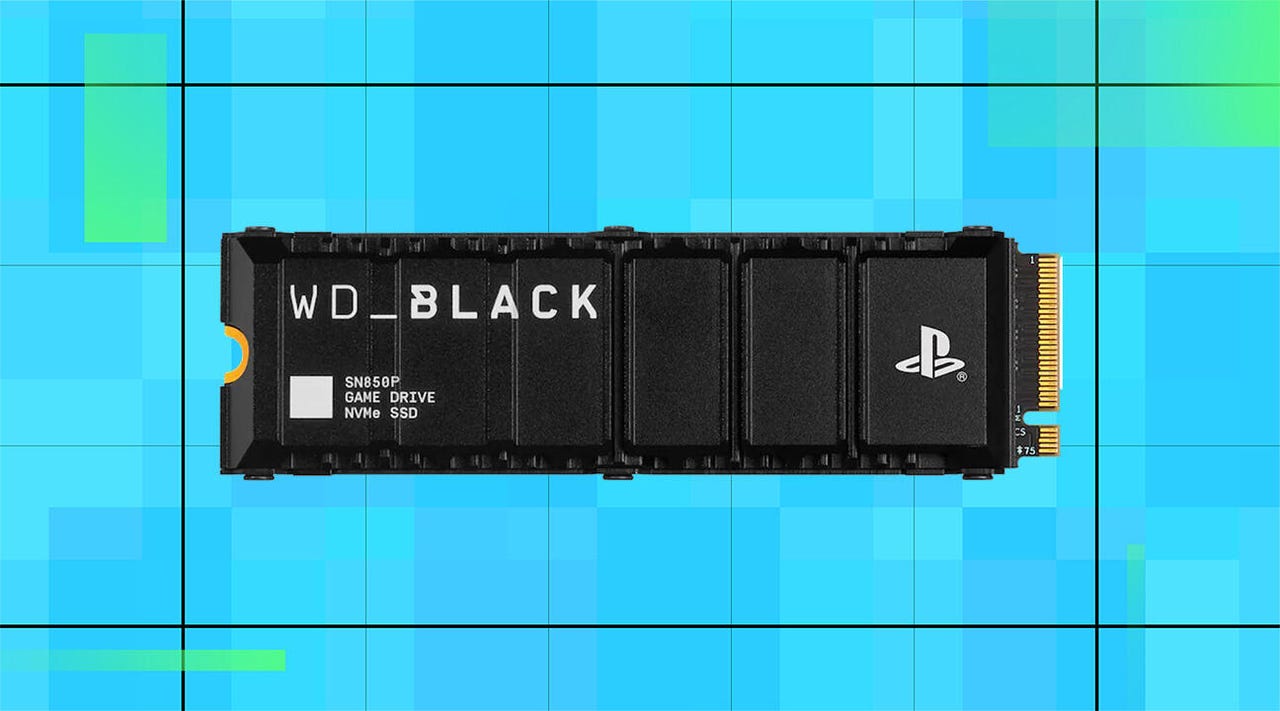
A WD Black SN850P SSD on a blue background

WD/ZDNET

High SSD prices got you down? Right now during Best Buy’s Tech Fest sale, you can save up to $2,800 on the WD Black SN850P storage drive. And while it’s officially licensed for use with PlayStation 5 consoles, it’s easy to reconfigure for use in gaming laptops and desktops for a boost in storage capacity. 

Also: The best Amazon Spring Sale deals: Save on streaming, Apple, Samsung, and more

Available in capacities from 1TB to 8TB, the WD Black SN850P can double, or even quadruple, your available storage space, giving you plenty of room for large game downloads, save files, screenshots, highlight reels, and more. With read and write speeds up to 7300 and 6600 MB/s, respectively, you’ll get much faster loading times than traditional HDDs as well as quicker access to your favorite apps, games, and programs.

Also: SSD vs HDD: What’s the difference, and which should you buy?

The integrated heatsink helps keep everything running at optimal temperatures to prevent data loss or corruption due to overheating. It can also be removed for easier installation in smaller PCs. 

By using flash memory rather than traditional mechanical platters, the WD Black SN850P can provide you with years of reliable data access with much less risk of internal damage due to shocks and bumps.

How I rated this deal 

Prices for RAM and SSD storage drives have skyrocketed as AI companies buy up available stock to power LLMs. And while this particular model is licensed for use with the PS5, you can quickly reconfigure it for use in laptops and desktop PCs. The 2TB model is marked down to $400, bringing it closer to pre-AI pricing, and the 8TB version is almost $2,800 off. While it’s still very expensive, it’s the lowest price I’ve seen on a high-end SSD in a long time. That’s why I gave this deal a 5/5 Editor’s rating.

Deals are subject to sell out or expire anytime, though ZDNET remains committed to finding, sharing, and updating the best product deals for you to score the best savings. Our team of experts regularly checks in on the deals we share to ensure they are still live and obtainable. We’re sorry if you’ve missed out on this deal, but don’t fret — we’re constantly finding new chances to save and sharing them with you at ZDNET.com


Show more

We aim to deliver the most accurate advice to help you shop smarter. ZDNET offers 33 years of experience, 30 hands-on product reviewers, and 10,000 square feet of lab space to ensure we bring you the best of tech. 

In 2025, we refined our approach to deals, developing a measurable system for sharing savings with readers like you. Our editor’s deal rating badges are affixed to most of our deal content, making it easy to interpret our expertise to help you make the best purchase decision.

At the core of this approach is a percentage-off-based system to classify savings offered on top-tech products, combined with a sliding-scale system based on our team members’ expertise and several factors like frequency, brand or product recognition, and more. The result? Hand-crafted deals chosen specifically for ZDNET readers like you, fully backed by our experts. 

Also: How we rate deals at ZDNET in 2026


Show more


Source link