Maple Grove Daily

Maple Grove Daily

Subscribe to Our Newsletter

Get our latest articles delivered straight to your inbox. No spam, we promise.


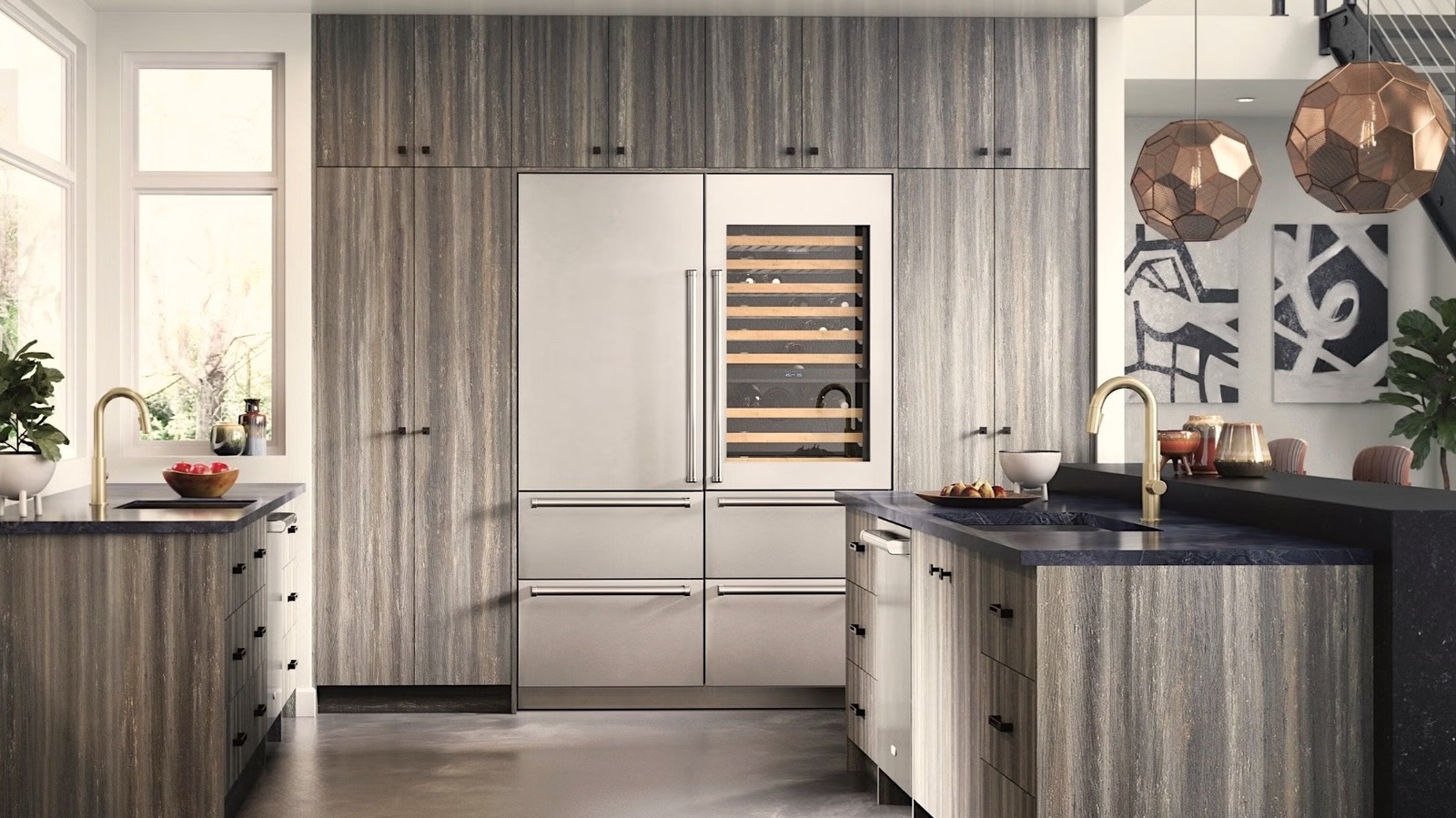
Sub-Zero is often ranked among the most respected names in the refrigerator game. The brand also ranks as one of the more innovative outfits in the consumer arena, with its design team pioneering dual refrigeration, a setup that uses separate evaporators and compressors for the refrigerator and freezer. The brand also led the custom refrigeration market in integrated coolers, which essentially turn any drawer or cabinet in your house into a cooling unit. These Consumer Reports-recommended fridges are also intuitively designed to adapt to an individual owner’s usage. 

These advancements didn’t happen overnight, of course, with the Sub-Zero company developing those game-changing features, and many more, over the course of more than eight decades in existence. The company came into being at the behest of one Westye F. Bakke, an engineer from Wisconsin who first started tinkering with refrigeration while looking for a way to properly preserve his Diabetic son’s Insulin.

Bakke also spent several years helping Frank Lloyd Wright customize refrigerators for the iconic architect’s patrons. Thus, when Bakke founded Sub-Zero Group Inc. in 1945, he sought to marry the worlds of architecture and engineering. Today, Sub-Zero is still designing refrigerators to that very end. The company is also still headquartered in Wisconsin, and yes, it is still independently owned. In fact, Sub-Zero is still run by the Bakke family, with James J. Bakke now serving as the third-generation CEO of the family-owned brand. 

Sub-Zero refrigerators are made in the USA

If you’re eyeing a Sub-Zero refrigerator for your kitchen, you should first know that they are among the more expensive you can buy in the consumer arena, with prices starting in the $9,000 range. Sub-Zero has positioned itself as a uniquely American brand since its founding. However, in today’s market, many are only willing to apply that tag to companies that aren’t just headquartered within the borders of the continental United States, but also manufacture their goods there. 

If you’re staunch in your desire for an American-made appliance, you can rest assured that the brand’s cooling devices are actually made in the USA. For that matter, the brand’s high-end appliances have always been manufactured in the States, with Sub-Zero initially setting up shop in its home state of Wisconsin. As the company’s story goes, Westye Bakke built the first Sub-Zero prototype in his own basement circa 1943. 

The company has come a long way since the days of Bakke’s basement innovations. However, many of its refrigerators are still manufactured in Wisconsin by way of Sub-Zero’s Fitchburg production facility. Apart from the Wisconsin facility, Sub-Zero also operates a manufacturing plant in Goodyear, Arizona, and in May 2026, the brand went on to open a sprawling new 600,000-square-foot facility in Cedar Rapids, Iowa. These days, Sub-Zero has also become a singular player in the luxury appliance market, claiming ownership over the Wolf range brand and high-end dishwashing outfit Cove. And yes, those brands also make their products in U.S. facilities. 


Source link


Minnesota is at a decision point and one proposal in front of us, which includes a tax on large social media platforms, raises a bigger question than it might first appear. Not just whether the policy makes fiscal sense, but whether it reflects the values that have made Minnesota a leading state in the first place.

As a pediatrician at Hennepin Healthcare, I see a consistent pattern in Minnesota’s success: that we prioritize children and families. That throughline — not any single policy — has shaped our economy, our civic life and our quality of life. The results are visible in strong health outcomes, high civic participation and a stable, high-performing economy. But those outcomes didn’t happen by accident. They reflect deliberate choices to invest in children and families.

A social media tax should be evaluated in that same context.

Large platforms generate enormous value from the attention and data of Minnesotans, including children. At the same time, families, schools and health systems are managing the downstream effects of a digital environment that is evolving faster than our ability to fully understand it. The best evidence we have continues to show that negative effects are particularly worrisome for youth mental health and well-being. For example, a recent meta-analysis published earlier this month found “digital media use is consistently linked with modest yet measurable declines in children’s mental health and development — outcomes that were most pronounced for social media.”

This creates a clear imbalance: Value is being extracted from Minnesota communities, while the costs are increasingly borne by families and public systems.

A targeted tax on the largest social media companies is one way to address that imbalance. It would raise meaningful revenue while minimizing the direct burden on working families at a time when Minnesota faces budget gaps as a result of historic federal cuts. Compared to alternatives like cutting services or raising broad-based taxes, it is a more focused and equitable approach.

But the most important question is what that revenue allows us to do.

Minnesota has a strong track record to build on. The state has enacted the most generous child tax credit in the country to help families manage rising costs. It is expanding paid family leave so parents can be present during the earliest stages of a child’s life. It has maintained investments in schools, health and community infrastructure. These are often described as economic policies, but they are more than that. They shape the day-to-day conditions in which families live and children grow roots and spread their wings. They are the reason Minnesota works.

A social media tax, like the one in the governor’s proposed supplemental budget, would create an opportunity to extend that model. The revenue could be used to protect and expand the very support that has driven the state’s success: early childhood programs, mental health services, schools and direct support to families. In other words, it would allow Minnesota to double down on the approach that has consistently delivered results.

This matters especially now. The state is facing new pressures: federal policy shifts, persistent cost burdens and growing needs. In that environment, the temptation is often to make reactive choices. But Minnesota’s strength has never come from reacting. It has come from staying grounded in a clear set of principles.

By asking the largest platforms to contribute a portion of the value they derive from Minnesota communities, and by reinvesting that revenue into the families raising the next generation, the state can stay true to what has worked.

That is the choice in front of us. Not just whether to adopt a new policy, but whether to continue the pattern of decisions that has made Minnesota a place where children, families and communities can thrive.

Michael Arenson is a pediatrician at Hennepin Healthcare and principal investigator at Children’s HealthWatch.


Source link

Recent Reviews