Sony Dev Says This Is The Console Coming For Playstation


We don’t really know anything concrete about PlayStation 6 just yet (it’s not even official at the time of writing), but you can be sure it’ll face considerable competition when it finally drops. That competition, however, may not be spearheaded by one of Sony’s traditional industry rivals. 

According to Peter Dalton of Bluepoint Games, a subsidiary of PlayStation Studios, which is sadly closing its doors in March 2026, it’s a historically very different gaming heavyweight that Sony really needs to fear: Valve. Steam is one of the biggest names in the medium, powering an immense storefront that’s essentially a one-stop shop for many customers’ gaming needs. According to Dalton, a system such as the Steam machine could herald a paradigm shift in the industry. He noted in a post on X, “If Valve releases a new Steam console that provides a console-like experience while still giving players access to the entire PC game library, that could become a very compelling option.” 

The resulting blend of “console simplicity with the full breadth of PC gaming,” Dalton goes on, could be a very potent one-two punch. It’s certainly possible that this could be a major threat to Sony, perhaps more so than Microsoft’s Xbox family or Nintendo’s Switch and Switch 2. However, some important factors could limit its reach.

Steam Machine poses a potent new threat, with some caveats

The Steam Machine is a system with set specs out of the box, and with 16GB of DDR5 RAM, 8 GB GDDR6 VRAM, and a 4.8GHz CPU (AMD Zen 4), Digital Foundry‘s first conclusion was that it would offer “performance at some mid-way point between Xbox Series S and the standard PlayStation 5.” 

Unfortunately, tied into that, potential leaks about the Steam Machine’s price back in January 2026 suggest it could be pricier than we’d hoped. Here, then, are two significant potential barriers to a Valve console/PC hybrid taking off to the extent it could: Its all-important price, which has yet to be officially confirmed for the Steam Machine at the time of writing, and the fact that its specs are so comparable to both Sony and Microsoft’s existing systems. On top of that, of course, the PlayStation brand has generations of successful consoles behind it, and the latest is available from other retailers, while the Steam Machine may only be available from Valve itself. Loyalty to a brand is a powerful force.

At the same time, it’s about establishing a foothold in a space dominated by more traditional consoles. A Valve device, fully integrated with the Steam ecosystem, gives access to an enormous library of games (there are more than 125,000 games on Steam as of early 2026, according to SteamDB) in a potentially more user-friendly package.  This new iteration of a Steam Machine has potential, building on what the Steam Deck achieved. While you might want to consider building your own Steam Machine alternative and saving some money, it’s also worth keeping an eye on what Valve is cooking up.


Source link

Leave a Reply

Subscribe to Our Newsletter

Get our latest articles delivered straight to your inbox. No spam, we promise.

Recent Reviews


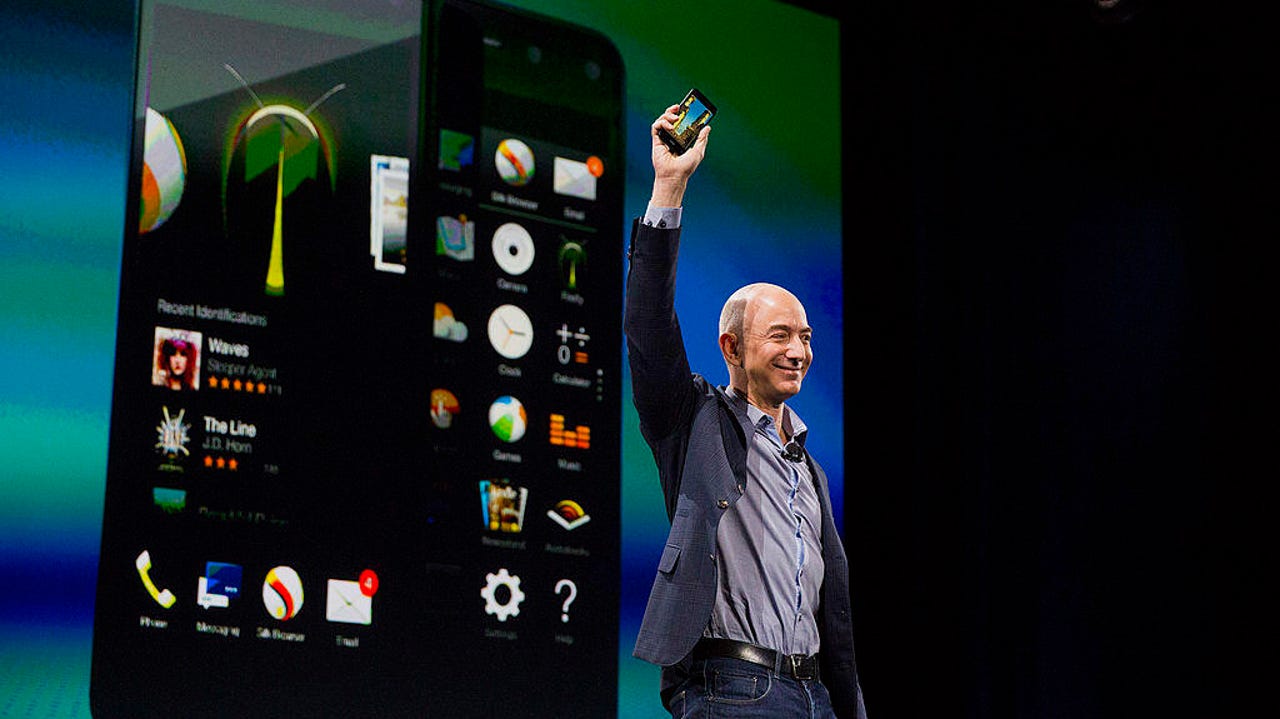
Amazon Fire Phone Jeff Bezos

Bloomberg / Getty Images

Follow ZDNET: Add us as a preferred source on Google.


ZDNET’s key takeaways

  • Amazon is reportedly developing a new Fire Phone.
  • The previous model had several issues, including an inferior app store experience.
  • Under new supervision (and with more experience), Amazon can do better this time.

Well, I don’t know about you, but I certainly didn’t have “new Amazon smartphone” on my 2026 bingo card. As it turns out, according to Reuters, the retailer may be developing a new smartphone, internally known as “Transformer.” 

Those familiar with the industry will instantly draw parallels to Amazon’s previous smartphone effort, the Fire Phone from 2014. Appropriately, that phone ended up as part of a fire sale about a year later.

Now, in 2026, with no fewer than five phone brands in the US — Apple, Samsung, Google, Motorola, and OnePlus — Amazon faces a lot of competition. In fairness, it also has two fewer platforms to compete against. In 2014, Windows Phone and BlackBerry were still very much part of the smartphone conversation; these days, not so much.

The AppStore problem

But there’s one mistake Amazon made in its first effort that will absolutely torpedo its chances at succeeding — the Amazon AppStore and specifically the decision to forego Google Play services. Google is simply too valuable in too many lives to not support the platform. Oh, and the Amazon AppStore is terrible.

Also: What’s right (and wrong) with the Amazon Fire Phone

It has admittedly been a few years since I last inventoried the Amazon AppStore, but when I last checked, the Amazon AppStore was a wasteland of half-supported or unsupported apps, with two notable exceptions. Finance, home control, and communication apps were either absent or had not received updates for years prior.

The only apps in the Amazon AppStore that remained up to date were productivity apps (largely powered by Microsoft) and streaming apps. Those two categories work very well on the cheap, underpowered hardware that Amazon usually launches, and that’s fine. A coffee-table tablet is a nice thing to have lying around.

A spark of hope

Amazon Fire Phone

Liam Tung/ZDNET

But a phone is another animal entirely. If a tablet is a device to entertain, a phone is a device for everything else. One of the key reasons Windows Phone failed was its lack of an app ecosystem. The Senior Vice President of Devices and Services,  Panos Panay, is very familiar with that saga, so I’m hopeful that he will make the same arguments to the powers that be at Amazon. 

Honestly, if there is anyone who I think can pull off an Amazon phone revival, it’s probably Panay, who understands design and product development better than most, and to be perfectly honest, he’s my absolute favorite product presenter.

Also: Amazon Fire Phone review: Not a great smartphone

Of course, all of this is early days. This phone is being worked on internally, and even Reuters reports that it could get the axe long before it sees the light of day. Personally, I’m intrigued by the idea, but I sincerely hope that Amazon doesn’t make this the shopping phone it tried to build in 2014. 

If Amazon just wants to make a nice, well-built smartphone, with a skin that pushes Amazon content to the fore, I’m fine with that. But leaving Google behind is a mistake that Amazon cannot afford to make again. Fool me once, and all that.

So, if this phone is to have a chance at success, it needs to embrace Google services so it can be a phone that everyone can use. Amazon has the brand power to make a phone like this work, even up against juggernauts like Apple and Samsung, but it needs to approach this correctly, lest it end up in yet another Fire phone fire sale.


Source link