
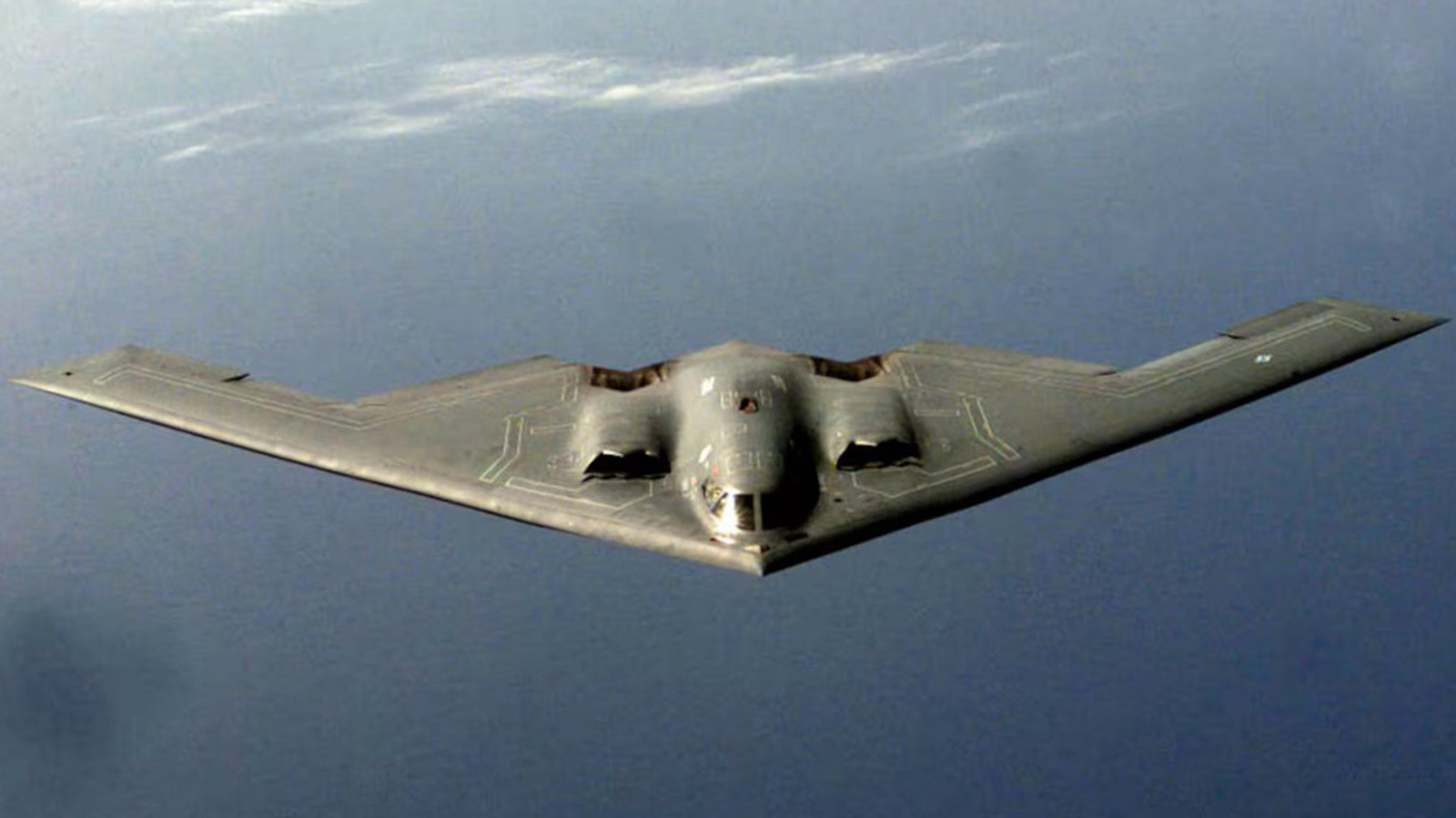

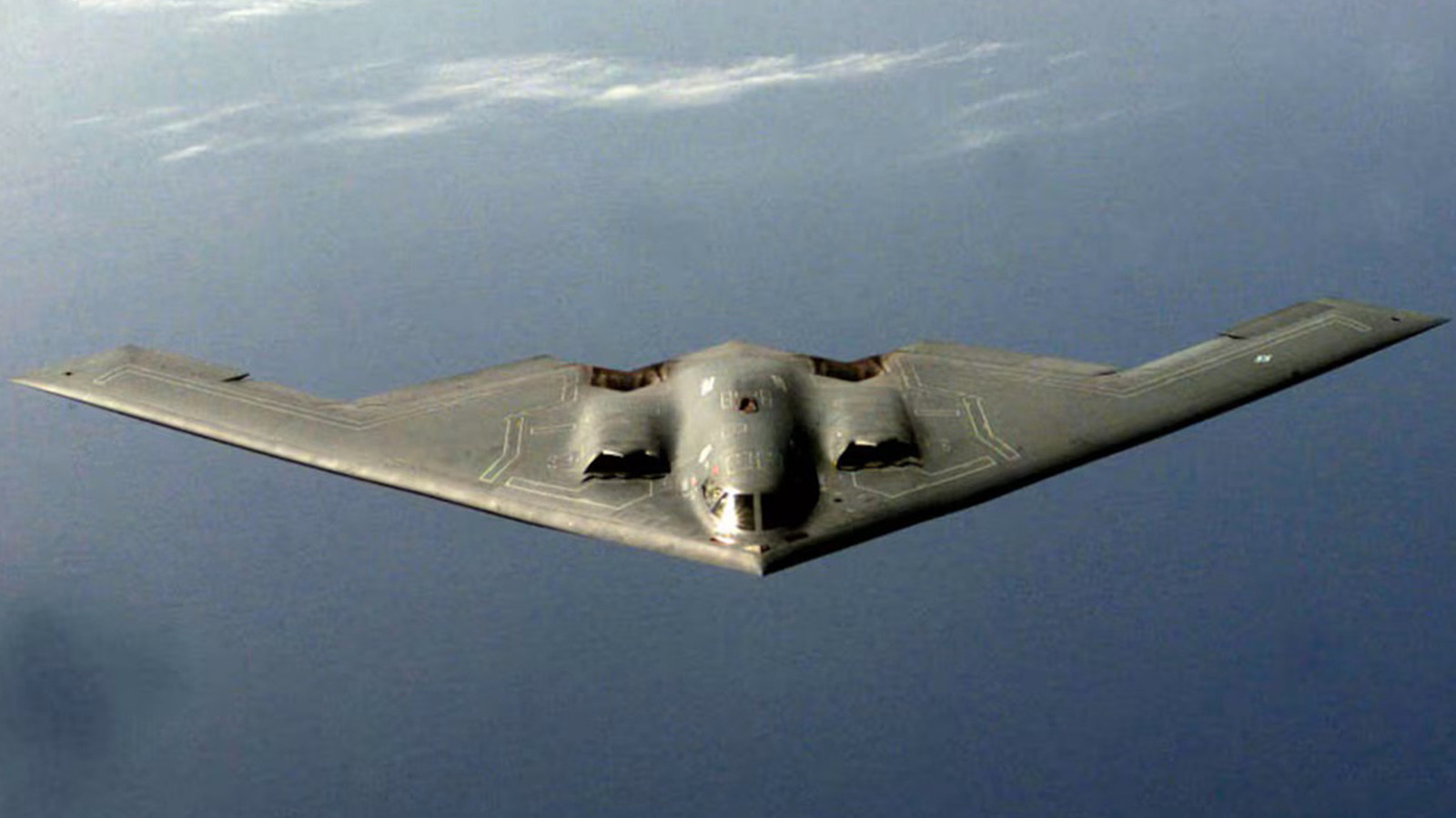
US Air Force (USAF) B-2 Spirit stealth bombers recently trained alongside US Navy jet fighters in a maritime strike exercise conducted off the coast of California. The drill brought together aircraft from Carrier Air Wing 11 — the aviation element assigned to the USS Theodore Roosevelt (one of the oldest aircraft carriers still in service) — and at least one B-2 bomber from the USAF’s 509th Bomb Wing based at Whiteman Air Force Base in Missouri. While the USAF publicly announced the exercise, officials didn’t specify exactly when the exercise took place.
The drill was focused on integrated maritime strike operations — a mission that involves coordinating multiple aircraft types to engage seaborne targets. It was a mission that also introduced the $2 billion Spirit bomber to the Navy’s new AIM-174B “Gunslinger” missile — an air-launched weapon based on the service’s SM-6 interceptor. The Gunslingers were loaded on two of the participating Navy F/A-18E/F Super Hornets.
The exercise in itself is not unusual; the Navy and USAF regularly conduct such exercises. However, this one drew attention because it highlighted both the introduction of the AIM-174B and the evolving role of strategic bombers like the B-2 in maritime strike scenarios.
Essentially, this sort of exercise is designed to give military planners an opportunity to test how long-range weapons, stealth aircraft, and naval aviation resources can operate together in complex missions designed to better defend US assets.
Meet the Gunslinger
The AIM-174B “Gunslinger” was not developed from scratch. Rather, it traces its roots back to the Navy’s Standard Missile-6 (SM-6). Developed by Raytheon, the SM-6 is something of a multitool in the missile world. Originally designed for launch from Aegis-equipped warships, it can be used for anti-air warfare, ballistic missile defense, and against sea and ground targets at long ranges (thought to be about 230 miles).
Essentially, the Gunslinger is the same missile as the SM-6 but adapted for air launch. Officially, it’s known as the SM-6 AIM-174B Air Launch Capability; the system is designed to pair with the F-18 Super Hornet, which remains one of the fastest US fighter jets in service today. This combination gives the Navy’s carrier-based fighters access to a much longer-range missile than traditional air-to-air missiles.
Physically, the weapon is larger than many air-to-air missiles, stretching to more than 15 feet in length and weighing close to a ton. This is what allows it to carry both a larger propulsion system and a larger warhead. The result is a new weapon in the Navy’s armory that allows its jet fighters to engage threats at far greater distances.
Why the B-2 is showing up in naval warfare exercises
At first glance, the partnership between Naval assets and the B-2 Spirit might seem like a strange one. After all, the B-2 is more widely known as a platform for delivering precision weapons against land targets, sometimes flying on missions that can last for over 30 hours. However, what this exercise shows is how the US military is increasingly exploring a changing role for the aircraft and how it can be used to target ships.
One area of development is the USAF’s QUICKSINK program (the clue is in the name). This program converts existing weapons platforms into guided anti-ship weapons capable of striking moving targets. Instead of using more expensive purpose-built anti-ship missiles, the concept allows aircraft to use modified munitions equipped with guidance systems to target and sink enemy ships. This approach allows a lower-cost way to expand the military’s anti-ship arsenal, without building advanced missile systems.
This isn’t the first involvement the B-2 has had with the program. In September 2025, a B-2 bomber from Whiteman Air Force Base joined Norwegian F-35 fighters during an exercise in the North Atlantic. The exercise included a maritime strike using a QUIKSINK weapon.

Stephan is the sports journalist for the Maple Grove Report.



