Why EV Owners May End Up Paying More In Federal Taxes Than Gas Drivers


Electric vehicle owners could face an additional fee if a new federal proposal from the House Transportation Infrastructure Committee is approved. Lawmakers are getting ready to propose a bill that potentially includes a $250 annual fee for EVs and a $100 annual fee for hybrids, while a separate proposal from a group of Republican senators recently pushed for a one-time $1,000 fee for all EVs. This is the second time that Republican Chair Sam Graves has attempted to tax EVs. 

The EV fees are meant to fund $500 billion-plus in infrastructure initiatives, like repairing roads and bridges. In the past, infrastructure spending was largely financed through taxes on gasoline and diesel, but as more Americans switch to electric vehicles, this revenue stream has declined. Lawmakers are hoping that taxing EVs will make up for the loss of infrastructure revenue. Their argument? EVs also use the roads — and they are heavier, causing more wear — so they should still pay some taxes toward infrastructure as well. 

However, the proposed $250 EV fee is nearly triple the $88 average fuel taxes received from gas car owners, and even the $100 hybrid fee exceeds it. This is probably because the federal gas tax hasn’t been increased since 1993. Consumer Reports’ Head of Sustainability Advocacy Chris Harto stated: “EV drivers should pay into the road funding system, but taxes on EV drivers alone — no matter how excessive — won’t solve the larger problem of transportation funding shortfalls.” 

Ongoing EV fees across the United States feel unfair to owners
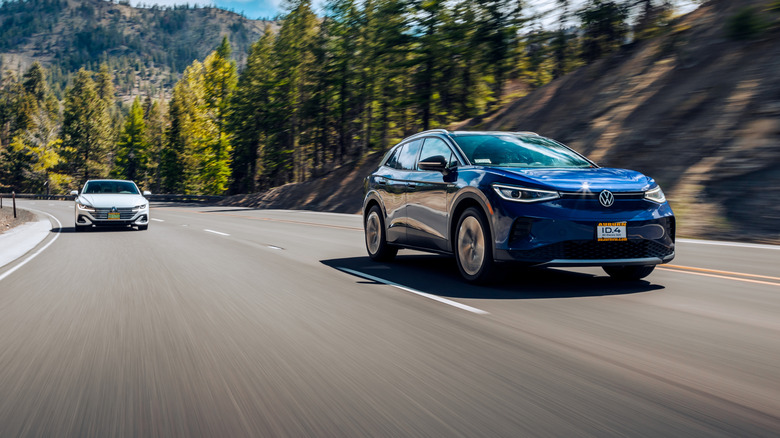
The proposed annual EV tax has raised concerns among EV owners, as many already pay taxes on hybrid or electric vehicles. There are currently 40 states that charge an additional registration fee for EVs. Similar to the federal proposal, this additional fee is intended to make up for states’ lost fuel tax revenue, but it can feel unfair to EV owners. In New Jersey, for example, EVs have a $250 annual fee that increases by $10 per year until it reaches $290 in 2028. Texas charges a $400 registration fee for new EVs, followed by a $200 annual fee. 

A vehicle miles traveled (VMT) tax has been seen as a more reasonable alternative. Currently, Oregon has implemented the “OReGO” program, which charges EV drivers 2.3 cents per mile. Utah and Hawaii have similar usage-based programs that serve as a fairer alternative to flat annual registration fees. California is also thinking about implementing a “road charge.” 

The flat fees from the federal government and state have not felt fair, and maybe even hostile. With the federal tax credit removed and the Trump Administration halting a clean energy program aimed at building more charging infrastructure — and even Maryland charging existing EV charging stations — the ongoing attempts to add additional taxes to EV ownership feel like a bit more of a message than a way to fix the roads. 


Source link

Leave a Reply

Subscribe to Our Newsletter

Get our latest articles delivered straight to your inbox. No spam, we promise.

Recent Reviews


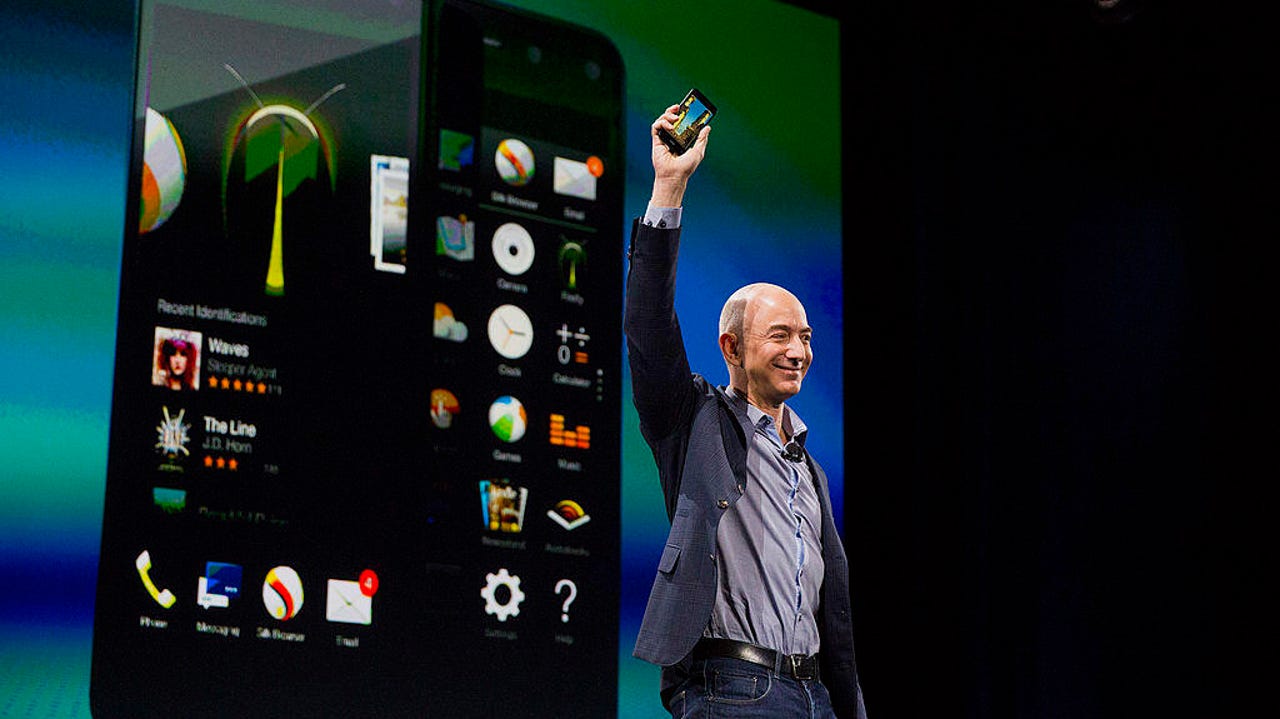
Amazon Fire Phone Jeff Bezos

Bloomberg / Getty Images

Follow ZDNET: Add us as a preferred source on Google.


ZDNET’s key takeaways

  • Amazon is reportedly developing a new Fire Phone.
  • The previous model had several issues, including an inferior app store experience.
  • Under new supervision (and with more experience), Amazon can do better this time.

Well, I don’t know about you, but I certainly didn’t have “new Amazon smartphone” on my 2026 bingo card. As it turns out, according to Reuters, the retailer may be developing a new smartphone, internally known as “Transformer.” 

Those familiar with the industry will instantly draw parallels to Amazon’s previous smartphone effort, the Fire Phone from 2014. Appropriately, that phone ended up as part of a fire sale about a year later.

Now, in 2026, with no fewer than five phone brands in the US — Apple, Samsung, Google, Motorola, and OnePlus — Amazon faces a lot of competition. In fairness, it also has two fewer platforms to compete against. In 2014, Windows Phone and BlackBerry were still very much part of the smartphone conversation; these days, not so much.

The AppStore problem

But there’s one mistake Amazon made in its first effort that will absolutely torpedo its chances at succeeding — the Amazon AppStore and specifically the decision to forego Google Play services. Google is simply too valuable in too many lives to not support the platform. Oh, and the Amazon AppStore is terrible.

Also: What’s right (and wrong) with the Amazon Fire Phone

It has admittedly been a few years since I last inventoried the Amazon AppStore, but when I last checked, the Amazon AppStore was a wasteland of half-supported or unsupported apps, with two notable exceptions. Finance, home control, and communication apps were either absent or had not received updates for years prior.

The only apps in the Amazon AppStore that remained up to date were productivity apps (largely powered by Microsoft) and streaming apps. Those two categories work very well on the cheap, underpowered hardware that Amazon usually launches, and that’s fine. A coffee-table tablet is a nice thing to have lying around.

A spark of hope

Amazon Fire Phone

Liam Tung/ZDNET

But a phone is another animal entirely. If a tablet is a device to entertain, a phone is a device for everything else. One of the key reasons Windows Phone failed was its lack of an app ecosystem. The Senior Vice President of Devices and Services,  Panos Panay, is very familiar with that saga, so I’m hopeful that he will make the same arguments to the powers that be at Amazon. 

Honestly, if there is anyone who I think can pull off an Amazon phone revival, it’s probably Panay, who understands design and product development better than most, and to be perfectly honest, he’s my absolute favorite product presenter.

Also: Amazon Fire Phone review: Not a great smartphone

Of course, all of this is early days. This phone is being worked on internally, and even Reuters reports that it could get the axe long before it sees the light of day. Personally, I’m intrigued by the idea, but I sincerely hope that Amazon doesn’t make this the shopping phone it tried to build in 2014. 

If Amazon just wants to make a nice, well-built smartphone, with a skin that pushes Amazon content to the fore, I’m fine with that. But leaving Google behind is a mistake that Amazon cannot afford to make again. Fool me once, and all that.

So, if this phone is to have a chance at success, it needs to embrace Google services so it can be a phone that everyone can use. Amazon has the brand power to make a phone like this work, even up against juggernauts like Apple and Samsung, but it needs to approach this correctly, lest it end up in yet another Fire phone fire sale.


Source link