Foldable Smartphone Shipments Grew 28% in 2025, Even Without Apple


Foldable phones are picking up steam, at least in North America, according to new data from Counterpoint Research. In 2025, shipments of foldable smartphones in the region grew 28% year over year, and they’re expected to grow by more than 20% annually in 2026.

The rise in foldable phone shipments last year was largely driven by “intensifying competition and broader product availability” from key manufacturers, Counterpoint Research said in a release. “In 2025, more competitive pricing, stronger carrier promotions and improved retail visibility helped expand the addressable market beyond early adopters.”

Despite their growing popularity, foldable phones remain a niche segment of the smartphone industry. Their novel design can be alluring to tech enthusiasts or anyone who’s tired of boring slab phones, but it can also be a hindrance to people who want something predictable and straightforward. 

Prices can also be prohibitive, with phones like the book-style Samsung Galaxy Z Fold 7 starting at $2,000 (not to mention the $3,000 Galaxy Z TriFold). But with a growing range of options at various prices, a larger pool of people may be tempted to dip their toes in foldable waters. 

There’s one key player many foldable phone enthusiasts are waiting for with bated breath: Apple. Rumors suggest the company could debut a foldable iPhone later this year, after years of speculation. Apple’s entry could help to further legitimize a niche category by giving buyers — specifically, brand loyalists — more reasons to opt for a foldable device. 

See also: MWC Is Where Cutting-Edge Phones Shine. Too Bad You’ll Probably Never Buy Them

A competitive foldable market

According to Counterpoint Research, Motorola had the highest growth among major phone manufacturers, capturing 44% of the market. The Motorola Razr, with its retro clamshell design, is a popular choice among buyers looking to tap into nostalgia while still enjoying the latest smartphone technology. It also helps that the Razr comes in various pricing tiers, from the $700 baseline Razr to the $1,000 Razr Plus and the $1,300 Razr Ultra. The range of fun colors and finishes doesn’t hurt, either.  

Google also saw significant growth last year, expanding 52% year over year, according to the report. The release of the Pixel 10 Pro Fold in October played a key role in Google “reinforcing its positioning in the book-type segment,” Counterpoint Research says. 

unnamed.png

Samsung still dominates foldable phone shipments, but competition is ramping up.

Counterpoint Foldable Smartphone Market Tracker, Feb 2026

Samsung is still king, with a 51% share of foldable smartphone shipments in North America last year. As competition heats up, its share dropped slightly compared to previous years. 

Samsung is also the leader in the book-style segment. However, its clamshell Z Flip phones are facing growing pressure from Motorola’s devices. And as Motorola gears up to launch its book-style Razr Fold this summer, Samsung could have its work cut out for it in that segment, too.

According to Gerrit Schneemann, principal analyst at Counterpoint Research, Motorola’s rapid rise and Google’s expansion are balancing out the foldable smartphone landscape. “The North American foldables market is transitioning from a single-player-dominated market to a more competitive one,” Schneemann said in a statement


Source link

Leave a Reply

Subscribe to Our Newsletter

Get our latest articles delivered straight to your inbox. No spam, we promise.

Recent Reviews


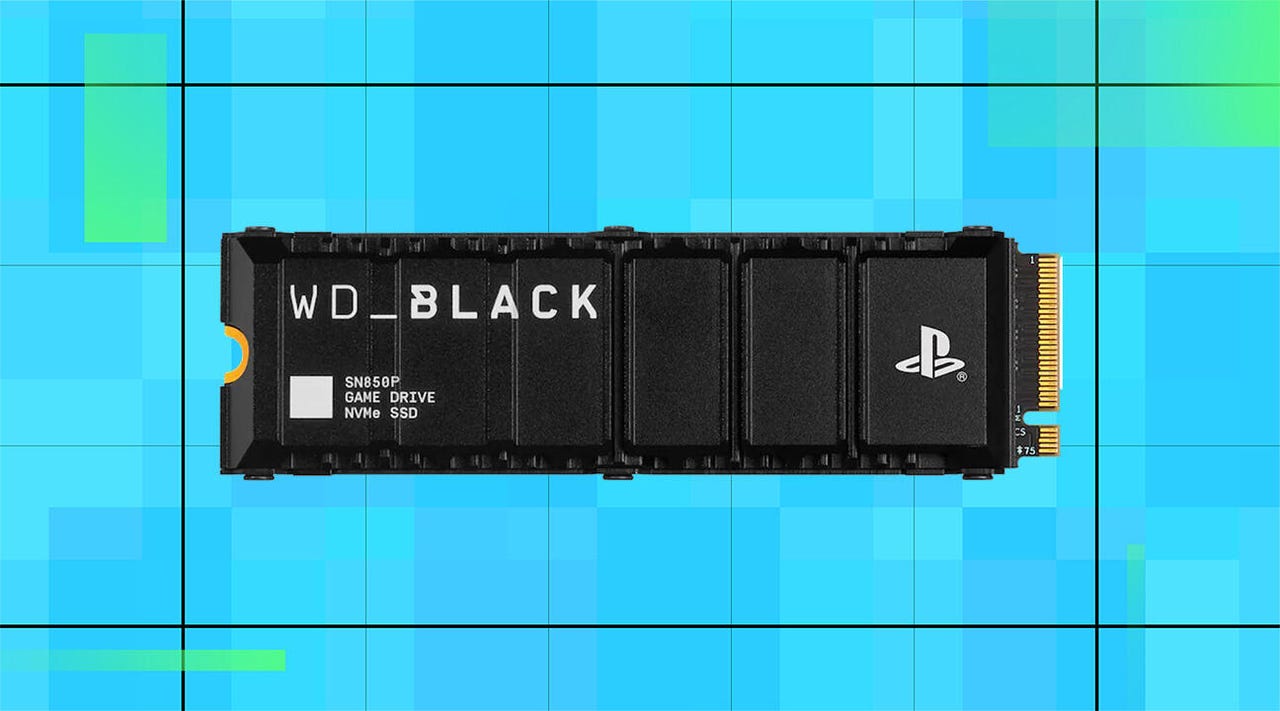
A WD Black SN850P SSD on a blue background

WD/ZDNET

High SSD prices got you down? Right now during Best Buy’s Tech Fest sale, you can save up to $2,800 on the WD Black SN850P storage drive. And while it’s officially licensed for use with PlayStation 5 consoles, it’s easy to reconfigure for use in gaming laptops and desktops for a boost in storage capacity. 

Also: The best Amazon Spring Sale deals: Save on streaming, Apple, Samsung, and more

Available in capacities from 1TB to 8TB, the WD Black SN850P can double, or even quadruple, your available storage space, giving you plenty of room for large game downloads, save files, screenshots, highlight reels, and more. With read and write speeds up to 7300 and 6600 MB/s, respectively, you’ll get much faster loading times than traditional HDDs as well as quicker access to your favorite apps, games, and programs.

Also: SSD vs HDD: What’s the difference, and which should you buy?

The integrated heatsink helps keep everything running at optimal temperatures to prevent data loss or corruption due to overheating. It can also be removed for easier installation in smaller PCs. 

By using flash memory rather than traditional mechanical platters, the WD Black SN850P can provide you with years of reliable data access with much less risk of internal damage due to shocks and bumps.

How I rated this deal 

Prices for RAM and SSD storage drives have skyrocketed as AI companies buy up available stock to power LLMs. And while this particular model is licensed for use with the PS5, you can quickly reconfigure it for use in laptops and desktop PCs. The 2TB model is marked down to $400, bringing it closer to pre-AI pricing, and the 8TB version is almost $2,800 off. While it’s still very expensive, it’s the lowest price I’ve seen on a high-end SSD in a long time. That’s why I gave this deal a 5/5 Editor’s rating.

Deals are subject to sell out or expire anytime, though ZDNET remains committed to finding, sharing, and updating the best product deals for you to score the best savings. Our team of experts regularly checks in on the deals we share to ensure they are still live and obtainable. We’re sorry if you’ve missed out on this deal, but don’t fret — we’re constantly finding new chances to save and sharing them with you at ZDNET.com


Show more

We aim to deliver the most accurate advice to help you shop smarter. ZDNET offers 33 years of experience, 30 hands-on product reviewers, and 10,000 square feet of lab space to ensure we bring you the best of tech. 

In 2025, we refined our approach to deals, developing a measurable system for sharing savings with readers like you. Our editor’s deal rating badges are affixed to most of our deal content, making it easy to interpret our expertise to help you make the best purchase decision.

At the core of this approach is a percentage-off-based system to classify savings offered on top-tech products, combined with a sliding-scale system based on our team members’ expertise and several factors like frequency, brand or product recognition, and more. The result? Hand-crafted deals chosen specifically for ZDNET readers like you, fully backed by our experts. 

Also: How we rate deals at ZDNET in 2026


Show more


Source link