Chef Jean-Louis Angulo Appointed Head Chef at La Maison 1888


Danang, Vietnam – InterContinental Danang Sun Peninsula Resort, a five-star retreat set within 39 hectares of lush jungle on the Son Tra Peninsula, is pleased to announce Jean-Louis Angulo as the new Chef de Cuisine of La Maison 1888. This appointment continues the restaurant’s legacy of culinary excellence, making it the only fine dining establishment in Central Vietnam to hold a MICHELIN Star.

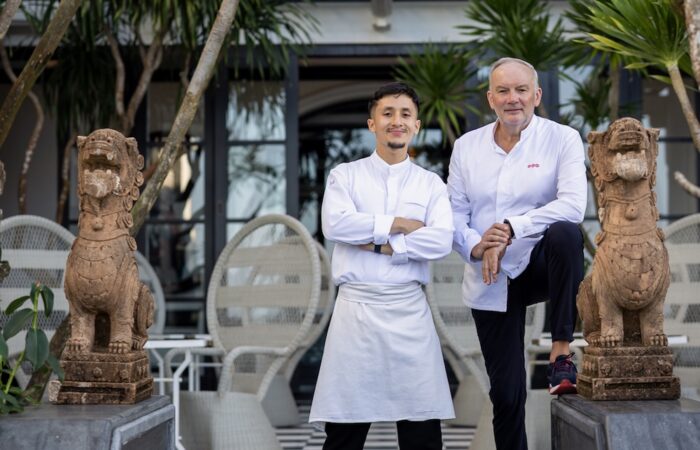
Chef Jean-Louis Angulo (right), the newly-appointed Chef de Cuisine of La Maison 1888, alongside culinary icon Chef Christian Le Squer (left), who oversees this highly acclaimed fine dining destination at InterContinental Danang

Chef Jean-Louis Angulo (right), the newly-appointed Chef de Cuisine of La Maison 1888, alongside culinary icon Chef Christian Le Squer (left), who oversees this highly acclaimed fine dining destination at InterContinental Danang

Chef Jean-Louis, previously the restaurant’s Sous Chef, has a rich background in culinary arts. Originally from France with Peruvian roots, he grew up traveling between Europe and South America, enriching his cultural and culinary outlook.

Having trained in Paris, his career has been influenced by MICHELIN-starred restaurants, including Gordon Ramsay au Trianon in Versailles, L’Espadon at the Ritz Paris, and Le Cinq at the Four Seasons Hotel George V Paris. His skills were refined under Chef Christian Le Squer, a leading figure in French fine dining and former global “Chef of the Year,” now managing La Maison 1888.

Chef Jean-Louis made a notable impression on the notoriously precise Chef Christian, leading to his appointment as Sous Chef at La Maison 1888, a role he has maintained for two years. Now, as Chef de Cuisine, he will oversee the restaurant’s culinary activities, manage a team of skilled professionals, and realize Chef Christian’s unique “haute couture” culinary style.

Regarding this appointment, Christian Le Squer stated: “Jean-Louis has developed over the years within our realm of precision and excellence. I am completely confident in his technical skills, his authentic flavors, and his capacity to lead La Maison 1888 with both discipline and foresight.”

La Maison 1888 is housed in a French Indochine-style mansion featuring eye-catching, design-focused interiors. It offers three private dining rooms and La Veranda, a sophisticated outdoor terrace that provides views of the forest and ocean.

Seif Hamdy, General Manager of InterContinental Danang, who jointly announced this important promotion, added: “With Jean-Louis stepping forward, we are proud to ensure continuity at the highest level while elevating the experience even further, giving our guests the assurance of MICHELIN distinction today and the promise of an exciting new chapter ahead.”

La Maison 1888 is situated in an elegant French Indochine-style mansion designed by Bill Bensley, overlooking the ocean. It was Vietnam’s first dining venue to be led by a MICHELIN three-star chef: initially Michel Roux, then Pierre Gagnaire, and currently the renowned Christian Le Squer. Under Chef Christian’s leadership, who maintained three MICHELIN stars for 23 years, the restaurant offers artistic cuisine that blends emotion with sophistication, with each dish showcasing his passion for expanding the limits of flavor.

As Chef de Cuisine, Chef Jean-Louis will be supported by a skilled team of Vietnamese and international chefs. He will also collaborate closely with Head Sommelier Amedeo Bellini and Assistant Sommelier Toan Nguyen, who manage the restaurant’s acclaimed wine cellar.

La Maison 1888 boasts a wine cellar with some of Vietnam's rarest labels, carefully hand-selected by expert sommeliers. It has consistently received Wine Spectator’s “Best of Award of Excellence” every year since 2018.
La Maison 1888 boasts a wine cellar with some of Vietnam’s rarest labels, carefully hand-selected by expert sommeliers. It has consistently received Wine Spectator’s “Best of Award of Excellence” every year since 2018.

To learn more or to reserve your dining experience at InterContinental Danang Sun Peninsula Resort, please email dining.icdanang@ihg.com, call +84 236 393 8888 (ext. 6328), or visit www.danang.intercontinental.com/dining.

Da Nang Travel Tour Packages You Should Try

Follow and subscribe to OutofTownBlog.com on FacebookTwitterInstagramPinterest, and YouTube for more Travel-related updates.

Read:


Source link

Leave a Reply

Subscribe to Our Newsletter

Get our latest articles delivered straight to your inbox. No spam, we promise.

Recent Reviews


In the ever-shifting geopolitical sphere, China’s growing military presence and the ongoing tensions over Taiwan and the South China Sea continue to be a closely watched topic — particularly in regard to China’s ambition for naval power. In recent years, much speculation has been made over the country’s rapid military development, including the capabilities of the newest Chinese amphibious assault ships.

While there’s no denying its military advancements and buildup, much has been made about the logistical and military difficulties that China’s People’s Liberation Army (PLA) would face if it launched an amphibious invasion of Taiwan. However, there’s growing concern that if a Taiwan invasion were to happen, it wouldn’t just be military vessels taking part in the action, but a fleet of commercial vessels, too — including a massive new car ferries that could quickly be repurposed into valuable military transports.

While the possibility of the PLA using commercial vessels for military operations has always been on the table for a potential Taiwan invasion, the scale with which China has been expanding its commercial shipbuilding industry has become a big factor in the PLA’s projection of logistical and military power across the Taiwan Strait. It’s also raised ethical concerns over the idea of putting merchant-marked ships into combat use.

From car ferry to military transport

The rapid growth of modern Chinese industrial capacity is well known, with Chinese electric vehicle factories now able to build a new car every 60 seconds. Likewise, China has developed a massive shipbuilding industry over the last 25 years, with the country now making up more than half of the world’s shipbuilding output. It’s from those two sectors where China’s latest vehicle-carrying super vessels are emerging. 

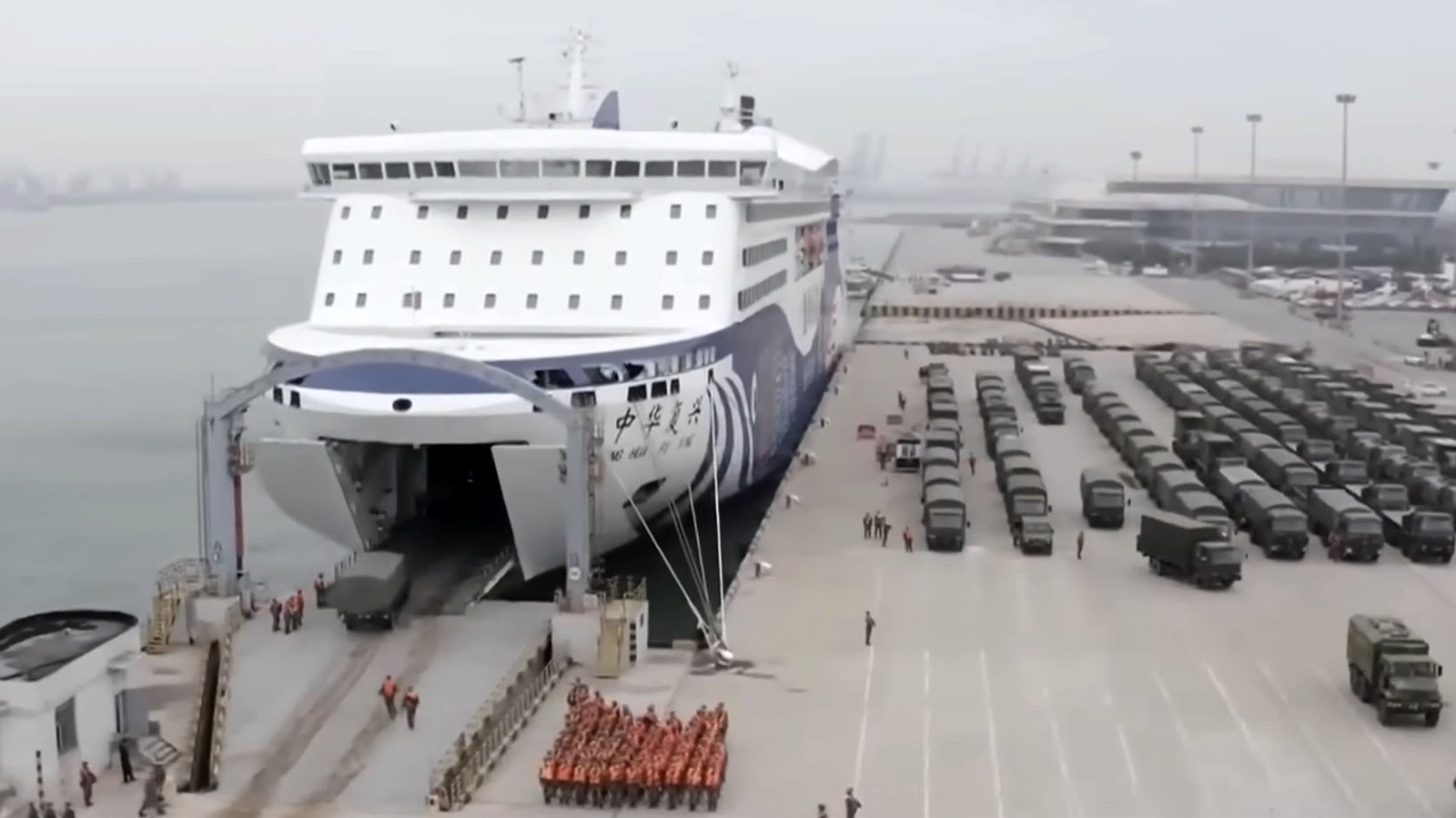
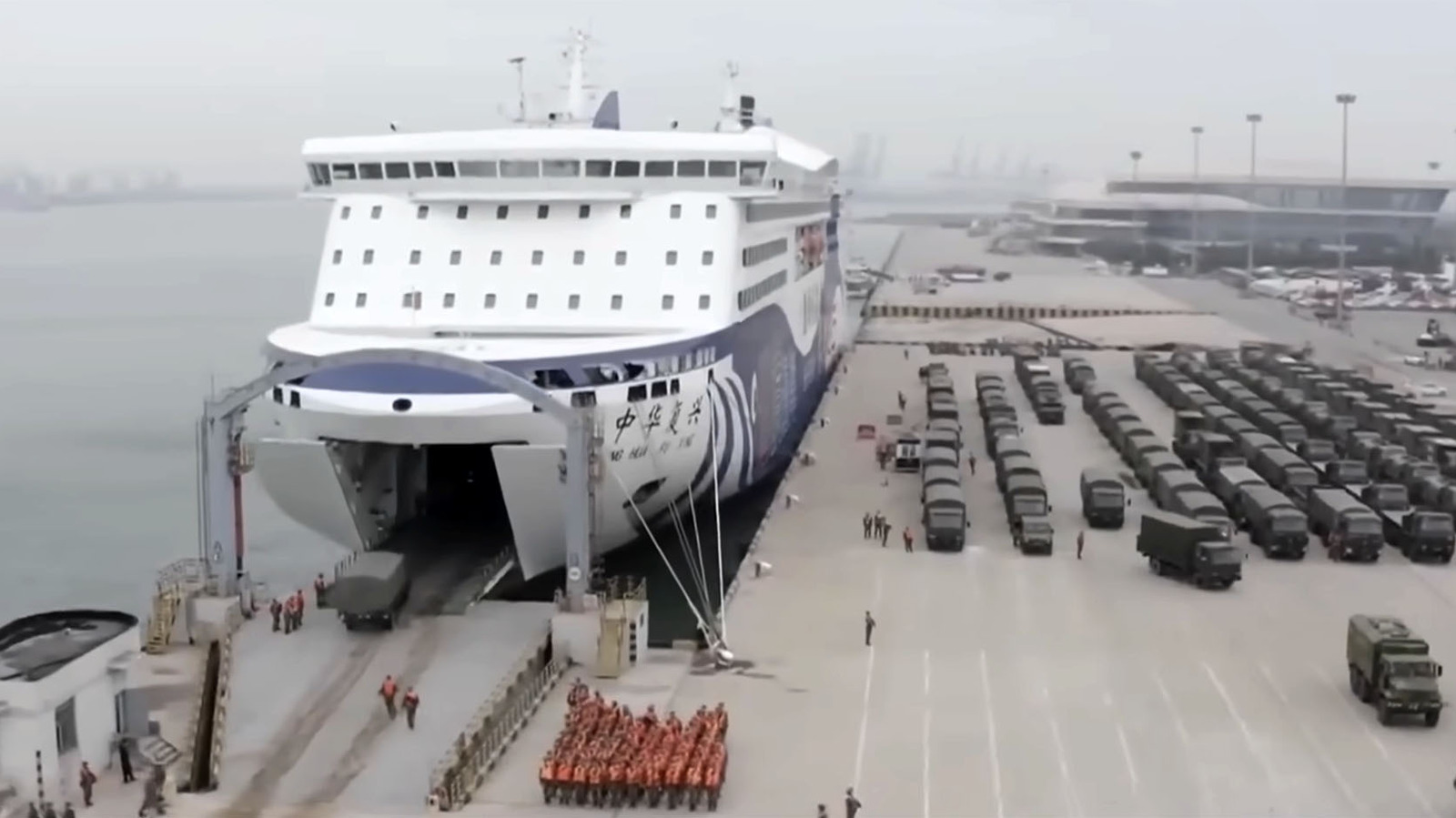
With a capacity to carry over 10,000 new vehicles for transport from factories in Asia to destinations around the world, these ships, known as roll-on/roll-off (Ro-Ro) ferries, are now the biggest of their type in the world. The concept of the PLA putting civilian ferries into military use is not a new one, or even an idea China is trying to hide. Back in 2021, China held a public military exercise where a civilian ferry was used to transport both troops and a whole arsenal of military vehicles, including main battle tanks.

The relatively limited conventional naval lift capacity of the PLA is something that’s been pointed out while game-planning a Chinese amphibious move on Taiwan, and it’s widely expected that the PLA would lean on repurposed civilian vessels to boost its ability to move soldiers and vehicles across the Taiwan Strait. With these newer, high-capacity Ro-Ro ferries added to the fleet, the PLA’s amphibious capacity and reach could grow significantly.

A makeshift amphibious assault ship

However, even with the added capacity of these massive ferries, military analysts have pointed out that Ro-Ro ships would not be able to deploy vehicles and soliders directly onto a beach the way a purpose-built military amphibious assault ship can. Traditionally, to deploy vehicles from these ships, the PLA would first need to capture and then repurpose Taiwan’s existing commercial port facilities into unloading bases for military vehicles and equipment.

However, maybe most alarming is that satellite imagery and U.S. Intelligence reports show that, along with increasing ferry production output, the PLA is also working on a system of barges and floating dock structures to help turn these civilian ferries into more efficient military transports. With this supporting equipment in place, ferries may not need to use existing port infrastructure to bring their equipment on shore.

Beyond the general military concern over China’s growing amphibious capability, there are also ethical concerns if China is planning to rapidly put a fleet of civilian merchant vessels into military service. If the PLA were to deploy these dual-purpose vessels into direct military operations, the United States and its allies would likely be forced to treat civilian-presenting ships as enemy combatants. On top of all the other strategic challenges a Taiwan invasion would bring, the U.S. having to navigate the blurred legal lines between military and merchant vessels could potentially give China a strategic advantage amidst the fog of war.


Source link