4 Different Futures for Quantum Computing Converge at Nvidia GTC


This year, I visited the quantum corner at Nvidia GTC, determined to wrap my mind around what has so far been a pretty intimidating topic to me: quantum computers. 

This technology promises to revolutionize industries such as finance, cybersecurity, chemistry and more. To get there, however, it needs to crack some very hard problems.

One question still swirling in the quantum computing world is what exactly should qubits be made from. Classical computer bits are anything that exists in a binary state (either a 0 or a 1, a true or a false). These are often physically represented as an electrical charge that’s either on or off.

Jesse next to a quantum computer that traps ions in a central chamber and controls them with lasers.

A top-down view of Quantinuum’s trapped-ion quantum computer.

Celso Bulgatti/CNET

Qubits are anything that can be in one of two states, or both at the same time. This occurs in nature, with particles, and can also be engineered with special circuits.

At Nvidia GTC, I saw quantum computers built around neutral atoms (without charge), ions (with charge), photons (light particles), and engineered quantum circuits. 

Jesse holding a circular wafer of photonic chips reflecting rainbow light from PsiQuantum.

PsiQuantum’s photon-based quantum computer design takes advantage of the existing semiconductor industry.

Celso Bulgatti/CNET

Each type of quantum computer has its advantages, but none has become the definitive means of building one. 

To see a detailed explanation of each of the four quantum computers we encountered, plus a way that you could connect your classical computer to a real-life quantum computer via the cloud, check out the video in this article.

Watch this: 4 Competing Visions for Quantum Computers on Display at Nvidia GTC


Source link

Leave a Reply

Subscribe to Our Newsletter

Get our latest articles delivered straight to your inbox. No spam, we promise.

Recent Reviews


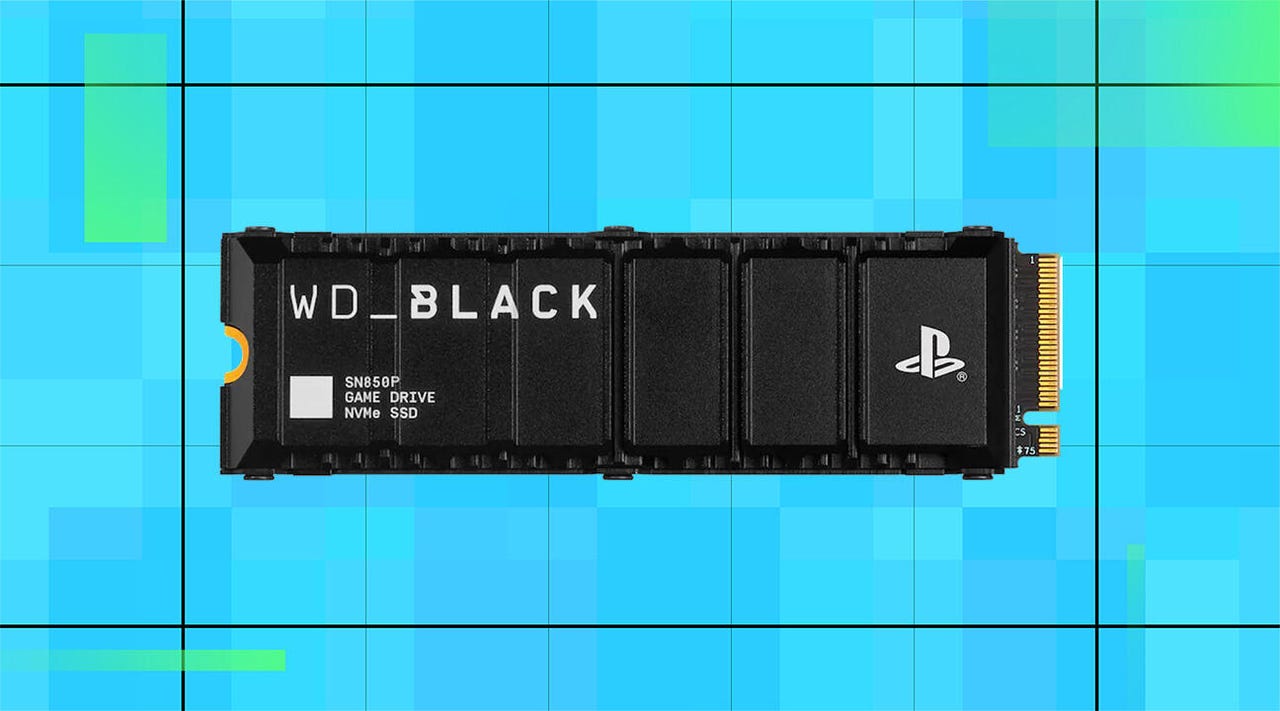
A WD Black SN850P SSD on a blue background

WD/ZDNET

High SSD prices got you down? Right now during Best Buy’s Tech Fest sale, you can save up to $2,800 on the WD Black SN850P storage drive. And while it’s officially licensed for use with PlayStation 5 consoles, it’s easy to reconfigure for use in gaming laptops and desktops for a boost in storage capacity. 

Also: The best Amazon Spring Sale deals: Save on streaming, Apple, Samsung, and more

Available in capacities from 1TB to 8TB, the WD Black SN850P can double, or even quadruple, your available storage space, giving you plenty of room for large game downloads, save files, screenshots, highlight reels, and more. With read and write speeds up to 7300 and 6600 MB/s, respectively, you’ll get much faster loading times than traditional HDDs as well as quicker access to your favorite apps, games, and programs.

Also: SSD vs HDD: What’s the difference, and which should you buy?

The integrated heatsink helps keep everything running at optimal temperatures to prevent data loss or corruption due to overheating. It can also be removed for easier installation in smaller PCs. 

By using flash memory rather than traditional mechanical platters, the WD Black SN850P can provide you with years of reliable data access with much less risk of internal damage due to shocks and bumps.

How I rated this deal 

Prices for RAM and SSD storage drives have skyrocketed as AI companies buy up available stock to power LLMs. And while this particular model is licensed for use with the PS5, you can quickly reconfigure it for use in laptops and desktop PCs. The 2TB model is marked down to $400, bringing it closer to pre-AI pricing, and the 8TB version is almost $2,800 off. While it’s still very expensive, it’s the lowest price I’ve seen on a high-end SSD in a long time. That’s why I gave this deal a 5/5 Editor’s rating.

Deals are subject to sell out or expire anytime, though ZDNET remains committed to finding, sharing, and updating the best product deals for you to score the best savings. Our team of experts regularly checks in on the deals we share to ensure they are still live and obtainable. We’re sorry if you’ve missed out on this deal, but don’t fret — we’re constantly finding new chances to save and sharing them with you at ZDNET.com


Show more

We aim to deliver the most accurate advice to help you shop smarter. ZDNET offers 33 years of experience, 30 hands-on product reviewers, and 10,000 square feet of lab space to ensure we bring you the best of tech. 

In 2025, we refined our approach to deals, developing a measurable system for sharing savings with readers like you. Our editor’s deal rating badges are affixed to most of our deal content, making it easy to interpret our expertise to help you make the best purchase decision.

At the core of this approach is a percentage-off-based system to classify savings offered on top-tech products, combined with a sliding-scale system based on our team members’ expertise and several factors like frequency, brand or product recognition, and more. The result? Hand-crafted deals chosen specifically for ZDNET readers like you, fully backed by our experts. 

Also: How we rate deals at ZDNET in 2026


Show more


Source link