Last-Minute ‘Shortcut’ Left US Navy Fuel Ship Ran Aground


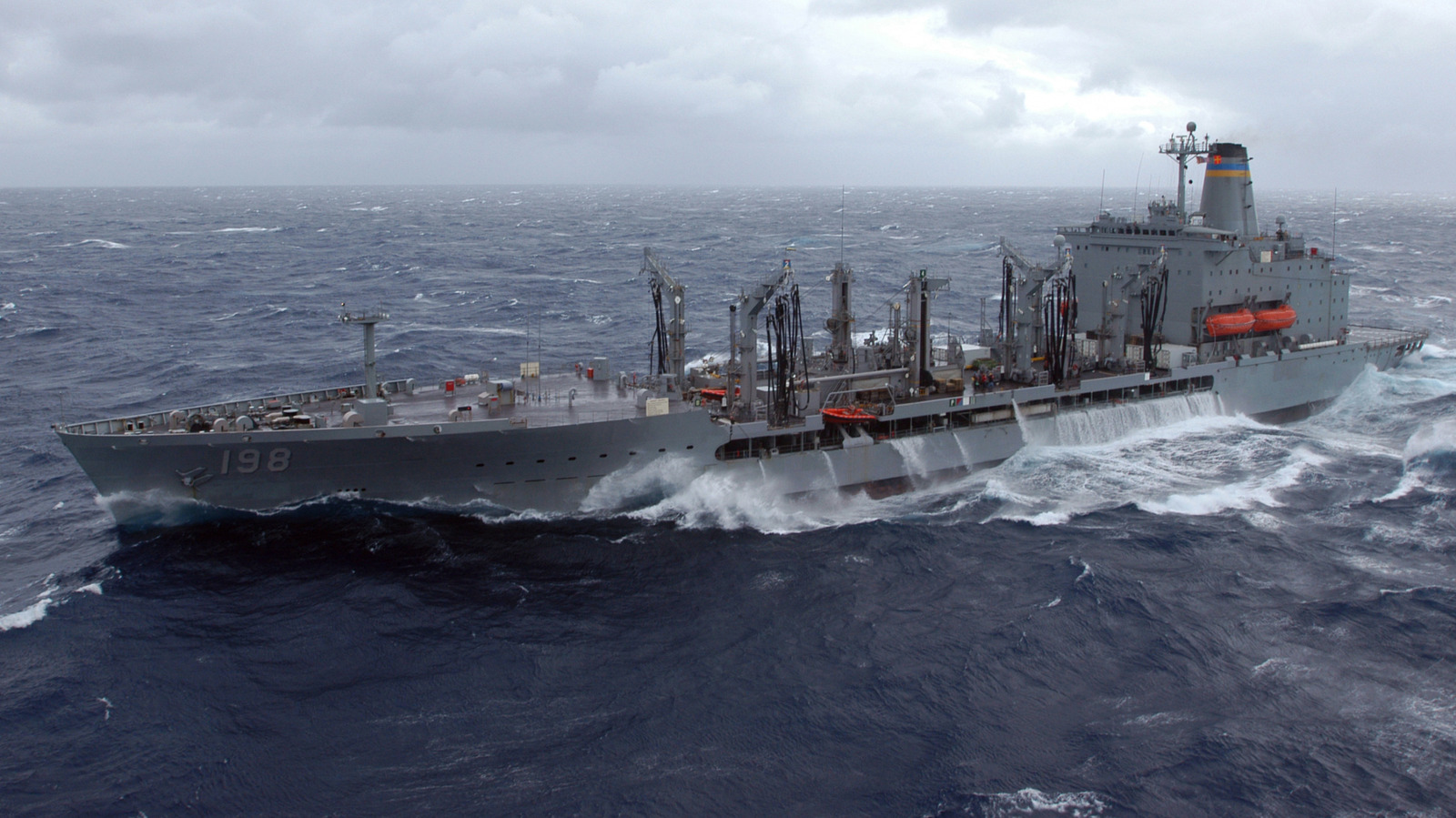
In September 2024, the USNS Big Horn (T-AO-198) was operating in the U.S. 5th Fleet area of operations (off the coast of Oman) as part of the Abraham Lincoln Carrier Strike Group. The job of the 677-foot, 42,000-ton Kaiser-class replenishment oiler was to refuel and resupply ships in the strike group. Operated by the Military Sealift Command, the Big Horn is part of the U.S. Navy’s underway replenishment (UNREP) capabilities, and it acts as a vital support and logistics cog that keeps the fleet operationally ready.

At the time, it was the only oiler in the Arabian Sea. When it ran aground — cruising at a clip of 17 to 18 knots (about 20 mph) — in treacherous and restricted waters, the accident exposed a major weakness in Navy logistics: There simply weren’t enough oilers or qualified mariners to operate them. No injuries occurred, but internal support structures were damaged, as was the port propeller and port rudder. Additionally, the hull was breached, causing flooding in an aft engineering space. In all, $20 million was spent on repairs, including $7.5 million for towing it back into port, $8.6 million for the actual repairs, $1.9 million for offloading its fuel, and another $2.4 million in additional costs.

A post-incident Navy investigation determined the accident was entirely preventable, as the captain and crew made “a series of poor decisions” and failed not only to follow procedure but also to use proper risk calculations. Disciplinary action was recommended for the captain and several officers, but both the captain and the ship’s navigator are still “employed” (per Military Sealift Command via Business Insider). However, it’s unclear whether they were permitted to retain their positions.

The Big Horn learned a big lesson

The Big Horn was supposed to return to the Duqm port in Oman after its refueling mission. The navigator began planning route options, one of which had them going through deeper, safer water, but added 10 miles to the journey. The second option shaved off those 10 miles, but would take the ship through shallower water filled with shoals. The navigator expressed his concerns about the shorter option, preferring to go the longer way back. However, the captain decided to take the quicker route and “shoot the gap” through the shoals, intent on getting to Duqm’s harbor to meet the harbor pilot who would have guided them safely into port.

When the navigator informed the captain about the keel’s clearance, he reportedly said, “Rad,” and, “If we cut corners we’ll get there.” The Navy concluded he failed to conduct the required navigation brief or review any paper charts. Furthermore, when safety alarms triggered, the sound was turned off (leaving only visual cues), but there was no indication that anyone actually acknowledged them. Furthermore, the investigation also discovered that music was playing on the bridge right up until the ship grounded.

The Big Horn is one of 15 Kaiser-class oilers, a dozen of which are single-hulled. At least six are being removed from service over the next five years. The USNS John Ericsson (T-AO-194) and USNS Pecos (T-AO-197) are set to be decommissioned in 2026 because they were deemed “environmentally vulnerable” after the single-hulled oil tanker — the Exxon Valdez — struck a reef and spilled 11 million gallons of crude oil in March 1989.


Source link

Leave a Reply

Subscribe to Our Newsletter

Get our latest articles delivered straight to your inbox. No spam, we promise.

Recent Reviews


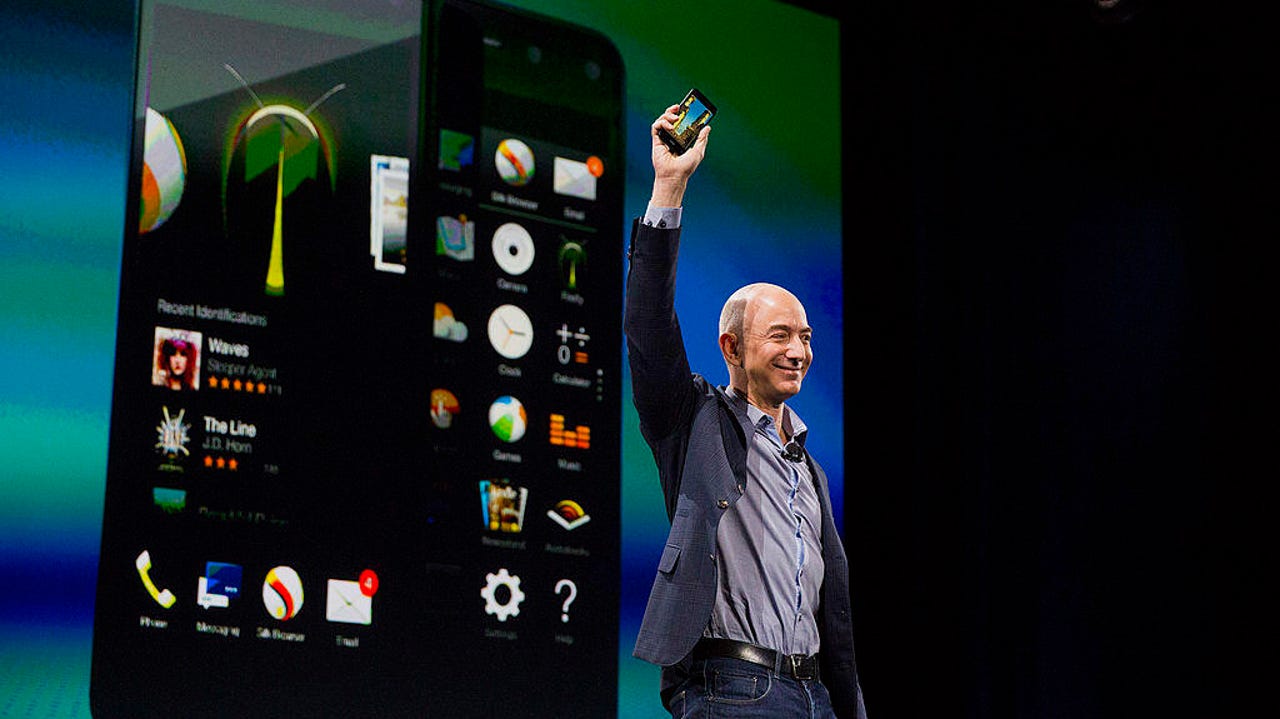
Amazon Fire Phone Jeff Bezos

Bloomberg / Getty Images

Follow ZDNET: Add us as a preferred source on Google.


ZDNET’s key takeaways

  • Amazon is reportedly developing a new Fire Phone.
  • The previous model had several issues, including an inferior app store experience.
  • Under new supervision (and with more experience), Amazon can do better this time.

Well, I don’t know about you, but I certainly didn’t have “new Amazon smartphone” on my 2026 bingo card. As it turns out, according to Reuters, the retailer may be developing a new smartphone, internally known as “Transformer.” 

Those familiar with the industry will instantly draw parallels to Amazon’s previous smartphone effort, the Fire Phone from 2014. Appropriately, that phone ended up as part of a fire sale about a year later.

Now, in 2026, with no fewer than five phone brands in the US — Apple, Samsung, Google, Motorola, and OnePlus — Amazon faces a lot of competition. In fairness, it also has two fewer platforms to compete against. In 2014, Windows Phone and BlackBerry were still very much part of the smartphone conversation; these days, not so much.

The AppStore problem

But there’s one mistake Amazon made in its first effort that will absolutely torpedo its chances at succeeding — the Amazon AppStore and specifically the decision to forego Google Play services. Google is simply too valuable in too many lives to not support the platform. Oh, and the Amazon AppStore is terrible.

Also: What’s right (and wrong) with the Amazon Fire Phone

It has admittedly been a few years since I last inventoried the Amazon AppStore, but when I last checked, the Amazon AppStore was a wasteland of half-supported or unsupported apps, with two notable exceptions. Finance, home control, and communication apps were either absent or had not received updates for years prior.

The only apps in the Amazon AppStore that remained up to date were productivity apps (largely powered by Microsoft) and streaming apps. Those two categories work very well on the cheap, underpowered hardware that Amazon usually launches, and that’s fine. A coffee-table tablet is a nice thing to have lying around.

A spark of hope

Amazon Fire Phone

Liam Tung/ZDNET

But a phone is another animal entirely. If a tablet is a device to entertain, a phone is a device for everything else. One of the key reasons Windows Phone failed was its lack of an app ecosystem. The Senior Vice President of Devices and Services,  Panos Panay, is very familiar with that saga, so I’m hopeful that he will make the same arguments to the powers that be at Amazon. 

Honestly, if there is anyone who I think can pull off an Amazon phone revival, it’s probably Panay, who understands design and product development better than most, and to be perfectly honest, he’s my absolute favorite product presenter.

Also: Amazon Fire Phone review: Not a great smartphone

Of course, all of this is early days. This phone is being worked on internally, and even Reuters reports that it could get the axe long before it sees the light of day. Personally, I’m intrigued by the idea, but I sincerely hope that Amazon doesn’t make this the shopping phone it tried to build in 2014. 

If Amazon just wants to make a nice, well-built smartphone, with a skin that pushes Amazon content to the fore, I’m fine with that. But leaving Google behind is a mistake that Amazon cannot afford to make again. Fool me once, and all that.

So, if this phone is to have a chance at success, it needs to embrace Google services so it can be a phone that everyone can use. Amazon has the brand power to make a phone like this work, even up against juggernauts like Apple and Samsung, but it needs to approach this correctly, lest it end up in yet another Fire phone fire sale.


Source link