
China’s Bizarre Shape-Shifting Robot Grows And Changes Like A Human


From Boston Dynamics’ Electric Atlas to Unitree Robotics’ G1, humanoid robots are becoming more human-like in many ways – and sometimes even more capable – but they are often made of pretty heavy materials and carry a chunky battery pack. Atlas weighs just short of 200 pounds and is made from titanium and aluminum. In contrast, researchers from China’s Southern University of Science and Technology recently revealed a 10-pound robot made of lightweight, malleable materials.

GrowHR has the ability to change its shape depending on the task it’s performing, mostly by extending and shrinking its leg-like appendages. Its adaptability allows GrowHR to swim in the water, crawl through tight spaces, and even “fly” with the help of additional fans.

Given its unique anatomy, GrowHR developers believe it could be useful for search-and-rescue missions. “This growable bio-inspired structure can be applied in field rescue missions, such as navigating through narrow gaps. Moreover, its multiple locomotion modes allow it to adapt to complex terrains,” Wang Ting, a PhD Student at SUST, told Interesting Engineering

How GrowHR mimics human biology for versatile mobility

GrowHR’s design is based on human anatomy and biology. While the materials are different than that of human legs, researchers were inspired by human processes to create GrowHR’s shape-shifting legs. Basically, the team created “bones” from soft, airtight chambers and then encased them in a specialized fabric. Tension cables and motors keep the legs stabilized.

To mimic a human’s bone growth, GrowHR gets air pumped into its chambers, reaching up to three times the original length. The soft PVC material acts as the robot’s “developing bones,” allowing the appendages to bend and stretch. Then, to recreate rigid “compact bones,” researchers wrapped the inflatable area in a thin, non-stretchable fabric that holds the shape of the legs and provides necessary structural stiffness. This way, the robot can become stiff enough to walk while carrying things, but soft enough to absorb incoming impacts. Letting air out of the chambers shrinks GrowHR to 36% of its height so it can squeeze into tight spaces or underneath low objects.

“Deformable legs demonstrate elastic energy storage and release under external loading, allowing motions beyond the limits of rigid structures. This work pioneers a growable, multifunctional robotic design approach for dynamic, complex environments,” explained the team of researchers. And unlike China’s creepy AI robots, GrowHR has one singular, friendly expression. 


Source link

Leave a Reply

Subscribe to Our Newsletter

Get our latest articles delivered straight to your inbox. No spam, we promise.

Recent Reviews


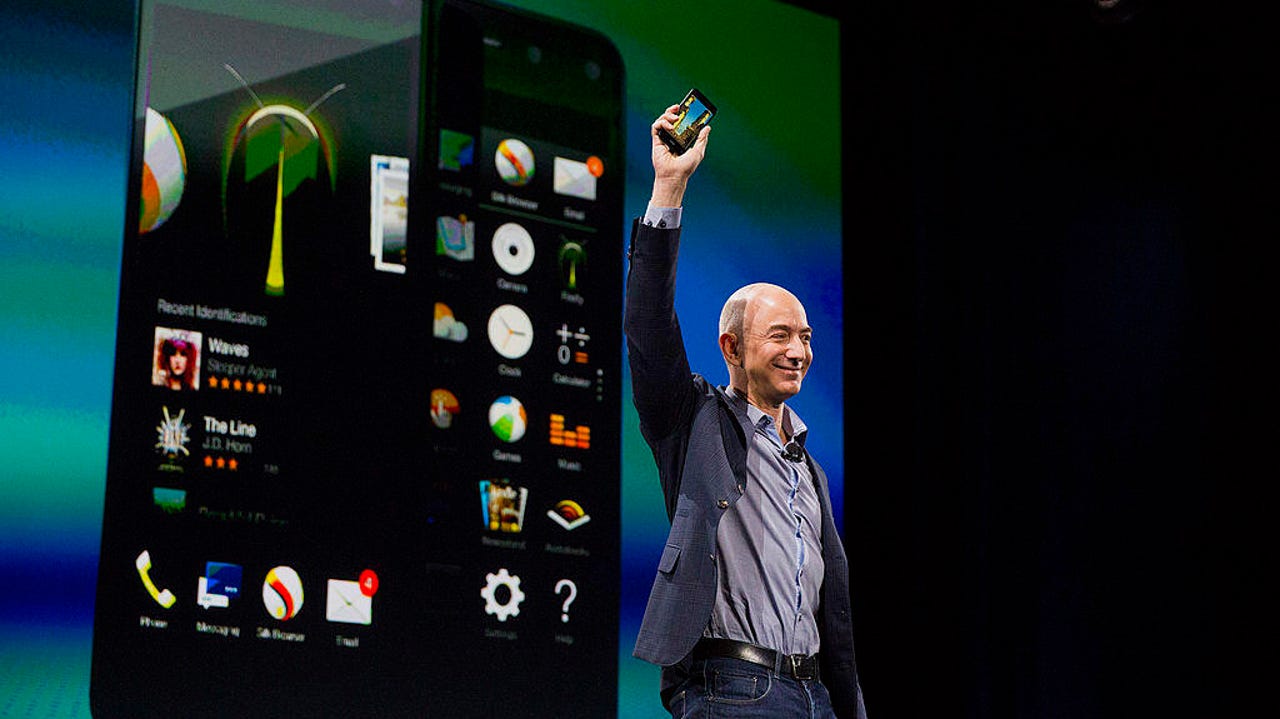
Amazon Fire Phone Jeff Bezos

Bloomberg / Getty Images

Follow ZDNET: Add us as a preferred source on Google.


ZDNET’s key takeaways

  • Amazon is reportedly developing a new Fire Phone.
  • The previous model had several issues, including an inferior app store experience.
  • Under new supervision (and with more experience), Amazon can do better this time.

Well, I don’t know about you, but I certainly didn’t have “new Amazon smartphone” on my 2026 bingo card. As it turns out, according to Reuters, the retailer may be developing a new smartphone, internally known as “Transformer.” 

Those familiar with the industry will instantly draw parallels to Amazon’s previous smartphone effort, the Fire Phone from 2014. Appropriately, that phone ended up as part of a fire sale about a year later.

Now, in 2026, with no fewer than five phone brands in the US — Apple, Samsung, Google, Motorola, and OnePlus — Amazon faces a lot of competition. In fairness, it also has two fewer platforms to compete against. In 2014, Windows Phone and BlackBerry were still very much part of the smartphone conversation; these days, not so much.

The AppStore problem

But there’s one mistake Amazon made in its first effort that will absolutely torpedo its chances at succeeding — the Amazon AppStore and specifically the decision to forego Google Play services. Google is simply too valuable in too many lives to not support the platform. Oh, and the Amazon AppStore is terrible.

Also: What’s right (and wrong) with the Amazon Fire Phone

It has admittedly been a few years since I last inventoried the Amazon AppStore, but when I last checked, the Amazon AppStore was a wasteland of half-supported or unsupported apps, with two notable exceptions. Finance, home control, and communication apps were either absent or had not received updates for years prior.

The only apps in the Amazon AppStore that remained up to date were productivity apps (largely powered by Microsoft) and streaming apps. Those two categories work very well on the cheap, underpowered hardware that Amazon usually launches, and that’s fine. A coffee-table tablet is a nice thing to have lying around.

A spark of hope

Amazon Fire Phone

Liam Tung/ZDNET

But a phone is another animal entirely. If a tablet is a device to entertain, a phone is a device for everything else. One of the key reasons Windows Phone failed was its lack of an app ecosystem. The Senior Vice President of Devices and Services,  Panos Panay, is very familiar with that saga, so I’m hopeful that he will make the same arguments to the powers that be at Amazon. 

Honestly, if there is anyone who I think can pull off an Amazon phone revival, it’s probably Panay, who understands design and product development better than most, and to be perfectly honest, he’s my absolute favorite product presenter.

Also: Amazon Fire Phone review: Not a great smartphone

Of course, all of this is early days. This phone is being worked on internally, and even Reuters reports that it could get the axe long before it sees the light of day. Personally, I’m intrigued by the idea, but I sincerely hope that Amazon doesn’t make this the shopping phone it tried to build in 2014. 

If Amazon just wants to make a nice, well-built smartphone, with a skin that pushes Amazon content to the fore, I’m fine with that. But leaving Google behind is a mistake that Amazon cannot afford to make again. Fool me once, and all that.

So, if this phone is to have a chance at success, it needs to embrace Google services so it can be a phone that everyone can use. Amazon has the brand power to make a phone like this work, even up against juggernauts like Apple and Samsung, but it needs to approach this correctly, lest it end up in yet another Fire phone fire sale.


Source link