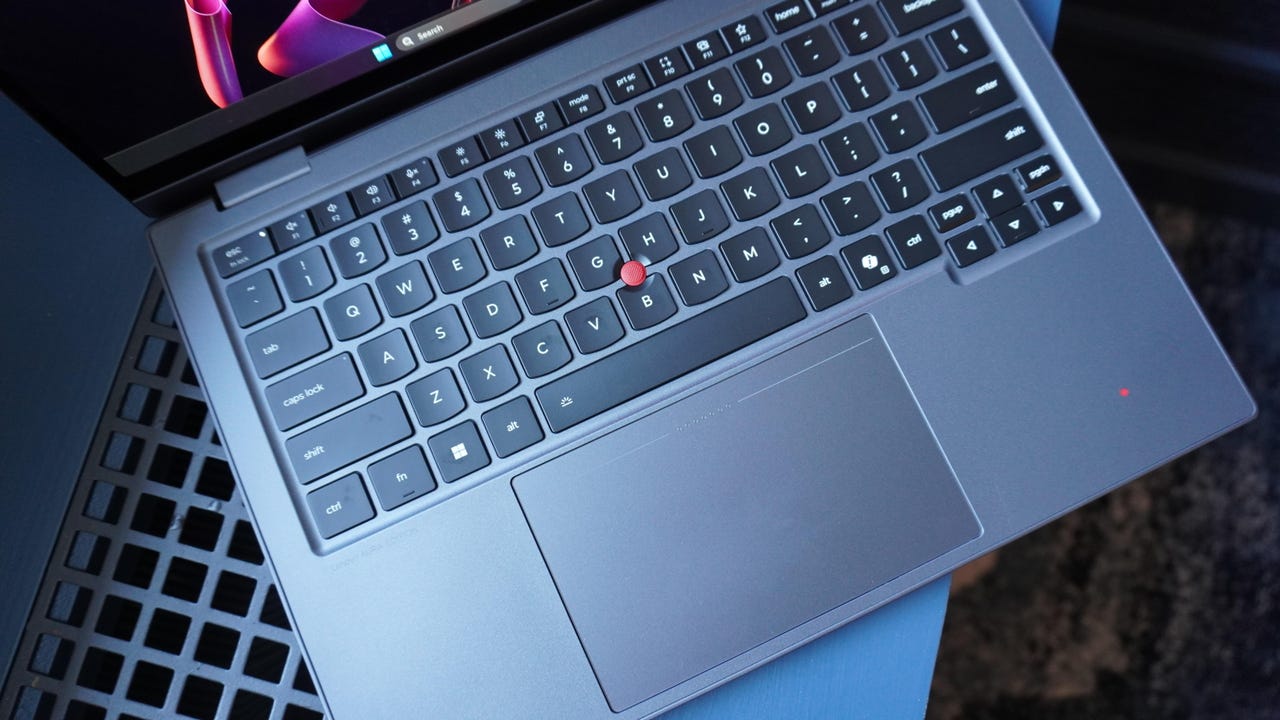

Lenovo ThinkPad X1 2-in-1 Gen 11 Aura Edition
Kyle Kucharski/ZDNET
Follow ZDNET: Add us as a preferred source on Google.
Have you ever noticed how your PC’s storage never quite seems to add up? Part of that is because Windows reserves a small portion of your storage for system files. A feature called Reserved Storage quietly sets aside 5GB to 10GB on your SSD for update files, cache, and temporary files.
It’s not as nefarious as it sounds — there’s a rationale behind allocating space to streamline updates — but you may want to get that space back, especially if you have a smaller SSD and space is tight.
Also: Do yourself a favor and stop buying these cheap SSD drives flooding the market
Most users with 512GB or more of storage don’t need to mess with these settings, but if you really want to maximize your SSD, Windows lets you disable Reserved Storage.
Start here first
If you’re hurting for space on your local drive, there are several other options I recommend exploring first — many of which could produce even better results. First, consider clearing the cache in Windows 11, a safe way to free up some space.
Second, Windows PC Manager is a free cleanup tool that helps identify clutter on your machine. Since it’s designed by Microsoft, it should theoretically be able to identify some files that third-party programs can’t, like old Windows log files and installation clutter.
Also: I used an M.2 PCIe enclosure for data storage, and it made file transfers so much faster
We wrote an extensive guide on how to get PC Manager, but the tl;dr is that you can download it from either its product page or the Microsoft store. When you first run it, run a health check, then let it clean up disk space.
How to turn off Reserved Storage
If you’ve already gone through these steps and want to claw back every spare byte of your SSD from Windows, here’s how you can turn off Reserved Storage. First, navigate to settings in Windows, and go to System > Storage. Once on this tab, click the “Show more categories” tab, then navigate to System & Reserved.
If you scroll to the bottom, you’ll see “Reserved Storage,” including how much your system has set aside for this purpose. Again, this will be most impactful for systems with very limited storage. If you have 512GB or more and only 10GB or less reserved for Windows, it’s ultimately negligible and will likely have little to no impact on your system.
Also: How much RAM does your PC actually need in 2026? A Windows and Mac expert weighs in
To put that in perspective, 10GB is not even 2% of a 512GB.
To proceed with turning off Reserved Storage, you’ll need to enter a command line. Click Start > Command Prompt, right-click and select “Run as Administrator.” Then type or paste in the following command:
DISM.exe /Online /Set-ReservedStorageState /State:Disabled
Restart your computer, and navigate back to the screen you just visited in Settings > System > Storage > System & reserved. Click “Show more categories”, and note that where you previously saw an amount for Reserved Storage, it should be blank.
When to turn Reserved Storage back on
Surface Laptop 5g for Business
Kyle Kucharski/ZDNET
You’ll want to turn the feature back on again when it’s time to update your PC. It’s easy enough to do so, just type the same command line, but change the last part to Enabled.
DISM.exe /Online /Set-ReservedStorageState /State:Enabled
I don’t blame you if you want greater control over how Windows uses storage on your PC, but there’s only so much you can do when you’re working with severely limited space. Unless you’re on a secondary device or a Chromebook, I wouldn’t consider anything less than 512GB of storage for a main driver PC.
Also: Don’t ignore your desktop PC’s empty M.2 slots – they’re more useful than you think
The best solution is to add more storage, whether that’s upgrading the onboard SSD or using external storage. We’ve tested several in the last year, including portable options like this 1TB SanDisk ExtremeFit that’s probably smaller than your mouse dongle, or this massive 4TB Samsung T9 portable SSD, with enough space to last indefinitely for some users.
Whatever you do, though, stay away from cheap SSDs that seem too good to be true, as we’ve found several devices that were either unreliable or straight up DOA.