
Very few places will make you dream and fantasize of paradise quite like Santorini’s virgin-white clifftop houses and bright-blue church domes backed by a flaming Aegean sunset.
Yes, it’s gorgeous, and yes, it’s simply one of those breathtaking places you can’t quite put into words.
That said, Santorini’s natural beauty and unique architecture are also the main culprits behind its downfall.
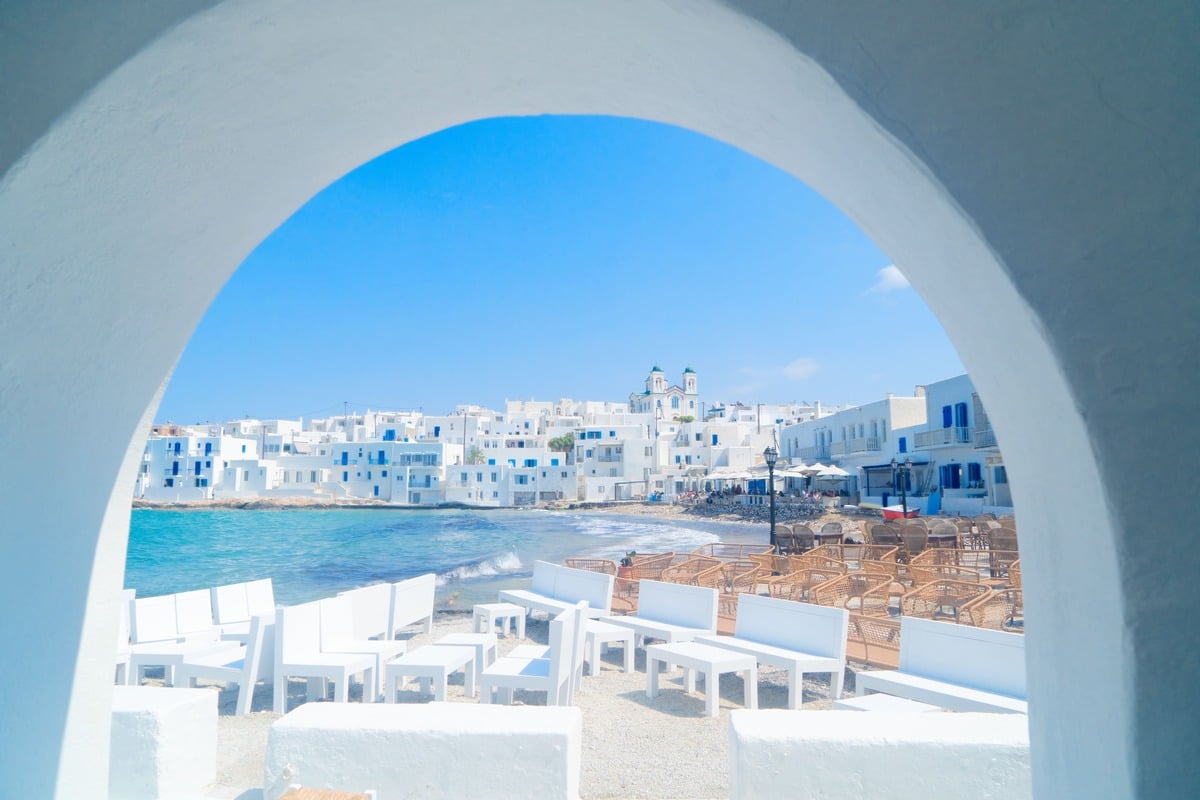
Unless you’re booking yourself a luxurious cave hotel in the heart of Oia, the world-famous Santorini village with caldera views, to the tune of $1,000+ a night, and basically barricading yourself off from the tour bus plebes, magical is the last word you’ll be using to describe Greece’s top-rated island.
But despair not: there’s a light at the end of the tunnel.
These 4 alternative European spots have the exact same Mediterranean island aesthetics that made Santorini famous in the first place, Cycladic-like vibes minus the tourist pressure, and better even: they’re dirt-cheap in comparison.
PLUS: We’ve included safety indexes for each location and put together an interactive quiz for you at the end of this article to find out which one is perfect for you. Check it out!
Paros, Greece
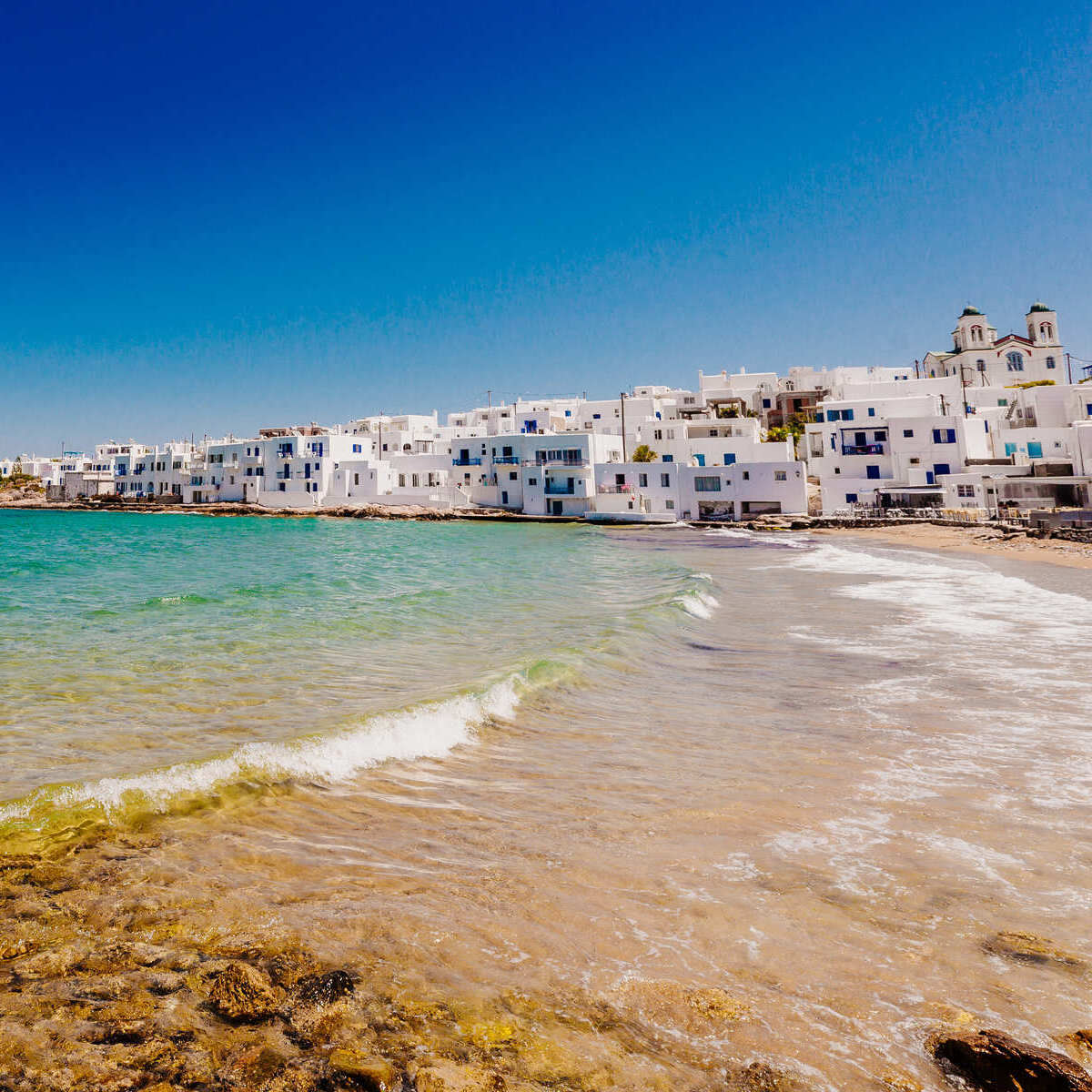
You don’t need to go a thousand miles away to another European country, or even leave the same group of islands, to tap into that Santorini-esque summer.
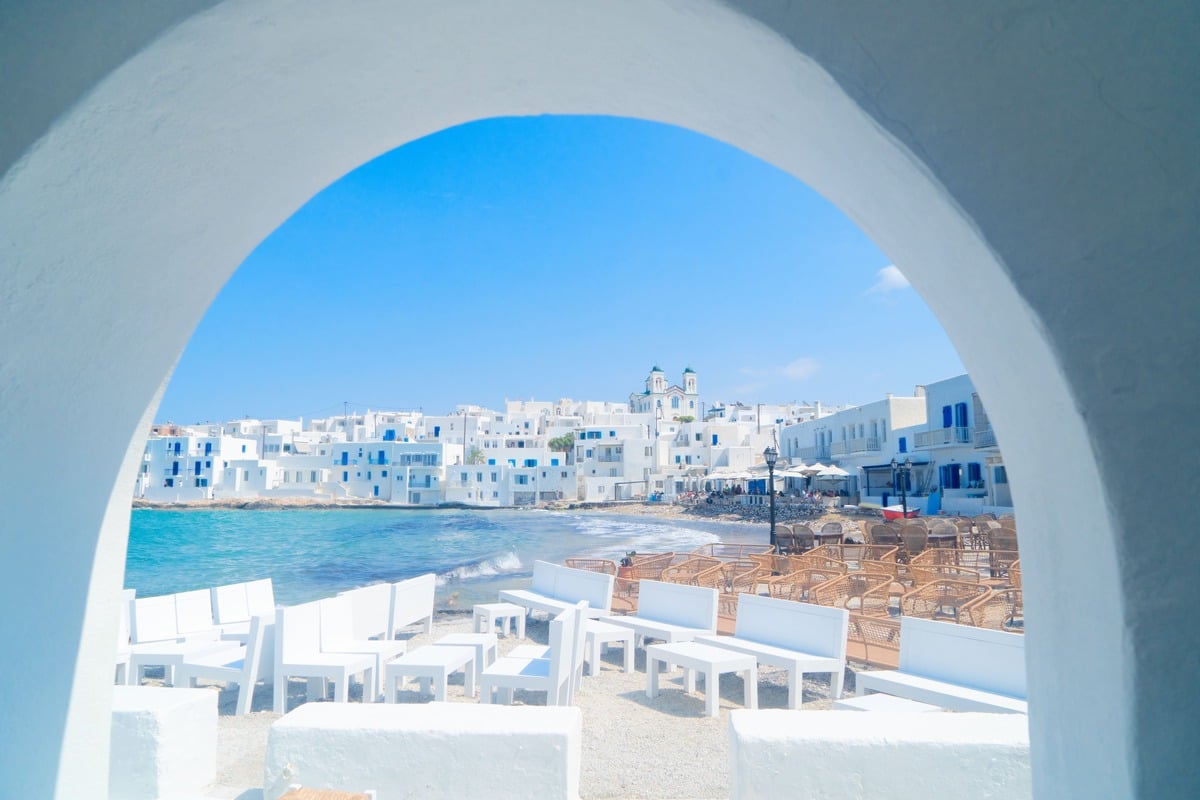
Tucked away on the quieter end of the Cyclades, Paros is a small Greek island, a short 2-hour ferry crossing away, known for uncrowded beaches and peaceful traditional villages with only a fraction of the tourists Thira gets.
The main town and port, Parikia has those gorgeous cubic, chalk-white houses, windmills, and a landmark Panagia Ekatontapiliani church (literally the 100-Gate Church), which just happens to be one of Greece’s oldest. Not just another photo op like Oia’s no-access blue dome chapels.
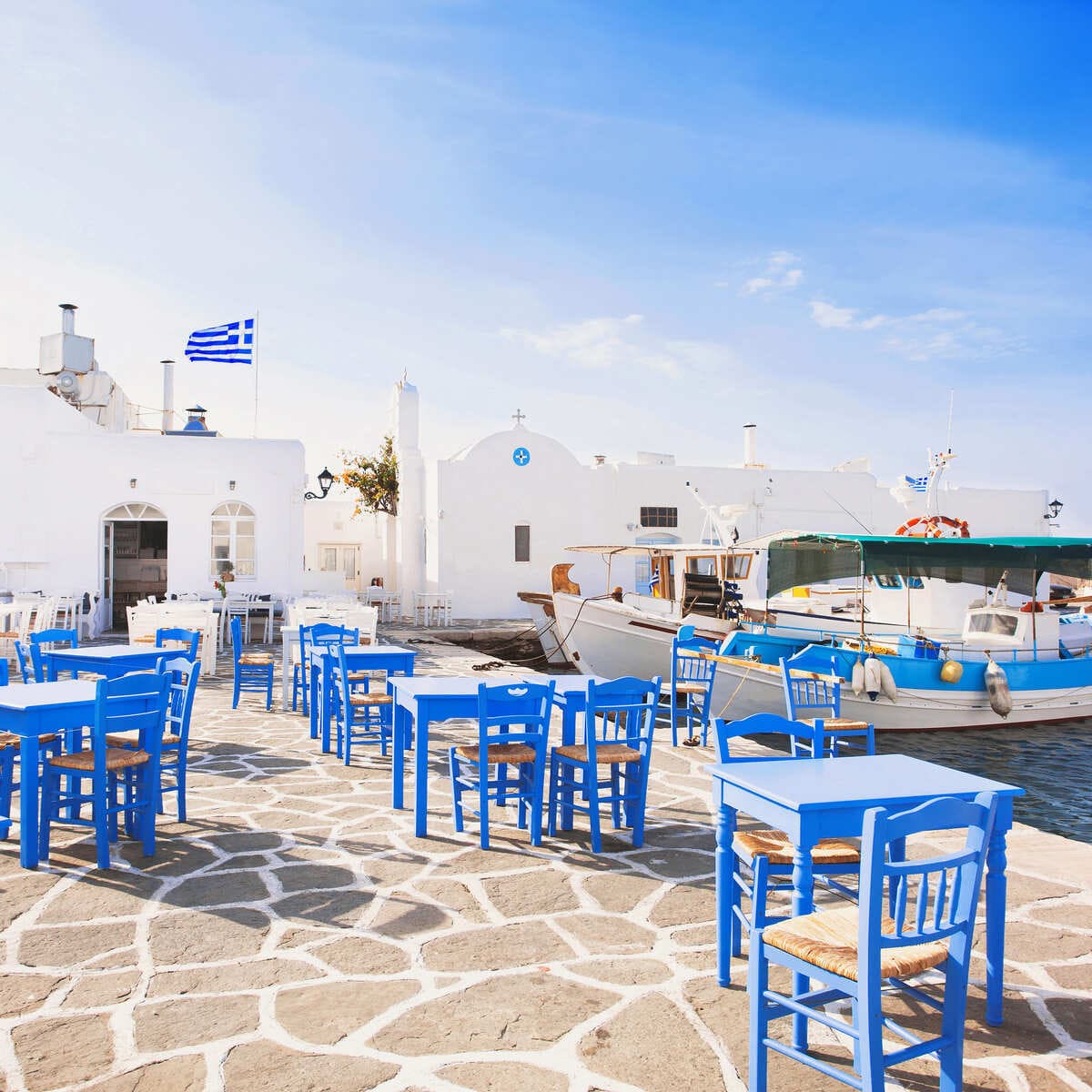
Perched on an inland hill, Lefkes has more of that gorgeous Cycladic architecture, with stone-paved walkways and bougainvillea-framed alleys, while Naoussa, directly on the coast, is a scenic fishing village turned nightlife spot after dark.
Santorini isn’t exactly known for its excellent beaches, but over in Paros, there’s a long ‘Golden Beach’ (Chrysi Akti), a short 25-minute drive away from Parikia. Not overly built-up, with just about enough sunbeds and tavernas, and a laid-back atmosphere.
Thinking budget-wise? Paros isn’t exactly dirt-cheap, but it’s definitely on the cheaper end of Greece, with basic rooms ranging from $40–$95 at small guesthouses, and sit-down meals in Old Town eateries averaging $15–$25.
Burgau, Portugal
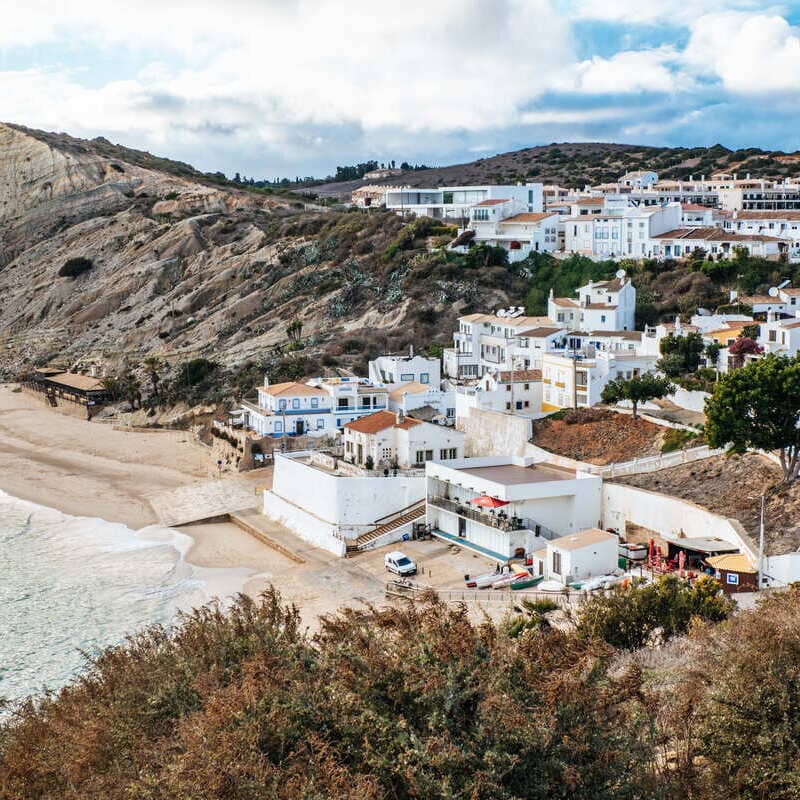
Located in Portugal’s sun-drenched Algarve coast, where it’s sunny and some degree of warm for a whopping 300 days a year, Burgau is oftentimes called the ‘Portuguese Santorini‘, though there are no cruise crowds or hefty price tags to be seen anywhere.
Both destinations are separated by 1,900 miles, but they both share the white-house aesthetics.
Burgau has no blue-dome churches, but many of the townhouses have the same simple geometric shapes as Santorini’s, and pastel-blue trims and shutters, as much native to the Algarve as it feels typically Greek.
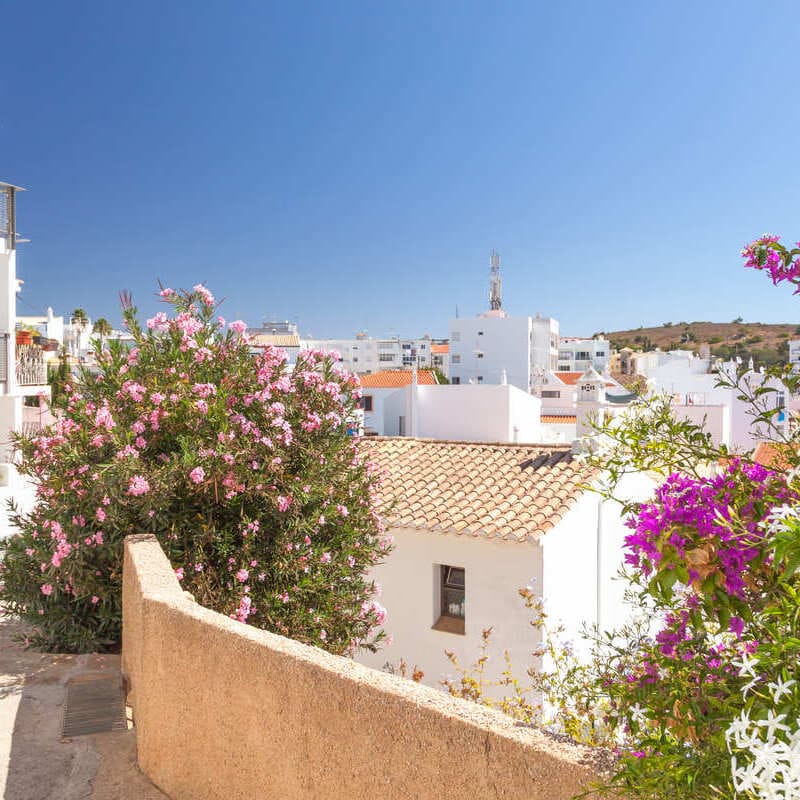
As you walk around the maze-like center, you’ll find cobbled streets lined with cozy cafés and small souvenir shops, very reminiscent of the Greek islands, and picturesque village squares ringed by quiety-charming parish churches and orange trees.
Also, who needs caldera views when you have cliffside houses overlooking a small sandy beach with dramatic sea vistas?
The Algarve is getting pricier each passing year, especially now that Americans have caught wind of the destination, but in Burgau prices remain local-friendly: downtown guesthouses like Aloha Burgau cost around $50–$60 per night, and a casual ‘menu do dia’ lunch is around $12.
Favignana, Italy
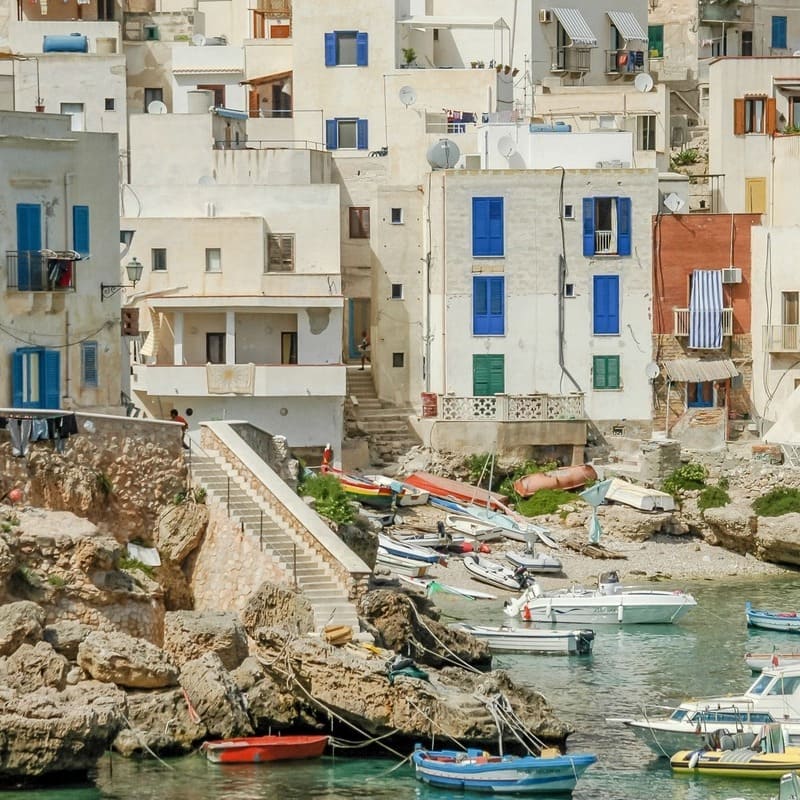
The largest of the Egadi Islands, an archipelago off the northwest coast of Sicily, Favignana is probably the most Santorini-like spot out this far west in the Tyrrhenian Sea.
A short ferry hop away from Trapani, a large coastal city on the Sicilian mainland, it is best known for its main town, with clusters of pale, sun-bleached houses set along narrow streets, small port wedged between a string of seafood trattorie and colorful fishing boats, and crystal-clear water.
Favignana is basically Santorini’s spiritual Italian sister, and what further proof could you need other than it’s one of the paradisiacal locations Christopher Nolan picked as backdrop for his upcoming The Odyssey blockbuster?

It’s Greek-coded through and through, but don’t worry, you won’t be attacked by sea monsters swimming in one of the many secretive coves fringing the coast, nor face the wrath of an Olympian God for eating pasta the wrong way—but maybe you’ll get some disapproving looks from the next table.
Speaking of food, a traditional fried fish cone will set you back $6 each time, while a sit-down pizza dinner can cost as cheap as $12. Staying overnight on the island?
That’s about $80–150 for a room per night, or if you don’t mind the 30-minute hydrofoil transfer, it’s an even-cheaper $55–$95 to stay in Trapani.
Frigiliana, Spain

Nestled up the lush coastal hills of Andalusia, the warmest region in Europe with temperatures ranging from 72–77°F in spring, Frigiliana is a chill mountain village with a real Old World feel.
If Oia is the main event in Santorini, with its cliffside cave suites and blue domes, Barribato is the star of the show in Frigiliana. Picture cobblestone alleys, whitewashed houses decorated with flower pots, arches and basically killer photo spots at every turn.
Don’t overplan it: just get lost in the tiny, postcard-worthy district for a couple of hours.
A good place to start is Plaza de las Tres Culturas, the main square surrounded by coffee spots. It’s the most central location in Frigiliana, and a common jump-off point into the Old Quarter.

We won’t lie, gorgeous as Frigiliana may be, as far as epic sunset terraces, it’s hard to beat Oia Castle’s, but their Panorámica Frigiliana platform comes a close second: think elevated views over the surrounding hills, down toward the sparkly, blood-orange-tinged Mediterranean.
Furthermore, Frigiliana is just much cheaper and more relaxed than Santorini in the high season: it’s never too busy, it borders on suffocatingly crowded, even at peak visitation hours, and your typical menú del día (3-course meal in a casual restaurant) costs about $13–$20.
As for hotels, a realistic range in and around town is $70–$125 (Hotel Villa Frigiliana is an affordable $73 a night).
Now take this quiz to find your perfect match!


Stacie Harris is a local resident and reporter of the Maple Grove area. Stacie reports on medicine and science for the Maple Grove Report.