
I’ll never take for granted how lucky I am to call Europe home.
Being based in Paris, with a good few London and Ireland years under my belt before that, I basically grew up hopping countries and crossing borders like it was no big deal. In the Schengen era, it’s not like there are even passport checks half the time anyway.
Any chance I got, I was jetting off somewhere new on the continent. Weekends, bank holidays, annual leave, you name it, until… I ran out of places to go. Actually, scratch that: until I ran out of new countries to visit.
From the westernmost reaches of Portugal (hi, Terceira), all the way east to Ukraine in times of war, hem… Russia, and even down to the lesser-known Caucasus (Georgia will forever be that girl), I’ve seen them all. Weirdo alpine microstates, billionaire playgrounds posing as countries, and unrecognized breakaway states included (Northern Cyprus summers, anyone?).
These days, I mostly repeat destinations that wowed me the first time, and that somehow keep on delivering still.
All of that is to say, I was recently tasked by the editorial team at Travel Off Path with shortlisting the top 5 unassuming cities that surprised me most 40+ European countries in, and boy, that took some proper brain-racking, but here we are.
Inherently fascinating, sometimes culturally-ambiguous, and, if I may say so, every bit as exciting as the capitals they quietly live in the shadow of:
PLUS: We’ve created a quiz for you at the end of the article to find which one is perfect for you, scroll to the end to find out!
Trieste, Italy

I’m sure you’ve heard of Venice and its winding canals, Rome and its imposing Colosseum, and the iconic Leaning Tower of Pisa, but you were never properly introduced to Trieste, the Italian jewel on the Adriatic Sea.
A vibrant port city with a rich heritage, encompassing periods of Roman control, Venetian influence, Slavic influence, and even direct Austrian rule, it is probably the most architecturally diverse city in the Italian peninsula.
I’m talking perfectly preserved leftovers of the Roman Empire, including Arco di Riccardo, an ancient arch built in 33 BC, now etched into a modern building, a grand canal flanked by Italianate buildings with those unmistakable green shutters, and ornate Habsburg-coded façades with decorated niches and flourishes that could easily belong in Budapest or Vienna.

Canal Grande in particular, with its many moored boats and stone bridges, is the prime spot for getting those Venice vibes, and Piazza Unità d’Italia, Europe’s largest sea-facing square, is where you go for the wow factor. Grandiose edifices, wide-open waterfront space, and a gigantic Italian tricolor flying high on a mast right along the shoreline.
Whenever you’re craving that morning espresso, hit up Caffè San Marco, a historic literary café with a real fin-de-siècle feel. You might not know this, but Trieste cuisine differs from the rest of Italy in that it is much more akin to Slovenian or Croatian cuisine than to, say, Mediterranean fare.
Osteria Bier Stube serves some killer goulash, and Buffet da Pepi is everyone’s go-to spot—including mine—for having bollito (boiled pork).
Salzburg, Austria

Vienna is probably what most tourists think to visit when they plan a trip to Austria, and as majestic and imperial-like as it is, I kinda wish I hadn’t hopped over the border from Munich, Germany, to visit Salzburg for a day, as it completely ruined the rest of Austria for me.
Honestly, what a stupidly gorgeous city.
The birthplace of Mozart, and the storybook backdrop to Julie Andrews’ The Sound of Music, it is every bit as fairytalish as the pictures indicate.
An off-white cluster of limestone buildings, gathered at the foot of a massive hilltop fortress, and surrounded by the snow-capped Salzkammergut Alps, this is the postcard shot my brain instantly conjures up when I think “Europe.”

Plus, it feels more like a small town, with every corner being surprisingly quaint, despite the influx of tourists in summer and coach parties. Contrary to Vienna, where the further you stray from that picture-perfect Historic Center, the more it’s all graffiti-covered walls, kebab joints, and Turkish barbers.
The Old Town is the star of the show here, with its many cobbled lanes, buildings painted in soft hues of pastel, and Mozart’s very own birthplace, right on the city’s main pedestrianized street at Getreidegasse 9.
Mirabell is that Baroque fever dream of a lush, landscaped garden, with ornate fountains that’ll have you bursting into song, or failing that, at least humming the opening notes to Do-Re-Mi, and looming over the medieval maze, Hohensalzburg is that massive castle for epic city views.
Glasgow, Scotland
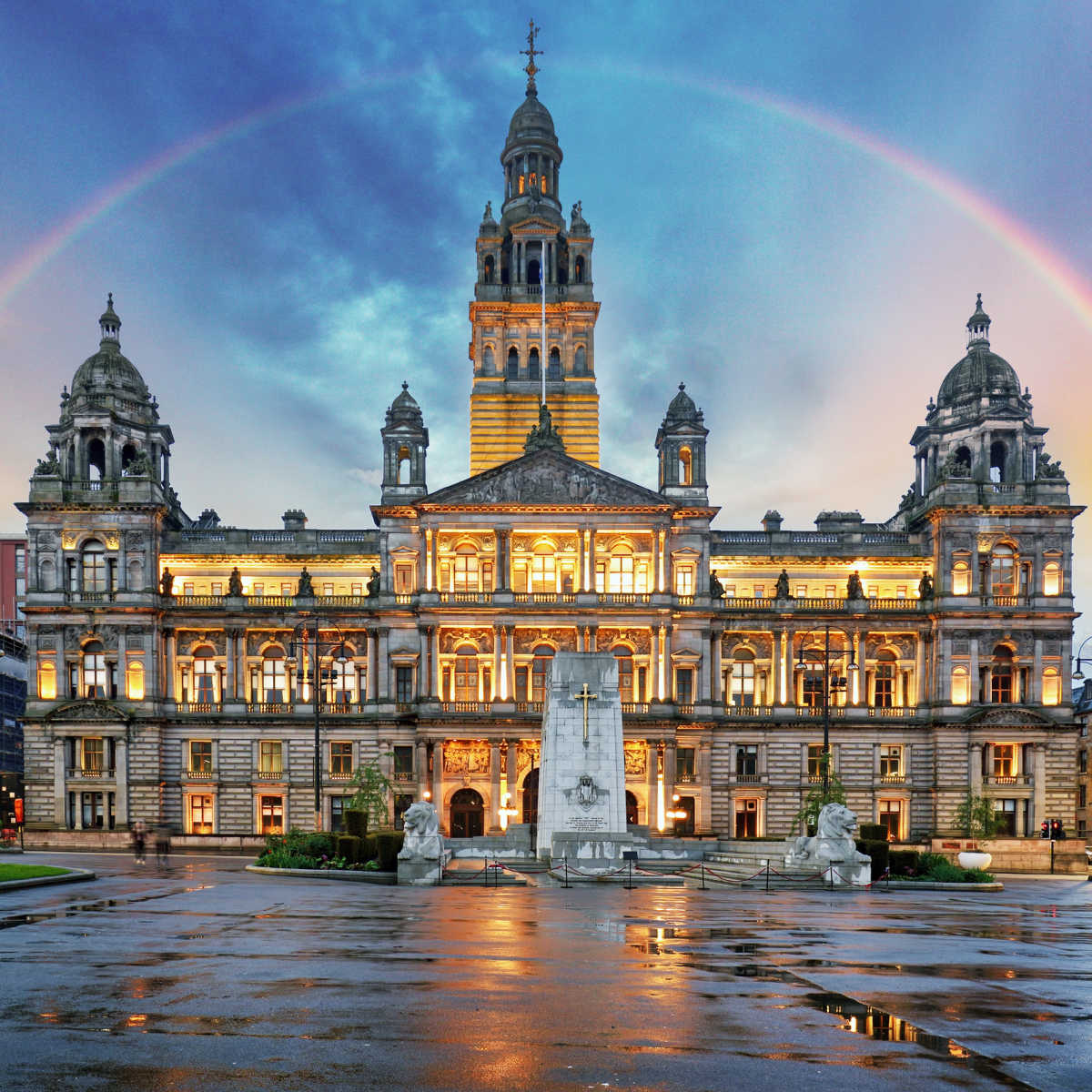
I guess capitals are just not where it’s at for me. Don’t get me wrong, Edinburgh is one of the most beautiful cities in the whole world, and there’s nowhere I’d rather go for Gothic architecture and that unrivaled medieval flair, but when I’m looking for a proper night out on a Friday and want some fun with a pint in hand?
I’m picking Glasgow any day.
The largest and most cosmopolitan city in Scotland, it has no obvious landmarks that would make you go out of your way to visit, nor a storybook skyline, yet it’s the greatest fun I’ve had on a weekend out in ages. Yep, it even tops London or godforsaken Dublin.
The West End in Glasgow is that hip, bohemian, cultural hub you just can’t help but get lost in. It has the quirky coffee shops, the dodgy underground bars, and vintage shops you just can’t help but browse for hours.

For that fun, yet intimate vibe with creative drinks and cocktails, check out Rascal. A bit different from your standard pub, but absolutely worth it. Funky décor, retro energy, and lots of space is your vibe instead? Hillhead Bookclub is the place to be.
In need of some fresh air and a chill nighttime stroll? Ashton Lane is a charming cobbled path just off the busy Byres Road, known for its plethora of pubs and restaurants. It’s dimly lit by fairy lights and lined with Victorian-era buildings. An absolute stunner of a backstreet.
A gem of the West End, the University of Glasgow is an ensemble of stunning Gothic buildings, I’m pretty sure I’ve seen in Harry Potter before, and when that shopaholic urge hits, Buchanan Street is where you go for that High Street shopping and lively energy.
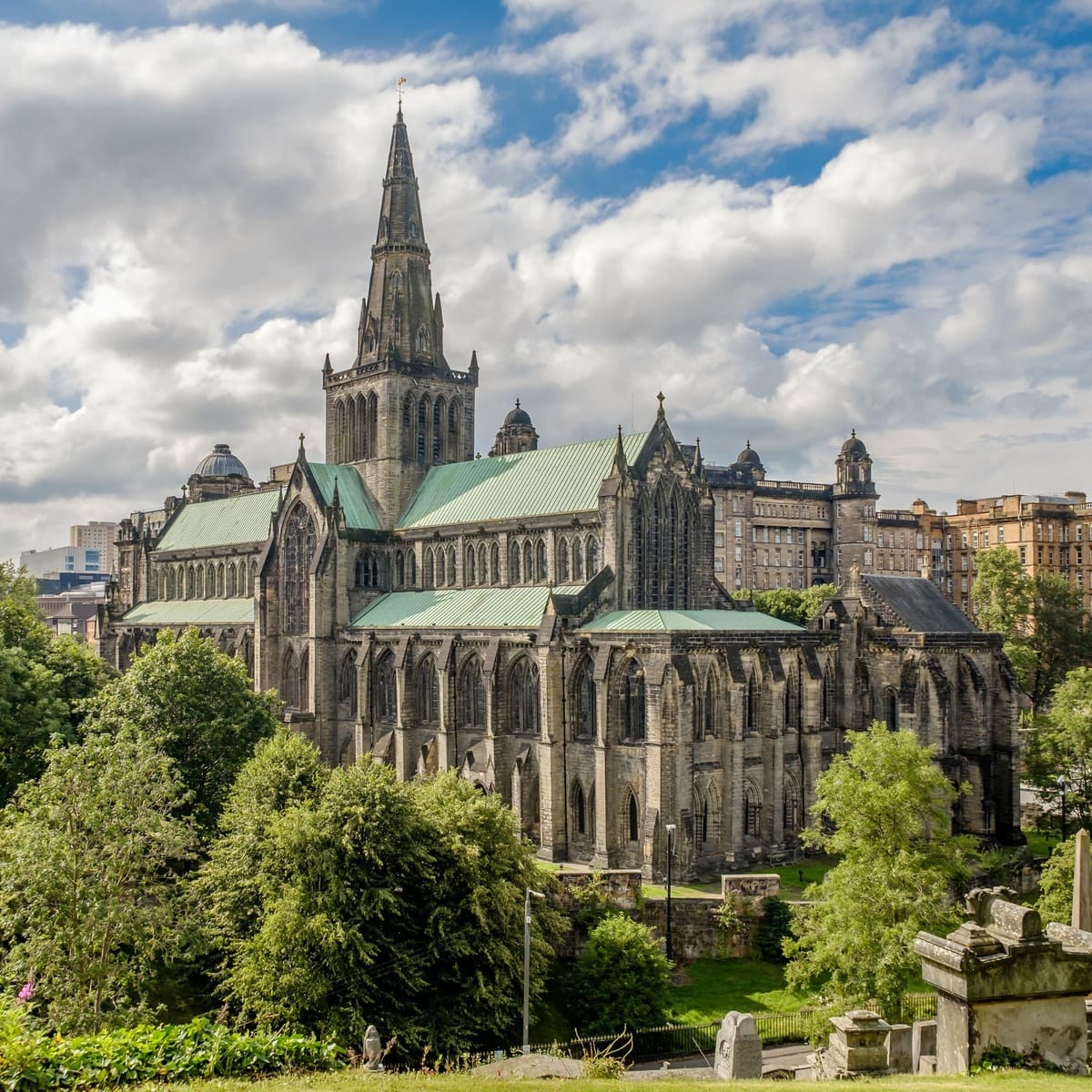
Glasgow’s not all bustling city life and nightlife, either: tucked away in a verdant park, in the midst of the urban sprawl, Glasgow Cathedral is, in fact, the oldest cathedral in Scotland, with origins in the 12th century. It’s the only medieval cathedral in the country to have survived the Reformation intact.
Glasgow is also the only city in the UK, other than London, that has a metro. Nicknamed the ‘Clockwork Orange’, its signage is distinctly jaune, and it’s made up of only two lines: an outer circle and an inner circle. One runs clockwise, the other anticlockwise, with a handful of interchanging stations.
That’s actually great, cause if you’re hammered and fall asleep and miss your stop, you only need to go ’round the Clockwork Orange again and hop off at the right station.
Lille, France

I’ve been living in Paris for the past half-decade, and it took me until recently to finally tick Lille off my bucket list. I know, shameful, as it’s only an hour’s train away, and tickets can cost as cheaply as $23 one-way.
Better late than never, as they say, and boy, am I glad I finally did.
In many ways, Lille is the spiritual sister to Glasgow. Both are northerly, criminally underrated metropolises with an underappreciated cultural status in their own respective countries, and when it comes to metro connections, Lille also boasts the second-largest underground transit system after the capital.
I’m still a kid at heart with an obsession with trains, but that’s not the main reason I love Lille. For starters, it is where Charles de Gaulle, the greatest Frenchman after Napoleon, perhaps, was born (you might recognize his name from Paris’ main airport).

The Grand-Place, which borrows heavily from Brussels’ own, with the same Flemish-style guild halls and stepped buildings, is arguably the most beautiful in France, and the expansive Historic Center has a plethora of Belle époque buildings and shopping galleries.
Book markets housed in 17th-century Old Stock Exchanges, one of the largest Fine Arts museums in the country outside Paris, a neo-Gothic cathedral with a crazy-modernist twist on its main portal, and a Historic Center criss-crossed by cobbled lanes and narrow streets with red-brick buildings:
It’s all utterly charming.
On the edge of it, the now-militarized Citadel of Lille (Vauban) is a 17th-century star-shaped fort. You can’t exactly go inside, but biking around the area is permitted.
For a little banter on a Friday night, pop round to Rue Royale or Place Louise de Bettignies. Either is perfect for a cheeky apéero and a cheese-and-charcuterie planche ahead of a night out.
Thessaloniki, Greece
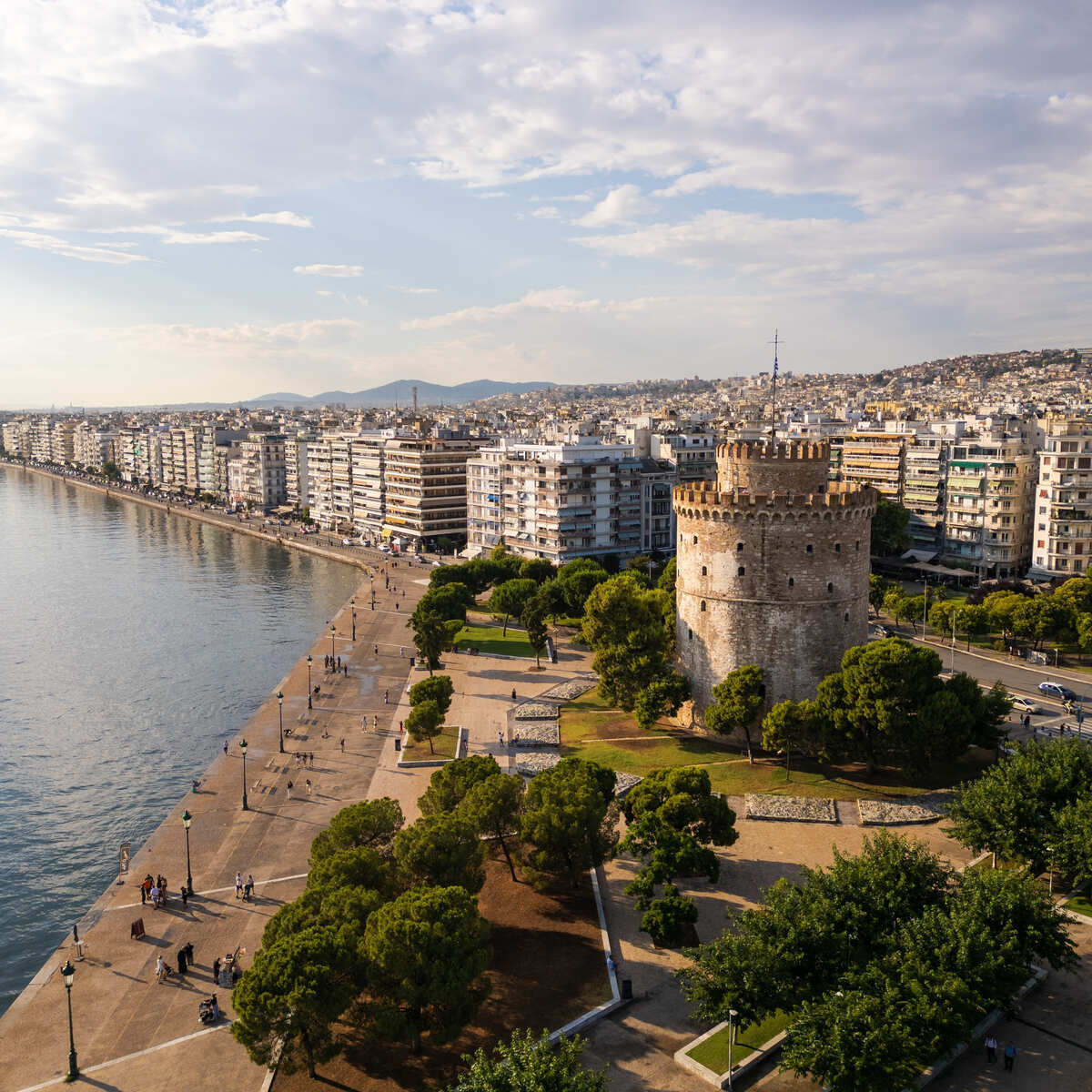
The second-largest city in Greece, tucked away in the less-touristy, often-overlooked northern strip of the country, Thessaloniki balances that bustling urban energy Athens is known for with the deep blue of the Aegean Sea.
As much as Athens is within short driving distance to beautiful beaches, and even a short ferry hop away from stunning islands like the Cyclades, Thessaloniki has the edge. It’s literally right on the water.
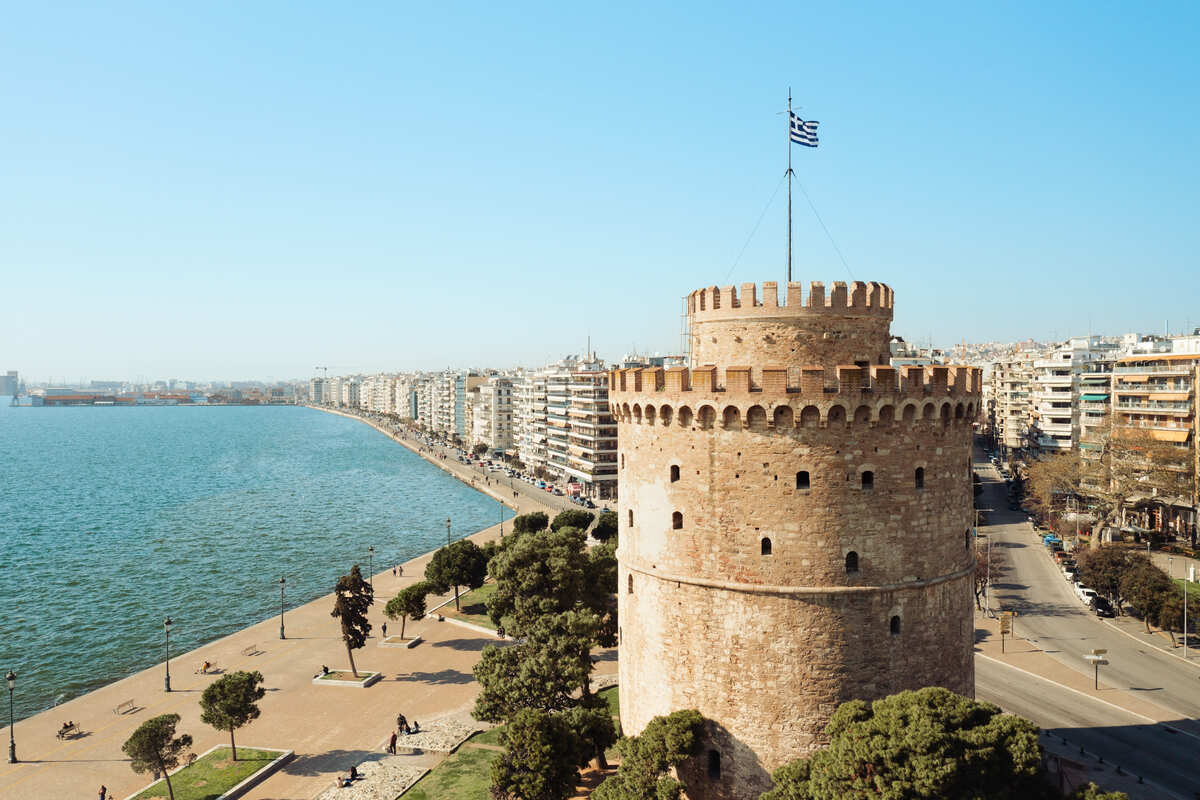
Its waterfront promenade is lined with open-air cafés, where locals and visitors alike gather to sip caffè freddo under the scorching sun, and joggers and cyclists pass by, with the imposing White Tower as backdrop.
That’s Thessaloniki’s most iconic landmark, by the way, a medieval stronghold that once served as a prison.
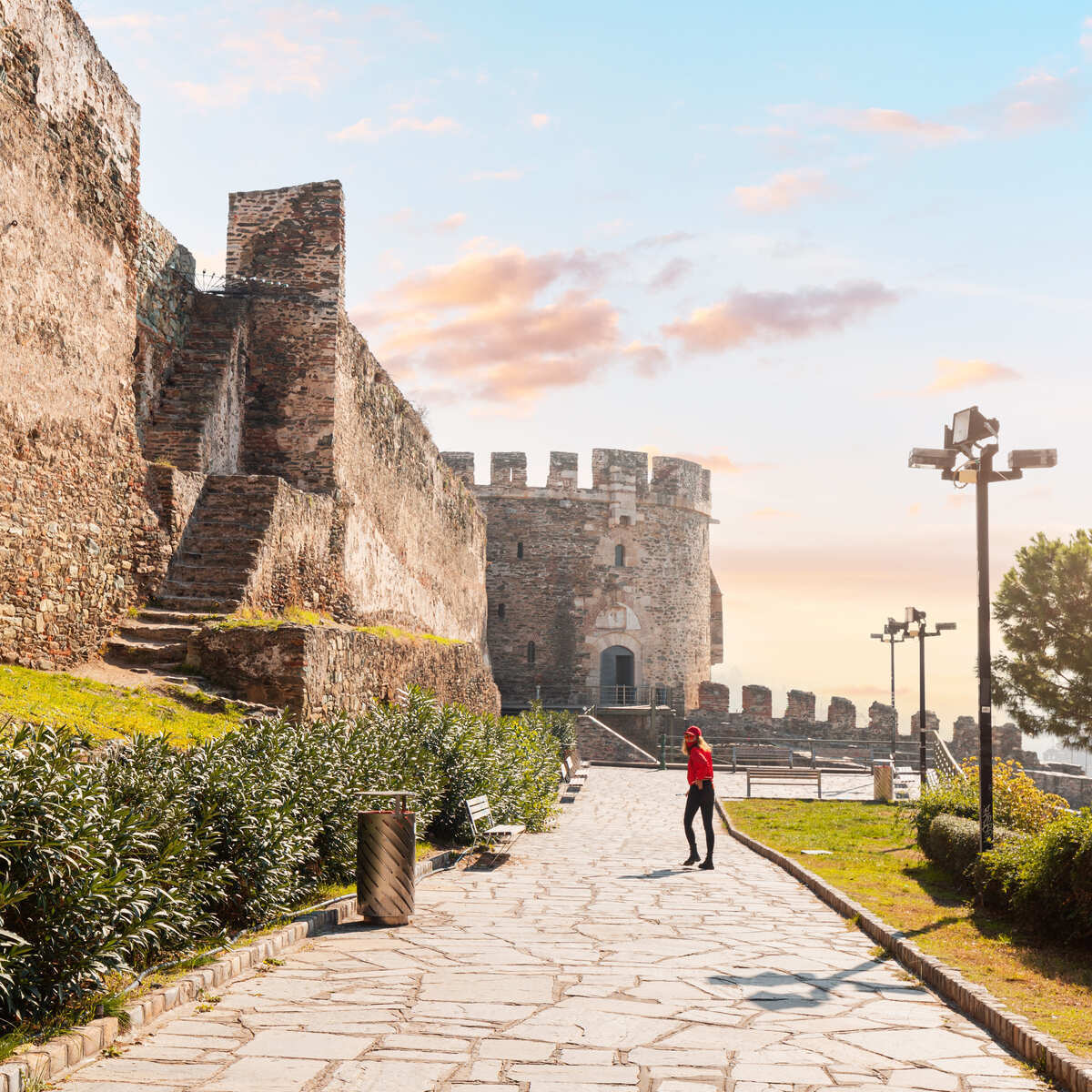
Up Ano Poli, the ‘Old Town’, you’ll find a maze of uphill cobbled lanes flanked by Ottoman-era houses with signature covered wooden balconies, and centuries-old Byzantine churches. The sweeping panorama from the local Acropolis, a fortress with surviving ramparts and towers, is out of this world.
You can literally see all of the city’s distinct layers stacked on top of each other, from the Ancient Greek ruins scattered across the cityscape, to Roman leftovers, Byzantine temples, and Turkish mosques-turned-churches.
If Athens is Greece’s nostalgic soul, Thessaloniki is its pulsating heart: all of the cultures, civilizations, and flavors that shaped the Hellenes’ national identity converge here in one place.
Oh, and let’s not pretend food isn’t like 90% of the reason Thessaloniki is my Greek guilty pleasure. Whether it’s the delicious bougatsa pastries you can snag for only a couple of euros at any street-corner pastry shop, or the killer octopus served at the seafront tavernas, this is not the place to go if you’re on a strict diet.
In that case, definitely steer clear of Modiano Market.
Now take this quiz to find your perfect match!


Stacie Harris is a local resident and reporter of the Maple Grove area. Stacie reports on medicine and science for the Maple Grove Report.