
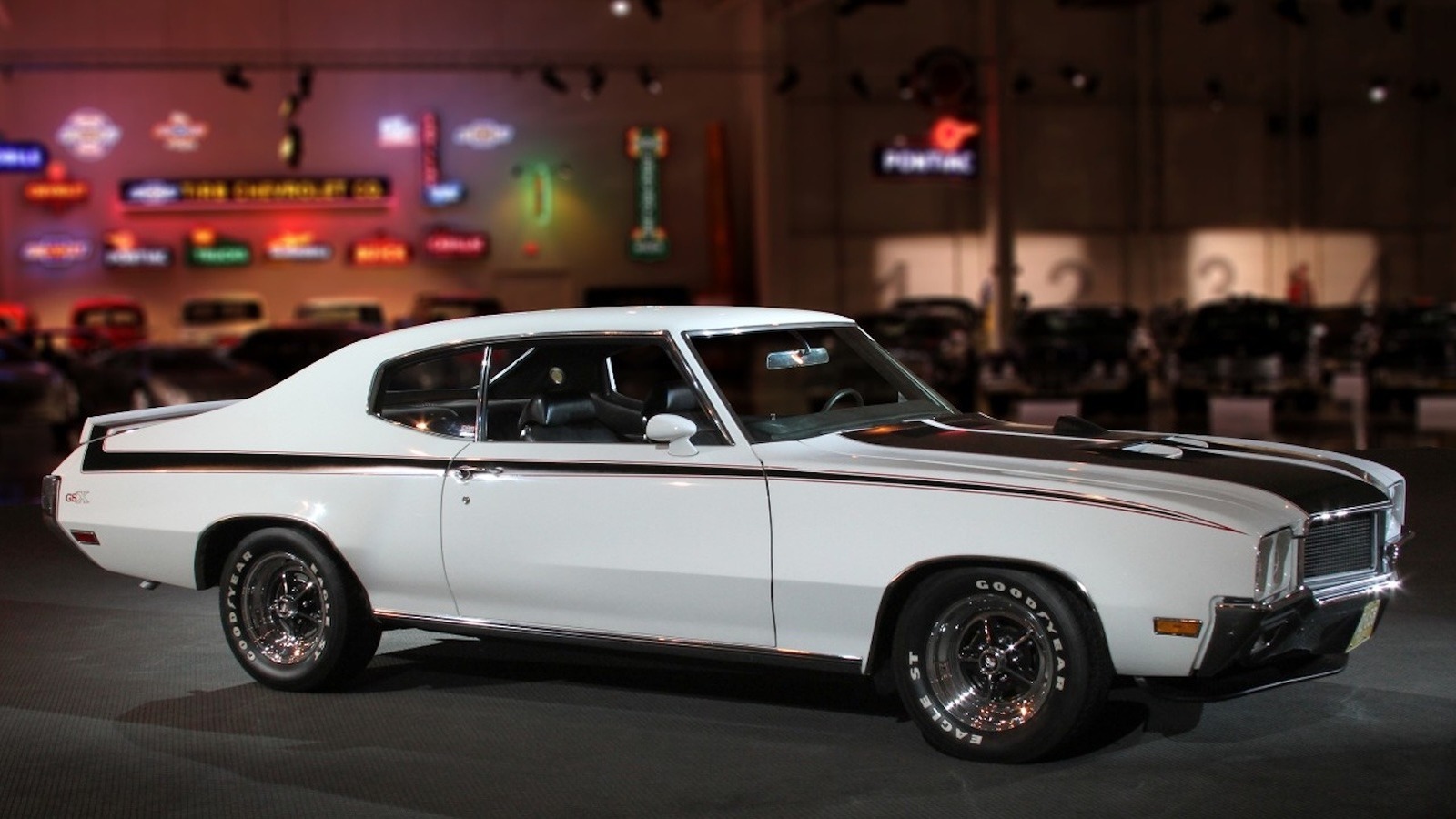

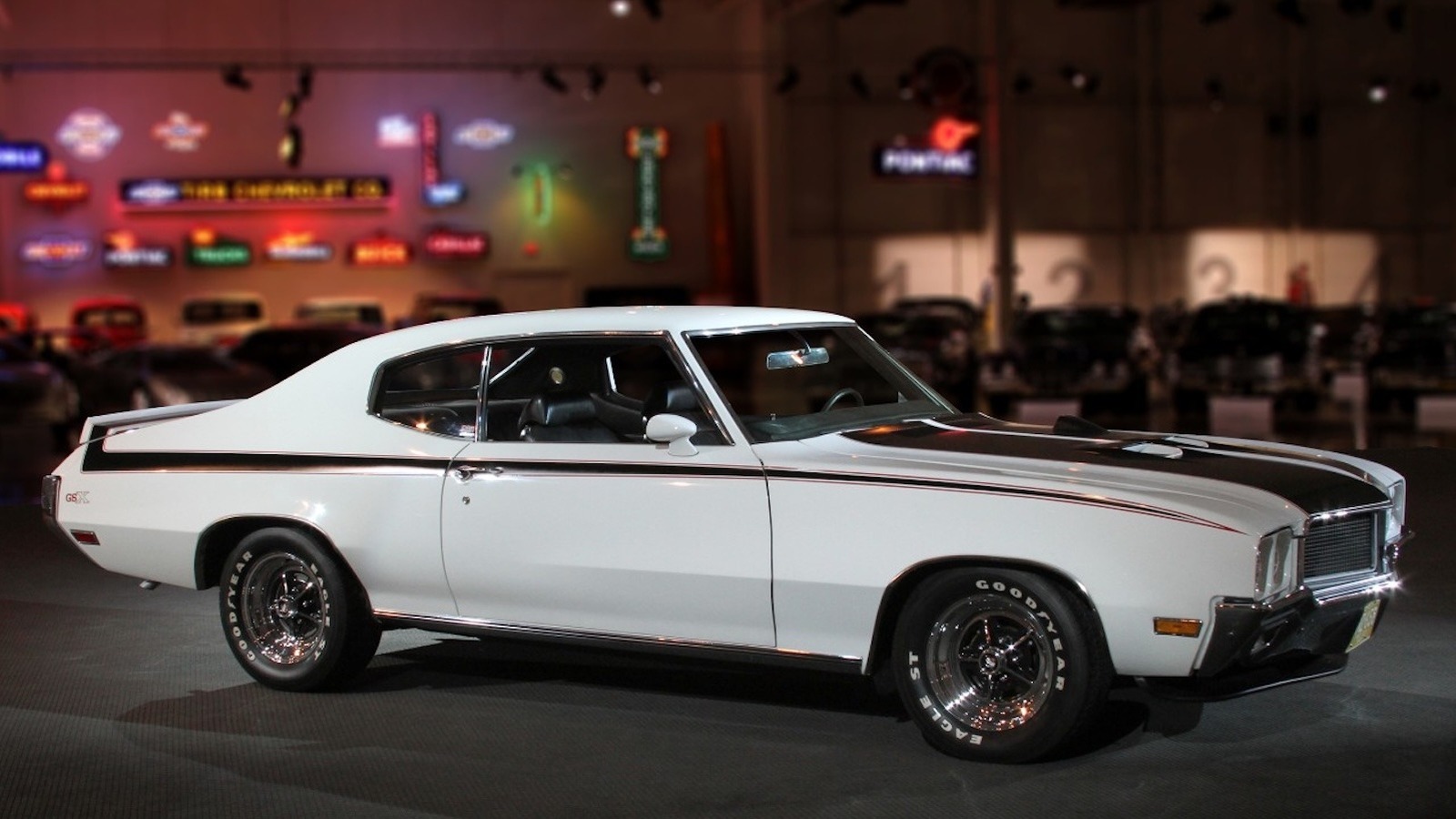
At the height of the muscle car era, Buick made a very rare vehicle. This Buick came with an amazingly powerful engine that set it apart from most others of its type. This Buick muscle car was called the Buick GSX. The GSX was a higher-performance evolution of the GS, or Gran Sport, moniker that Buick had used since it first shoehorned a 401-cubic-inch “nailhead” engine from the larger Wildcat into the intermediate-sized Skylark in 1965. The Buick GSX definitely qualified as having one of the classic muscle car engines that made tons of torque.
Without a doubt, the 455-cubic-inch engine in the GSX did make a huge amount of torque. Even though the base 455 in the GSX was rated at 350 horsepower, which has generally been acknowledged as severely underrated to keep the car insurance underwriters calm, it was also rated at 510 lb-ft of torque, the highest-listed torque rating during the muscle-car heyday.
The Buick GSX was made during a three-year period, during which the fortunes of the muscle cars would both rise and fall. The GSX’s run started in 1970, which could be considered the peak year for American muscle cars, particularly those from General Motors, and ended in 1972. A total of 678 GSX examples were produced in 1970, with just 124 in 1971 and an even lower 44 in 1972. And then the GSX was done, with only 846 units having ever been produced.
What was so special about the GSX?
In reality, the 1970 Buick GSX was essentially a package of appearance items that was applied to the 1970 GS model, which came with either the standard 350-horsepower 455 or the 360-horsepower Stage 1 engine. The buyer had a choice of two exterior colors: the unique Saturn Yellow and the non-exclusive Apollo White.
The GSX also received a front chin spoiler in black, a Buick-branded hood tach originally popularized on Pontiac’s GTO and Grand Prix, a rear spoiler that sat atop the trunk lid, body-colored racing-type mirrors and headlight bezels, a padded steering wheel, and, of course, the two distinctive broad hood stripes, complemented by the narrower stripe running along the body sides from front to rear and crossing at the rear spoiler. A firmed-up suspension called the “Rallye ride package” used gas shocks, sway bars, stiffer springs and bushings, and power front discs to improve the Buick GSX’s handling.
The 455-cubic-inch Buick GSX motor could be upgraded with the Stage 1 package, which added larger valves, a higher-compression cylinder head, a more aggressive camshaft, an upgraded four-barrel Rochester Quadrajet carburetor, and a retimed distributor. This made it one of the most powerful Buick engines, ranked by horsepower. Transmission options were either a three-speed Turbo Hydramatic or a four-speed manual. Performance numbers for the 1970 Buick GSX Stage 1, as performed by Motor Trend, were a quarter-mile time of 13.38 seconds at 105.5 mph. Pretty fast.
What happened to the Buick GSX in 1971 and 1972?
The 1971 Buick GSX saw some changes, as both emission regulations and the heavy hand of the insurance industry began to rein in performance. General Motors required all of its vehicles to run on regular gasoline, which lowered the standard 455’s compression ratio from 10:1 to 8.5:1, while the Stage 1 lost a full two points of compression. Horsepower dropped accordingly, from 350 to 315 in the standard 455 and from 360 to 345 in the Stage 1. One more change that Buick made to the GSX for 1971 and 1972 was the availability of a smaller, lower-powered engine — a 350-cubic-inch mill with a four-barrel carburetor producing 260 horsepower in 1971. Instead of the original two colors of Saturn Yellow and Apollo White, an additional nine colors became available.
1972 marked the final year for this fading muscle car, now available in 12 colors, even though total production amounted to just 44 cars. Power was also down, thanks to the use of “net” horsepower numbers, which lowered the output of the Stage 1 455 engine to 270 horsepower, the standard 455 engine to 250 horsepower, and the 350 engine to just 195 horsepower.
The Buick GSX is a distinctive muscle car that lived during both the best and the worst times of the muscle car era. Its rarity makes it one of the classic American muscle cars worth every penny.

Stephan is the sports journalist for the Maple Grove Report.



