
pros and cons
- Super-loud speaker, beats the AirTag hands down
- Strobe makes finding in low-light conditions easier
- Rechargeable using USB-C.
- Bulky compared to regular finder tags
- Alert Live requires ongoing subscription
- More expensive per tag than even the AirTag.
Follow ZDNET: Add us as a preferred source on Google.
Tracker tags have revolutionized how we keep track of personal belongings, offering a seamless combination of convenience, security, and peace of mind in a single device. With new advancements like extended range and integration into massive networks such as Apple’s Find My and Google’s Find Hub, finding lost or stolen items has become faster and easier than ever before.
But what if a tracker tag could do more than locate your belongings? What if it could help keep you safe? Not in a creepy, invasive way, but as a personal safety device, one that can discreetly or loudly alert your friends, family, or loved ones during an emergency.
Also: My two Raspberry Pi boards cost as much as a laptop now – and AI is to blame
This is precisely what Pebblebee has achieved with the innovative Halo, the first product in its Safe Haven line, designed to prioritize personal safety while still functioning as a reliable finder tag.
More than just a finder tag
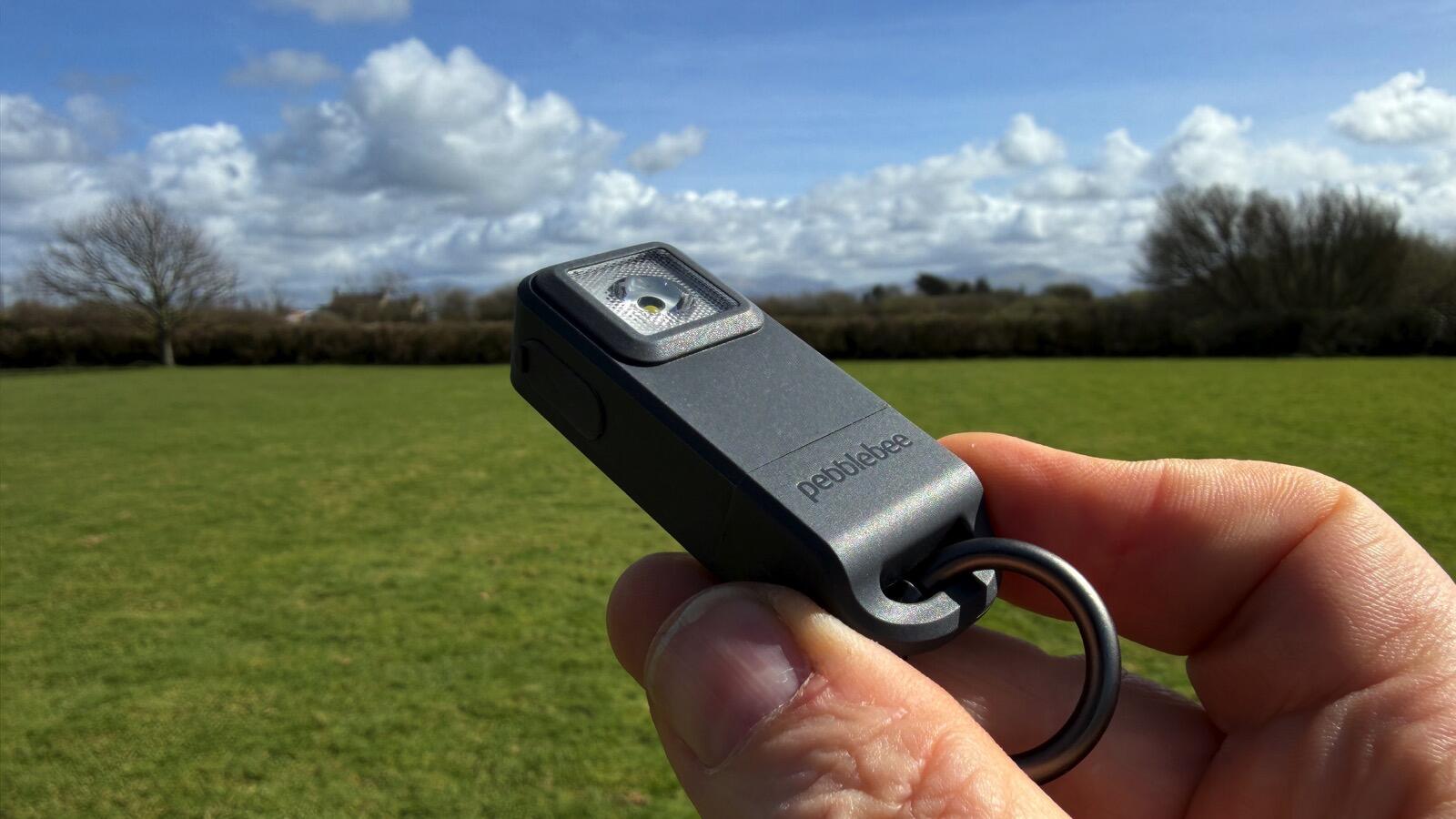
The Halo is much more than a simple tracker. The device combines a physical emergency trigger, a 130dB siren, a 150-lumen strobe, live location sharing, and an everyday-carry flashlight into one compact, rechargeable keychain device.
Also: How my portable wind turbine compares to solar panels – 2 years of testing later
Measuring just 1.1 x 2.7 x 0.7 inches (28 x 69 x 18 mm) and weighing only one ounce (28 grams), the tracker is small enough to clip onto your keys, handbag, or backpack, yet large enough to house an impressively long-lasting battery that keeps the device powered for up to one year per charge.
The Halo is also durable, built to an IP66 rating, meaning it is completely dust-tight and can withstand strong water jets from any direction. The device is rugged enough to handle everyday wear and tear, whether it’s clipped to your bag on a rainy day or dropped into a sandy environment.
Finder tag features
As a traditional finder tag, the Halo delivers on expectations. The device is compatible with both Apple’s Find My and Google’s Find Hub, allowing users to choose the ecosystem that best suits their needs.
Also: You’re being tracked online – 9 easy ways to stop the surveillance
The Halo displays its location on a map and offers a Bluetooth finding range of up to 500 feet (150 meters) under ideal conditions, making it easy to locate misplaced items. Whether you’ve lost your keys in the couch cushions or left your bag at a coffee shop, the Halo has you covered.
Personal safety features
Where the Halo truly shines is as a personal safety device. The device features an ear-piercing 130dB siren and 150-lumen strobe lights, offering high levels of audible and visible deterrence. For context, 130dB is at the threshold of pain for most people (yes, I tested it, and it’s loud enough to make me wince), and the 150-lumen strobe is bright enough to grab attention in an emergency. These features make the Halo a powerful tool for deterring threats and signaling for help.
Also: The best GPS trackers and devices for kids you can buy now
All safety features are customizable using the Pebblebee app available for Android and iOS.
Lots of customization is possible in the Pebblebee app.
Adrian Kingsley-Hughes/ZDNET
Easy activation
Activating the Halo is simple and intuitive. The device is pull-apart, meaning you only need to grab and pull it to trigger an alert. This motion is easy to perform, even in high-stress or adrenaline-filled situations.
Despite its ease of activation, the Halo is designed to stay securely held together during normal use, so you don’t have to worry about accidentally setting it off.
Also: The only lithium button battery brand I recommend now – for serious safety reasons
When activated, the Halo doesn’t just make noise and flash lights. The device also sends its live location to up to five trusted contacts in the user’s Safety Circle. These contacts will continue to receive real-time location updates until the alert is deactivated using the Pebblebee app. This feature, called Alert Live, is included with a complimentary 12-month subscription, which can be renewed annually for $24.99.
Silent alerts
For situations where noise or flashing lights might escalate the danger, the Halo offers a silent alert option. This thoughtful feature allows users to notify their Safety Circle discreetly, without activating the siren or strobe. It’s perfect for emergencies where subtlety and stealth are crucial, such as dealing with a suspicious individual or navigating a tense situation where drawing attention could worsen the threat.
Also: The best parental control apps to keep your kids safe
With this feature, the Halo empowers users to adapt their response to the situation, offering peace of mind and an added layer of security in unpredictable circumstances.
How does it compare to the AirTag?
The Apple AirTag’s precision-finding feature, which guides you to the tag’s position as long as you’re within 30 to 100 feet of it, is this tag’s killer feature. No other tag comes close, and that’s because AirTags rely on Ultra Wideband as well as Bluetooth, whereas all other tags rely on Bluetooth only.
For iPhone users, AirTags are hard to beat.
Also: I cracked open cheap charging gadgets from Temu – and it was worse than I expected
When it comes to third-party tags, Halo is about as good as you’ll find, both for locating the tag and in speaker volume (the Halo is far louder than an AirTag). The addition of a strobe makes finding the tag in low-light conditions (or when it’s buried in the sofa) a lot easier.
The built-in battery is also nice, because it means not having to mess with potentially dangerous button cells.
But what about…?
Now, let me address a question I anticipate hearing: ‘Why bother with the Halo when you could carry pepper spray, a knife, a stun gun, or some other self-defense tool?’
A fair question, but here’s why the Halo still stands out:
- Training and proficiency: Many self-defense tools require proper training to use effectively. Without training, these items may not provide the protection you’re hoping for and could even put you in greater danger. The Halo, on the other hand, is simple to use in any situation.
- Legality and accessibility: Self-defense tools like pepper spray, knives, or stun guns are illegal or heavily restricted in many places around the world. Even in regions where they’re legal, you often can’t carry them in certain locations, such as airports, schools, or government buildings. The Halo faces none of these restrictions and can be carried virtually anywhere.
- Safety: Physical self-defense tools can be turned against the user in a confrontation, which is a serious risk. The Halo avoids this issue entirely while still offering powerful deterrence features.
- Alerts: Most self-defense tools can’t notify trusted contacts when you’re in danger. The Halo’s ability to send live location updates to your Safety Circle is a critical feature that sets it apart, ensuring help can be on the way even if you can’t call for it yourself.
While traditional self-defense tools certainly have their place, the Halo offers a safer, more accessible, and proactive alternative for personal protection.
ZDNET’s buying advice
The Pebblebee Halo retails for $59.99, which might seem a high price for a finder tag. However, this device offers so much more than that capability. By transforming a standard tracker into a versatile personal safety tool, the Halo stands out as a truly innovative product. Its combination of range, precision, and thoughtful safety features — the siren, strobe, flashlight, and the Alert Live feature — makes it a standout in its category.
If you’re looking for a device that not only helps you keep track of your belongings but also prioritizes your personal safety, the Halo is worth the investment. It’s small, powerful, and designed to provide peace of mind that few other devices can.