
Most car enthusiasts know that Hyundai Motor Group owns three car brands: Hyundai, Kia, and its luxury brand Genesis. Its success has helped Korea become one of the world’s leading carmaking nations, but dig a little deeper into HMG’s lengthy list of subsidiaries, and you’ll find that it offers a lot more than just cars. Its many divisions include companies that deal with everything from financial services to logistics and even a farmland investment company.
The conglomerate was even bigger, but the original Hyundai Group was split into several distinct entities following the Asian financial crisis in the late ’90s. Here, we’re focusing on products made by subsidiaries of the Hyundai Motor Group, and not those made by HD Hyundai (formerly called Hyundai Heavy Industries Group). HD Hyundai’s current business includes building everything from ships to construction equipment, but Hyundai Motor Group makes an even more diverse array of products.
Steel
As well as making cars, Hyundai also produces the steel that’s used to build them through its subsidiary Hyundai Steel. According to the company, it makes 24 million tons of steel every year, with a significant proportion used in the automotive industry. Hyundai Steel also supplies the shipbuilding, energy, and construction industries, selling a variety of products including section steel, plating, and rebar. One of the company’s most notable projects was making steel for a bridge that was built over the waters of the Bosphorus Strait, connecting the continents of Europe and Asia.
The company can trace its roots back to 1953, when it was originally founded as the Korea Heavy Industry Corporation. It became part of the Hyundai Group in 1978, and after the Group’s reorganization, it became a subsidiary of Hyundai Motor Group in 2001. As well as expanding its steel-making capabilities over the decades, Hyundai Steel has also produced hydrogen fuel since 2016. Hyundai is one of only a handful of carmakers to mass-produce hydrogen fuel cell cars, and at the time of writing, it is preparing to launch a new generation of its NEXO FCEV.
Trains
High-speed rail systems are being built all over the world, with Brazil recently announcing that it was building a bullet train and Uzbekistan upgrading its railway system with six high-speed electric trains. Uzbekistan’s new trains are supplied by Hyundai Rotem, a subsidiary of the Hyundai Motor Group that builds a wide variety of vehicles. The company has also recently built new driverless passenger trains (EMUs) for a line in Taiwan, and has recently been awarded contracts to build similar trains for public transit systems in the USA, Australia, Morocco, and Egypt.
Hyundai Rotem has a long history of building trains of various kinds, with its earliest locomotives built for Korea’s domestic rail system. After being founded in 1977, the company delivered its first diesel locomotive just two years later. Through the ’90s, Hyundai Rotem began to win contracts for railway projects in other parts of Asia, such as in the Philippines and Indonesia. It also built a magnetic maglev train to transport visitors to the Daejeon Expo in Korea in 1993. Much like Hyundai Steel, Hyundai Rotem formally became part of Hyundai Motor Group in 2001, after the former Hyundai Group was broken up.
Tanks
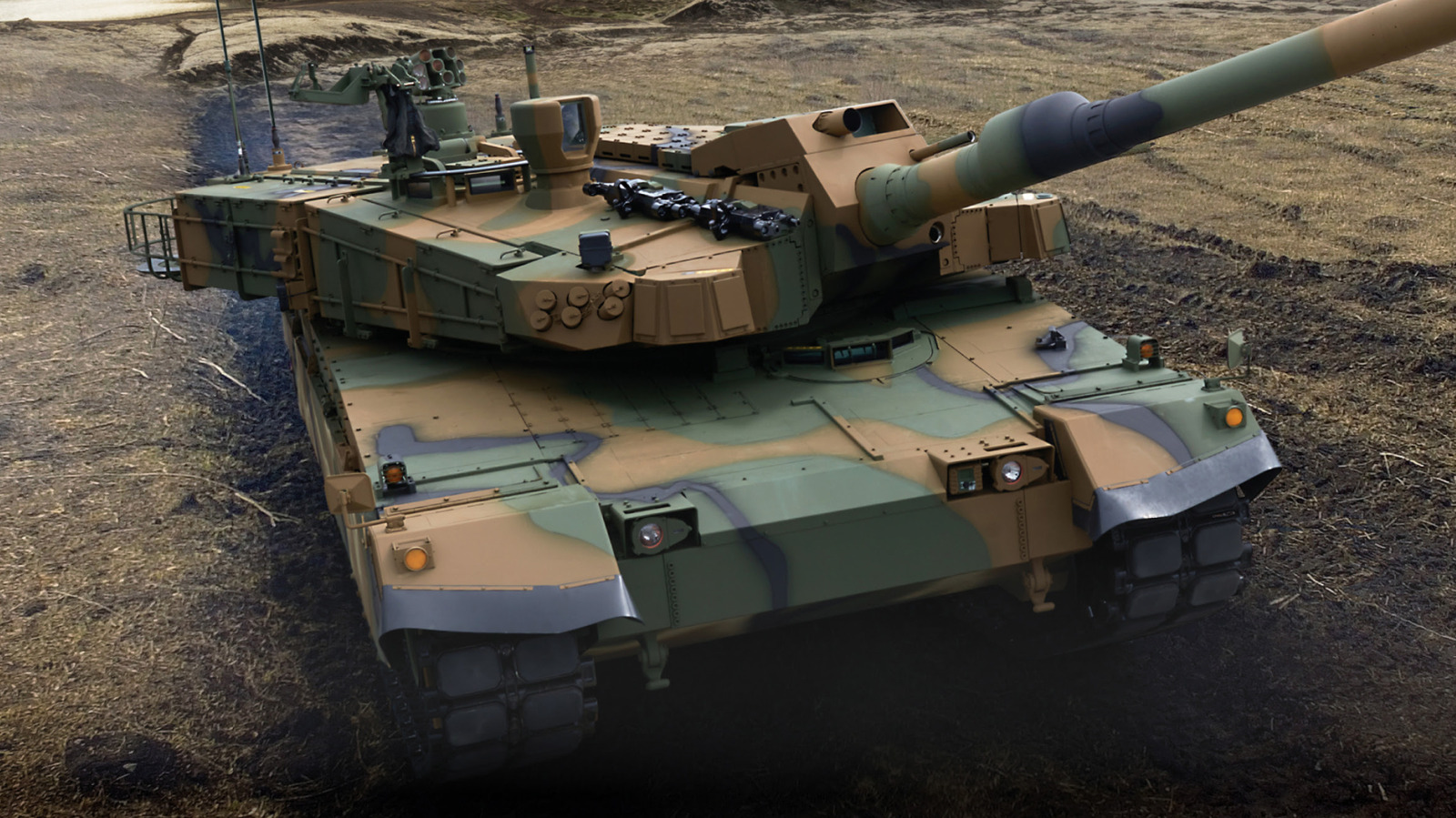
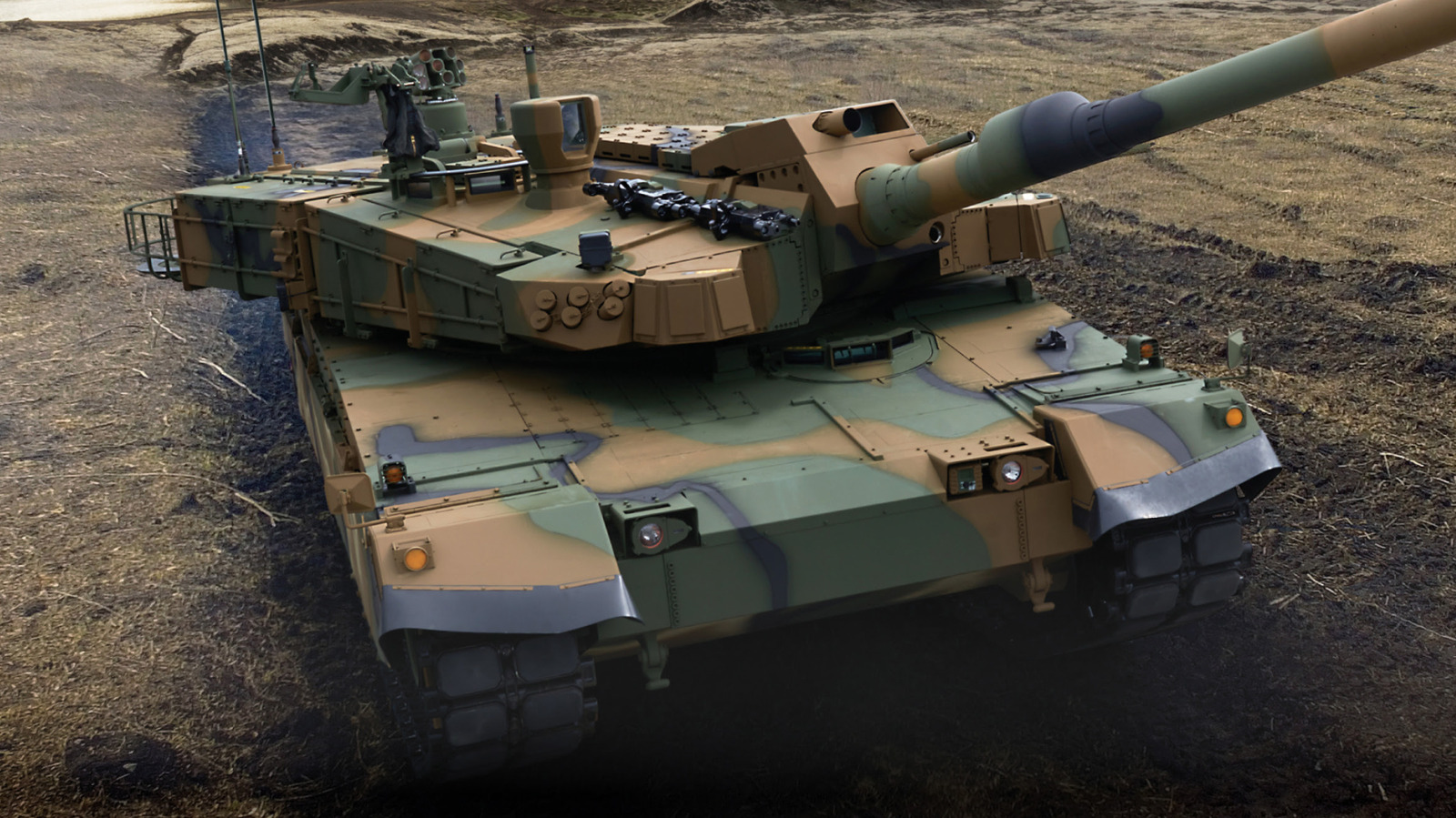
Hyundai also produces tanks, most notably the K2 Black Panther tank. The K2 was built to be the Republic of Korea’s main battle tank, but Hyundai Rotem has also built a version for the Polish armed forces. A new Middle East-specific variant was also unveiled in March 2026, but at the time of writing, it has not been confirmed whether or not the tank will enter production.
In late 2025, Hyundai Rotem also unveiled its next-generation K3 tank, which will run on hydrogen and feature stealth technology. It’s currently under development, with no concrete date set for production to begin. The company has been making tanks for almost as long as it has been making trains, with the first K1 tank entering development in 1984. It remains part of Korea’s military fleet today, albeit in upgraded form. The first upgraded K1E1 tanks launched in 2013, and Korea plans to upgrade its remaining K1 tanks to the K1E1 design by the end of 2026.
Infrastructure
Another arm of the Hyundai Motor Group is Hyundai Engineering and Construction, which builds road and energy infrastructure as well as apartment buildings. The company has worked on a number of major bridge projects across the world, including the Third Bosphorus Bridge in Turkey in partnership with Hyundai Steel. In Qatar, Hyundai E&C built the Lusail Expressway, a highway that links Lusail City with the country’s capital, Doha. Elsewhere in the Middle East, the company built the Sheikh Jaber Al-Ahmad Al-Sabah Causeway, a huge bridge that stretches across the Bay of Kuwait.
One of Hyundai E&C’s earliest overseas projects was the Penang Bridge in Malaysia, which opened in 1985. At the time of its opening, it was the longest bridge in Asia and one of the longest bridges anywhere in the world. In the decades since, Asia has become a world leader in making lengthy bridges, with many of the world’s current longest bridges located in China, Taiwan, and Japan.
As well as building road infrastructure, Hyundai E&C has also built a surprisingly diverse array of offices, hospitals, and apartment blocks. Among many others, it takes credit for making HD Hyundai’s Global R&D Center in Seongnam, Korea, the Lusail Plaza Tower in Qatar, and the Medical City Complex in Baghdad, Iraq.
Resorts
One of the most unexpected companies within the Hyundai Motor Group stable is Haevichi, a luxury resort developer. It’s one of the younger companies within the group, having only been established at the turn of the century. It was established to build the Haevichi Resort in Jeju, Korea, but it has since expanded to build a chain of resorts, restaurants, hotels, and offices around the country.
Haevichi operates several franchised hotels that are marketed by brands owned by Marriott International, including the Westin Resort on the U.S. territory of Guam. The Korean company purchased the resort in 2016, and in 2022, Haevichi expanded its Marriott partnership by opening hotels in Korea under the Moxy and Le Méridien brands.
Alongside its Marriott partnership, Haevichi also has long-standing agreements with other divisions of the Hyundai Motor Group. It operates restaurants within the HMG Experience Driving Center in Chungcheongnam-do province and within Hyundai’s various Motor Studio locations, as well as managing operations at Hyundai’s training campus.

Stephan is the sports journalist for the Maple Grove Report.