Roblox Will Roll Out Age-Based Accounts Amid Child-Safety Push


Evolving global regulations aimed at limiting child access to harmful content, as well as incidents and lawsuits related to youth safety online, have prompted Roblox to revise how it handles accounts for minors and verifies users’ ages.

Starting in early June, the popular online game platform plans to group its younger users into two new account types: “Roblox Kids” for those ages 5 to 8, and “Roblox Select” for those ages 9 to 15. Everyone else ages 16 and older will be in an age group called “Roblox.” 

The company said that Kids and Select accounts will have distinct background treatments across the Roblox apps to make it clear which account type is being used. Accounts will be assigned to age groups as determined by the platform’s global age-check technology or by a verified parent. 

Roblox’s CEO and founder, David Baszucki, detailed the changes in a blog post on Monday, including restrictions for each account type and the parental control options that will soon be available on Roblox. 

“When it comes to safety, we do the right thing, including proactive filtering, age-checks, parental controls, and providing clear content ratings, because the well-being of our community is our highest priority,” Baszucki said in the post. 

Chat functionality has been a particular point of criticism against Roblox, which has faced scrutiny and lawsuits related to online grooming, when adult predators contact minors through unmonitored chats. In one recent high-profile case in the UK, a 19-year-old man contacted a 14-year-old via Roblox chat, then encouraged her to move to other messaging platforms, where he went on to engage in “highly sexualized” conversations and shared intimate images and videos.

As part of the new age groupings, Kids accounts will have platform chat turned off by default, and access will be limited to games with a Minimal or Mild content maturity label. For Select accounts, chat communication will be “gradually introduced with safeguards,” and access will be capped at games with Moderate content maturity labels

Pressure to age-verify

As more scrutiny is placed on social media and gaming platforms that attract young audiences, various countries and states have introduced laws requiring platforms to verify users’ ages, often requiring government-issued IDs or parental consent to create accounts. 

Companies like Discord, OpenAI and Google-owned YouTube have been taking different approaches to introducing age-verification technology. Some are using AI to guess users’ ages to ensure younger people aren’t exposed to inappropriate content or contact.

Discord, for instance, introduced its concept for verifying users’ ages on its platform, something it says it already automates, but was met with a huge backlash. The company ultimately delayed its age-verification requirements.

Part of the challenge in implementing age-verification technology is avoiding disruption to platform engagement. Some companies are facing hurdles in creating systems that are both hard to fool or bypass and that comply with regulations across regions. Age-verification laws are also facing opposition from privacy and free-speech campaigners, who say such regulations can easily violate First Amendment protections and pose acute privacy risks. 


Source link

Leave a Reply

Subscribe to Our Newsletter

Get our latest articles delivered straight to your inbox. No spam, we promise.

Recent Reviews


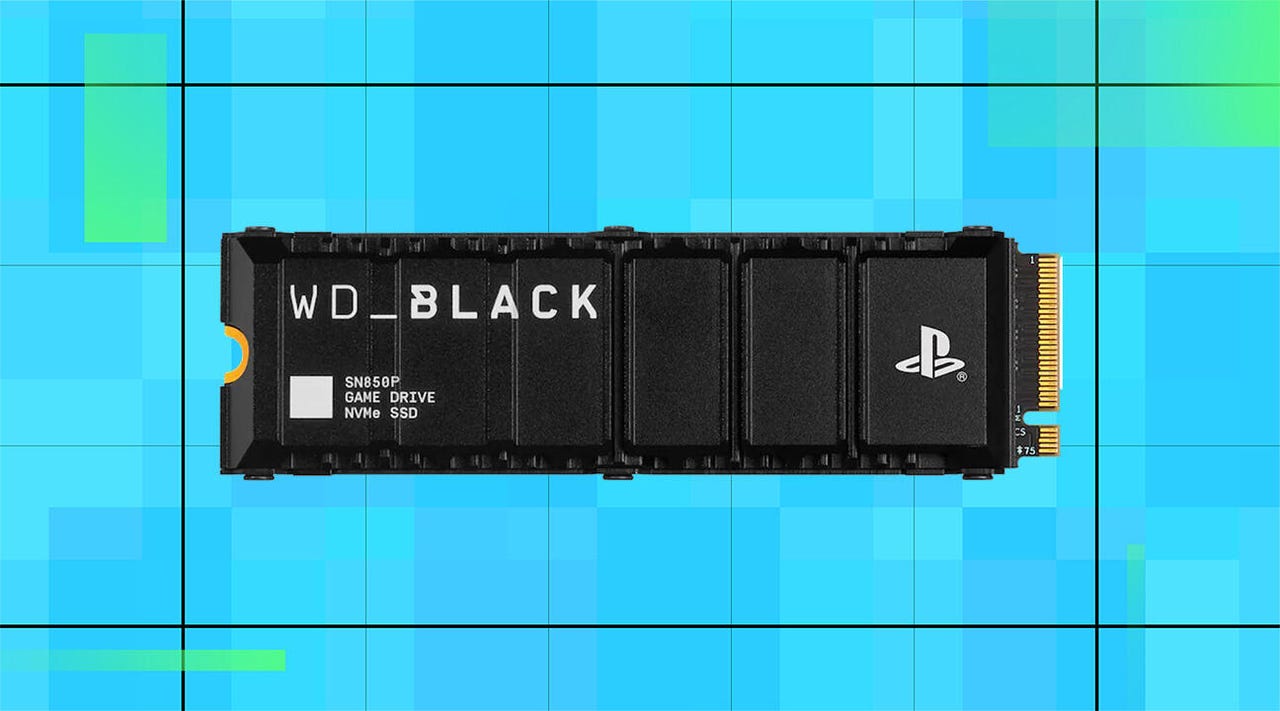
A WD Black SN850P SSD on a blue background

WD/ZDNET

High SSD prices got you down? Right now during Best Buy’s Tech Fest sale, you can save up to $2,800 on the WD Black SN850P storage drive. And while it’s officially licensed for use with PlayStation 5 consoles, it’s easy to reconfigure for use in gaming laptops and desktops for a boost in storage capacity. 

Also: The best Amazon Spring Sale deals: Save on streaming, Apple, Samsung, and more

Available in capacities from 1TB to 8TB, the WD Black SN850P can double, or even quadruple, your available storage space, giving you plenty of room for large game downloads, save files, screenshots, highlight reels, and more. With read and write speeds up to 7300 and 6600 MB/s, respectively, you’ll get much faster loading times than traditional HDDs as well as quicker access to your favorite apps, games, and programs.

Also: SSD vs HDD: What’s the difference, and which should you buy?

The integrated heatsink helps keep everything running at optimal temperatures to prevent data loss or corruption due to overheating. It can also be removed for easier installation in smaller PCs. 

By using flash memory rather than traditional mechanical platters, the WD Black SN850P can provide you with years of reliable data access with much less risk of internal damage due to shocks and bumps.

How I rated this deal 

Prices for RAM and SSD storage drives have skyrocketed as AI companies buy up available stock to power LLMs. And while this particular model is licensed for use with the PS5, you can quickly reconfigure it for use in laptops and desktop PCs. The 2TB model is marked down to $400, bringing it closer to pre-AI pricing, and the 8TB version is almost $2,800 off. While it’s still very expensive, it’s the lowest price I’ve seen on a high-end SSD in a long time. That’s why I gave this deal a 5/5 Editor’s rating.

Deals are subject to sell out or expire anytime, though ZDNET remains committed to finding, sharing, and updating the best product deals for you to score the best savings. Our team of experts regularly checks in on the deals we share to ensure they are still live and obtainable. We’re sorry if you’ve missed out on this deal, but don’t fret — we’re constantly finding new chances to save and sharing them with you at ZDNET.com


Show more

We aim to deliver the most accurate advice to help you shop smarter. ZDNET offers 33 years of experience, 30 hands-on product reviewers, and 10,000 square feet of lab space to ensure we bring you the best of tech. 

In 2025, we refined our approach to deals, developing a measurable system for sharing savings with readers like you. Our editor’s deal rating badges are affixed to most of our deal content, making it easy to interpret our expertise to help you make the best purchase decision.

At the core of this approach is a percentage-off-based system to classify savings offered on top-tech products, combined with a sliding-scale system based on our team members’ expertise and several factors like frequency, brand or product recognition, and more. The result? Hand-crafted deals chosen specifically for ZDNET readers like you, fully backed by our experts. 

Also: How we rate deals at ZDNET in 2026


Show more


Source link