Hisense’s 55‑inch QLED TV is almost a third off today, perfect for a World Cup upgrade


The World Cup kicks off in mere weeks, and a 55-inch QLED screen with Quantum Dot colour and Dolby Atmos sound is a considerably more rewarding way to watch it than whatever you are currently sitting in front of.

That upgrade is the Hisense 55E78QTUK PRO, now down from £449 to £329.98 on Amazon, putting a 2025 QLED with a 144Hz refresh rate within reach for well under £350.

Hisense's 55‑inch QLED on a brown background

Hisense’s 55‑inch QLED TV is almost a third off today, landing just in time for the World Cup

The World Cup arrives later this year, and a 55-inch QLED screen with Quantum Dot colour and Dolby Atmos sounds like a great way to watch it.

View Deal

The 144Hz refresh rate is the headline specification, and it earns its place both in the living room and at a gaming desk, because the panel runs natively at 144Hz with VRR support, meaning football and fast-paced games benefit equally from motion that stays clean rather than blurring under pressure.

Game Mode PRO activates automatically when a console is detected via ALLM, switching the set into a low-latency state with AMD FreeSync Premium PRO handling variable frame rates, so screen tearing and stuttering stop being something you notice mid-match or mid-session.

That same hardware serves film and TV well through the Hi-View AI Engine, which works frame by frame to upscale lower-resolution content towards 4K quality by enhancing sharpness, brightness, contrast, and colour in real time rather than applying a single static correction.

Advertisement

The Whatsapp Logo

Get Updates Straight to Your WhatsApp

Join Now

The Quantum Dot panel itself produces over a billion shades of colour, with Dolby Vision HDR adding further depth to contrast, and the Dolby Atmos built-in speakers handling the audio side with a surround-sound presentation that gives action sequences genuine spatial presence.

Smart features run through the VIDAA platform, which brings Disney+, Netflix, and YouTube built in, so there is no dongle or streaming box required to get started, and the three HDMI ports leave room for a console, a soundbar, and a set-top box alongside each other.

The Hisense 55E78QTUK PRO is a strong pick for households that want a capable all-rounder ahead of a summer of sport, and at £329.98 with 27% off the original price, the timing makes this one of the more straightforward deals of the week.

SQUIRREL_13890777

Advertisement


Source link

Leave a Reply

Subscribe to Our Newsletter

Get our latest articles delivered straight to your inbox. No spam, we promise.

Recent Reviews


In the ever-shifting geopolitical sphere, China’s growing military presence and the ongoing tensions over Taiwan and the South China Sea continue to be a closely watched topic — particularly in regard to China’s ambition for naval power. In recent years, much speculation has been made over the country’s rapid military development, including the capabilities of the newest Chinese amphibious assault ships.

While there’s no denying its military advancements and buildup, much has been made about the logistical and military difficulties that China’s People’s Liberation Army (PLA) would face if it launched an amphibious invasion of Taiwan. However, there’s growing concern that if a Taiwan invasion were to happen, it wouldn’t just be military vessels taking part in the action, but a fleet of commercial vessels, too — including a massive new car ferries that could quickly be repurposed into valuable military transports.

While the possibility of the PLA using commercial vessels for military operations has always been on the table for a potential Taiwan invasion, the scale with which China has been expanding its commercial shipbuilding industry has become a big factor in the PLA’s projection of logistical and military power across the Taiwan Strait. It’s also raised ethical concerns over the idea of putting merchant-marked ships into combat use.

From car ferry to military transport

The rapid growth of modern Chinese industrial capacity is well known, with Chinese electric vehicle factories now able to build a new car every 60 seconds. Likewise, China has developed a massive shipbuilding industry over the last 25 years, with the country now making up more than half of the world’s shipbuilding output. It’s from those two sectors where China’s latest vehicle-carrying super vessels are emerging. 

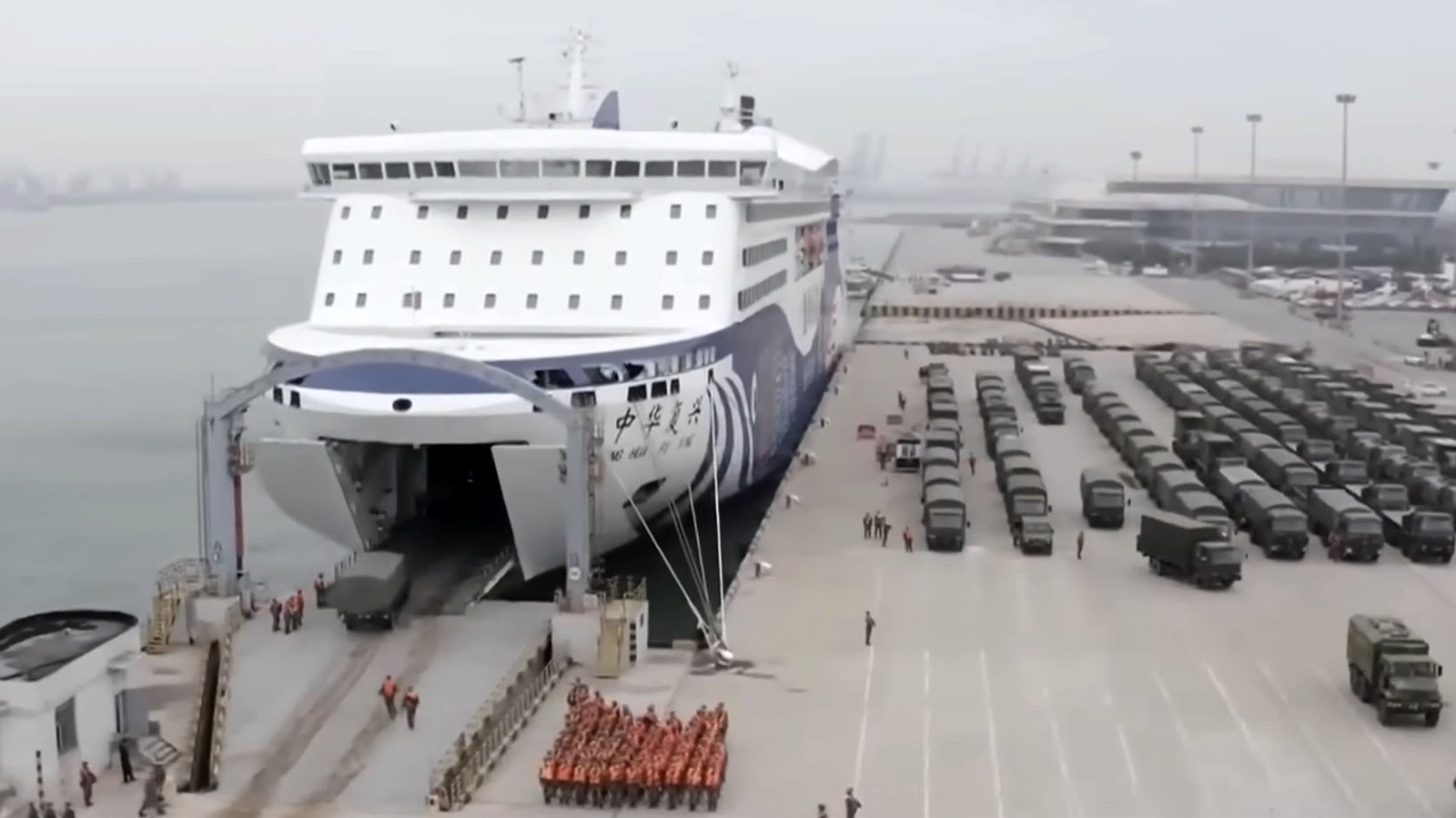
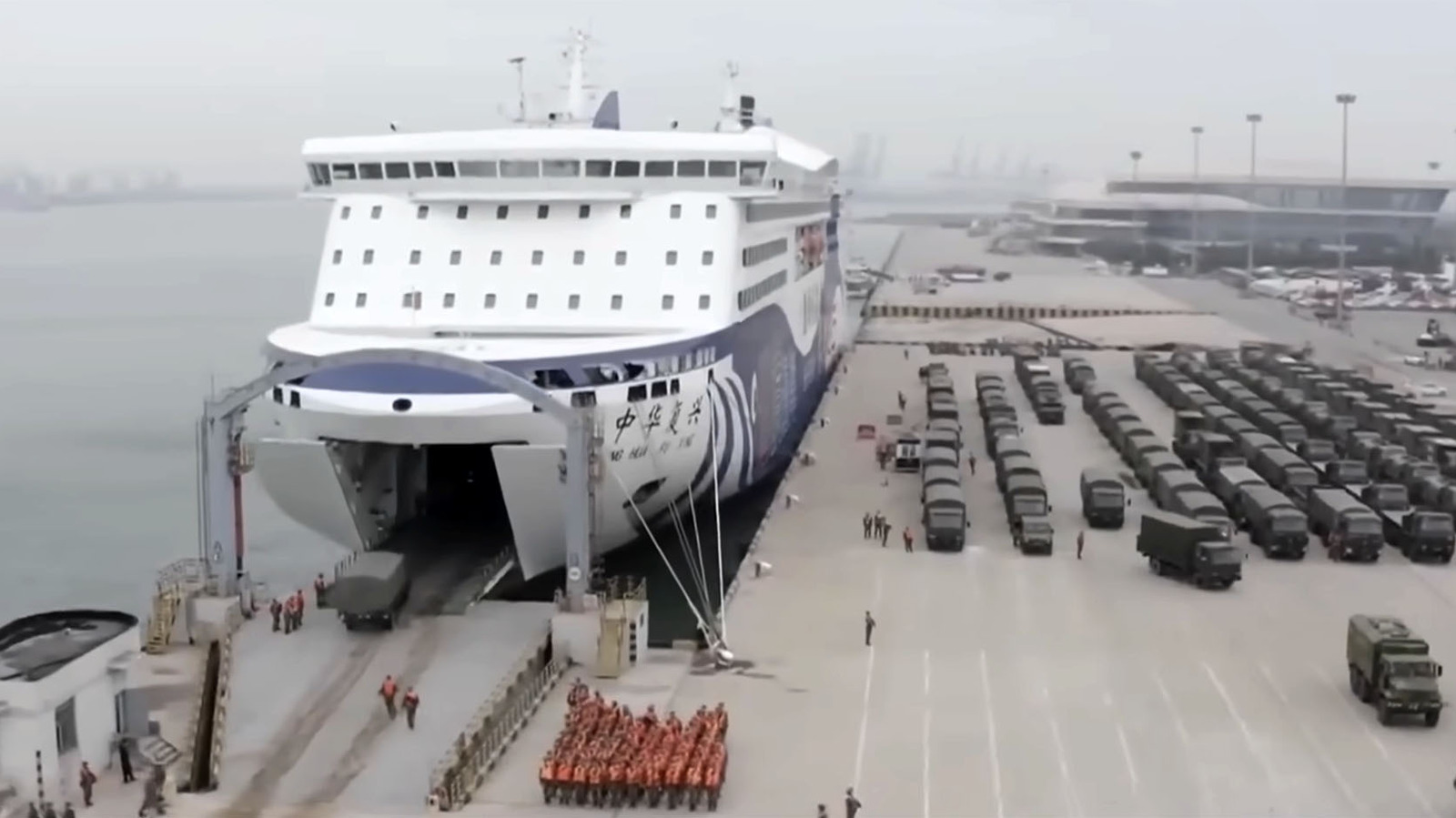
With a capacity to carry over 10,000 new vehicles for transport from factories in Asia to destinations around the world, these ships, known as roll-on/roll-off (Ro-Ro) ferries, are now the biggest of their type in the world. The concept of the PLA putting civilian ferries into military use is not a new one, or even an idea China is trying to hide. Back in 2021, China held a public military exercise where a civilian ferry was used to transport both troops and a whole arsenal of military vehicles, including main battle tanks.

The relatively limited conventional naval lift capacity of the PLA is something that’s been pointed out while game-planning a Chinese amphibious move on Taiwan, and it’s widely expected that the PLA would lean on repurposed civilian vessels to boost its ability to move soldiers and vehicles across the Taiwan Strait. With these newer, high-capacity Ro-Ro ferries added to the fleet, the PLA’s amphibious capacity and reach could grow significantly.

A makeshift amphibious assault ship

However, even with the added capacity of these massive ferries, military analysts have pointed out that Ro-Ro ships would not be able to deploy vehicles and soliders directly onto a beach the way a purpose-built military amphibious assault ship can. Traditionally, to deploy vehicles from these ships, the PLA would first need to capture and then repurpose Taiwan’s existing commercial port facilities into unloading bases for military vehicles and equipment.

However, maybe most alarming is that satellite imagery and U.S. Intelligence reports show that, along with increasing ferry production output, the PLA is also working on a system of barges and floating dock structures to help turn these civilian ferries into more efficient military transports. With this supporting equipment in place, ferries may not need to use existing port infrastructure to bring their equipment on shore.

Beyond the general military concern over China’s growing amphibious capability, there are also ethical concerns if China is planning to rapidly put a fleet of civilian merchant vessels into military service. If the PLA were to deploy these dual-purpose vessels into direct military operations, the United States and its allies would likely be forced to treat civilian-presenting ships as enemy combatants. On top of all the other strategic challenges a Taiwan invasion would bring, the U.S. having to navigate the blurred legal lines between military and merchant vessels could potentially give China a strategic advantage amidst the fog of war.


Source link