This simple email trick saves me from annoying marketing spam (and it’s free to do)


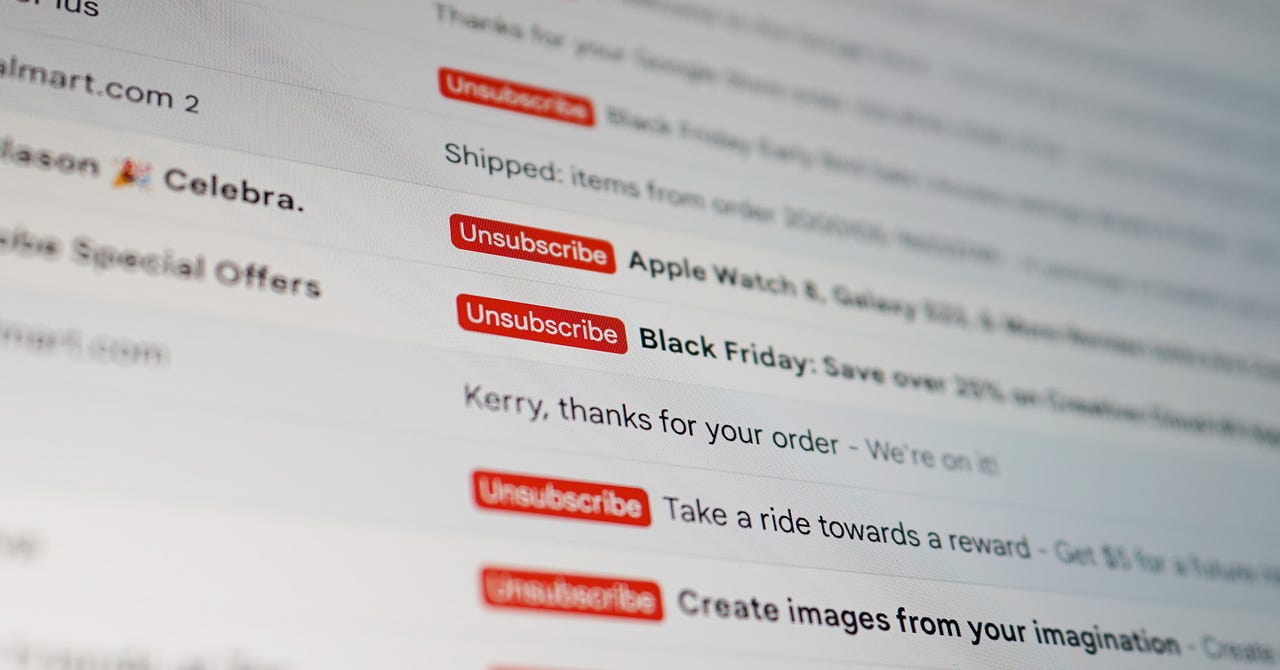
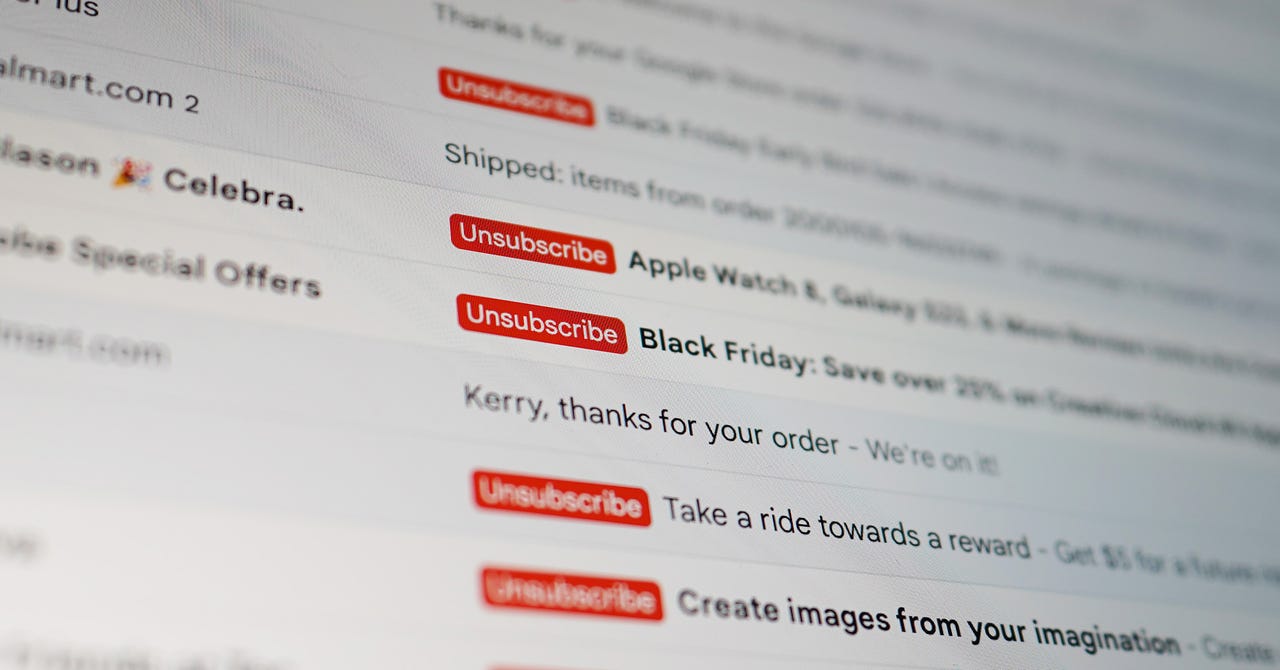
Gmail Unsubscribe labels

Kerry Wan/ZDNET

Follow ZDNET: Add us as a preferred source on Google.


As a Gen-Z shopping editor, I spend most of my dollars online. I’m always looking for easy ways to save with promo codes, sign-ups, memberships, and more. 

I’ve also written full guides on how I’ve saved over $500 using services like Rakuten. But most importantly, after covering numerous sale events like Black Friday and Prime Day, I’ve learned how to avoid the deluge of spam that usually follows signing up for coupons or free shipping. 

Also: 3 money-saving tricks I use every time I shop online – and you should too

That’s why I’m sharing one of my favorite email tips that helps put marketing, ads, promotions, and other salesy emails in your rearview. This first tip is so obvious, you’ve probably never thought twice about it before. I’ve been using this shopping tip for almost a decade, and it’s still as functional as ever. Plus, it’s totally free. 

How I decrease marketing clutter in my inbox

So, you want to know the easiest way to ditch junk shopping mail that doesn’t ever seem to wind up in your junk folder? Stop letting retailers access that email from the get-go, and set up a… shopping email!

That’s it. That’s the tip. The easiest way to never let sales emails into the inboxes that matter the most is to never open the door in the first place. My shopping email is a free email account I set up through Gmail. Instead of ever being tied to anything important, this is the throwaway email I use when I shop online. 

I sign up for new-member offers and promo codes with it, create online retailer accounts with it, and have even graduated to using it as my primary email for nearly all my subscription services, too.

No time-consuming unsubscribe campaign needed: a shopping email can help sift out the often-large portion of spam or junk mail in most people’s inboxes. 

Screenshot from Amazon blog post

Don’t shop online until you know this one simple tip. 

Amazon

This shopping email is additionally the one I fill out when I order anything online. Not only does this help reduce the deluge of retailer emails in my personal inbox, but it also means any online orders or receipts are already stored on their own account.

I’ve found this especially helpful when I need to make a return or source specifics on a purchase, as I’m digging through a much smaller pool of emails than I would in a primary inbox. 

Also: I’ve used Rakuten for a year and earned nearly $500 – here’s how

Similarly, it helps to know that this shopping email is the one tied to several of my entertainment subscriptions. Renewal info, price changes, login notifications, and one-time passcodes all appear in one place, which is, once again, much less cluttered with other email. 

I’ve found that over the years of using this email hack, I’ve had an easier time navigating my personal email accounts and can check my digital mail more efficiently. I also find myself more tuned in to newsletters or other news I receive via my primary email because it’s not mixed in between a bunch of marketing language. I open and read more of the content I want to consumer, and spend less time hitting delete on junk mail. 

But the very best part of my shopping email? Mass-deleting a majority of those marketing memos without a second thought. 


Source link

Leave a Reply

Subscribe to Our Newsletter

Get our latest articles delivered straight to your inbox. No spam, we promise.

Recent Reviews


A new class-action lawsuit, filed on Monday by three teenage girls and their guardians, alleges that Elon Musk’s xAI created and distributed child sexual abuse material featuring their faces and likenesses with its Grok AI tech.

“Their lives have been shattered by the devastating loss of privacy, dignity, and personal safety that the production and dissemination of this CSAM have caused,” the filing says. “xAI’s financial gain through the increased use of its image- and video-making product came at their expense and well-being.”

From December to early January, Grok allowed many AI and X social media users to create AI-generated nonconsensual intimate images, sometimes known as deepfake porn. Reports estimate that Grok users made 4.4 million “undressed” or “nudified” images, 41% of the total number of images created, over a period of nine days. 

X, xAI and its safety and child safety divisions did not immediately respond to a request for comment.

The wave of “undressed” images stirred outrage around the world. The European Commission quickly launched an investigation, while Malaysia and Indonesia banned X within their borders. Some US government representatives called on Apple and Google to remove the app from their app stores for violating their policies, but no federal investigation into X or xAI has been opened. A similar, separate class-action lawsuit was filed (PDF) by a South Carolina woman in late January.

The dehumanizing trend highlighted just how capable modern AI image tools are at creating content that seems realistic. The new complaint compares Grok’s self-proclaimed “spicy AI” generation to the “dark arts” with its ease of subjecting children to “any pose, however sick, however fetishized, however unlawful.”

“To the viewer, the resulting video appears entirely real. For the child, her identifying features will now forever be attached to a video depicting her own child sexual abuse,” the complaint reads.

AI Atlas

The complaint says xAI is at fault because it did not employ industry-standard guardrails that would prevent abusers from making this content. It says xAI licensed use of its tech to third-party companies abroad, which sold subscriptions that led abusers to make child sexual abuse images featuring the faces and likenesses of the victims. The requests ran through xAI’s servers, which makes the company liable, the complaint argues.

The lawsuit was filed by three Jane Does, pseudonyms given to the teens to protect their identities. Jane Doe 1 was first alerted to the fact that abusive, AI-generated sexual material of her was circulating on the web by an anonymous Instagram message in early December. The filing says she was told about a Discord server by the anonymous Instagram user, where the material was shared. That led Jane Doe 1 and her family, and eventually law enforcement, to find and arrest one perpetrator.

Ongoing investigations led the families of Jane Does 2 and 3 to learn their children’s images had been transformed with xAI tech into abusive material.


Source link



