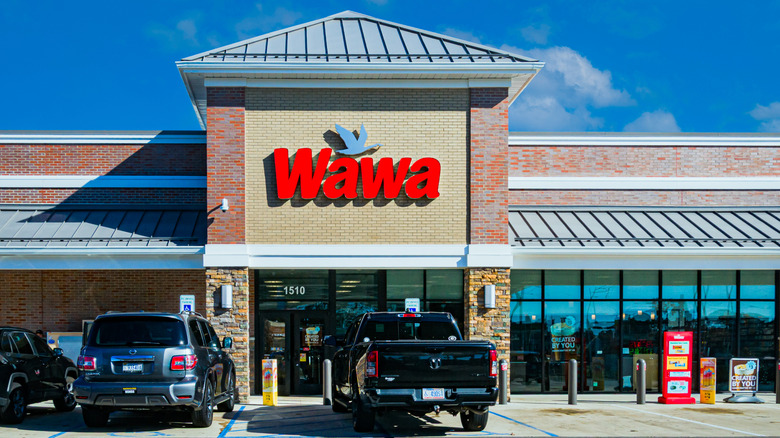

Wawa, a large convenience store and gas station chain, started out in 1902 when George Wood founded the Wawa Dairy in Delaware County, Pennsylvania. Its products were sourced from its herd of certified Guernsey cows, which produced what was called “doctor certified” milk, delivered by the dairy to the homes of area residents. The name “Wawa”, which is the Native American Ojibwe word for the Canada goose that appears in the company’s logo, is also the name of the town in Delaware County where the dairy originally existed.
Fast forward to 1964 when Grahame Wood, the founder’s grandson, saw the milk delivery business dwindling. He realized that consumers’ shopping habits were changing, with supermarkets becoming more common as places to purchase their dairy products. This led Wood to open the first Wawa Food Market in Folsom, Pennsylvania that year. Within five years, the Wawa chain expanded to the neighboring states of Delaware and New Jersey. Prepared foods like fried chicken and hamburgers were added, with the now-famous hoagies introduced in 1970. While gas stations were not part of the original Wawa plan, the first store that included fuel was built in 1996, in Millsboro, Delaware. And since around 2004, every single Wawa store built has had a gas station.
As far as the ownership of Wawa, one of the the best U.S. convenience stores goes, there are two levels to consider. One of these is the Wood family, who share approximately 60% of the business. Then there are the Wawa employees, who own the other 40% through an employee stock ownership plan.
What else should you know about Wawa?
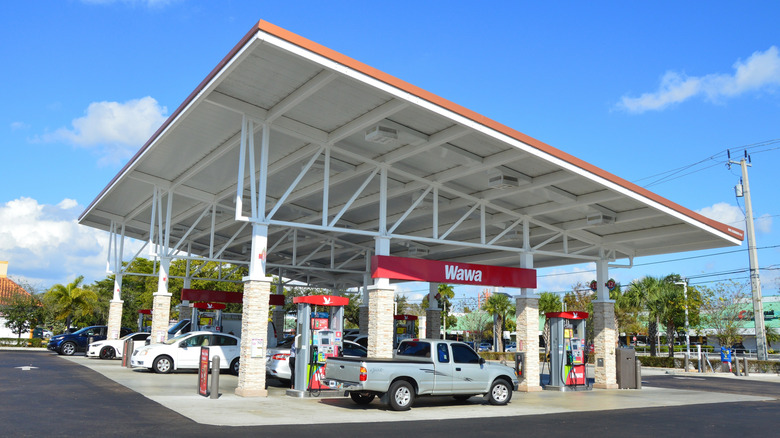
As of April 2026, there were a total of 1,212 Wawa stores in the U.S., some of which let you charge your EV. They are located in 14 different states and territories, primarily in the mid-Atlantic and Florida. The three states with the largest numbers of Wawa stores account for around three-quarters of all of the retailer’s locations. These are Florida with 317 stores, New Jersey with 299 stores, and Pennsylvania with 272 stores. Other places having significant numbers of stores include Virginia with 133, Maryland with 69, and Delaware with 51.
Wawa has taken innovative approaches to enhance their customers’ experiences in getting what they need during each visit to one of its convenience stores. It started in 2002 with touchscreen kiosks for ordering in all locations. From 2010 to 2012, lattes, macchiatos, hot chocolate, smoothies, and frozen cappuccinos were added to the menu. The year 2016 saw Wawa opening its 500th store with a gas station, which tends to customers are welcome to use (provided they follow certain rules of etiquette). In 2017, Wawa welcomed Tesla as its partner in providing Superchargers at some stores. Wawa added delivery and curbside pickup options in 2021 as well.
Wawa has also grown to the point where it is giving back. Some milestones on its journey include the establishment of The Wawa Foundation in 2014, placing its emphasis on feeding the hungry and supporting health initiatives. The Wawa Volunteer Center at the Children’s Hospital of Philadelphia in was created in 2016, while the Foundation donated $1.5 million to the American Red Cross for hurricane relief in 2017.

Stephan is the sports journalist for the Maple Grove Report.