Another State Is Cracking Down On Slow Drivers Hogging The Left Lane


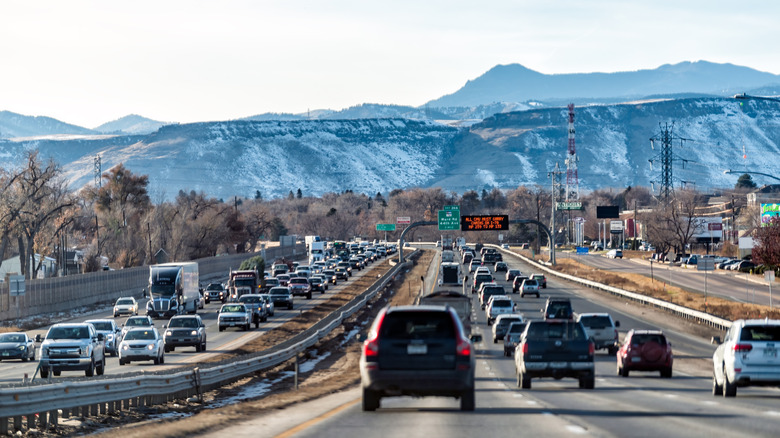
You always hear about drivers getting caught speeding, but what about drivers getting caught driving too slow? That’s becoming a very big issue in Colorado, where “lane camping” has led to thousands of drivers getting pulled over. In 2025, Colorado State Troopers pulled over 2,540 drivers for blocking traffic flow in the fast lane on the highway. 

A press release from the Colorado State Patrol Department of Public Safety states that slow drivers in the left lane — or passing lane — disrupt traffic flow by causing bottlenecks, “often creating additional hazards for other motorists.” The press release also reminds road users that multi-lane roads in the state with a 65 mph speed limit or greater require slower drivers to stay on the right. 

This jump in drivers being pulled over for going too slow coincides with other states’ efforts to crack down on slow drivers. In 2025, for example, Arizona made it illegal for drivers to be in the left lane if they’re driving slower than traffic.

This doesn’t mean you should speed in Colorado, or anywhere else
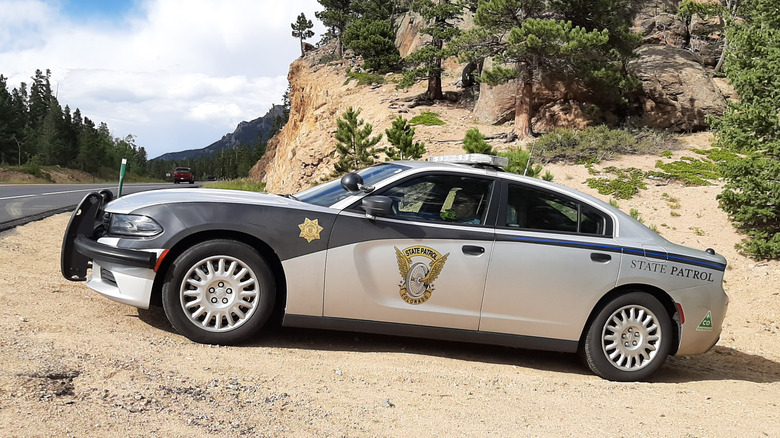
Colorado State Patrol’s push to punish slow drivers is not meant to encourage speeding in Colorado. In fact, it’s not just slow drivers that are ignoring the traffic laws of the highway. In the same press release, Col. Matthew C. Packard added that even drivers driving at the speed limit are not supposed to stay in the left lane. Colorado highways’ left lanes are meant solely for passing, with drivers otherwise required to stay in the right lanes.

While driving slowly can get you pulled over, driving fast can have much more dire consequences. In 2023, 11,775 people were killed across the United States in speed-related crashes. Various states have been cracking down on speeding, including by implementing new speed camera technology and increasing punishments for excessive speeding. While the first-ever speeding ticket was issued in 1896 for a driver going 4 mph, those caught speeding on the highway today are going 75 mph or more. A vehicle going 80 mph takes 439 feet to stop, and that distance can lead to serious accidents — or worse.


Source link

Leave a Reply

Subscribe to Our Newsletter

Get our latest articles delivered straight to your inbox. No spam, we promise.

Recent Reviews


A new class-action lawsuit, filed on Monday by three teenage girls and their guardians, alleges that Elon Musk’s xAI created and distributed child sexual abuse material featuring their faces and likenesses with its Grok AI tech.

“Their lives have been shattered by the devastating loss of privacy, dignity, and personal safety that the production and dissemination of this CSAM have caused,” the filing says. “xAI’s financial gain through the increased use of its image- and video-making product came at their expense and well-being.”

From December to early January, Grok allowed many AI and X social media users to create AI-generated nonconsensual intimate images, sometimes known as deepfake porn. Reports estimate that Grok users made 4.4 million “undressed” or “nudified” images, 41% of the total number of images created, over a period of nine days. 

X, xAI and its safety and child safety divisions did not immediately respond to a request for comment.

The wave of “undressed” images stirred outrage around the world. The European Commission quickly launched an investigation, while Malaysia and Indonesia banned X within their borders. Some US government representatives called on Apple and Google to remove the app from their app stores for violating their policies, but no federal investigation into X or xAI has been opened. A similar, separate class-action lawsuit was filed (PDF) by a South Carolina woman in late January.

The dehumanizing trend highlighted just how capable modern AI image tools are at creating content that seems realistic. The new complaint compares Grok’s self-proclaimed “spicy AI” generation to the “dark arts” with its ease of subjecting children to “any pose, however sick, however fetishized, however unlawful.”

“To the viewer, the resulting video appears entirely real. For the child, her identifying features will now forever be attached to a video depicting her own child sexual abuse,” the complaint reads.

AI Atlas

The complaint says xAI is at fault because it did not employ industry-standard guardrails that would prevent abusers from making this content. It says xAI licensed use of its tech to third-party companies abroad, which sold subscriptions that led abusers to make child sexual abuse images featuring the faces and likenesses of the victims. The requests ran through xAI’s servers, which makes the company liable, the complaint argues.

The lawsuit was filed by three Jane Does, pseudonyms given to the teens to protect their identities. Jane Doe 1 was first alerted to the fact that abusive, AI-generated sexual material of her was circulating on the web by an anonymous Instagram message in early December. The filing says she was told about a Discord server by the anonymous Instagram user, where the material was shared. That led Jane Doe 1 and her family, and eventually law enforcement, to find and arrest one perpetrator.

Ongoing investigations led the families of Jane Does 2 and 3 to learn their children’s images had been transformed with xAI tech into abusive material.


Source link