
Energy costs have been on the rise for a long time, and they haven’t shown any signs of slowing. For many, gas and electric bills are among the biggest financial burdens that they have to bear each month. These costs are especially high in fall and winter when temperatures drop, and climate control needs are highest.
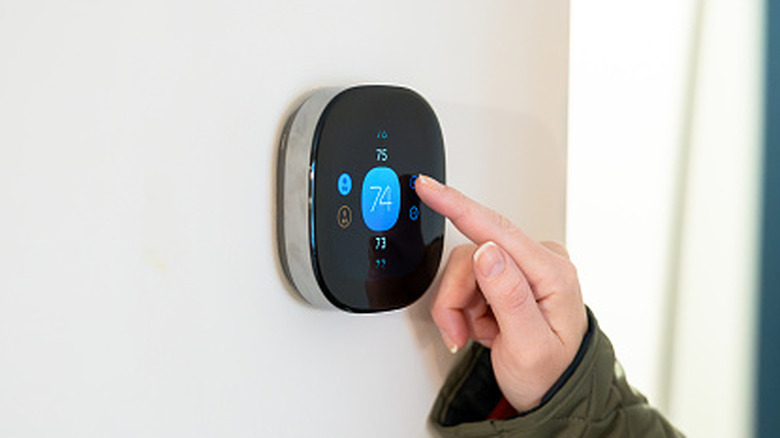
There are a few energy-saving tactics you can implement without investing in something like solar panels to help keep the heat in your home and reduce your monthly energy expenses. You can upgrade your insulation, install more energy-efficient doors and windows, and get yourself a smart thermostat. But there is a limit to how much this can achieve, and much of your home’s heat will simply be lost through the walls, regardless of how hard you work to seal every nook and cranny. Now, however, it seems that there might be a new solution on the horizon: ‘Sweaters’ for homes.
Researchers at the University of Massachusetts have been developing several different technologies in an effort to minimize fossil fuel-based energy consumption and fight climate change. One of the tools that they recently unveiled is a collection of panels that are designed to be mounted on the exterior of houses and large apartment complexes to insulate the outer walls from the cold. That might not seem all that exciting at first, but these panels are made of high-tech materials that have already proven to be quite effective. With that in mind, many of you might be interested in learning a bit more about how these panels work and just how effective they can be.
What are these ‘sweaters’ made of?
Suffice it to say, the researchers aren’t exactly picking up a massive pair of hooks and crocheting sweaters for houses, but the philosophy behind how these panels work is fairly similar. “When you’re cold, you put on a sweater,” said Carolina Aragón, an associate professor of landscape architecture at the university. “So we started thinking: what would you do if you’re a building?” It appears that the original plan was for the team to build a massive blanket-like length of fabric that you would wrap around your house. But the ‘blanket’ idea was eventually discarded in favor of a better model: panels.
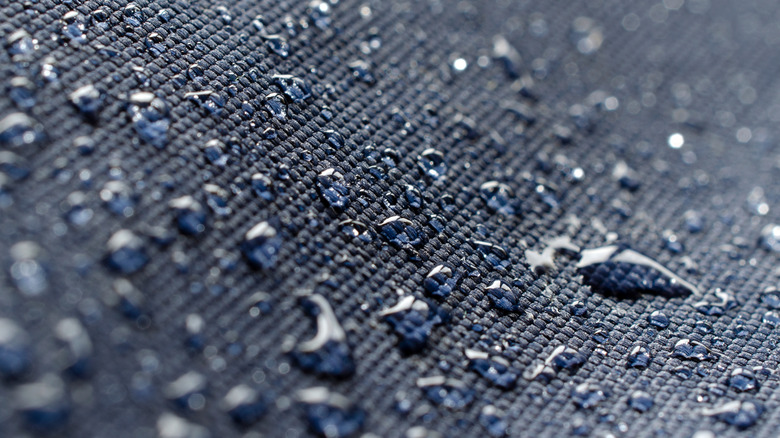
The University of Massachusetts team wanted something modular that could be hung on any surface, and that could absorb as much of the sun’s warmth as possible to passively heat the structure’s outer walls. But what makes these panels special isn’t the fabric itself, but rather a photothermal dye called PEDOT-Cl that was invented by a professor of chemistry at UMass, Trisha Andrew. “We can put this dye on anything,” Andrew said. “It doesn’t have to be on an expensive fabric. We chose to test it on umbrella fabric—something that was rugged and robust but still affordable.”
The idea is for these panels to be adaptable, accessible, and affordable. The university describes them as potential DIY projects that can be completed by homeowners and renters alike. Simply buy a roll of fabric, build a frame from 2-by-4s, and then assemble and mount. What’s more, because the dye is more important than the fabric itself, the panels can be shaped, colored, and patterned to match the aesthetics of your home, so you don’t need to turn your house into an eyesore to use them.
How effective are they?
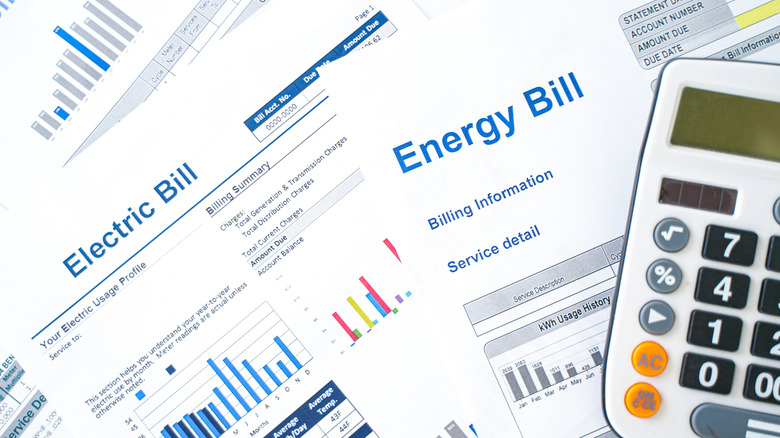
The U.S. Energy Information Administration (EIA) states that more than half of all energy consumption in residential homes can be attributed to heat and air conditioning. According to EIA estimates, from November to March, the average U.S. household spends $1,133 on heating fuel if they use electricity, $642 for natural gas, $1,210 for propane, and $1,390 for heating oil. When you consider that more than half of that goes to climate control costs, it becomes clear that even minor efficiency upgrades can make a big environmental and financial difference.
Fortunately, it seems that these panels are quite effective. Andrew claimed that this technology has already proven to provide “a 15% decrease in energy costs for a residential building in a northern climate, like Massachusetts, […] and up to 23% reduction in a large, 16-story apartment building.” Even that base 15% is enough to knock $169.95 off the average American’s heating cost if they have an electric furnace. The university then compared this to a traditional home renovation, which, even when done correctly, might lower energy bills by 2%.
These high-tech home ‘sweater’ systems are still in development. The team has had very promising results thus far, but more real-world testing still needs to be performed before you’ll find rolls of the cloth being sold at your local Home Depot. Still, it’s exciting to see such a promising technology that combines modularity, affordability, aesthetics, and efficiency into a simple yet effective design.

Stephan is the sports journalist for the Maple Grove Report.