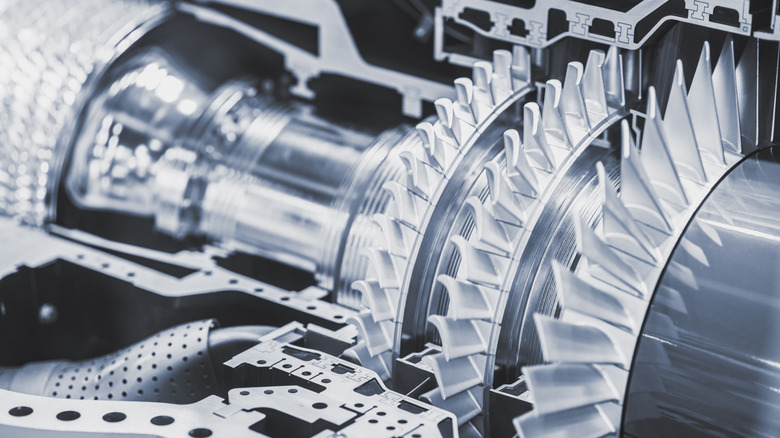

The roots of the jet engine can be traced back to before World War II, and they generally still work on the same principles despite having evolved quite a bit since then. Yet there are still limitations to what they can do, including their ability to perform efficiently (or at all) as airspeed inside the engines increases to extreme speeds.
Of course, legendary aircraft like the SR71 Blackbird can reach speeds that exceed Mach 3, or over 2,000 mph. However, they can’t rely on turbojet engines to reach this speed. That’s because these engines become unreliable as flight speeds increase into the supersonic range. To work around this limitation, Lockheed Martin engineered a hybrid engine for the SR71 Blackbird that used a turbojet to reach speeds of around Mach 2 before switching over to “ramjet” mode. This solved the problem because ramjet engines essentially work by “raming” the air through the engine at high speed when the traditional engine could no longer function properly.
However, this was a complex and heavy solution to the high-speed problem that required the engine to switch modes. China claims its new engine replaces this complex hybrid system with a single engine that takes a plane all the way from the runway to Mach 6. Currently, the engine is at the prototype stage and has been “experimentally verified,” according to the South China Morning Post.
What we know about China’s new engine
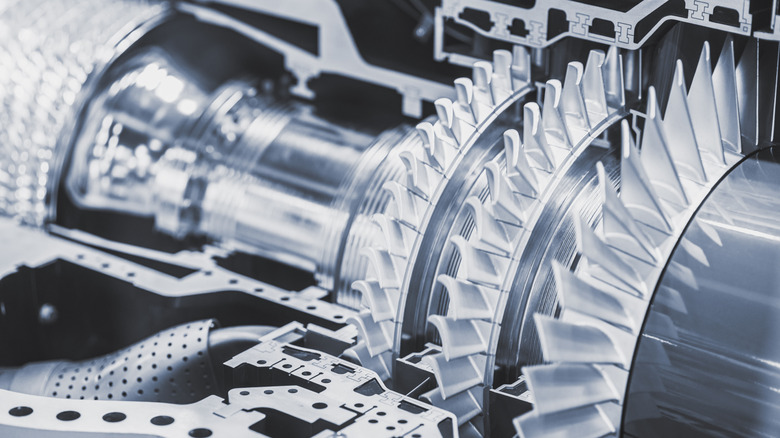
The contra-rotary ramjet engine, as it’s known, has been in development for 30 years, although it wasn’t until 2009 that it gained institutional support. The key technology at the heart of the jet is a contra-rotary compressor system. This addresses one of the key shortcomings traditional turbojets face at high speeds: the inability to slow the incoming air down enough for the engine to work effectively and stably.
From what we know about the system, the contra-rotary ramjet engine uses low and high-pressure turbine blades spinning in opposite directions. This allows the engine to maintain relative speed regardless of airspeed. It also means that turbine rotation speeds are minimized, which reduces the incredible centrifugal forces that such blades operate under.
If this makes it past the experimental stage, then it has the potential to become one of the most powerful jet engines ever made. However, there are significant challenges still to be addressed. For one, sustained hypersonic flight generates extreme heat, and this places enormous stress on materials.

Stephan is the sports journalist for the Maple Grove Report.