What Happens To All The Items Left Behind At TSA Checkpoints?


So far in 2026, on average, more than two million people fly the friendly skies each and every day. According to the Transportation Security Administration (TSA), travelers leave behind anywhere between 90,000 and 100,000 items at airport checkpoints every single month, and much of it’s actually cold, hard cash. In 2025, the TSA scooped up $967,897.97 in unclaimed checkpoint money, mostly coins people removed from their pockets during security screening. So, what exactly happens to all those items that get left behind?

Although TSA tries to return money to the owner whenever possible, when they can’t, they have to follow strict protocols. First, they must track the amounts received from each airport and then report the totals not only to Congress but also to several different committees. When foreign currency goes unclaimed, it is exchanged into U.S. dollars to reduce conversion costs. Any unclaimed funds must be spent on carrying out the TSA’s mission of providing civil aviation security.

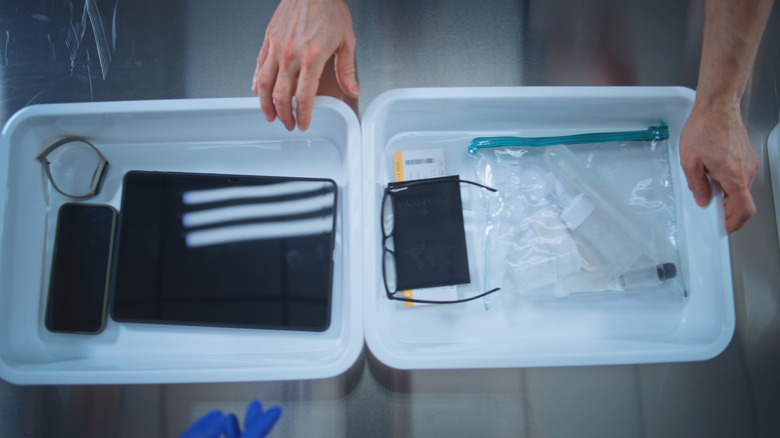
Physical items like laptops, cellphones, wallets, belts, and passports follow very different pathways through the system. The TSA does have a “Lost and Found” where passengers can collect any items they may have left behind or that escaped from checked baggage. If there’s no easy, identifiable way to return an item to the owner, TSA will hold it for at least 30 days. That’s why it’s always important to plaster your contact information on everything you’re traveling with, because you never know what might happen while frantically scurrying through the airport.

Finders keepers, losers weepers
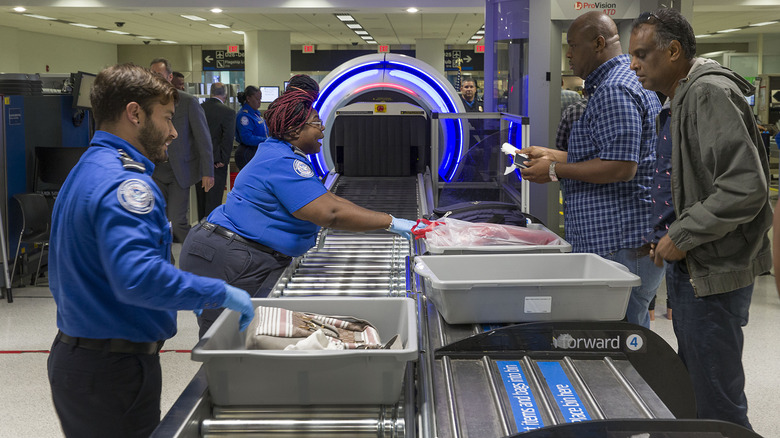
After 30 days, any electronics that go unclaimed will have their memory wiped and hard drive destroyed. If a drive can’t be removed, the entire item gets tossed into the shredder to protect personal data. Documents like passports and driver’s licenses are also destroyed after the 30-day waiting period. If any weapons are confiscated or found inside carry-on bags, they’re turned over to local police. It might be surprising to know that in 2024, the TSA snatched 6,678 firearms at airport security checkpoints.

Any unclaimed items that remain are then shipped to individual state surplus property agencies, where they might be recycled, donated, destroyed, or sold at auction like the government surplus marketplace GovDeals. Once an item is sold, the proceeds are turned over to the U.S. Department of the Treasury and used to pay off the national debt. It should be noted that if you voluntarily leave an item behind (as opposed to losing it), that 30-day grace period goes out the proverbial window and will be dealt with far more swiftly. Interestingly, one way items are sold is through lost luggage auctions, sometimes referred to as “suitcase gambling,” which is pretty much the same as people blindly bidding on abandoned and repossessed storage units, hoping to strike gold. 

To avoid mistakenly leaving something behind, it’s best to follow the age-old adage of keeping calm. Secondly, label everything of value, and if you do lose something, remember you have a limited amount of time to try and get it back.


Source link

Leave a Reply

Subscribe to Our Newsletter

Get our latest articles delivered straight to your inbox. No spam, we promise.

Recent Reviews


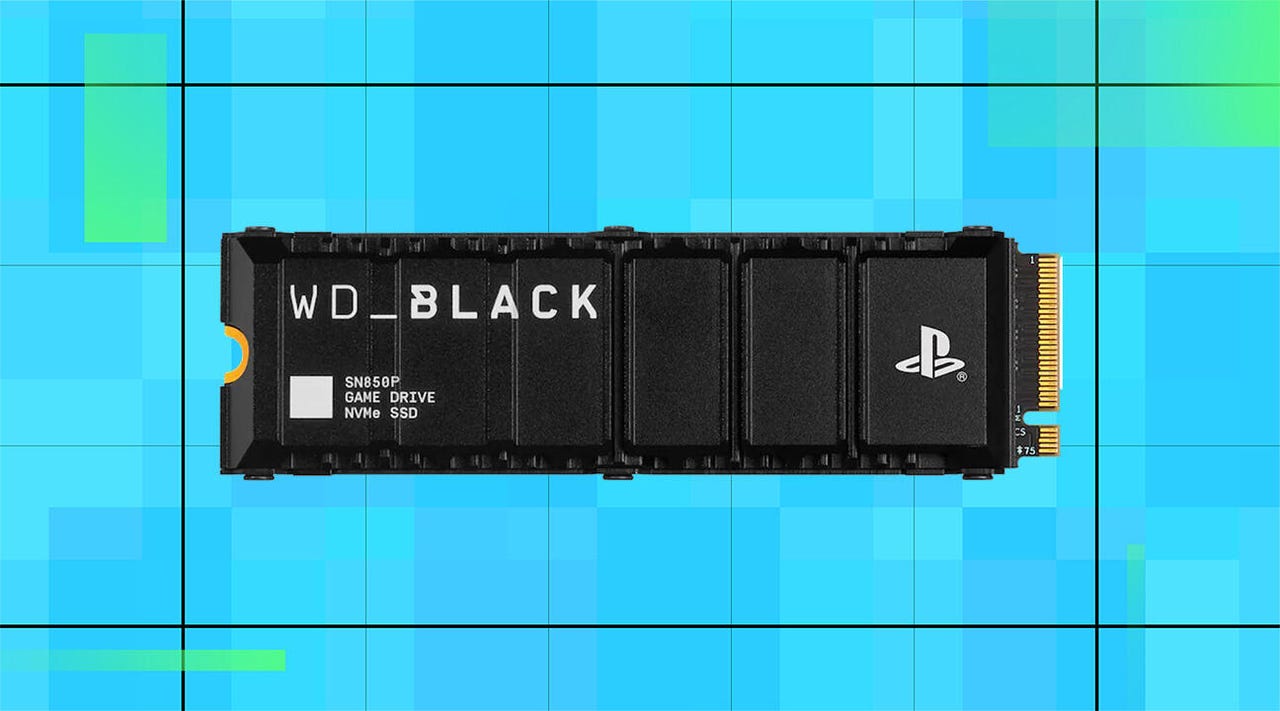
A WD Black SN850P SSD on a blue background

WD/ZDNET

High SSD prices got you down? Right now during Best Buy’s Tech Fest sale, you can save up to $2,800 on the WD Black SN850P storage drive. And while it’s officially licensed for use with PlayStation 5 consoles, it’s easy to reconfigure for use in gaming laptops and desktops for a boost in storage capacity. 

Also: The best Amazon Spring Sale deals: Save on streaming, Apple, Samsung, and more

Available in capacities from 1TB to 8TB, the WD Black SN850P can double, or even quadruple, your available storage space, giving you plenty of room for large game downloads, save files, screenshots, highlight reels, and more. With read and write speeds up to 7300 and 6600 MB/s, respectively, you’ll get much faster loading times than traditional HDDs as well as quicker access to your favorite apps, games, and programs.

Also: SSD vs HDD: What’s the difference, and which should you buy?

The integrated heatsink helps keep everything running at optimal temperatures to prevent data loss or corruption due to overheating. It can also be removed for easier installation in smaller PCs. 

By using flash memory rather than traditional mechanical platters, the WD Black SN850P can provide you with years of reliable data access with much less risk of internal damage due to shocks and bumps.

How I rated this deal 

Prices for RAM and SSD storage drives have skyrocketed as AI companies buy up available stock to power LLMs. And while this particular model is licensed for use with the PS5, you can quickly reconfigure it for use in laptops and desktop PCs. The 2TB model is marked down to $400, bringing it closer to pre-AI pricing, and the 8TB version is almost $2,800 off. While it’s still very expensive, it’s the lowest price I’ve seen on a high-end SSD in a long time. That’s why I gave this deal a 5/5 Editor’s rating.

Deals are subject to sell out or expire anytime, though ZDNET remains committed to finding, sharing, and updating the best product deals for you to score the best savings. Our team of experts regularly checks in on the deals we share to ensure they are still live and obtainable. We’re sorry if you’ve missed out on this deal, but don’t fret — we’re constantly finding new chances to save and sharing them with you at ZDNET.com


Show more

We aim to deliver the most accurate advice to help you shop smarter. ZDNET offers 33 years of experience, 30 hands-on product reviewers, and 10,000 square feet of lab space to ensure we bring you the best of tech. 

In 2025, we refined our approach to deals, developing a measurable system for sharing savings with readers like you. Our editor’s deal rating badges are affixed to most of our deal content, making it easy to interpret our expertise to help you make the best purchase decision.

At the core of this approach is a percentage-off-based system to classify savings offered on top-tech products, combined with a sliding-scale system based on our team members’ expertise and several factors like frequency, brand or product recognition, and more. The result? Hand-crafted deals chosen specifically for ZDNET readers like you, fully backed by our experts. 

Also: How we rate deals at ZDNET in 2026


Show more


Source link