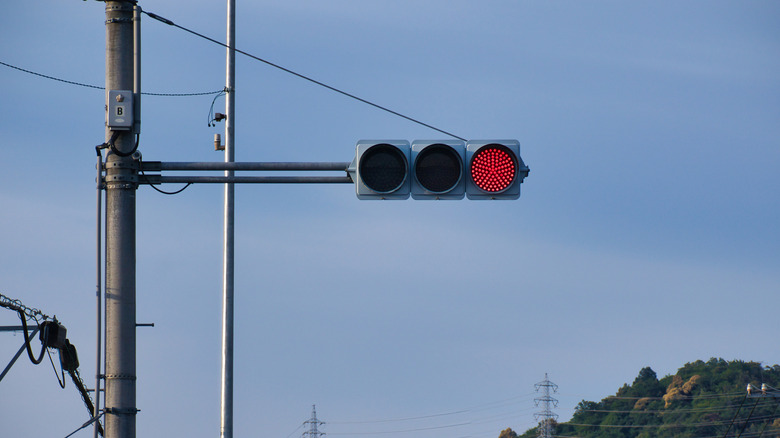

Despite generally having the same purpose, traffic lights aren’t exactly the same everywhere around the world. Sometimes, these differences have to do with legality, while others — like the unusual upside-down traffic light in Syracuse — are borne from local history or cultural norms. Japan, for example, is known for its blue traffic lights. The prevalence of turquoise, teal, or an ambiguous bleen (greenish blue or bluish green) at crossroads, intersections, and turnings across the archipelago isn’t the only unusual traffic light in Japan, though.
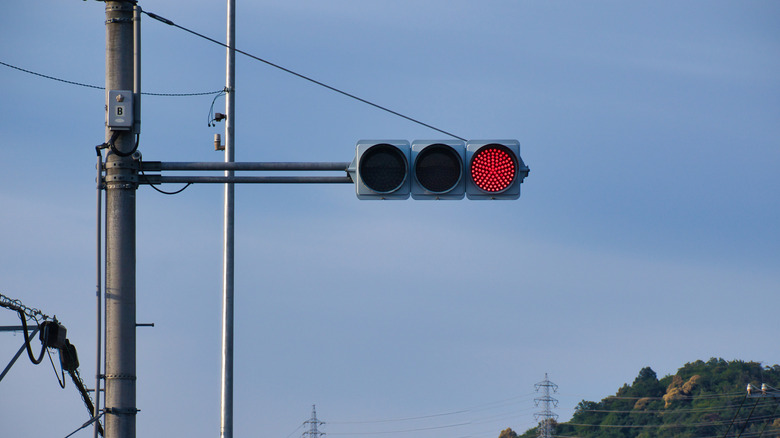
If you head down to an island in the Aichi Prefecture, you might notice a couple of unusual things about the area’s traffic lights. Namely, you’d probably notice that there are next to none, and that it takes an awfully long time to change. The only area of Himakajima that’s home to any traffic lights is the East Port area, and usually, they only flash red or amber — except for one day of the year, when the light finally turns green. Or blue, depending on how you think about it.
According to CBC Television News Japan, Himakajima’s lone traffic lights make their annual switch to green to help teach local elementary students how to safely cross roads, and also raise general road awareness. The schoolchildren are split up into two groups, pedestrians and cyclists, which are each then chaperoned by adults from the Himakajima Traffic Safety Association to teach them how to cross when the light goes green, or stop when the light appears amber or red.
The story behind Himakajima’s red-amber traffic lights
Himakajima is a small island. To be specific, the island has a total area of less than a square meter, and it only has a population of around 2,000. As a result, there aren’t many cars to worry about at all — or even very many roads altogether. As a result, Himakajima’s stoplights aren’t doing much heavy lifting. At least, they certainly aren’t when they’re not being used to teach traffic safety.
Of course, a lack of traffic — and in turn, a lack of traffic lights — means there aren’t as many opportunities for children living on the island to learn how to cross roads. That’s a crucial skill for if and when they visit the mainland, where you could easily expect to find bigger roads and more traffic. Initially, children were taught how to read traffic lights using a model — but that all changed in the early 1990s following campaigning from Traffic Safety Association chairman Kazuo Sugiura.
All of that’s to say that the East Port lights weren’t actually ever installed with the purpose of managing traffic. Instead, they were actually installed with the sole purpose of teaching Himakajima’s third and fifth-graders how to cross roads safely in a hands-on manner. The light was installed in 1994, meaning they’ve only turned green a little over thirty times over the years. The rest of the time, the north-south and east-west lights at the intersection light up a little differently, with the former flashing red, and the latter flickering amber. Today, the lights are even listed under the sightseeing section of the official Himakajima website.
Some Japanese remote islands don’t have traffic lights
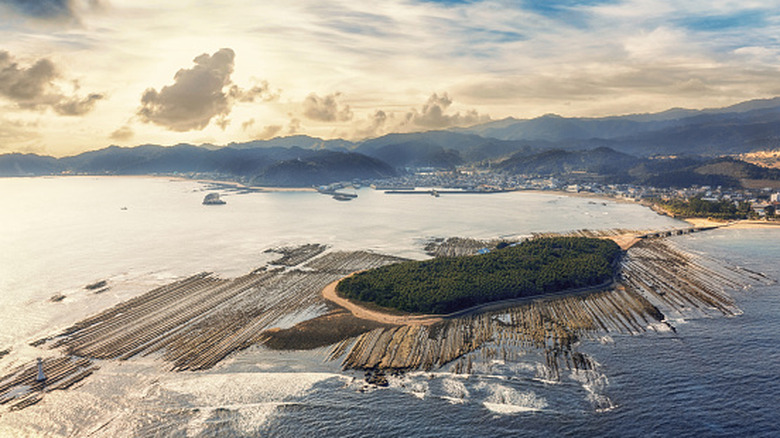
With Himakajima’s single intersection only serving an educational purpose, most of the island’s roads are instead managed with stop signs, zebra crossings, and other road markings. If you’re used to driving on bigger, busier roads and the familiar red, amber, and green glow of tricolor traffic lights, then this could prove to be a bit of a culture shock. However, it’s not entirely unusual for some smaller islands in Japan — and other islands around the world, like Block Island in the United States — to not have permanent traffic lights in the first place.
Some islands that lack permanent traffic lights include Shinojima, which neighbors Hinakajima, Kōzu-shima, a volcanic island and village off the coast of Tokyo, and Teshima, in the south near Okayama. Much like Himakajima, each of these islands is relatively small. Kōzushima Village, for example, registered a population of 1,855 on the 2020 census, with a population density of less than 100 people per kilometer.
Naturally, not all of Japan’s non-main islands lack traffic lights. For example, Sado Island is home to an entire city, inclusive of traffic lights. Meanwhile, one island in Japan doesn’t just lack traffic lights — it lacks traffic altogether. Aoshima, which you might know as Cat Island, doesn’t have any cars at all. The whole island is actually only accessible on foot.

Stephan is the sports journalist for the Maple Grove Report.