On February 28, 2026, the United States and Israel launched surprise attacks on the Islamic Republic of Iran, starting a large-scale war that spilled out into a region-wide conflict. Because Iran is such a large nation with over 93 million people and a sizable military, it’s natural to question what the U.S. and Israel have gotten themselves into. After all, before the war began, Iran had plenty of warships in its navy, leading many to wonder about its ground forces in case the U.S. and Israel deploy troops to the country.

Iran has a rather large military, or rather, it had one before the conflict began. Most of its strength in terms of tanks came from those supplied by the Soviet Union, but the nation does produce many domestic tanks as well. Its equipment includes self-propelled artillery units, which are different from tanks, towed artillery, Multiple Launch Rocket Systems, and more. In terms of tanks, Iran has, or had, around 1,900 of various types, though their total strength remains unclear.

This estimate is from the Iran Military Power report, published by the United States Defense Intelligence Agency in 2019. While the information may be somewhat out of date, the lack of overt military conflicts using armored vehicles like tanks in the years since its publication suggests the numbers are as close to accurate as can be determined as of writing.

Iran’s pre-war tank fleet
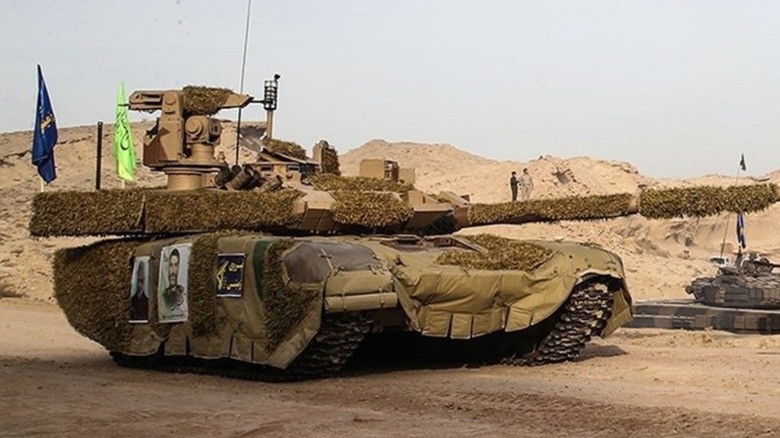
Iran maintains two ground forces: the Islamic Republic of Iran Army Ground Forces, the nation’s standing army, and the IRGC Ground Forces, which falls under the Islamic Revolutionary Guard Corps. While separate, they employ similar equipment. Iran has one light tank called the Tosan, of which an unknown number are in service. This is a domestically produced tank that weighs less than 10 tons. It also operates Chieftain Main Battle Tanks (MBTs), which are domestically upgraded into the Mobarez MBT.

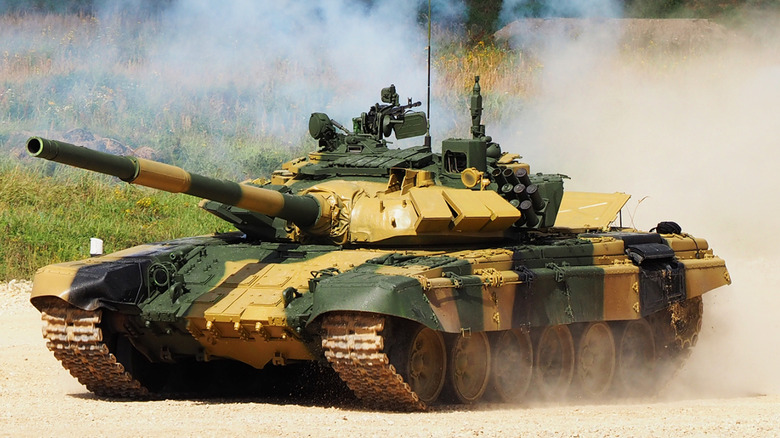
These, alongside around 50 upgraded M-60A1 MBTs provided by the United States, don’t represent much in terms of combat capability. Iran’s tank strength lies in its various versions of the Soviet-made T-72 MBTs, of which Iran operates several models. In 2020, Iran began upgrading its fleet of T-72s, of which it claimed to possess 565. The veracity of that figure cannot be confirmed, but it’s likely that Iran had in its possession several hundred working T-72s at the start of the 2026 war.

Iran also uses three models of the Zulfiqar MBT, which is based on both the T-72 and M-60, and is domestically produced. It’s unclear how many Iran has, though WarPowerIran places the total number at 250. The most recently developed MBT that’s domestically produced and operated by Iran is the Karrar, of which it’s believed around 100 are in use. Because of the secretive nature of the Iranian government and the IRGC, it’s impossible to know for sure, though total estimates put the number at around 1,900 tanks, though all models are incomparable to something like the U.S.’ M1A2 Abrams MBT.


Source link

Leave a Reply

Subscribe to Our Newsletter

Get our latest articles delivered straight to your inbox. No spam, we promise.

Recent Reviews


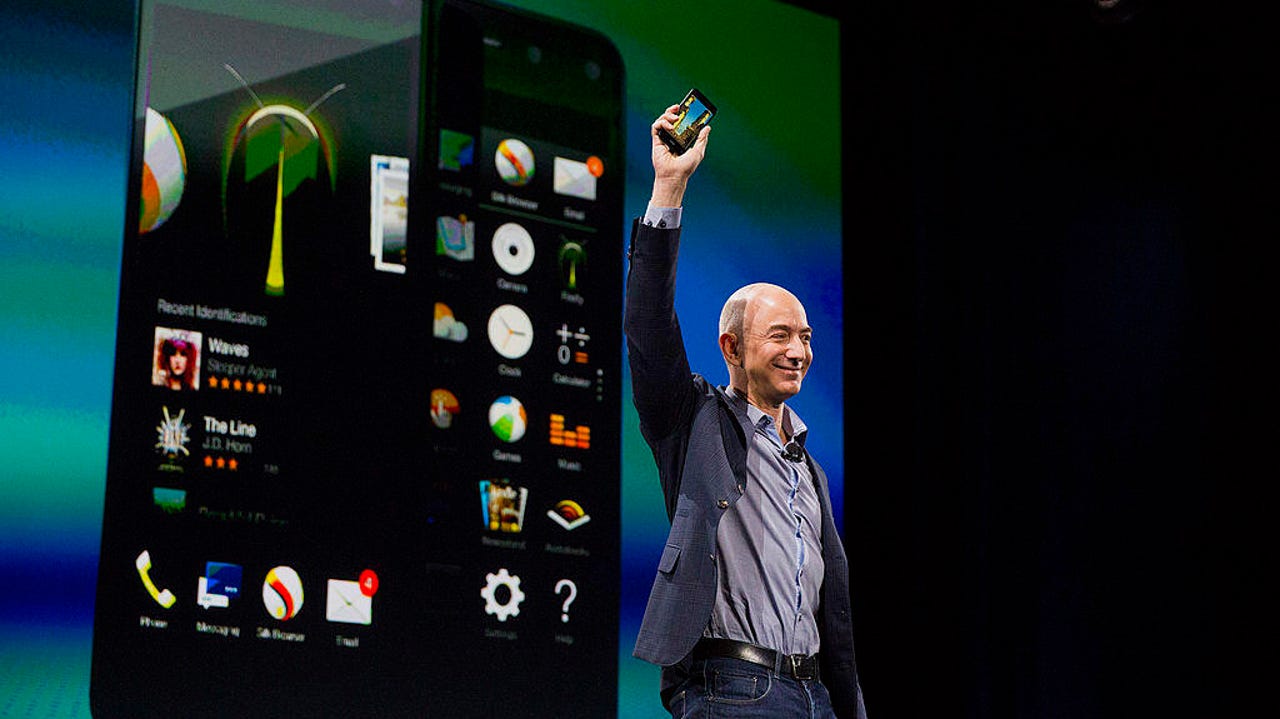
Amazon Fire Phone Jeff Bezos

Bloomberg / Getty Images

Follow ZDNET: Add us as a preferred source on Google.


ZDNET’s key takeaways

  • Amazon is reportedly developing a new Fire Phone.
  • The previous model had several issues, including an inferior app store experience.
  • Under new supervision (and with more experience), Amazon can do better this time.

Well, I don’t know about you, but I certainly didn’t have “new Amazon smartphone” on my 2026 bingo card. As it turns out, according to Reuters, the retailer may be developing a new smartphone, internally known as “Transformer.” 

Those familiar with the industry will instantly draw parallels to Amazon’s previous smartphone effort, the Fire Phone from 2014. Appropriately, that phone ended up as part of a fire sale about a year later.

Now, in 2026, with no fewer than five phone brands in the US — Apple, Samsung, Google, Motorola, and OnePlus — Amazon faces a lot of competition. In fairness, it also has two fewer platforms to compete against. In 2014, Windows Phone and BlackBerry were still very much part of the smartphone conversation; these days, not so much.

The AppStore problem

But there’s one mistake Amazon made in its first effort that will absolutely torpedo its chances at succeeding — the Amazon AppStore and specifically the decision to forego Google Play services. Google is simply too valuable in too many lives to not support the platform. Oh, and the Amazon AppStore is terrible.

Also: What’s right (and wrong) with the Amazon Fire Phone

It has admittedly been a few years since I last inventoried the Amazon AppStore, but when I last checked, the Amazon AppStore was a wasteland of half-supported or unsupported apps, with two notable exceptions. Finance, home control, and communication apps were either absent or had not received updates for years prior.

The only apps in the Amazon AppStore that remained up to date were productivity apps (largely powered by Microsoft) and streaming apps. Those two categories work very well on the cheap, underpowered hardware that Amazon usually launches, and that’s fine. A coffee-table tablet is a nice thing to have lying around.

A spark of hope

Amazon Fire Phone

Liam Tung/ZDNET

But a phone is another animal entirely. If a tablet is a device to entertain, a phone is a device for everything else. One of the key reasons Windows Phone failed was its lack of an app ecosystem. The Senior Vice President of Devices and Services,  Panos Panay, is very familiar with that saga, so I’m hopeful that he will make the same arguments to the powers that be at Amazon. 

Honestly, if there is anyone who I think can pull off an Amazon phone revival, it’s probably Panay, who understands design and product development better than most, and to be perfectly honest, he’s my absolute favorite product presenter.

Also: Amazon Fire Phone review: Not a great smartphone

Of course, all of this is early days. This phone is being worked on internally, and even Reuters reports that it could get the axe long before it sees the light of day. Personally, I’m intrigued by the idea, but I sincerely hope that Amazon doesn’t make this the shopping phone it tried to build in 2014. 

If Amazon just wants to make a nice, well-built smartphone, with a skin that pushes Amazon content to the fore, I’m fine with that. But leaving Google behind is a mistake that Amazon cannot afford to make again. Fool me once, and all that.

So, if this phone is to have a chance at success, it needs to embrace Google services so it can be a phone that everyone can use. Amazon has the brand power to make a phone like this work, even up against juggernauts like Apple and Samsung, but it needs to approach this correctly, lest it end up in yet another Fire phone fire sale.


Source link