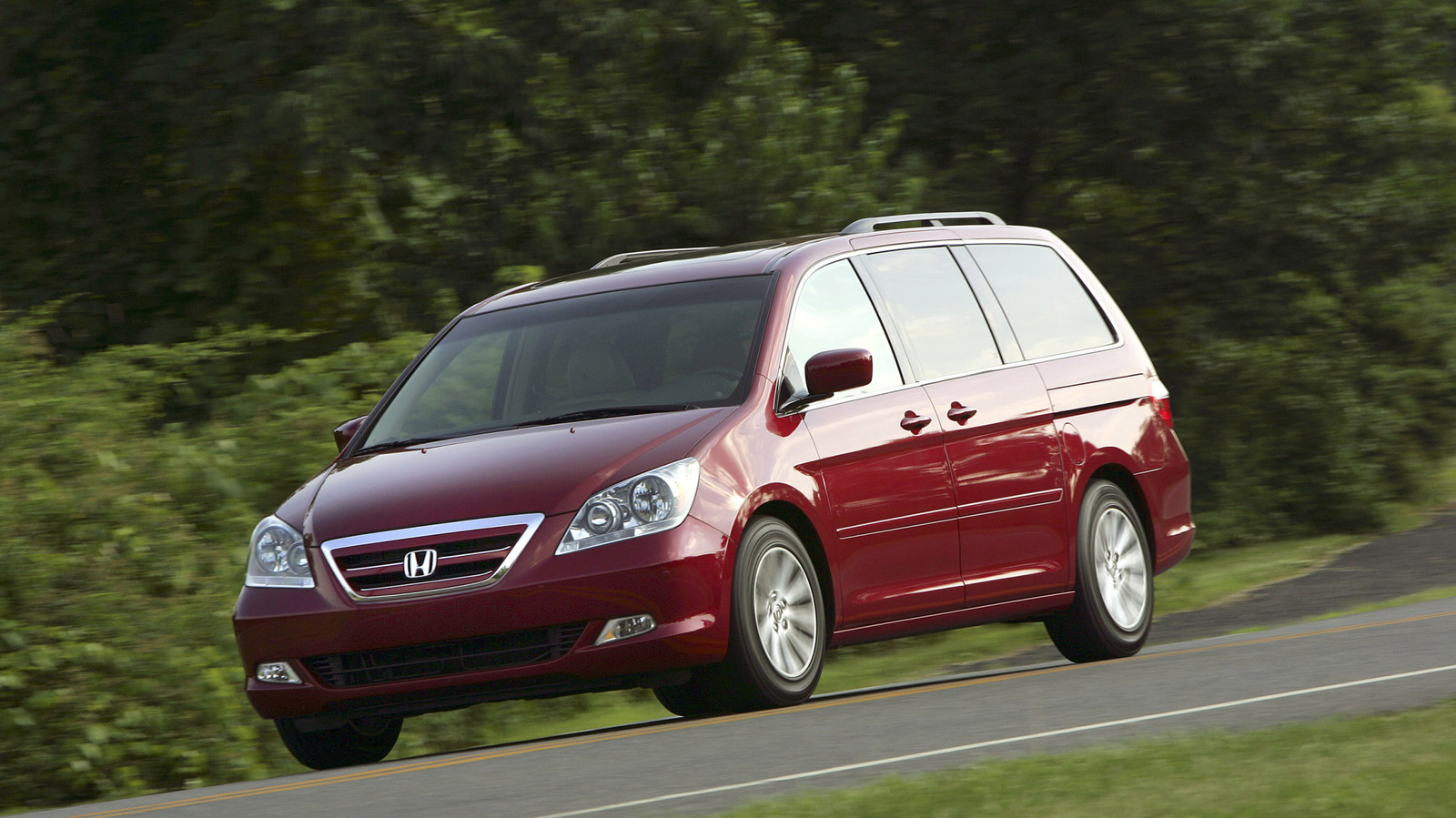

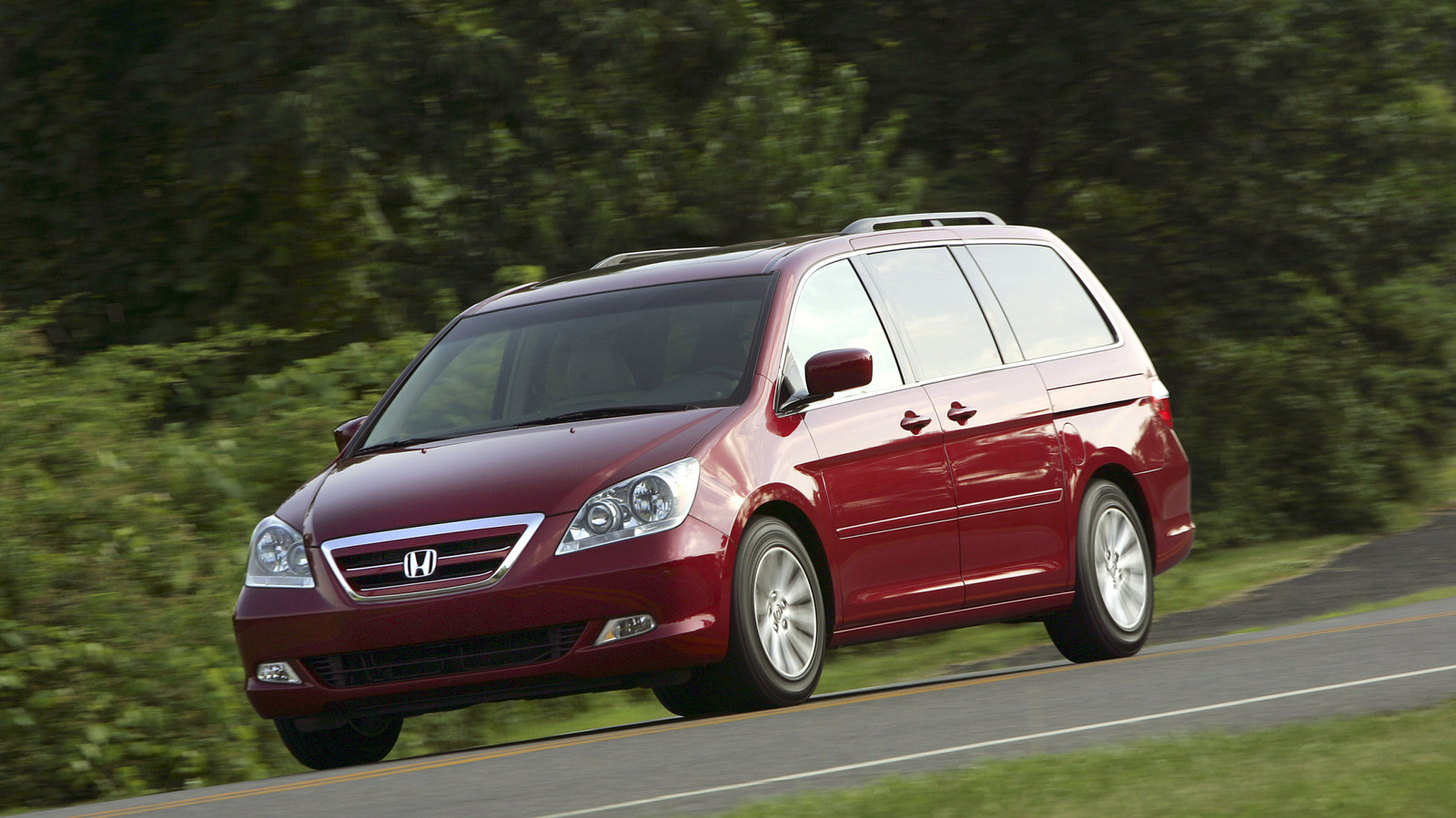
There are discrepancies between automobiles, and then there’s this. Okay, at first glance, a Honda Odyssey and Bugatti Veyron both feature some similarities. Some. For instance, they both have four wheels, an engine, and a steering wheel. They both go vroom when you step on the gas pedal (though one sounds substantially more operatic than the other). And, for a select few models, both of these vehicles feature something rather unique and obscure: the failed Michelin PAX run-flat tire system. No, not the tires themselves — though it’s funny to imagine an Odyssey fitted with some of the widest tires ever made for a production car – just the safety device the tires incorporated.
At one point, Michelin revolutionized the tire industry by releasing the first patented radial tire in 1946, and in 2004 the company set out to quite literally reinvent the wheel (again). It looked promising at first, with Michelin viewing the PAX system as a stepping-stone to more advanced designs, such as airless tires, curtailing the inconvenience of getting a flat. Only a few cars received this system, however; most notable among them being the Rolls Royce Phantom, Bugatti Veyron, and the suburban perennial Honda Odyssey. At the end of the day, all modern production cars do run on inflatable tires, and this makes this run-flat safety technology as equally applicable to hypercars as it is to minivans hauling around whole families.
The PAX system is actually quite sophisticated, with a handful of innovations considered novel in the mid-2000s. However, a number of critical design flaws prevented the system from widespread adoption, instead ending as a footnote in the otherwise evolving tire industry. Let’s explore how it worked and how it ultimately failed.
How the Michelin PAX system worked
The Michelin PAX system was just that — a system. It wasn’t just a run-flat tire in the traditional sense; instead, it was composed of three separate pieces. First and most obvious is the tire itself, which is built like any other. You have economy tires for the Odyssey and performance tires for the Veyron, but here’s where it gets interesting.
The tire is mounted on a specialized inner support, not unlike a bicycle tire inner tube, for instance. This support acts as a rigid base on which the tire sits if it bursts, acting similarly to other modern run-flat systems. The polyurethane ring effectively transforms the flat into a hard donut, allowing you to get to a service center without having to swap it out; other systems exist today, such as heavily-reinforced sidewalls designed to support the weight of the car without an inner ring.
The third component is unique to PAX, however, and is crucial to how these components interact with one another. A typical tire is held in place with air pressure forcing a mechanical fit between the tire bead and the rim. Conversely, a PAX-equipped tire is held in place by a special groove cut into the inside of the rim, meaning you need both the tire and rim for the system to work. In theory, this allows the PAX system to be much lighter than conventional run-flats, improving ride quality and lowering the strain on suspension components. It’s not as well-known on the Bugatti as its infamous W16 engine, but it was certainly innovative in the early 2000s.
Why the PAX system failed
The simplest answer to this question is that few companies were willing to commit to developing brand-new rims just for this one specific tire. According to Michelin’s PAX homepage (since taken down), PAX-equipped vehicles included the 2005-2007 Honda Odyssey, 2006-2007 Nissan Quest, and 2006-2007 Acura RL — in addition to the aforementioned exotics. Bluntly, Michelin wasn’t willing to commit further research into its run-flat system when only two major car companies actually used the thing. Moreover, Michelin (which owns numerous other tire manufacturers) licensed the inner ring assembly design architecture to other companies during PAX’s tenure. Many run-flats still utilize this technology, especially in the armored car market. Ultimately, such applications were always going to be niche.
Then there’s the question of how you mount the tire. For one, these weren’t cheap – and they’re still pretty pricey to this day. They also required specialized tools and training to mount, owing to the rims and inner ring assemblies not being compatible with typical tire mounting equipment. Basically, you had to go out of your way to find a shop to even mount these tires, which isn’t ideal if you end up with a puncture and you’re not near a major city.
Lastly, because Michelin licensed the technology, modern run-flats are infinitely better owing to two decades’ worth of development time. Today’s typical run-flat involves reinforced sidewalls designed to support the car’s weight for short periods of time. These also require bespoke machines that can handle the extremely stiff sidewall, but with the technology more universal than ever before, such systems are cheaper and more available. PAX was instrumental in this development, but it was never the end goal.

Stephan is the sports journalist for the Maple Grove Report.