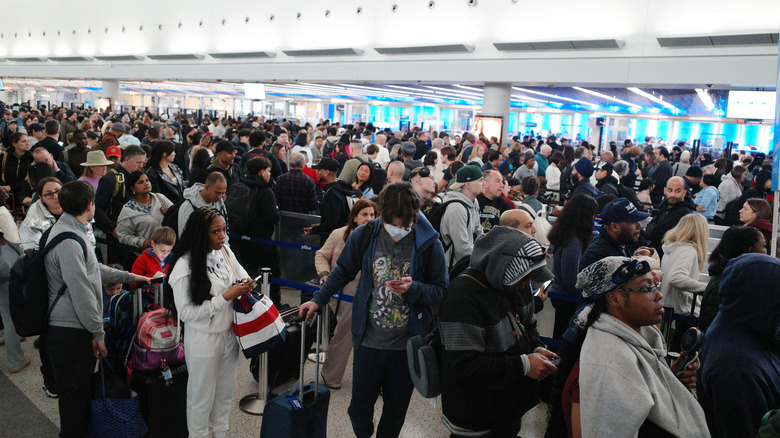

The Transportation Security Administration, or the TSA, has dominated headlines in 2026 due to long lines and staffing shortages driven by a still, at time of writing, unresolved partial government shutdown. In case you’re not a frequent flier, here’s a quick rundown of the TSA. This government agency provides security for all transportation systems in the U.S., including commercial aviation, highways, ports, and more. At airports, the TSA screens an average of almost 2.5 million passengers every day at almost 440 facilities across the nation. They’re the ones checking your carry-on for banned items – but not every airport uses the TSA for security.
There are 20 airports in the U.S. that participate in something called the Screening Partnership Program (SPP), which allows them to use qualified private companies for security screenings in place of TSA officers. To qualify for the program, airports must contract with private companies that operate under federal oversight and that follow every procedure, policy, and guideline required by the TSA. Airports only receive approval to participate in the program if it does not put travelers at risk, increase costs, or reduce the effectiveness of screening both passengers and their luggage. Additionally, the TSA mandates all security standards and screening equipment.
Many of the airports that participate in this program are smaller facilities like Tupelo Regional Airport in Mississippi, but there are three larger airports where you won’t spot TSA security: Kansas City International, Orlando Sanford, and San Francisco International Airport (SFO), which is the busiest airport in the program. More than 54 million people flew into or out of SFO in 2025, and they likely benefited from the SPP.
Perks (and downsides) of the Screening Partnership Program
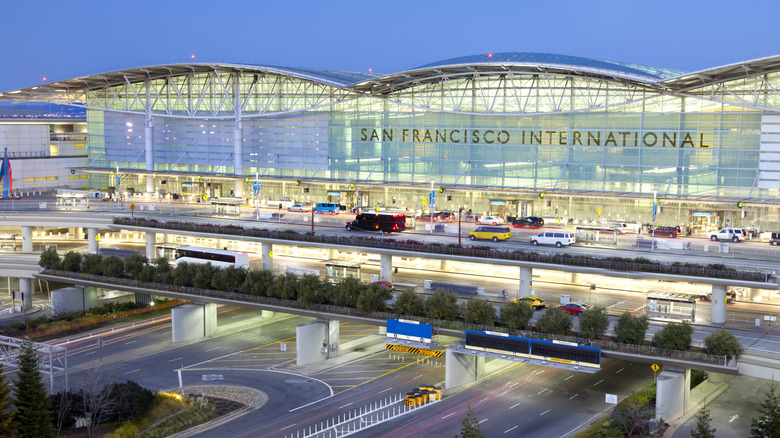
The difference between TSA-operated security and SPP-screened airports is typically not noticeable to most travelers. Recently, however, some airports staffed by the TSA saw hours-long security lines due to the partial government shut-down, which didn’t affect airports with private security. Some TSA workers stopped coming to work because they weren’t being paid. In early April, President Trump signed an order to retroactively pay all TSA workers, and lines have decreased significantly at most airports.
But facilities that participate in the SPP didn’t experience any of these issues, because the government shutdown doesn’t affect those private contractors. It was a perk for many travelers during those fraught weeks for sure, but there’s little evidence to support other potential perks, such as cost savings and better customer service. The Trump administration recently floated a plan to privatize all TSA screeners, in part to avoid future disruptions during government shutdowns. The administration claims the move could save the government $52 million, but it would likely mean lower pay and fewer benefits for those private workers. Private security must still adhere to TSA safety standards without exceeding what it would cost the TSA to perform the same tasks. Private companies are also vulnerable to the same risks as companies in other industries, including economic downturns, and it’s unclear how that could potentially affect airport security. For now, the next time you fly during a government shutdown, skip the delays by choosing SFO or other SPP-screened airports — or, if you’re lucky enough, take a private jet.

Stephan is the sports journalist for the Maple Grove Report.