
We may receive a commission on purchases made from links.
Photography is quite a fulfilling hobby, but buying “proper” cameras can get expensive. Even the cheap but high-quality digital camera that we recommend, the Canon EOS Rebel SL3, generally has a starting price of around $600. This is probably out of range for most people, especially those who are looking to buy a camera to gift to friends and family or just want something that wouldn’t cost an arm and a leg to get started and practice their art.
Thankfully, Kodak seems to want to address this problem by creating a an affordable device that’s great for newbies and seasoned photographers alike. While one could argue that a smartphone would do that job, there is still no substitute to using a dedicated device for taking photos, even if it’s not as capable as the camera that you’d find on a thousand-dollar flagship from Apple or Samsung.
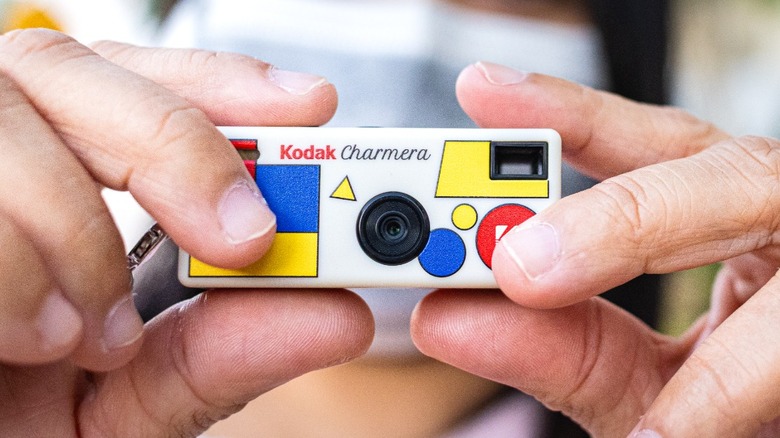
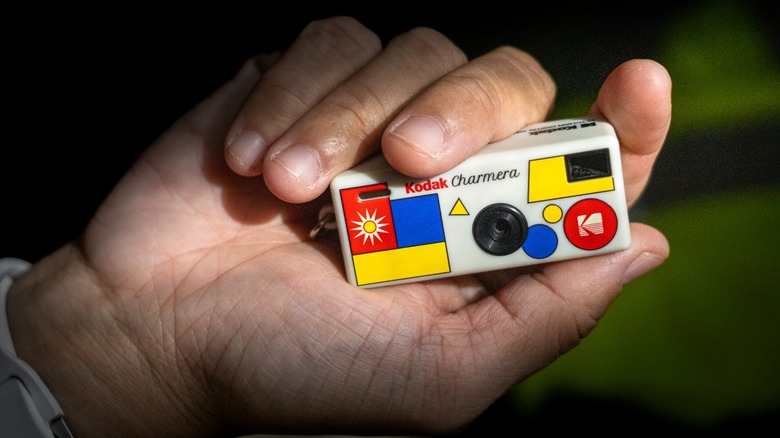
This is the Kodak Charmera. It’s a tiny basic digital camera that captures photos and records videos. The Charmera isn’t designed to deliver professional-grade media, so one should temper their expectations when it comes to its output. But what it lacks in options, it makes up for in whimsy.
What is the Kodak Charmera?
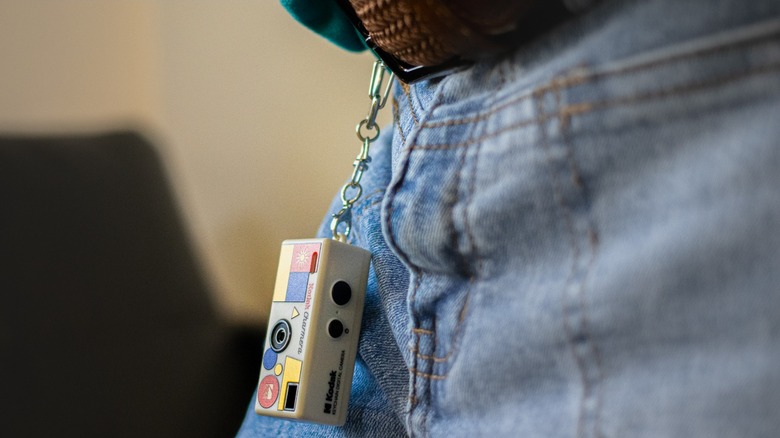
The Kodak Charmera is a keychain digital camera inspired by the company’s first disposable camera, the Kodak Fling, which was launched in 1987. The Fling used a much smaller 110 film than the average 35mm film camera when it was launched and was essentially just a lens mounted on the film canister protected by a plastic case. The Charmera follows it footsteps with a similarly diminutive size — it measures at just 2.3 x 1.0 x 0.8 inches, making it small enough to fit in your palm, and weighs less than an ounce.
Aside from the keyring and the camera itself, the only other thing that you get in the box is a short USB-A to USB-C cable for charging the device and transferring photos. One big downside to the Charmera is that it does not come with a microSD card, meaning you cannot use it straight out of the box. While the camera does have internal memory, it can only manage to hold two photos at a time (unless you have a microSD card installed).
Despite being modeled after a disposable device and weighing next to nothing, the small camera feels solid enough that you can leave it hanging on your bag or belt without worrying that it will break into pieces. It’s not waterproof, though, so it’s not recommended that you leave it out if you’re walking in the rain.
Perfect for everyday snaps
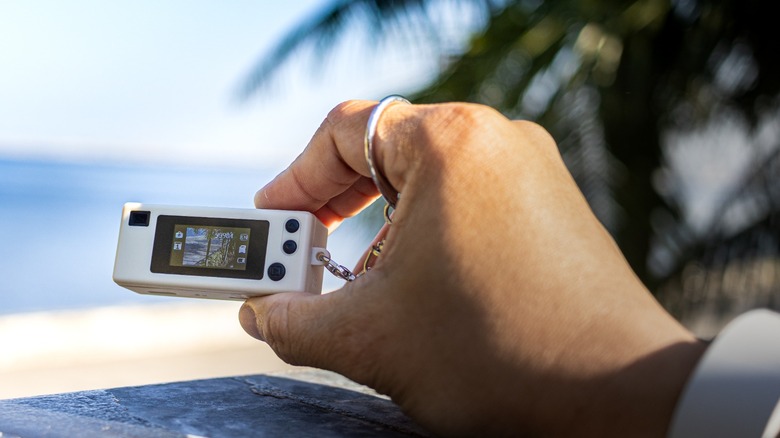
The Charmera’s accessible design makes it rather convenient for everyday shooting. In fact, you can wear the keyring on one of your fingers, ensuring that you can quickly get a photograph. It’s also rather easy to use — you can pinch it between your thumb and forefinger to take pictures while using your middle finger for extra stability.
Its tiny 0.9-inch screen is not especially bright, so you might have trouble seeing it under a bright sky. If that’s the case, use the physical viewfinder, which is just a rectangular hole, to see what the camera is looking at. When you’re shooting with this device’s 1.6-megapixel sensor in dim areas, it fires a little LED flash good enough to light up close subjects.
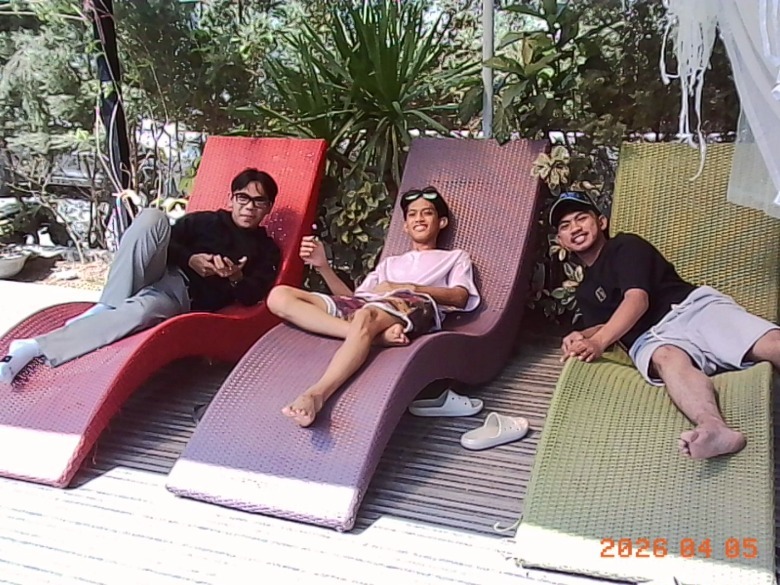
The camera’s documentation suggests it’ll take 1 GB to 128 GB microSD cards, although testing showed that it can handle up to 256 GB of storage. This is practically a limitless amount as all the photos taken on Charmera during our test did not exceed 500 KB.
 Jowi Morales/SlashGear
The Charmera is also capable of recording videos at 1440p resolution, but there isn’t any image stabilization to speak of. The quality of this video is something like a web camera from the 90s. Nevertheless, it does the job well enough of capturing your memories while delivering the nostalgic look and feel of classic Kodak cameras.
This camera has a built-in battery, so you’ll have to charge it through a power bank or charging brick. Still, it’s good enough to last more than 120 photos and when it runs out of battery, you can just plug it in for less than a couple of hours to get it back to full.
A substitute for your phone
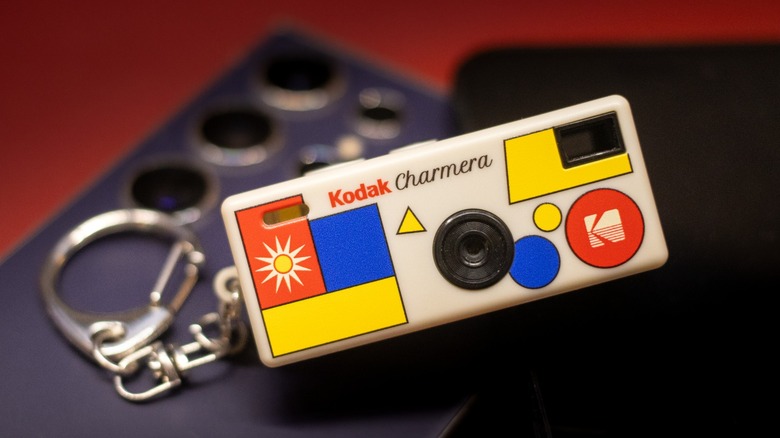
This “disposable” digital camera goes against recent smartphone trends like manual control, 100 times zoom, and AI filters aplenty. Instead, it brings you back to the simplicity of being in the moment and capturing memories as you see them.
The camera only shoots in auto mode, so you’ll have to accept whatever exposure it sets. It has a fixed focus, so you’re not going to be taking good macro photos or portraits that pop out with bokeh effects. If you want to zoom on or out, you’ll have to physically move closer or farther away, as necessary. And when capturing scenes with high contrast, it tends to blow out the bright parts at the same time as it drown out details in the darker areas.
 Jowi Morales/SlashGear
Nevertheless, this is where the charm of the Charmera lies. It takes away everything unnecessary and forces you, the photographer, to be creative and work around its limitations.
It does offer filters and frames you can add to your images, but that’s about the only extra features that you’ll get. You can’t even delete images on the camera itself — you need a computer to do that.
Its small size and light weight make it more discrete than a smartphone or big camera, making it ideal for capturing street scenes during the day. And because it’s quite cheap, you won’t take a big monetary hit if it’s misplaced.
Affordable photography fun
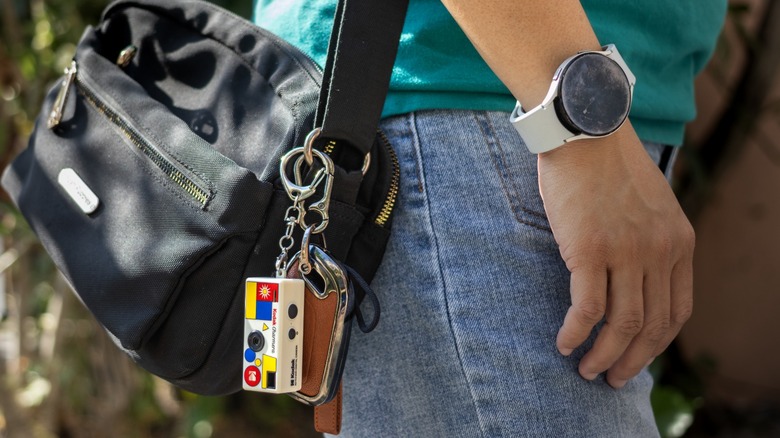
The Kodak Charmera is an affordable piece of kit, coming in at under $35 from Kodak’s store on Amazon. Aside from being a toy camera, it’s also a collectible that comes in seven different designs, and you can get a whole box set of seven for under $210. Despite lacking in the technical department, this is still a cheap way that anyone can practice the art of photography, allowing you to practice some of these smartphone photography tips with a “real” camera.
 Jowi Morales/SlashGear
Charmera is still more affordable than some of the other big names in instant cameras worth your money, and they’re surprisingly sturdy despite their simple construction.
It is important to note that it is harder to share the images captured with the Charmera than with other options (digital or instant-print analog), as it does not offer a wireless connection (or printing). You either have to attach the camera to your laptop, tablet, or smartphone via a USB-C cable or use a microSD card reader to download the pictures from the camera.
 Jowi Morales/SlashGear
This is inconvenient for the average person, but it makes photography intentional for those who are just breaking into the space and for enthusiasts who are looking for a challenge without spending thousands of dollars on high-end gear.
You don’t need a professional camera to create art
This retro digital camera takes advantage of nostalgia and evokes the feel of point-and-shoot digital cameras from the late 90s and early 2000s. It’s a good everyday companion for taking pictures without thinking about technicalities like focus, exposure, and ISO. You can instead focus on artistry, like composition, color, and texture. This makes the Charmera a good addition to the gear of every photographer and great way to introduce beginners to the simpler joys of photography.
If the goal of the Charmera isn’t to create tack-sharp photos, but to record and share your memories so that others may see how you lived, it’s a winner. Our short time testing this device showed us that a tiny, affordable camera could be just as good as expensive, high-end gadgets if you know how to make the most of it.
You can find the Kodak Charmera in the Kodak Store on Amazon for about $35, or at a photography-friendly store near you.

Stephan is the sports journalist for the Maple Grove Report.