
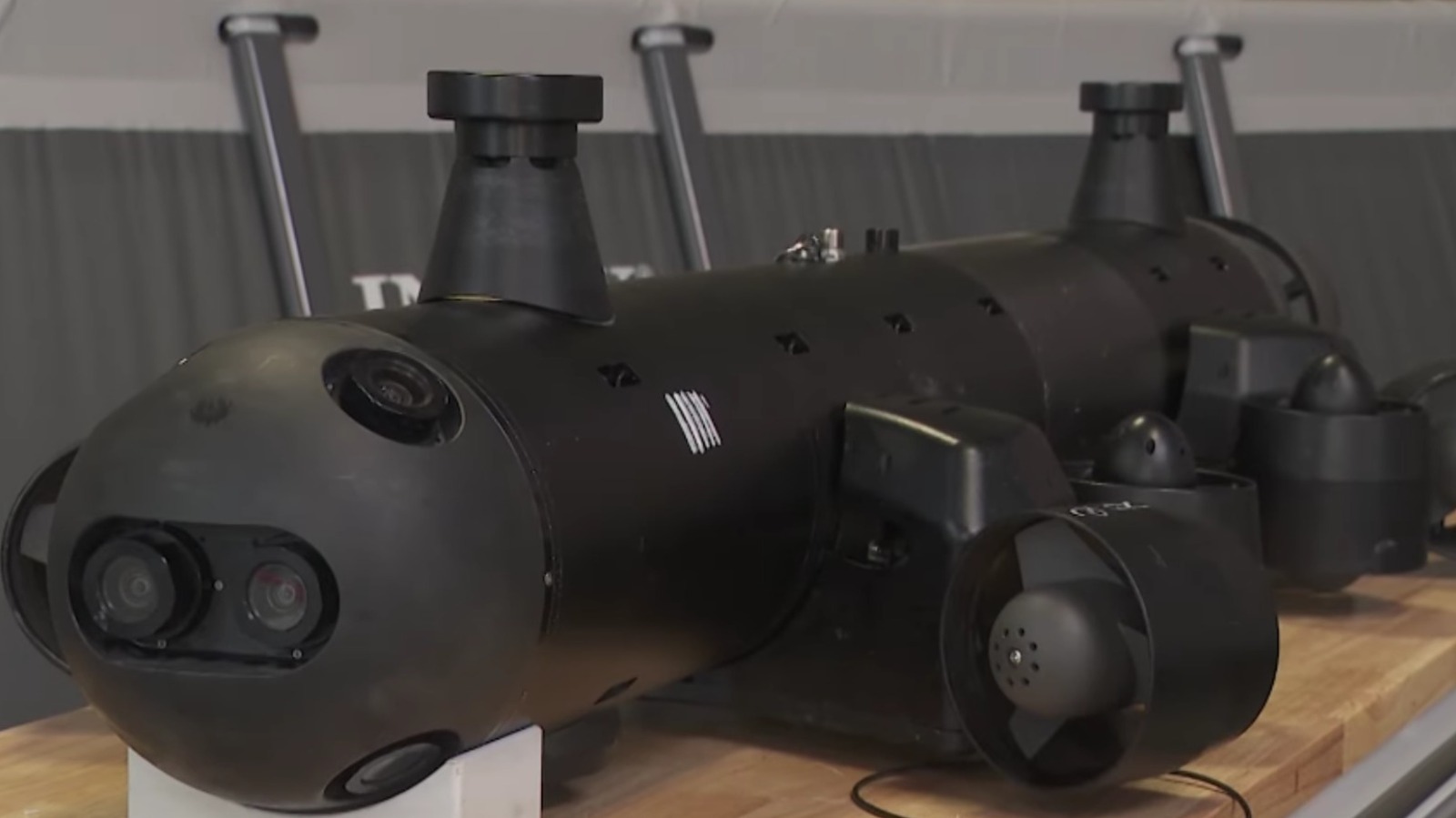
Both on land and in the ocean, mines are an enormous threat. Finding and neutralizing them can be an arduous process that might require getting up close and personal, and a single wrong move or miscalculation can be disastrous. This is another area, then, in which drones can make an invaluable contribution, by helping to keep personnel out of harm’s way in minesweeping efforts.
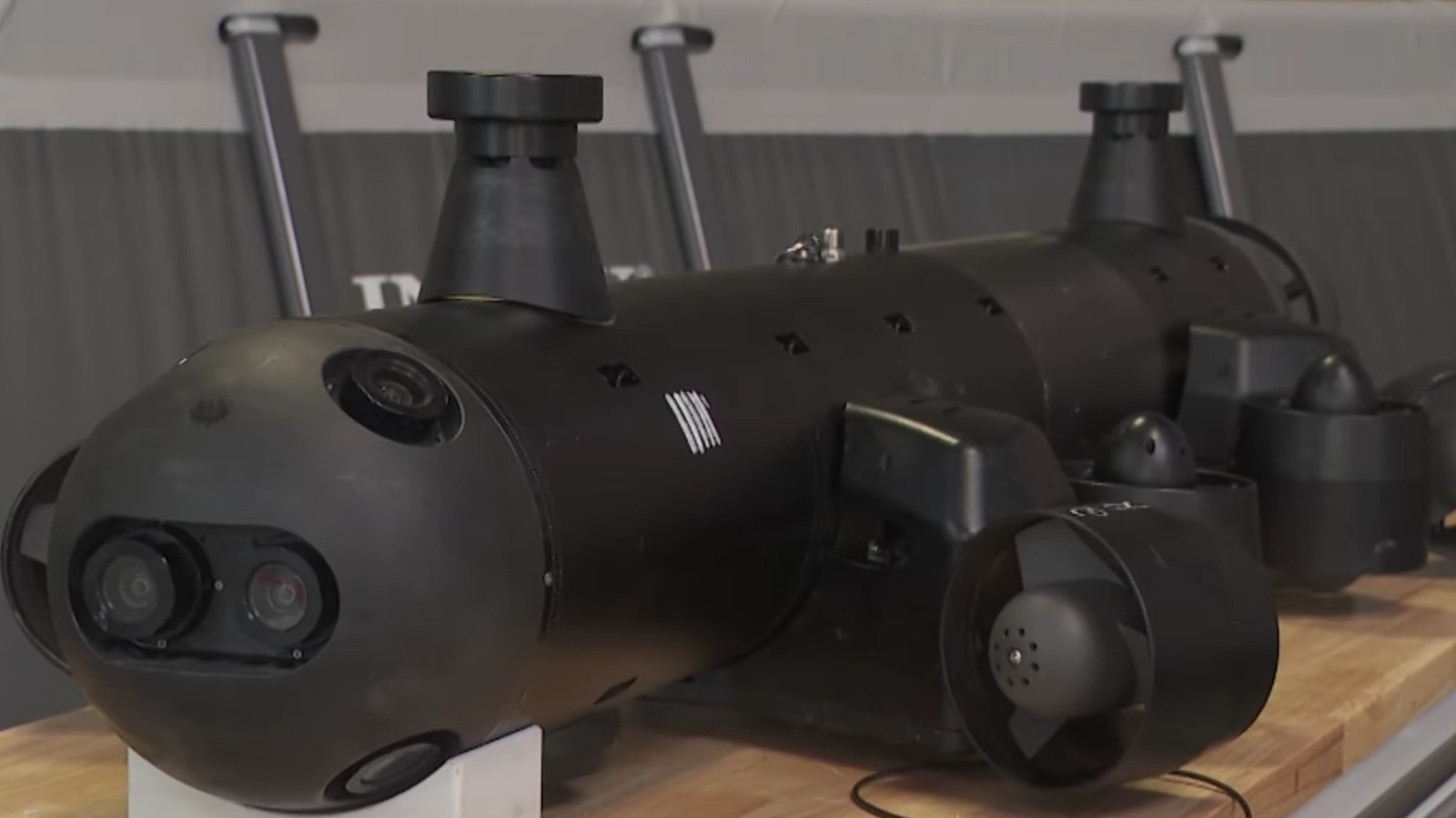
Undersea mines can be particularly challenging to remove, with the United Nations deeming the task “a new dimension of difficulty.” This is because such mines are unpredictable, moving with the ocean’s ebb and flow and able to be deployed at different depths. Ulysses Maritime Technologies’ Mako drone could be one sophisticated answer to this very problem, with its autonomous underwater exploration and advanced modular design that helps users adapt it to the parameters of a given mission.
Ulysses explains that use cases for its machine include helping the growth of seagrass through careful cultivation and precise placement. With advanced sensors and communication systems, they are also able to detect any illegal fishing operations in range, potentially identifying the positions of perpetrators and providing them for local authorities to apprehend. However, one of the most exciting potential applications for the technology is the capacity to detect and dispatch mines, and it’s something that the company is eagerly exploring. Here’s a look at the Mako drone, its modular design, and Ulysses’ ambitions for expansion. The U.S. Navy already has its own minesweepers, of course, but it seems that this could be a versatile new asset for military applications too.
Agility configuration and other options transform what Mako can do
In April 2026, NewsNation spoke to Akhil Voorakkara, co-founder of Ulysses, about the potential of Mako drones when deployed as minesweepers. Voorakkara noted that Mako could be arranged in the Agility Configuration, so named because it allows the drone to “hold itself in any angle, in really strong currents, it can also maneuver very precisely. It can […] turn on a dime. It can also rotate on its axis.” This level of fine control, needless to say, is essential for a delicate operation like minesweeping, and it’s not all that the machine has to offer to help in that department.
Voorakkara added that Mako’s on-board cameras are “really useful for getting up close to a mine and confirming what type it might be,” but also addressed the obvious fact that even high-quality cameras will fail to discern very much in deeper, darker water. As such, the drones are equipped with further advanced sensors, such as radar, that can map the drone’s surroundings in 2D and 3D. An endurance configuration, meanwhile, provides improved speed and range, though at the cost of being less agile. The modular design of the Mako drones allows the user to customize them to specific needs, by swapping out different components. This configuration, for instance, would allow the model to cover more ground (or rather, water), which would be a vital part of detecting mines in huge stretches of ocean.
Another example of the changeable components of the machine in action, then, is the concept of affixing a small payload to its underside, allowing for the destruction of mines once they have been successfully identified by the machine and its human operator.
The U.S. Navy’s underwater minesweeping efforts, and how Ulysses’ Mako could fit in
Will O’Brien, president and co-founder of Ulysses, acknowledges that the concept of discovering and eradicating underwater mines via drones is not new. “The U.S. Navy’s kind of been doing this for a number of decades now,” O’Brien told NewsNation. It’s true that the navy has been using a combination of Mk 18 Mod 2 Kingfish drones and SeaFish Neutralizers in the Strait of Hormuz to find and destroy drones, but at $100,000 per non-reusable neutralizer alone, it’s an expensive process. Ulysses’ Akhil Voorakkara boasts that the company’s drones have similar abilities and could “provide them for an order of magnitude lower cost.”
Fellow co-founder Akhil Voorakkara stated to the outlet, “getting 1,000 robots in the Strait of Hormuz is something that’s not a matter of years for us, but more a matter of months.” This is thanks to the modular design of the drones themselves and the entire process being completed in-house, making the process much faster.
At the time of writing, no deal has been made with the U.S. military for deploying the drones in locations such as the Strait of Hormuz. It’s clear, though, that Mako drones have tremendous potential to perform that role, and might be a much more cost-effective solution. After all, the SeaFish Neutralizers work just once, and a fleet of Mako drones wouldn’t have this issue. In fact, it could be supported by Ulysses’ in-development Leviathan, another autonomous craft that the company deems a mothership of sorts for maintaining other drones. The U.S. Navy is also considering an autonomous sub that deploys heavy payloads under the sea, but as a defensive option for the minesweeping use case, the Mako drone is an attractive one.

Stephan is the sports journalist for the Maple Grove Report.