98% of IT leaders want digital sovereignty: Now SUSE is operationalizing it for companies everywhere


SUSE bets its future on digital sovereignty

SJVN / ZDNET

Follow ZDNET: Add us as a preferred source on Google.


ZDNET’s key takeaways

  • SUSE shifts course to digital sovereignty for all. 
  • The approach focuses on partners, products, and services.
  • This strategic shift includes the Linux desktop. 

At SUSECON 2026, it was obvious that European Linux powerhouse SUSE had found its new north star. The company isn’t just talking about digital sovereignty to please its European Union (EU) customers and regulators. No, it’s rebuilding its Linux, Kubernetes, and AI story around the idea that sovereignty is now the only practical route to choice and resilience in enterprise IT globally. 

The reason? It’s what customers around the world, wary of centralized, proprietary, and US-centric tech services and hyperclouds, want. SUSE research revealed at the company’s annual trade show in Prague, Czech Republic, that among IT leaders worldwide, 98% prioritize digital sovereignty. Of those, just over half (52%) are already taking steps to achieve freedom from US-based hypercloud providers such as Microsoft and Google. 

Also: How digitally sovereign is your organization? This Red Hat tool can tell you in minutes

SUSE is trying to turn digital sovereignty into an operating model. What does that approach mean? Frank Feldmann, SUSE’s chief strategy officer, explained, when you strip away the policy talk, it’s “how quickly you can detach from a vendor or platform that no longer fits, and how easily you can move to the next one.” That adaptability is important when you can’t trust proprietary companies governed by countries that don’t respect your rights to act in your or your customers’ best interests. 

This isn’t a theoretical problem; it’s real and serious. According to SUSE, 51% of executives say they have already suffered a breach by a foreign entity. SUSE wants to help you find the “exit velocity and pivot ability” you need to react almost as fast as “a politician signs an executive order” to protect your data and services. 

Feldmann also sees a classic execution gap between executives and implementers. “People at an executive level… understand they need to change. But if you then would ask a DevOps engineer or platform engineer, ‘Is there stuff happening already?’ the answer very often is still ‘no, not yet’… We’re articulating frameworks… but the real move is still a little left behind.” That gap, between strategy decks and kubectl, is where SUSE thinks it can make money.

Code‑level control

SUSE’s answer doesn’t start with a glossy “sovereign cloud” marketing slide. It starts with engineering.

In an interview, Miguel Pérez Colino, who oversees SUSE’s Linux strategy, made the connection between SUSE’s build processes, European legal frameworks, and digital sovereignty explicit. 

“We have a completely open mechanism for building everything,” he said. “Companies want to be in control, and they don’t want anyone messing with them. What is the guarantee? SUSE is completely open source — the build, the test bits, everything. What is the warranty? Being able to reproduce what you’re doing. So reproducible builds are key for us.”

Today, SUSE has quietly pushed reproducible builds past 97%, and Pérez Colino added that they will soon be at 100%. The point is that customers can, in principle, rebuild and verify the binaries they run rather than trusting a black box binary.

Also: France is ditching Windows for digital sovereignty – and its new Linux stack is taking shape

From there, he walked straight into politics. “The European laws guarantee that your privacy is kept… So we’re saying that being European guarantees sovereignty. It’s not for sovereignty for Europe, it’s for sovereignty everywhere, because the legal framework where we work enables us to do it.”

That’s SUSE’s message: open source gives you code‑level control, while European jurisdiction constrains what SUSE and its European-based partners can do with your data and systems. To move beyond rhetoric, SUSE is rolling out a set of tools and offerings designed to make sovereignty measurable and actionable.

That approach starts with SUSE’s Cloud Sovereignty Framework Self‑Assessment. This structured survey, aligned with the EU Cloud Sovereignty Framework, enables you to achieve a Sovereignty Effective Assurance Level (SEAL) score (from 0 to 4) across eight objectives. This gives CIOs and CISOs a number they can take to the board, regulators, and procurement officers to demonstrate progress or risk.

Underneath that assessment sits SUSE Linux Enterprise 16 (SLES 16), which SUSE CEO Dirk Peter van Leeuwen cast as more than just another long‑term support release in his keynote. “SLES 16 makes Linux exciting again,” he said. “It’s the first platform of its kind that integrates agentic AI. It’s designed specifically to handle the transformation from virtual machines to containers and from the datacenter to the edge. It’s not just an OS. It’s a platform for adaptation.” 

Also: The new rules for AI-assisted code in the Linux kernel: What every dev needs to know

That “platform for adaptation” message is very deliberate. If sovereignty is about exit velocity and pivot ability, SLES 16 is supposed to be the infrastructure layer that never blocks you. Already running a “Red” Linux and don’t want to switch? No problem, SUSE’s Multi‑Linux Support plays the same game from another angle. Customers can keep Red Hat Enterprise Linux (RHEL)- or CentOS‑derived systems running while pointing their updates and support to SUSE instead.

“You have one company, you switch the company, you move to another company for your support,” Pérez Colino said. “This is based on the basics of open source. You have open source, and you provide the service on open source.” In other words, sovereignty also means being able to change who you pay without having to reinstall the world.

Keeping options open

SUSE has also been building out its Sovereign Premium Support, a Europe‑centric support tier aimed at customers with strict jurisdictional and regulatory requirements.

At the sovereignty panel, Arnab Chatterjee, senior infrastructure engineering manager at Nomura, Japan’s largest investment bank, described why that support matters when trying to unwind long‑term dependencies. He compared years of reliance on VMware to carrying “a 500‑pound pet gorilla on your back”, saying his organization needed a partner to move forward: “With SUSE premium services, we found somebody who can walk with us through the journey, advocate for us where there were problems and pitfalls, and be part of our team.”

To scale this kind of work, SUSE is extending its SUSE One Partner Program with a new sovereign specialization. “This provides,” explained Hayley Wienszczak, head of SUSE global partner programs, “a horizontal layer across the whole program, so it will be open to all of our partners to join. This really is about helping our customers by working with and investing in service providers to build a sovereign stack based on SUSE.” In other words, if SUSE can’t provide the specific services you need from its portfolio of programs, its partners likely can instead. 

Also: 5 Linux servers that let you ditch the public cloud and reclaim your privacy – for free

The pitch is straightforward: partners build and run SUSE‑based sovereign stacks, SUSE validates the architecture and backs it with its own premium support, and customers get auditable, jurisdiction‑aware environments without having to chase every new update.

Beyond the obvious geopolitical issues that make digital sovereignty a hot topic, AI is throwing gasoline on the digital sovereignty bonfire. In particular. Van Leeuwen said, “Shadow AI is becoming the new shadow IT.” That reality means organizations are approving one vendor’s AI service while staff quietly paste confidential data into another, with security teams struggling to track where models run, how confidential tasks are segregated, and whether employees are ready to manage 47 different agents. AI has become the moment sovereignty stops being a theoretical risk and becomes a daily operational question.

The debate over what, exactly, sovereignty covers is still very much alive. Marc O’Regan, Dell EMEA CTO, argued in a panel for a full‑stack view, warning that patterns extracted by AI can be more sensitive than raw data. “Data is only data. It becomes valuable when it becomes information… The exposure of the patterns associated with that information is massively risky,” he said, pointing to AI and even post‑quantum cryptography as new sovereignty battlegrounds.

Also: I wanted to self-host without paying, and this user-friendly server OS delivered

Mattias Åström, CEO of evroc, a Stockholm-based company building a sovereign European cloud and a SUSE partner, pushed back on the same panel with a blunt litmus test: “Does the foreign state have a kill switch? Can the foreign state see your data? Those are the definitions.”

Whether you prefer the nuanced stack view or the blunt kill‑switch test, SUSE wants to be the vendor that can tick the boxes either way.

SUSE customers, such as Airbus Defense and Space, view sovereignty as a long‑term survival issue. Nichol Reuters, Airbus’s SVP for innovation and technology, stated, “If we’re locked in, we’re not able to scale into the future or fulfill the customer requirements of future adaptations.” This is the customer lens SUSE is trying to align with: sovereignty as the only way to keep options open over decades, not just to pass this year’s audit.

Operationalizing sovereignty

In short, SUSE wants to be your foundation for digital sovereignty. But it’s not just infrastructure. On the desktop, Pérez Colino is pushing SUSE Linux Enterprise 16 with a Workstation extension as a sovereign Linux desktop/workstation, especially for European public-sector migrations away from proprietary operating systems.

Here, SUSE is separating the operating system from applications. SUSE relies on upstream kernels for hardware support and leans on Flatpak and Flathub for third-party desktop apps. That approach enables SUSE to focus on delivering a hardened, reproducible base, while partners and the broader ecosystem handle most user‑space software.

Also: Why even a US tech giant is launching ‘sovereign support’ for Europe now

Pérez Colino said: “If you want to set a desktop that is protecting you, that is completely open, that you can audit, that you can control, that you can customize, and that, on top of that, is built in a place where the laws are protecting you, we are providing [it]… with [the] same bits we provide with the server, so it’s resilient, built high‑quality, reliable, trustable.”

SUSE has always sold itself as the open, independent alternative in enterprise Linux and, more recently, Kubernetes. What’s new is how far it’s willing to stretch that story into law, geopolitics, AI, and long‑term escape planning.

Between reproducible builds, multi‑Linux support, EU‑centric premium support, partner specializations, and sovereign AI factories, SUSE now has enough concrete pieces to argue that it’s not just talking about sovereignty, it’s operationalizing it. The strategy is not as simple as a single product. SUSE’s combination of products, partnerships, and services can keep your company safe during uncertain times. 

If SUSE can demonstrate that its approach really does increase exit velocity and pivot ability, enabling customers to change course quickly without losing control of their data, models, and infrastructure, while increasing resilience, it won’t just have a new marketing slogan. It will have carved out a defensible niche as the open‑source backbone for sovereign IT, especially in Europe’s public sector and regulated industries.

I’ve been following SUSE since they were founded in 1992. I think they can deliver the digital sovereignty goods. 


Source link

Leave a Reply

Subscribe to Our Newsletter

Get our latest articles delivered straight to your inbox. No spam, we promise.

Recent Reviews


Bucket list trips for 2026 are shaping up to be bigger, bolder, and more experience-driven than ever. Travelers aren’t just checking off countries; they’re chasing moments—auroras dancing over Arctic fjords, elephants padding through misty savannas, and long, slow dinners in cities where food is practically a religion.

With international tourism up around 5% in 2025 and still growing, demand for “trips of a lifetime” is surging alongside interest in adventure, wellness, and deep cultural immersion. Surveys consistently show that top bucket list dreams include the northern lights, iconic national parks, overwater bungalows, and legendary cities like Tokyo and Paris.

Below is a guide to 15 curated bucket list trips for 2026 that blend classic, once-in-a-lifetime icons with emerging destinations and new travel trends.

How We Chose These Bucket List Trips For 2026

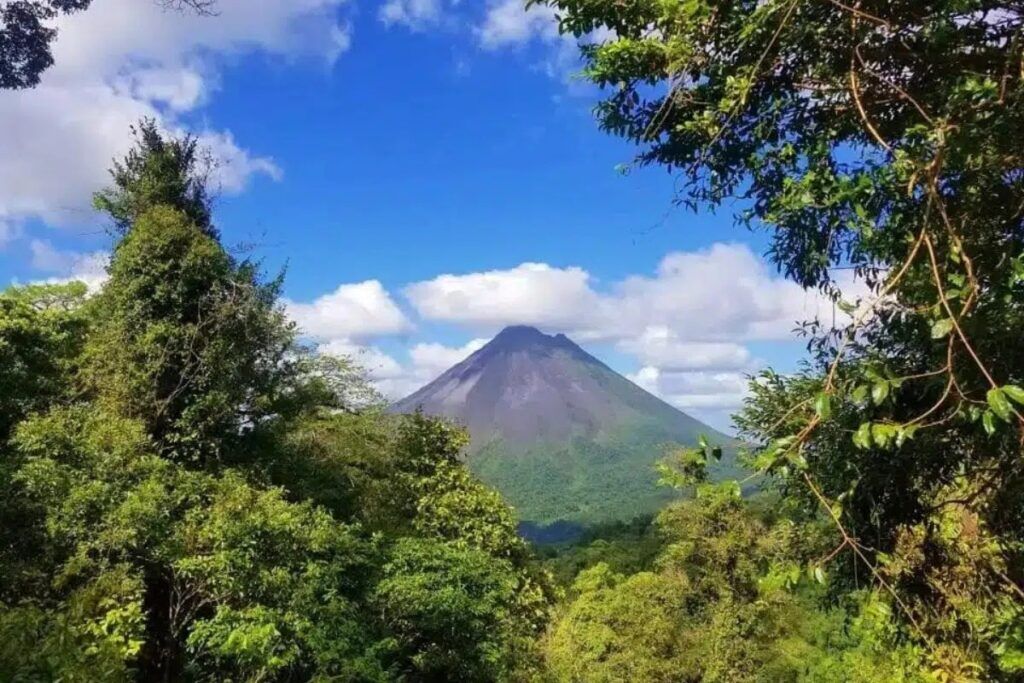
Arenal Volcano Costa Rica
Photo Credit: Jenn Coleman.

To build this list, we pulled from:

  • 2026 “where to go” lists from major travel publications and tour operators.
  • 2026 trend reports highlighting new hotspots from brands like American Express Travel and Four Seasons.
  • Fresh “bucket list experiences” roundups focused on once-in-a-lifetime safaris, rail journeys, and wellness escapes.

You’ll see a mix of:

  • Epic nature: auroras, mountains, deserts, and wildlife
  • Deep culture: food cities, historic routes, and sacred sites
  • Wellness and slow travel: spa breaks, rail journeys, and retreats
  • Responsible choices: places where tourism supports conservation and communities

Use this as your starting point to plan your own bucket list trips for 2026 that actually match how you like to travel.

1. Chase the Northern Lights in Arctic Europe

Northern Lights Iceland
Photo Credit: Deposit Photos.

Seeing the aurora borealis is still one of the most coveted bucket list experiences for Americans—it ranks number one in some recent surveys. For 2026, look to:

  • Tromsø and the Lofoten Islands (Norway) for fjords and cozy fishing villages
  • Lapland (Finland/Sweden) for glass igloos, reindeer safaris, and snowshoeing
  • Iceland for a blend of auroras, waterfalls, hot springs, and easy road-tripping

Why it’s a 2026 must:

  • Peak aurora season (roughly September–March) aligns with strong solar activity cycles.
  • Northern Europe continues to expand winter experiences—ice hotels, Sami culture tours, and wellness-focused saunas are all on the rise.

If “see the northern lights” has been sitting at the top of your list for years, 2026 is an ideal time to finally go.

2. A Classic African Safari with a Conservation Focus

Wandering group of elephants in Ngorongoro Crater Tanzania Africa
Photo Credit: Jenn Coleman.

Safari has always been a hallmark of bucket list travel, but the new trend is going deeper—fewer lodges, longer stays, and a clear link to conservation or community development.

Top 2026 choices:

  • Kenya’s Maasai Mara & conservancies – phenomenal big-cat viewing and community-run conservancies
  • Tanzania (Serengeti & Ngorongoro) – classic migration routes, crater landscapes, and cultural add-ons with Maasai and Hadzabe communities
  • Botswana’s Okavango Delta – water-based safaris, mokoro (dugout canoe) trips, and a strong low-impact tourism model

Look for lodges and operators that:

  • Support anti-poaching and habitat protection
  • Employ and train local guides
  • Limit vehicle numbers at sightings

For many travelers, a safari is the defining bucket list trip for 2026.

3. Overwater Bungalows in Bora Bora or the Maldives

Overwater Bungalows in Bora Bora
Photo Credit: Deposit Photos.

Sleep above turquoise water, step off your deck into a lagoon, and watch reef fish cruise under your bungalow—that’s the overwater fantasy that keeps showing up on global bucket list surveys.

Two iconic options:

  • Bora Bora, French Polynesia – Legendary for its lagoon, volcanic backdrop, and honeymoon-worthy overwater villas
  • The Maldives – Dozens of private-island resorts, world-class diving, and increasingly strong sustainability programs

Why 2026:

  • More flight options and packages make these destinations (slightly) more accessible.
  • Resorts are responding to traveler demand with reef-restoration programs, local culture experiences, and wellness-focused itineraries, not just “fly and flop” relaxation.

If “stay in an overwater bungalow” is on your dream list, 2026 is a great year to start planning while these destinations are still evolving in a more sustainable direction.

4. Cherry Blossoms in Japan and South Korea

Cherry Blossoms on Fujinomiya, Shizuoka, Japan
Photo Credit: Deposit Photos.

Japan has ranked as the world’s number-one bucket list destination in multiple surveys, with South Korea rising fast as a complementary trip.

For a 2026 bucket list trip, pair:

  • Japan: Tokyo and Kyoto, plus smaller cities like Kanazawa or Hiroshima
  • South Korea: Seoul, Busan, Gyeongju, or Jeju Island

Time it for late March to mid-April to catch cherry blossom season, with blooms starting in the south and moving north. Off-season, both countries still offer incredible food, temple stays, mountain hiking, and vibrant city life.

If you love culture, cuisine, and efficient public transit, this is one of the most achievable “big” bucket list trips for 2026.

5. Trekking in Patagonia (Chile & Argentina)

Hikers hiking, enjoying the view of Famous Patagonia Mount Fitz
Photo Credit: Deposit Photos.

Torres del Paine in Chile and Fitz Roy in Argentina show up again and again on “best places to visit in 2026” and lifetime adventure lists.

Why it belongs on your 2026 bucket list:

  • Iconic hikes: The W or O Circuit in Torres del Paine, day hikes around El Chaltén
  • Wild landscapes: Granite spires, glaciers, turquoise lakes, and guanacos grazing in the steppe
  • Seasonal sweet spot: October–April is ideal for most travelers, with long days and (relatively) stable weather

You can trek hut-to-hut, stay in eco-domes, or combine hiking with puma-tracking safaris or scenic drives down the Carretera Austral. For active travelers, this is one of the purest “world’s edge” feelings you’ll find in 2026.

6. An Expedition Cruise to Antarctica

Antarctica penguins and Cruise ship
Photo Credit: Deposit Photos.

Antarctica sits at the extreme edge of the bucket list—remote, fragile, and unforgettable. It regularly appears in “top bucket list places” research as the ultimate once-in-a-lifetime destination.

Current trends:

  • More small-ship expedition cruises with kayaks, zodiacs, and citizen-science programs
  • Stronger guidelines on landings and visitor numbers to protect wildlife and ecosystems.

If you go in 2026, look for operators that:

  • Belong to recognized polar associations
  • Offset emissions and support research
  • Keep landings small and structured

It’s not an inexpensive trip, but if “see Antarctica” is on your personal list, starting the planning 12–18 months ahead is key.

7. Wellness + Wild Nature in Costa Rica’s Papagayo Peninsula

Costa Rica’s Papagayo Peninsula
Photo Credit: Deposit Photos.

Wellness travel is booming, with projections for the sector heading toward $1.4 trillion by 2027 and 2026 shaping up as a big year for “wellness your way”—mixing spa time with adventure and social connection.

Costa Rica checks every box:

  • Papagayo Peninsula appears on trending destination lists for 2026 thanks to its eco-luxury resorts and protected coastline.
  • You can combine yoga, spa, and thermal springs with zip-lining, surfing, and wildlife watching.
  • Strong sustainability policies and reforestation programs mean your travel dollars can support long-term conservation.

For a balanced 2026 bucket list trip, split time between Papagayo’s resorts and more rustic areas like Monteverde or Arenal.

8. Grand National Park Road Trip in the USA

Road-to-Zion
Photo Credit, Jenn Coleman.

A good old-fashioned road trip ranks high on American bucket list surveys, often right alongside iconic sites like the Grand Canyon and Zion National Park.

In 2026, consider:

  • Southwest loop: Grand Canyon, Zion, Bryce Canyon, Page/Lake Powell, and Monument Valley
  • Rockies route: Yellowstone, Grand Teton, and Colorado’s San Juan Mountains, which feature on 2026 trending destination lists.

Tips for making it “bucket list” level:

  • Build in time for sunrise/sunset at a few anchor viewpoints.
  • Book at least one special experience—helicopter flight, guided slot canyon hike, or dark-sky stargazing.
  • Travel shoulder season (spring or fall) to avoid crowds and extreme heat.

Well-planned, a national park road trip can feel as epic as an international adventure.

9. Dolomites & Northern Italy: Mountains, Vineyards, and Villages

Dolomites
Photo Credit: Deposit Photos.

The Italian Dolomites feature prominently in “Best of the World 2026”-style lists, celebrated for their jagged peaks, alpine lakes, and hut-to-hut hiking culture.

Make it a full 2026 bucket list itinerary by pairing:

  • Dolomites: Lago di Braies, Seceda, Tre Cime di Lavaredo, and scenic passes
  • South Tyrol & Trentino: Wine routes, farm stays, and mountain cuisine
  • Venice or Verona: As a cultural bookend to your mountain time

The region now blends classic rifugio stays with stylish design hotels and wellness spas, reflecting the broader trend toward adventure-meets-wellness travel.

10. Marrakech and the Moroccan Desert

Main square of Marrakesh in old Medina. Morocco
Photo Credit: Deposit Photos.

Marrakech shows up on several 2026 trending destination lists thanks to its design-driven riads, vibrant souks, and evolving restaurant scene.

A bucket list-worthy Morocco trip can include:

  • Marrakech: Jardin Majorelle, medina rooftop dinners, hammams, and contemporary art spaces
  • Atlas Mountains: Hikes or village stays with community-run guesthouses
  • Sahara (Merzouga or beyond): Desert camps, camel treks, and stargazing under clear skies

This trip aligns perfectly with 2026 trends toward immersive, design-forward stays and “star bathing”—night-sky experiences that support mental well-being.

11. Rail Journeys Through Dramatic Landscapes

Views from Alaska Railroad
Photo Credit: Jenn Coleman.

Rail travel is having a moment again, both for sustainability and for the simple pleasure of watching the world glide past your window. Several 2026 bucket list roundups specifically highlight rail tours as “trips of a lifetime.”

Consider for 2026:

Alaska Railroad: Scenic routes like the Coastal Classic, Denali Star, and Glacier Discovery glide through fjords, tundra, alpine valleys, and glacier country.

Swiss Alps: Glacier Express or Bernina Express, linking iconic mountain towns.

Japan: Shinkansen journeys plus scenic local lines through rural regions.

Europe night trains: Revived sleeper routes, letting you wake up in a new city without stepping foot in an airport.

Add in food, local stays, and day hikes along the way, and your rail trip becomes a slow-travel bucket list adventure rather than just a way to get around.

12. New Zealand Road Trip from Alps to Ocean

New Zealand
Photo Credit: Deposit Photos.

New Zealand remains a dream destination for many travelers, showing up in multiple “best places to visit” lists going into 2026.

A classic 2–3-week itinerary might include:

  • South Island: Queenstown, Fiordland (Milford or Doubtful Sound), Wanaka, and the West Coast glaciers
  • North Island: Rotorua’s geothermal areas, Tongariro Alpine Crossing, and the wine regions around Hawke’s Bay or Waiheke

New Zealand also aligns with 2026 priorities like outdoor adventure, indigenous culture experiences, and high-quality yet small-scale hospitality.

13. Himalayan Adventures: From Spiritual Retreats to High Passes

Hiking the Himalayas
Photo Credit: Deposit Photos.

The Himalayas—whether in India, Nepal, or Bhutan—appear on several 2026 destination lists for travelers seeking a mix of spirituality, trekking, and cultural immersion.

Options range from:

  • Gentle wellness retreats and monastery visits in Bhutan or northern India
  • Classic treks such as Everest Base Camp or the Annapurna Circuit in Nepal
  • Jeep-based journeys through high passes and remote villages

For 2026 bucket list planning, think carefully about altitude, seasonality, and whether you want a challenging trek, a meditative retreat, or a bit of both.

14. Immersive City + Nature in Panama and Costa Rica

Panama City Panama
Photo Credit: Deposit Photos.

Panama City appears on trending lists for 2026 as a dynamic hub where old-world Casco Viejo meets gleaming skyscrapers and canal views. Pair it with Costa Rica or Panama’s own highlands and islands for a multi-country bucket list trip that mixes:

  • Historic neighborhoods and world-class dining
  • Cloud forests, coffee regions, and volcano hikes
  • Caribbean and Pacific beach escapes

This combination taps into 2026’s appetite for multi-stop itineraries that deliver big variety in a single trip—without round-the-world flight fatigue.

15. Culture, Carnival, and Coast in Brazil (Rio + Beyond)

Brazil
Photo Credit: Deposit Photos.

Rio de Janeiro’s blend of beaches, mountains, and music keeps it on lists of the best places to visit in 2026, especially around Carnival.

For a truly bucket list-level 2026 trip, expand your route beyond Rio:

  • Paraty & Costa Verde: Colonial streets and emerald bays
  • Iguaçu Falls: One of the world’s great waterfalls
  • Amazon or Pantanal: Wildlife and river-based adventures

Brazil rewards longer itineraries and slow exploration, aligning with 2026 trends toward meaningful, story-rich travel instead of rushing through a checklist.

How to Actually Make Your Bucket List Trips For 2026 Happen

Majestic waterfall in the rainforest jungle of Costa Rica. Tropical hike.
Photo Credit: Deposit Photos.

Big, dreamy trips tend to stay on the bucket list if you don’t connect them to a concrete plan. A few practical steps:

Pick one “flagship” trip for 2026.

  1. Pick one “flagship” trip for 2026.
  2. Instead of trying to do everything, choose the one experience that keeps pulling your attention—auroras, safari, Antarctica, Japan, etc.
  3. Match seasonality and budget.
    • Research best months for weather and wildlife.
    • Use shoulder seasons where possible for lower prices and fewer crowds.
    • For ultra-premium trips (Antarctica, overwater bungalows, business-class flights), plan 12–18 months out.
  4. Layer in one or two “stretch” experiences.
  5. A helicopter flight, private wildlife guide, or spa retreat can turn a great trip into a true trip of a lifetime. Pick the one or two splurges that matter most to you instead of upgrading everything.
  6. Travel responsibly.
  7. Consider 2026 “no lists” and overtourism warnings when you decide when and how to visit certain hotspots, and look for operators with clear sustainability and community-support policies.

When you design your 2026 travels around the experiences that matter most—rather than just ticking off places—you transform “someday” into a specific, bookable plan. That’s how bucket list trips for 2026 move from dream to departure date.

Hi! We are Jenn and Ed Coleman aka Coleman Concierge. In a nutshell, we are a Huntsville-based Gen X couple sharing our stories of amazing adventures through activity-driven transformational and experiential travel.


Source link