Inline remote and microphone with good noise reduction and voice calling performance
Cons
Some fraction of users may not get a tight seal from the included ear tips (three sizes)
No storage pouch or case included
Back in 2012, I wrote a review of Panasonic’s ErgoFit RP-HJE120 wired earbuds, which cost me $6 at the time (now they’re $9), and I was impressed by how decent they sounded for how little they cost. They didn’t have a ton of bass, but they were well-balanced and offered an ample amount of detail and clarity, making them arguably the cheapest audiophile-friendly earbuds. While the company’s step-up ErgoFit RP-TCM125 earbuds didn’t sound quite as good for some reason, they did have an inline remote and microphone, a key feature if you plan on using your buds with a phone.
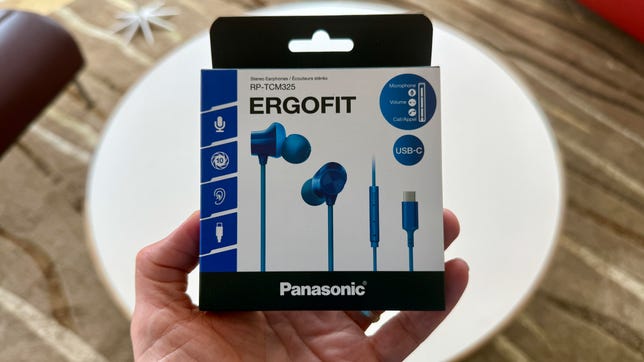
In those days, phones were equipped with 3.5mm headphone jacks (and so were once-popular digital music players such as the iPod Mini). Now, most phones leave them off, which is where Panasonic’s new-for-2026 ErgoFit RP-TCM325 USB-C comes in. The spiritual successor to those two earlier wired models with 3.5mm plugs, the RP-TCM325 instead connects to the USB-C port of your phone, tablet or computer to deliver an all-digital wired connection. For $25, the sound is hard to beat, and their voice calling performance is also good, which is why I’ve awarded them a CNET Editors’ Choice award.
The ErgoFit USB-C buds currently come in three color options: blue, white and black.
David Carnoy/CNET
Panasonic ErgoFit USB-C design
One of the drawbacks of the ErgoFit RP-HJE120 was that while they had a sturdy L-shaped plug, their cord was thin and had a tendency to become tangled if you stuffed the earbuds in a pocket. The ErgoFit RP-TCM325, however, has a thicker, tangle-resistant cord for about two-thirds of its length before splitting into two thinner cords that lead into the buds, which seem more substantial than the tiny RP-HJE120 buds; they’re larger and have more weight to them. The way they’re shaped does allow them to nestle nicely in your ears, even with the cord weighing down on them a bit.
In the cord leading up to the right bud, you’ll find an inline remote that allows you to raise and lower the volume as well as advance tracks forward and back and answer/end calls.
I had to put on larger tips from another set of buds (Beats Powerbeats Pro 2) I tested to get a tight seal.
David Carnoy/CNET
The only design issue I had was with the included silicone eartips. While most people should be able to get a decent fit from one of the three sizes of included tips, the largest tip didn’t quite give me a snug fit, so I had to swap in larger eartips from one of the many earbuds I’ve tested (they happened to be extra-large tips from the Beats Powerbeats Pro 2). But at least these buds don’t require proprietary eartips such as the Apple AirPods Pro 3 or Samsung Galaxy Buds 4 Pro; they have a standard post that accommodates many tips.
Impressive sound quality
The sound quality is remarkably good for $25 earbuds. The buds’ marketing material describes them as having “tonally balanced audio with crisp highs and deep low notes, plus wider frequency response and lively sound quality.” That pretty much sums them up, though I’d add that the key here, beyond the balanced sound, is that there’s a natural, accurate quality to that sound. Also, while the bass goes deep, it’s controlled and doesn’t overwhelm the mids and highs, which have some nice sparkle to them (the highs). I also encountered minimal distortion, which is unusual for inexpensive earbuds.
The one big caveat is that in order to get the quality of sound I’m talking about, you do have to get a tight seal from one of the included eartips or find some tips that get you that tight seal. Without a tight seal, you lose a lot of bass, and you’ll likely come away thinking the buds sound tinny and mediocre. If you’re underwhelmed by the sound, try pressing both buds into your ears to create a good seal and see if the sound quality changes.
The buds have a 1.2-meter cord with a microphone and remote integrated into it.
David Carnoy/CNET
There are plenty of sub-$25 USB-C earbuds out there. I’ve tested a few of them, including Sony’s IER-EX15C buds, which retail for just under $20. Those Sony buds also sound good for the money, but the ErgoFit USB-C are a cut above for sound and build quality (the Panasonic buds deliver richer sound with more bass). The Sony buds look and feel a little cheaper, and I had one pair where the sound cut out on one of the buds, so I had to toss them.
Passive noise isolation but no ANC
While wired earbuds are back in fashion (my teenage daughter has taken to wearing Apple’s wired EarPods USB-C with her iPhone), I can’t say I’m all too fond of wearing wired earbuds on the go. If you do get a tight seal, you get some passive noise isolation from the tips, but there’s no active noise canceling, though the buds do draw a bit of power from the USB-C connection. (USB-C earbuds tend to have their own built-in Digital-to-Analog Converter or DAC.)
The back of the buds’ box displays all their key features.
David Carnoy/CNET
I’ve gotten so used to wearing true-wireless earbuds with very good noise canceling that it’s a little hard for me to go without noise canceling, especially in noisy environments like the subway. I enjoyed using and listening to the earbuds most when I was stationary in a quieter environment (seated at my desk or on a couch). That said, not everybody likes or cares about active noise canceling.
Better voice calling performance than I expected
I hadn’t used wired earbuds for a while to make calls and was surprised when callers said they could barely hear any background noise from the noisy streets of New York and that my voice sounded mostly clear and natural. I tested the earbuds with callers at the same time I was testing Anker’s Soundcore Space 2 headphones ($130), and the two callers I spoke with both said the ErgoFit RP-TCM325 were the easy winner. I graded the Space 2 a B for voice calling. I’d give these an A-minus, with the only potential issue involving wind noise (don’t expect stellar voice calling performance when it’s windy).
Panasonic ErgoFit RP-TCM325 final thoughts
There are plenty of inexpensive USB-C earbuds out there, but Panasonic has built on the legacy of its earlier ErgoFit buds to deliver a set of USB-C buds that stand out from the pack for sound quality and also serve up good voice calling performance. If you get a tight seal, they sound as good or better than wireless earbuds and headphones that cost more than $100.
The decision to begin birth control is one of the most important decisions a woman can make for her health. While many think of birth control as simply a form of pregnancy prevention, it can also be used for a range of other gynecological issues, such as endometriosis and ovarian cysts. Before you make your birth control decision, it is important to review information about the types of birth control available to you, their various effects, and when to see your doctor to help you select the best option for your needs.
If you’re looking for a birth control option that fits your lifestyle, you’re not alone. A 2020 study by the National Center for Health Statistics (NCHS) reported that between 2017 and 2019, 65.3% of US women between the ages of 15 and 49 were using contraception. (Daniels et al., 2020) This shows that the majority of women will use contraception at least once in their lives, and the importance of understanding the various contraceptive options can’t be underestimated.
At Arizona Gynecology Consultants, we are dedicated to providing patients with the education they need to make informed decisions about their healthcare, including contraception. Whether you are just beginning to explore birth control or you’d like to change your current method, our personalized care approach ensures that we understand your needs so we can help you choose the right contraceptive for you. Learn more about why birth control is so important and the options available to you.
Why Birth Control Matters
For most people, birth control is a crucial family planning resource to help prevent pregnancy; however, birth control has many other proven uses besides contraception. Women all over the world use birth control to address or ease other gynecological conditions.
The National Library of Medicine lists these common issues that can be addressed, at least in part, with the use of one or more types of birth control: (Bansode et al., 2023)
Painful menstrual cramps
Endometriosis
Amenorrhea
Premenstrual syndrome
Primary ovarian insufficiency
Heavy menstrual bleeding
Hormonal imbalance causing acne
Polycystic ovary syndrome
It is also important to note that regardless of the reason you are considering birth control, contraceptives are a crucial way to take control of your own health. Whether you are reproductive planning or addressing a woman’s health condition, birth control can help you maintain autonomy while taking steps to ensure optimal gynecological health.
Birth Control Options
Your options for birth control are as varied and unique as you are. There are hormonal methods, non-hormonal methods, natural strategies, and even permanent solutions. Each of the options available has both strengths and drawbacks and can vary in terms of effectiveness. Learning some critical information about each method can help you choose the best option for you.
Hormonal Birth Control Methods
Many birth control methods prevent pregnancy by modulating important women’s hormones, primarily estrogen and progestin. They work by increasing the effects of these hormones on the body, either preventing egg release, blocking the travel of sperm to the egg, thickening cervical mucus, or thinning the lining of the uterus.
While all of these methods have been proven to be effective in preventing pregnancy, it’s important to consider their benefits and drawbacks before choosing:
The Pill
Birth control pills are daily oral hormones used to prevent ovulation. While some contain both estrogen and progestin, others contain progestin only. There are a variety of birth control pills on the market, all considered highly effective at preventing pregnancy and potentially offering other gynecological benefits like shorter periods. The downside of birth control pills is that you must commit to taking them regularly, and they may have some minor side effects. In addition, pills do not prevent sexually transmitted infections (STIs).
The Patch
The birth control patch is a small patch placed on the skin that releases hormonal birth control through the skin and into the bloodstream. It is also a highly effective form of birth control with benefits such as lighter periods and ease of use. While it only needs to be changed weekly, poor compliance can lead to pregnancy. As with the pill, the patch doesn’t protect against STIs.
Vaginal Rings
Like the patch, vaginal rings release hormones into the bloodstream to exert hormonal birth control effects. Unlike the pill or the patch, a vaginal ring must be removed and replaced on a monthly basis, which makes it a more convenient form of birth control. Vaginal rings may also help regulate periods, reduce cramping, and improve acne. The downside of vaginal rings is that some women have reported spotting and discomfort when inserting the device.
Depo-Provera
The Depo shot, or Depo-Provera shot is a progestin-only hormone method that is injected intramuscularly. The effects of the shot last for 12-15 weeks, which makes it more convenient than the pill, patch, or ring. This is a highly effective form of contraception that may also regulate periods and is safe for breastfeeding mothers. One disadvantage is that Depo-Provera may delay fertilization after you cease use and are ready to get pregnant and may also cause irregular bleeding.
Hormonal IUDs
Hormonal IUDs are the longest-lasting form of hormonal contraception. Many women choose this option as it is highly effective at preventing pregnancy and requires almost no upkeep, but it is also reversible. An IUD is a small device that is inserted into the uterus to prevent fertilization, and those with hormones can add another layer of protection. While a hormonal IUD can last up to ten years, some side effects associated with IUDs are spotting, hormonal changes, and irregular bleeding.
Non-Hormonal Birth Control Methods
Non-hormonal methods of birth control are just what they sound like – they do not contain hormones and instead work by physically blocking the travel of sperm to the egg, disabling sperm altogether, or creating an unfriendly environment for sperm. Women who want to maintain their normal menstrual cycle and those who are sensitive to hormones may prefer non-hormonal methods.
The most common non-hormonal methods of contraception include:
Copper IUD
A copper IUD is an intrauterine device like the hormonal IUD, but it releases copper instead of hormones. The IUD placement makes it difficult for the sperm to reach the egg, while the copper creates a hostile environment for the sperm, preventing fertilization. Copper IUDs are considered highly effective and can last up to ten years. Some women may experience heavy periods and bleeding in between periods.
Condoms
Condoms are one of the most common forms of contraception and can also be used in conjunction with other methods to protect against STIs and STDs. Condoms create a physical barrier between the penis and the vagina, preventing sperm from entering the vaginal canal and also preventing the spread of STIs. However, condoms must be used correctly and consistently, and the error rate is higher than with other forms of birth control. Some people note that condoms may also reduce sensation during sexual intercourse.
Spermicide
Spermicides are chemicals that are inserted into the uterus, killing or immobilizing sperm. They are most effective when used with other forms of contraception. Although spermicides are convenient to use and readily available, they have relatively low effectiveness rates compared to other forms of birth control and do not prevent STIs or STDs.
Diaphragm
A diaphragm is a cup that is placed over the cervix, acting as a physical barrier that prevents sperm from reaching the uterus. Women who want a long-term birth control option without hormones may choose a diaphragm, as they are reusable and effective. However, diaphragms are only at their most effective when used with a spermicide. Diaphragms can be uncomfortable, must be consistently used, and should be fitted by a doctor.
Permanent Birth Control Options
Permanent methods of birth control are typically chosen by women who have passed their childbearing years or those who do not wish to become pregnant again. Also referred to as sterilization, these methods are often irreversible, so it is important to be certain about your decision before choosing these options. Even though they require surgery, most permanent birth control options are minimally invasive and often done laparoscopically.
Tubal Ligation
Tubal ligation is a surgery that involves clamping, tying, or blocking a woman’s fallopian tubes, which are the channels that carry eggs from the ovaries to the uterus for fertilization. While the result is similar, tubal ligation should be distinguished from salpingectomy, which involves removing the fallopian tubes altogether. Tubal ligation is nearly 100% effective but can be expensive without insurance.
Vasectomy
Besides condoms, a vasectomy is the only birth control option that can be employed exclusively by male partners. A vasectomy is a surgery that involves a doctor removing or sealing the tubes that carry sperm from the testicles. For a vasectomy to be most effective, other forms of contraception should be used until a doctor verifies there are no sperm left. This procedure is nearly 100% effective and minimally invasive.
Natural Methods
Natural methods are for women or men who prefer a contraceptive method without intrusion or doctor interference. These methods do not involve pills, surgeries, devices, or barriers. While they are without side effects, they are the least effective forms of birth control.
The two main natural methods of birth control include:
Fertility Awareness
Fertility awareness simply involves a woman and/or her partner tracking ovulation and checking for signs of fertility to avoid pregnancy. Women may use a calendar, apps, or other methods to track ovulation and avoid sex during the most fertile days. This method may be effective, but only with accuracy and consistency. It also may not work for women who experience irregular periods.
Withdrawal Method
The withdrawal method, or “pulling out,” is typically the least effective of all birth control methods. It involves a man withdrawing his penis as he senses ejaculation is imminent. If done properly, the withdrawal method prohibits the sperm from entering a woman’s vagina. It does not, however, protect against STIs, and it can be risky if other factors, such as alcohol or drugs, are involved.
Choosing the Right Method
Birth control can provide women with control and freedom over their reproductive health, but it must be used accurately, consistently, and wisely. For the best results, it is important to choose the right method for you. Factors that should be considered when choosing the right birth control method are your lifestyle, health history, and, of course, personal preference.
Your doctor is an excellent resource for determining which method is best for you. At your consultation appointment, be sure to inform your doctor of any lifestyle and health history factors. For example, if you are allergic or hypersensitive to hormones, your doctor should know this to avoid suggesting hormonal methods. Likewise, if you have trouble staying on a schedule, your doctor may discourage the pill and offer an IUD as an option instead.
Myths and Misconceptions
There are several myths and misconceptions regarding birth control.
Birth Control Causes Infertility
One of the most commonly held misconceptions is that birth control causes infertility. While some hormonal methods, such as Depo-Provera, may delay fertilization, they do not stop it completely, and the delay is not significant.
A study regarding the resuming of fertility after discontinuing birth control published in Contraception and Reproductive Medicine debunks this myth. In fact, it posits that birth control does not negatively affect women’s ability to conceive once use is terminated. (Girum & Wasie, 2023)
Birth Control Side Effects Are Significant
Another myth is that birth control has severe side effects. While some hormonal methods may cause minor side effects like nausea, headache, spotting, or blood clots, they are generally deemed safe. For most people, minor side effects are considered a more desirable alternative to pregnancy or the effects of most women’s health issues.
It is important to discuss these concerns with your doctor and notify them of any pre-existing conditions so they can recommend the safest and most effective option for you.
When to See a Gynecologist
Most birth control methods can be managed by the patient without substantial physician support. However, for most women, it is wise to consult with your doctor as you embark on your contraceptive journey.
For example, you may need a birth control prescription or may need an in-office procedure to change a device. You should also see your gynecologist if you notice any significant changes in your symptoms, experience persistent side effects or are planning to switch methods.
Arizona Gynecology Consultants Can Help
Arizona Gynecology Consultants is a team of compassionate medical professionals dedicated to treating the whole woman no matter where you are on your reproductive journey. Important life decisions like choosing a birth control method can feel overwhelming, but being armed with the right information can help you feel comfortable and confident in your choice. We are proud to provide help at all stages of your contraceptive decision, from information and education to implementation and everywhere in between.
Whether you have questions about birth control or are looking to get started with a specific method, contact us today to schedule a consultation with a provider.
*This article was originally posted Jun 9, 2017 and was updated May 27, 2025.
To provide the best experiences, we use technologies like cookies to store and/or access device information. Consenting to these technologies will allow us to process data such as browsing behavior or unique IDs on this site. Not consenting or withdrawing consent, may adversely affect certain features and functions.
Functional
Always active
The technical storage or access is strictly necessary for the legitimate purpose of enabling the use of a specific service explicitly requested by the subscriber or user, or for the sole purpose of carrying out the transmission of a communication over an electronic communications network.
Preferences
The technical storage or access is necessary for the legitimate purpose of storing preferences that are not requested by the subscriber or user.
Statistics
The technical storage or access that is used exclusively for statistical purposes.The technical storage or access that is used exclusively for anonymous statistical purposes. Without a subpoena, voluntary compliance on the part of your Internet Service Provider, or additional records from a third party, information stored or retrieved for this purpose alone cannot usually be used to identify you.
Marketing
The technical storage or access is required to create user profiles to send advertising, or to track the user on a website or across several websites for similar marketing purposes.