
Verdict
The Xiaomi Pad 8 Pro is a top 11-inch contender for those who would like a Samsung Galaxy Tab S11 or iPad Pro, but can’t stomach their price tags. It costs less, while providing similar real-world results. Its screen isn’t class-leading, with lesser contrast than the best, but it only stands out because the bar is so very high in 2026.
-
Powerful processor
-
(Optional) Neat hinged keyboard case
-
Long battery life
-
Stylus and keyboard are pricey
-
Non-OLED screen with just OK colour depth
-
Heat regulation can cause app closures
Key Features
Introduction
The Xiaomi Pad 8 Pro is for people who want a large tablet but don’t want to spend as much as a Samsung Galaxy Tab S11 or iPad Pro 11 costs.
It’s a little over half the price of that iPad, and you can get both a stylus and an unusually interesting keyboard case for it too — for more money. It faces all the usual limitations when trying to make an Android tablet into a laptop replacer, but the hardware is here at least.
Top Xiaomi Pad 8 Pro features include a top-end processor and a large battery. The Honor MagicPad 4 beats it for pure media consumption and battery tech (if not stamina), but this is a quality alternative to the Apple and Samsung models often considered tablet go-tos.
There are two key models. The Pad 8 Pro with 8GB RAM and 256GB storage retails for £529, while the version with 12GB RAM and 512GB storage costs £599. An edition with matt-finish glass is slightly more expensive at £629.
Design
- Metal casing
- Laptop-like keyboard case
- Optional smart stylus
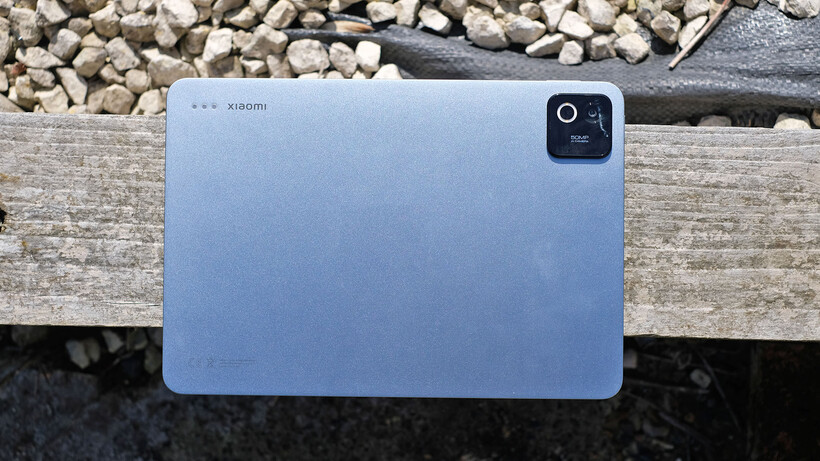
The Xiaomi Pad 8 Pro is a high-end tablet, and it has the design to match. Its casing is all-metal, the screen border sizes are consistent, for a slicker appearance, and this tablet is nice and slim.

It’s just 5.8mm thick, without counting the camera bump, just fractionally thicker than the 5.5mm Samsung Galaxy Tab S11.
This is a fairly straight-sided tablet, though. If you prefer a softer feel, you may want to consider a Xiaomi Pad 8 Pro case to smooth out its contours.
No case is included, but a power adapter is. And for the full package, you’ll also want to get hold of a Focus keyboard case and the stylus.

The stylus attaches magnetically to the top of the casing for charging and initial pairing, and is more than just a simple pressure-sensing stylus. It has wireless support, on-barrel controls and even haptic feedback. Very neat, but not cheap at an Apple-like £89.
The focus keyboard case is similar in that sense too. It’s no impulse buy at £189, but it hooks the tablet in place using magnets, and connects to the tablet with metal contacts, so there’s no need to mess about with Bluetooth.

Its keyboard keys feel much like those of a normal laptop, just a little more cramped. And there’s a small but useful plastic touchpad below. This stops you needing to reach for the touchscreen all the time.

Unlike a standard folio keyboard case, the Xiaomi Pad 8 Pro’s has a more laptop-like hinge at its centre, which gives the whole thing a real feeling of substance and confidence. It does also mean the screen doesn’t folded back far at all – the maximum is still near-upright. I also find my fingers end up occasionally making contact with the bottom of the Xiaomi Pad 8 Pro when typing.

That said, I still happily wrote this review on the keyboard. It’s a cut above the tablet norm, if not quite a match for the best from Microsoft Surface in all respects. There’s even a keyboard backlight powered using the tablet battery rather than a separate cell in the keyboard itself. Neat.

Screen and speakers
- Good peak brightness for a tablet
- Uses an LCD screen with universal backlight
- Loud speakers with decent bass output
The Xiaomi Pad 8 Pro has an 11.3-inch screen. It’s a 3.2K resolution display with curved corners and bezels of similar thickness to those of a Samsung Galaxy Tab S11. Brightness of 800 nits isn’t close to that of the latest OLED phones, but it’s more than enough for a more home-bound tablet. I measured its max at 857 nits when playing HDR video, so it more than meets the claim.
I’ve typically kept it around the 55-60% brightness mark for general use.

It’s sharp and the maximum refresh rate is 144Hz. But there’s one bit to note Xiaomi doesn’t seem too keen to highlight.
This is not an OLED screen, as used in the Honor MagicPad 4 and Samsung Galaxy Tab S11. It’s an LCD, which isn’t actually mentioned clearly on the tablet’s website spec sheet.
I will say this difference isn’t immediately obvious in general use. Contrast remains solid. But if you watch a movie in a darkened room on this tablet, it’s going to become clear.
Colour reproduction is a way below what you get with the OLED crowd, hitting 69 per cent DCI P3 coverage according to my colorimeter, rather than the 90 percent-plus you might expect from the best. We’re still miles off appearing undersaturated, but it’s worth considering if you think screen quality is the number one tablet feature.

The Xiaomi Pad 8 Pro also has a standard LCD screen with a universal backlight, not one with dimming zones. This means you’ll see the characteristic backlight glow in the black bars left when watching widescreen content on this 3:2 aspect screen.
It’s one reason the OLED Honor MagicPad 4 arguably, and perhaps clearly, beats this Xiaomi for pure content-munching.
A comparison of the speakers on these two big-screen tablets is a bit more complicated, though. The Xiaomi Pad 8 Pro has a quad speaker array, with two at each end when held in landscape orientation.

Their sound is a little less refined, a little less spatially complex than those of the Honor MagicPad 4. But you do hear the benefit of the Xiaomi’s slightly thicker casing as bass depth is significantly better.
We’re getting close to the audio output of a small Bluetooth speaker here. Not a particularly amazing one, but it’s a compelling performance from a thin tablet.
Software
- Android 16
- Optional Workstation mode for more PC-like UI
As with most Android tablets, the Xiaomi Pad 8 Pro gets only modest software concessions that take into account its larger size.
The main one is the app shortcut bar at the bottom of the home screen, which is similar to that of Apple’s Mac and iPad software. There’s no grand change in interface style when you attach the keyboard, which is a shame given how laptop-like it could otherwise feel thanks to the integrated touchpad.

There is a Features For Tablets section in the Settings menu, which you will want to know about. You can use a gesture to fire up split-screen app operation, for example, or turn a (compatible) app running full-screen into a floating window app by long-dragging from the top of the display.
And there’s the Workstation mode. This is disabled by default but is the closest the Xiaomi Pad 8 Pro gets to emulating a Windows PC or Mac.

It elongates the app shortcut bar at the bottom of the screen, and automatically opens apps up as floating windows rather than full-screen. This is the Xiaomi Pad 8 Pro’s hardcore multi-tasking mode. While it partly serves as a reminder these tablets are not like-for-like laptop replacers, it’s a nice-to-have.
The big issue is, as usual, that apps still feel mostly like they’re running in virtual phone screens when operating as windowed apps — Samsung and Honor have done perhaps slightly better with their versions of the same concept.

Under the hood, the Xiaomi Pad 8 Pro runs Android 16, the latest version available at the time of launch. It’s familiar stuff, but Xiaomi has deliberately elongated the transition animations across the system, in order to give it more of a loose and organic feel. Less snap, more slide.
Performance
- Powerful previous-generation processor
- Can close down apps during prolonged stress
- Minimal performance throttling
The Xiaomi Pad 8 Pro has almost as good a processor as you could hope for in an Android tablet, the Qualcomm Snapdragon 8 Elite.
This is a seriously powerful processor series used previously in top-top-tier phones like the Galaxy S25 Ultra. However, it’s not the very latest version, but the last-gen one. Still, it’s a great chipset.
The potential issue is not how much power you get here, but whether the Xiaomi Pad 8 Pro can even handle it. After trying to run a 20-minute stress test, the tablet continually closed the app towards the end of the run, citing overheating.

When you actually feel the tablet at this point, it doesn’t feel worryingly hot, suggesting either Xiaomi keeps a tight rein on temperatures, or that the passive cooling system doesn’t nearly spread out the heat from the CPU and GPU chip cluster fast enough.
Thankfully, I did manage to get the stress test completed on the Xiaomi Pad 8 Pro later on during testing, and that gave a clue as to what’s happening.
Over 20 minutes, the tablet only dropped to 93.1% of its peak performance, where plenty of phones might shave off 50 percent of their power to keep heat under wraps. At the end of the test, peak recorded temperatures were just under 50 degrees centigrade, suggesting the problems may start after 50.
The important point, though, is whether this actually happens when you play a game.
I tried Fortnite. You can max it out, no problem. And while I couldn’t get it to run above 60fps — despite the 120fps mode being unlocked in the Settings menu — it ran very well with no signs of the overheating issue I saw while benchmarking.
Camera
- Single rear 50MP camera
- 32MP selfie camera
The Xiaomi Pad 8 Pro has just the one rear camera, with a 50-megapixel sensor.
That’s quite a lot of megapixels for a tablet camera and, sure enough, it easily beats the Honor MagicPad 4 for photo detail even though the Xiaomi only takes 12.5MP photos by default.
It’s an entirely respectable camera for its class. But, sure, a good phone will still easily outdo it, and images can end up looking a little flat at times. Or overly contrasty. My best bet is this is a Samsung JN1 sensor camera, as used in budget phones like the Samsung Galaxy A26.

Megapixel count doesn’t mean much, but the Xiaomi Pad 8 Pro camera gets the job done.
The Xiaomi Pad 8 Pro can also shoot 4K video at up to 60fps, which is nice to have when plenty of mid-range phones are limited to 4K/30 these days.
Around the front the tablet has a 32MP sensor, once again aiming to draw us in with a high megapixel count. Despite that, video resolution is actually limited to 1080p. Selfies look OK, but bear in mind the landscape orientation of the camera means your face looks off-centre if you like to have video calls with the tablet held upright.
Battery life
- 9200mAh battery
- All-day use
- 67W fast charge support
The Xiaomi Pad 8 Pro has a 9200mAh battery, notably outdoing the 8400mAh Samsung Galaxy Tab S11.
Three hours and 17 minutes of video streaming took just 17 percent off the battery, suggesting you can expect around 19 hours of playback off a charge. I re-tested this once more for two hours and the Pad 8 Pro lost 10 percent charge, suggesting full-charge playback of up to 20 hours. This is a very long-lasting tablet.
It takes 80 minutes to charge, although you’ll be at 50% within 32 minutes thanks to the solid 67W charging standard support.
Should you buy it?
You want a more affordable iPad Pro alternative
A good amount of power, lower cost and an advanced keyboard case on offer, this Xiaomi is a direct rival to the Samsung Tab and iPad Pro lines.
You want a direct laptop replacement or peak media performance
Some others have better PC-mimicking software modes, and with an LCD screen in tow, you have to put up with some backlight glow when watching movies.
Final Thoughts
A top all-rounder tablet that costs significantly less than the rivals from Apple and Samsung. The Xiaomi Pad 8 Pro’s real rivals are arguably those from Honor and OnePlus, though.
The Xiaomi Pad 8 Pro is more powerful than the Honor MagicPad 4. But the OnePlus Pad Go 2 is much cheaper, and the larger, lighter, OLED-screened Honor is our pick for watching video.
It’s up to you to ask yourself what matters more. Power, saving some money or display size and contrast? For more options, take a look at our selection of the best tablets.
How We Test
Unlike other sites, we thoroughly test every product we review. We use industry-standard tests in order to compare features properly. We’ll always tell you what we find. We never, ever accept money to review a product.
- Used for over a week
- Thorough display testing in bright conditions
- Tested and benchmarked using respected industry tests and real-world data
FAQs
The tablet has no water resistance rating.
No, there’s no microSD slot in the tablet.
With the basic package, the tablet does not include Xiaomi’s stylus.
Test Data
| Xiaomi Pad 8 Pro | |
|---|---|
| Geekbench 6 single core | 3055 |
| Geekbench 6 multi core | 8934 |
| Geekbench 6 GPU | 18103 |
| AI performance | 4359 |
| 1 hour video playback (Netflix, HDR) | 3 % |
| 30 minute gaming (light) | 6 % |
| Time from 0-100% charge | 80 min |
| Time from 0-50% charge | 32 Min |
| 30-min recharge (no charger included) | 48 % |
| 15-min recharge (no charger included) | 29 % |
| 3D Mark – Wild Life Stress Test | 93.1 % |
Full Specs
| Xiaomi Pad 8 Pro Review | |
|---|---|
| UK RRP | £529 |
| Manufacturer | Xiaomi |
| Screen Size | 11.2 inches |
| Storage Capacity | 256GB |
| Rear Camera | 50MP |
| Front Camera | 32MP |
| IP rating | No |
| Battery | 9200 mAh |
| Fast Charging | Yes |
| Size (Dimensions) | 173.4 x 5.8 x 251.2 MM |
| Weight | 465 G |
| Operating System | Android 16 |
| Release Date | 2026 |
| First Reviewed Date | 24/04/2026 |
| Resolution | 3200 x 2121 |
| Refresh Rate | 132 Hz |
| Ports | USB-C |
| Chipset | Qualcomm Snapdragon 8 Elite |
| RAM | 8GB |

Stephan is the sports journalist for the Maple Grove Report.