5 1950s Motorcycles That Are Worth A Fortune Today


Right after the Second World War, the world of motorcycling really began to take off. Many veterans, in fact, formed motorcycle clubs (not to be confused with motorcycle gangs) for the love of riding. As such, many of the motorbikes released during the early postwar period in the middle of the 20th century represent the start of a movement. That’s why bikes of that generation are worth an astounding amount if they are in running order. Though the motorbike had existed long before, it is only around this time that it really began to catch on and become a mainstream means of transport that was accessible to everyone.

And that last bit is real important. When these units rolled off the factory lines in the 1950s, they were cutting-edge, sure, but not something reserved for lordly-sorts with large disposable incomes. Your average blue-collar worker could easily get their hands on one of these machines with just a few months of savings, which could explain their popularity. Coming to today, many of these examples sell for respectable five-figure sums — which can buy you a really good car in most places of the world — while others shatter the six-figure mark at auctions. Many factors contribute to the value of these bikes, with scarcity being topmost; decades of crashes and neglect have erased the vast majority of examples. Also contributing to the value is historical significance, racing pedigree, and performance, which all five of the following bikes from the 1950s have in droves.

BMW R69S and R50

Both the R69S and the R50 are undoubtedly among the coolest BMW motorcycles ever built, and not least because they have their origins in the German military complex. To begin with, the R50 came out in 1955, featured a 494 cc, twin-cylinder engine, and clocked in at a total weight of 429 pounds. It had a top speed of around 87 mph (140 kph) and there was also a version of it that came equipped with a sidecar. Total power output for the bike stood at 26 hp coming in at an okay 5,800 rpm, and units sell for around $20,000 today if and when they become available. 

Somewhat rarer is the BMR R69S, which could reportedly reach speeds of more than 100 mph. It debuted at the very end of the 1950s and remained in production until 1969, which is kind of poetic when you consider the name. For its part, the R69S came with a 594-cc, two-cylinder engine that made a whopping 42 hp and featured a rough-and-tumble shaft final drive. For the uninitiated, some of the benefits that shaft final drive transmissions (versus chain units) have are that they are durable and low-maintenance but also harder to replace. Given that the R69S was built to be rugged, the choice of shaft transmission — which might have seemed odd, given that it was a light, long-distance utility bike — actually makes a lot more sense. Today, R69S units can easily cross the $30,000 mark when going to auction.

Moto Guzzi 500 cc

Another bike that comes to us from across the pond in post-war Europe is the 500 cc from the Italian heritage brand, Moto Guzzi. There will be no prizes for guessing the engine size correctly, because the clue is in the name: It shipped with a half-liter engine that spread its displacement across four cylinders. The power unit in the lineup was mated to a four-speed transmission and featured shaft final drive. Also, the name “500 cc” implies the base model of the lineup, though there were a number of different body-types available at the time, such as a sidecar-optioned version. 

It’s unclear whether these upgraded body types were manufacturer or dealer options, but there does seem to be a decent number of them floating around. Pricing data for this bike when new is not reliably available; many asking prices touch the $35,000 mark when sold on the aftermarket in late 2025 and early 2026. 

Standout features of the Moto Guzzi 500 cc include the fact that the suspension was a Guzzi in-house product, being a linked fork unit at the front. Also, the engine had dual overhead cams, which was not typical for the era. As with most bikes of this time, it was considered a “works” machine, meaning it was intended for racing and was developed in part by the company’s motorsports division.

Vincent Black Shadow

Made by a company from the UK called Vincent, the Black Shadow routinely sells in the high-five-figure range at auction, and it’s easy to see why it’s so desirable. First and foremost, it came with a displacement figure of one liter (998 cc) at a time when other makers’ mainstays (like the BMW R50 and R69 from above) were shipping with half-liter displacements, or at least somewhere in that range. Couple that with the fact that that liter of displacement came about via a V-twin engine, which is a layout known for its distinct burbly rumble that can be heard half a mile away, and the Vincent Black Shadow already had the makings of one of the most desirable bikes of the era. 

Additionally, the engine was actually a part of the frame, which reduced the amount of frame tubing, ending up in reduced weight. Heck, if a brand released a cruiser with those specs, and the all-black, no chrome, no shiny bits aesthetics of the Black Shadow today, it’d probably be a success even now. However, the real talking point for this bike was its top speed, which hovered north of the 125 mph mark. Now, the top speed of a motorbike naturally depends on several factors, but none of that stopped the Black Shadow from becoming the world’s fastest production motorbike when it was launched. All that is why units for sale can easily touch the $60,000 mark today.

MV Agusta 500 GP

Up until now, all the motorbikes that we have listed have been so-called mass-market consumer models. In other words, if you had the money, you walked into a dealership, put down a deposit, and ordered one to your specs. However, the 500 GP was not such a bike, being primarily developed for racing in the Moto Gran Prix — often abbreviated to Moto GP — by the incredibly expensive motorbike brand MV Agusta

For those wondering, the MV in the name of the brand is an abbreviation of “Meccanica Verghera” – with the first word meaning “Mechanics” and the second being the name of the place where it was founded. Coming back to the 500 GP superbike, it shipped with a massive six-cylinder engine that displaced 500 cc and made about 75 horsepower. It was clearly an iteration of the MV Agusta four-cylinder bike from earlier in the 1950s, and had the same displacement too. 

The motorcycle manufacturer found extreme success in motorsport, mainly through its 500 cc variants of bikes (four and six-cylinder both). In 2009, a bike from this series (a four-cylinder older version) came up for auction, and ended up getting a valuation of around $150,000 at the time, putting it firmly amongst the most expensive ever sold by any metric. In fact, the legacy of MV Agusta racing runs so deep that the company re-released one of their most iconic engines (the 500 cc tri-cylinder) as a modern variant about a decade ago.

Moto Guzzi Otto Cilindri

If you thought having a high-cylinder motorbike was limited to the Honda Gold Wing of modernity and the MV Agusta 500 GP that we just covered above, then think again. Around the same time that MV made a six-cylinder, Moto Guzzi decided to distinctly Americanize their offerings too. 

By that, we mean that the company really subscribed to the trope of bigger is better, no replacement for displacement, and all similar lines pointing to more cylinders and larger engines. The name is taken from the engine; Otto Cilindri means “eight cylinders” in Italian, and that’s exactly what the bike had, getting a net displacement figure of 499 cc with a top speed of 171 mph. If you’re wondering what kind of witchcraft the company did to have eight cylinders displacing under half a liter, we did the research. 

That displacement was achieved in large part thanks to the bore and stroke dimensions of 44 mm and 41 mm, respectively. While we couldn’t find reliable sources for the piston sizes, they must have been tiny to stay under the class limit. While original models of the Otto Cilindri would be moonshots to find today, even replicas shatter expectations. So you’ll never ever see one for sale; even replicas command extremely high prices. One tribute model sold in 2016 for the eye-watering sum of 240,000 Euro (more than $280,000 USD), and, considering the heritage, it’s a fair price to pay.


Source link

Leave a Reply

Subscribe to Our Newsletter

Get our latest articles delivered straight to your inbox. No spam, we promise.

Recent Reviews


gettyimages-2237093321

Moor Studio/Getty Images

Follow ZDNET: Add us as a preferred source on Google.


ZDNET’s key takeaways

  • Spyware can track you, record calls, and steal phone data.
  • Watch for odd behavior, data spikes, unknown apps, and battery drain.
  • Use antivirus software, update regularly, and avoid untrusted app sources.

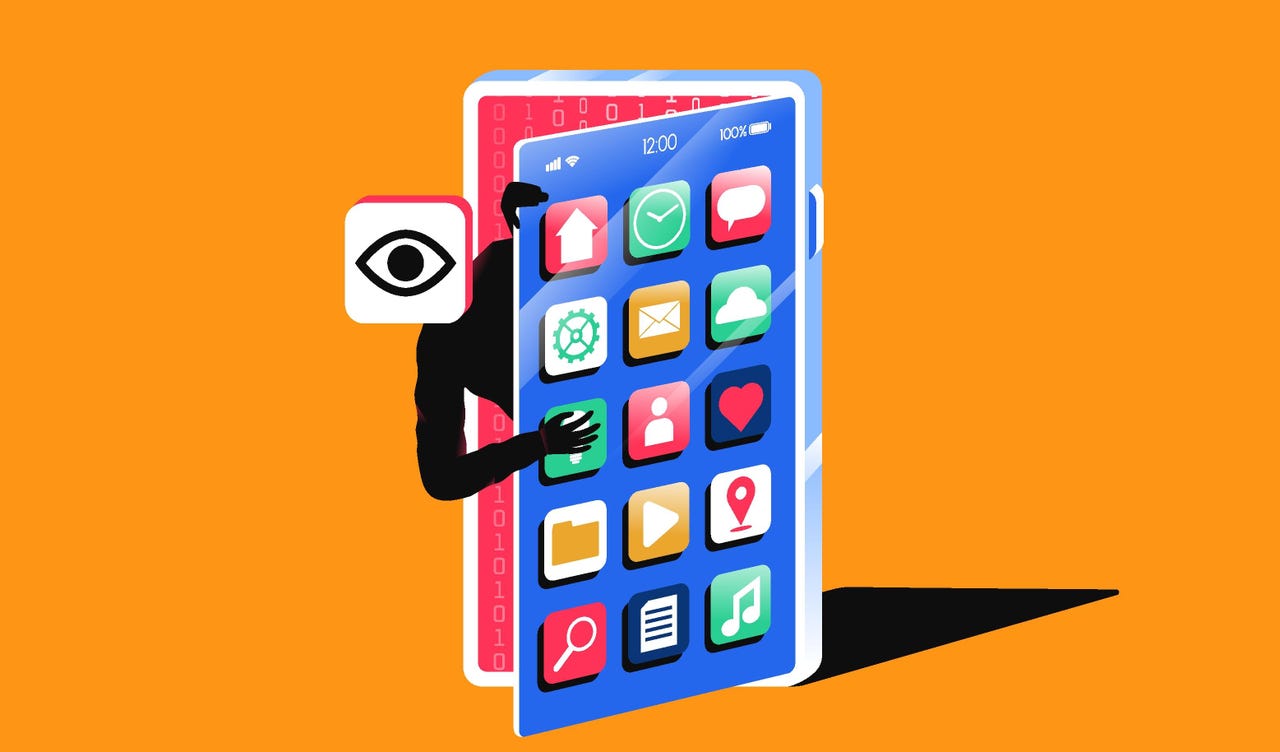
Spyware is one of the biggest threats to your mobile security and can severely impact your phone’s performance if you are unlucky enough to become infected. It is a type of malware that typically lands on your iPhone or Android phone through malicious mobile apps or through phishing links, emails, and messages.

While appearing to be a legitimate software package or useful utility, spyware will operate quietly in the background to monitor your movements, spy on your activities, and may also record your conversations, whether they are phone calls or social media threads. You may find your actions screenshotted, your call records logged, and even your physical location tracked via GPS. 

Also: 7 ways to lock down your phone’s security – before it’s too late

This information is then sent to a remote server and into the hands of someone else without your permission.

Similarly, a remote monitoring app promoted for parental use or work purposes could be abused and become a privacy invader rather than a legitimate service. 

Let’s explore the different types of spyware you might encounter, the warning signs of infection, and how to quickly remove it from your smartphone.

Spyware explained

It’s helpful to know the basic differences among types of spyware before you tackle infections on your handset.

Nuisanceware is bundled with mobile apps. It interrupts your web browsing with pop-ups, changes your homepage or search engine settings, may try to force you to watch videos, and may collect your browsing data to sell to ad agencies and networks. Although considered malvertising, it is generally not dangerous, as it focuses on generating illicit revenue by forcing ad views or clicks.

Also: As ransomware recedes, a new more dangerous digital parasite rises

There’s also generic mobile spyware. It steals operating system data, clipboard data, and anything of value, such as cryptocurrency wallet data or account credentials. Spyware isn’t always targeted and may be used in spray-and-pray phishing attacks.

Spyware may land on your device through phishing, malicious email attachments, social media links, fraudulent SMS messages, or physical device tampering.

Advanced spyware, sometimes also classified as stalkerware, is a step up from basic spyware. This malware is unethical and dangerous. It is sometimes found on desktop systems but is now more commonly installed on handsets. Stalkerware is typically used to spy on an individual and monitor what they do, say, and where they go, and is often linked to cases of domestic abuse.

Spyware and stalkerware may be used to:

  • Monitor emails, SMS, MMS messages, and other forms of communication sent and received, including Facebook and WhatsApp.
  • Intercept live cellular calls or Voice over IP (VoIP) applications.
  • Hijack camera functions to take photos and videos.
  • Screenshot mobile device screens and send them to a controller.
  • Track victims via GPS.
  • Conduct keylogging, account compromise, and data theft.

Finally, there’s government-grade commercial spyware, with Pegasus among the best-known variants. Unless you’re part of a group of specific interest to ethically challenged governments, it’s unlikely that it will impact you due to the expense of targeting victims.

Spyware warning signs

There aren’t always indicators of an infection attempt in real time, but the following scenarios could be warning signs that you are being targeted:

  • Receiving odd or unusual SMS messages, social media messages, or emails.
  • Strange permission, download, or software installation requests appear on your handset.
  • If your phone goes missing or is out of your possession for a period of time and then reappears with settings or changes you do not recognize, this may indicate that your device has been tampered with.
  • When it comes to stalkerware, initial infection messages may be more personal and tailored to the victim. Physical access to a handset may be necessary.

Also: I clicked on four sneaky online scams on purpose – to show you how they work

There are also signs you can watch for that may indicate your phone has been compromised. The most common are:

  • Power: You may experience unexpected handset battery drain, overheating, or sluggish performance.
  • Behavior: Strange behavior, such as GPS or camera functions turning themselves on and off without your input, or random reboots and unexplained crashes.
  • Pop-ups: If you are being bombarded with pop-ups, it’s likely that some form of adware is hidden on your handset. You may also find that your preferred search engine has been changed.
  • Increased cellular data usage: Information exfiltrated from your smartphone or hidden, active remote connections will use data.
  • Distortion: You may hear unusual noises or distortion during phone calls. Although this could simply be due to poor reception, it may also be a sign of interception.
  • On and off: You may also have trouble completely turning off your device, as more advanced spyware might prevent you from doing so.
  • Financial transactions: If spyware has obtained sufficient permissions, it may have signed you up for services or premium SMS plans you didn’t ask for.

Android

One telltale sign on an Android device is a setting that allows apps to be downloaded and installed outside of the official Google Play Store. If this setting is enabled, it may indicate tampering or jailbreaking without your consent. Not every form of spyware and stalkerware requires a jailbroken device, however.

Also: Your Android phone’s most powerful security feature is off by default and hidden – turn it on now

This setting is found in most modern Android builds in Settings > Security > Allow unknown sources. (This varies depending on the device and vendor.) You can also check Apps > Menu > Special Access > Install unknown apps to see if anything is unfamiliar.

Some forms of spyware also use generic names and icons to avoid detection. For example, they may appear to be useful utility apps such as calendars, calculators, utilities, or currency converters.

iOS

iOS devices that aren’t jailbroken are generally harder to infect with malware than Android handsets, unless a spyware developer is exploiting an unpatched vulnerability.

Also: How to lock down your iPhone to the extreme – so even the FBI can’t get in

However, the same principles apply. With the right tool, exploit, or software, your device could be compromised either with physical access or remotely. You may be more susceptible to infection if you have not updated your iPhone’s firmware to the latest version and you do not run frequent antivirus scans.

How to remove spyware from your smartphone

Spyware is often hard to detect and can be difficult to remove. It is not impossible in most cases, but it may take some drastic steps on your part.

When spyware, especially stalkerware, is removed, operators may receive an alert indicating that the victim’s device has been cleaned. Should the flow of your information suddenly stop, this would be another clear sign to the attacker that the malicious software has been removed. Do not tamper with your device if doing so would risk your physical safety.

Also: How to turn ChatGPT into a scam detector using the new Malwarebytes integration – for free

Instead, reach out to law enforcement and supporting agencies. Otherwise, here are some removal options:

  • Run a malware scan: There are mobile antivirus solutions available that can detect and remove spyware. This is the easiest solution available, but it may not be effective in every case. Cybersecurity vendors, including Malwarebytes.
  • Use a dedicated spyware removal tool: You can also use software specifically designed to detect and remove spyware. However, be careful to download tools only from reputable firms and official sources, as one of the most common ways to distribute malware is to disguise it as antivirus software. Check out the spyware removal apps offered by Bitdefender, Avast, and Malwarebytes.
  • Delete suspicious apps: Examine the list of installed apps on your handset and remove any you don’t recognize.
  • Check device administration controls: In advanced security settings, you can see if any suspicious apps have admin permissions. If so, you can try removing them, although this may require restoring your handset to factory settings.
  • Reboot in Safe mode: Restarting your smartphone in Safe mode prevents third-party software from running. On Android handsets, you can usually do this by long-pressing the power-off button and selecting Safe mode. This can allow you to safely uninstall apps — but it is not a failsafe solution against advanced spyware variants.
  • Update your operating system: It may seem obvious, but when an operating system releases a new version, which often includes security patches and upgrades, it can — if you’re lucky — cause conflicts and problems with spyware. Keep it updated.

Also: Rebooting your phone daily is your best defense against zero-click attacks – here’s why

If you have found suspicious software on your handset, consider changing your passwords and enabling biometrics.

If you suspect account compromise, change the passwords for every important account you have. Many of us have one or two central “hub” accounts, such as an email address linked to all of our other services. Remove access to any such hub services you use from a compromised device. 

For added security, consider changing your account passwords on a PC, forcing a logout on other devices, and enabling biometric authentication to prevent physical handset tampering.

An important point to mention is that sometimes spyware or other forms of malicious software might end up on your device via an initially benign app. There have been cases of developers releasing a genuine, useful app in official repositories, such as a currency converter or weather app, and then, after a large user base has been gathered, the developers twist the app’s functions into a Trojan through a software update.

If you recently downloaded a mobile app and now your phone is displaying odd behavior, consider removing it and running a malware scan.

Keeping spyware and stalkerware off your device

Unfortunately, no mobile device is completely protected against the scourge of spyware. However, we have provided some tips below to mitigate the risk of future infections:

  • Protect your device physically: Your first line of defense is to maintain adequate physical controls. Modern smartphones let you set PIN codes and patterns or use biometrics such as fingerprints or retina scans to prevent your handset from being physically tampered with.
  • Update your operating system: Install OS updates as soon as they are available. They contain security fixes and patches and are one of the most important lines of defense against malware.
  • Use antivirus software: Mobile antivirus solutions can detect and remove spyware. Running frequent scans will help protect your handset.
  • Only download apps from official sources: Most spyware and malware are found outside Google Play and the App Store, so be cautious about installing apps from third-party websites. Sometimes, malicious apps still slip through the net, so check reviews and app descriptions before installing anything new.
  • Enable app security: Enable built-in scanners that check any new app installs. On Android, you can find this setting in Security and privacy > App security.
  • Check permissions: You should monitor what permissions have been issued to which apps and when. If you haven’t used an app with extensive permissions for a while, consider deleting it. If any apps appear more intrusive than necessary, remove them and refuse to provide permissions on install.
  • Watch out for malicious links: Mobile malware is often spread through phishing and malicious links. These links may urge you to download apps from outside Google Play or the App Store and may be disguised as everything from antivirus software to streaming services.
  • Do not jailbreak your device: Jailbreaking not only voids your warranty but can also allow malicious apps and software to gain a deep foothold in your operating system, making removal extremely difficult.
  • Enable multi-factor authentication (MFA): When account activity and logins require further consent from a mobile device, this can also help protect individual accounts. (However, spyware may intercept the codes sent during 2FA protocols.)

If all else fails: Factory reset

Performing a factory reset and clean install on the device you believe is compromised may help eradicate some forms of persistent spyware. Make sure to back up important content first, as this process can’t be reversed. 

  • On Android platforms, the reset option is usually found under Settings > General Management > Reset > Factory Data Reset. 
  • On iOS, go to Settings > General > Transfer or Reset Phone.

Google’s guide to factory resetting your device can be found here, and Apple has also provided instructions on its support website.

Unfortunately, some malware may survive factory resets. Failing that, consider restoring to factory settings and then disposing of your device.

Parental control or employee monitoring apps: spyware?

There are cyberthreats around every corner, and while children often want a smartphone and to be on social media at a young age, parents want to monitor what they are viewing and who they are interacting with online in order to protect them.

This is a responsible position to take, but at their core, parental control apps are designed for surveillance — as are many “employee productivity” apps.

The main issue is the potential for abuse, turning what may have been a product developed with good intentions into invasive software used for purposes beyond protecting a minor or ensuring employee time is used wisely.

Also: The best employee monitoring software of 2026: Expert tested

A balance between a right to privacy and protection has to be maintained. With this in mind, both Apple and Google have introduced parental controls for their devices. These features focus on restricting screen time, locking and unlocking devices, managing permissions lists, restricting web content and app downloads, and approving purchases.

Regarding employee monitoring apps, don’t install them on your personal handset. If your employer insists on using them, then it should issue you a work laptop and phone.

Most common consumer monitoring apps

As we mentioned earlier, many apps may be advertised as parental control monitors or simple trackers, but their use can be unethical. Other app developers freely market their products for full device control and surveillance. 

Also: 5 ways to avoid spyware disguised as legit apps – before it’s too late

Apps often use the phrases ‘spy,’ ‘monitor,’ or ‘parental control,’ but they may also disguise themselves on a device as a utility, a game, or otherwise as an innocent piece of software.

Are Google and Apple protecting devices from spyware?

Google and Apple are generally quick to remove malicious apps that manage to evade the privacy and security protections in their respective official app stores. When individuals are considered particularly at risk, you can enroll in Google’s Advanced Protection Program, which provides additional security for your Android device.

Google has also banned spyware and stalkerware ads, and the firm’s Threat Analysis Group is constantly publishing research on new commercial spyware strains and their potential targets.

Apple has cracked down on parental control apps, citing privacy-invading functions as the reason for removal. The company offers its own parental device control service called Screen Time for parents who want to limit their child’s device usage.

Furthermore, the company does not allow sideloading — that is, installing third-party apps from sources other than Apple’s App Store — and is quick to remove any iOS apps that exhibit privacy-eroding functionality.

Apple also provides Lockdown Mode, an optional setting you can enable on your iOS device for extreme security. However, unless you don’t mind a heavily restricted smartphone, you should only consider this option if you are worried about commercial-grade spyware.


Consider checking out ways to remove yourself from the internet and ZDNET’s recommended data brokers of 2026.


Source link