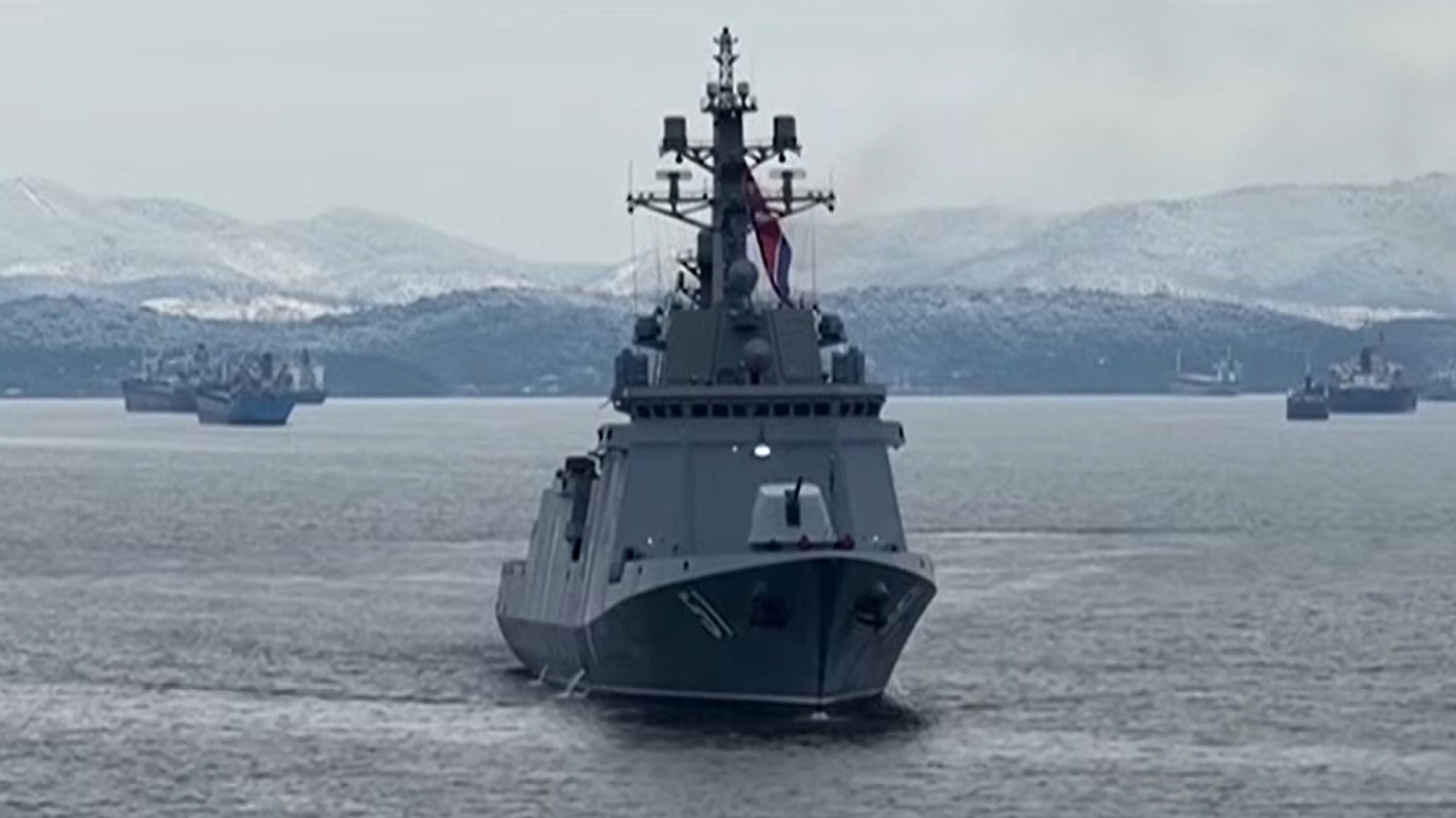

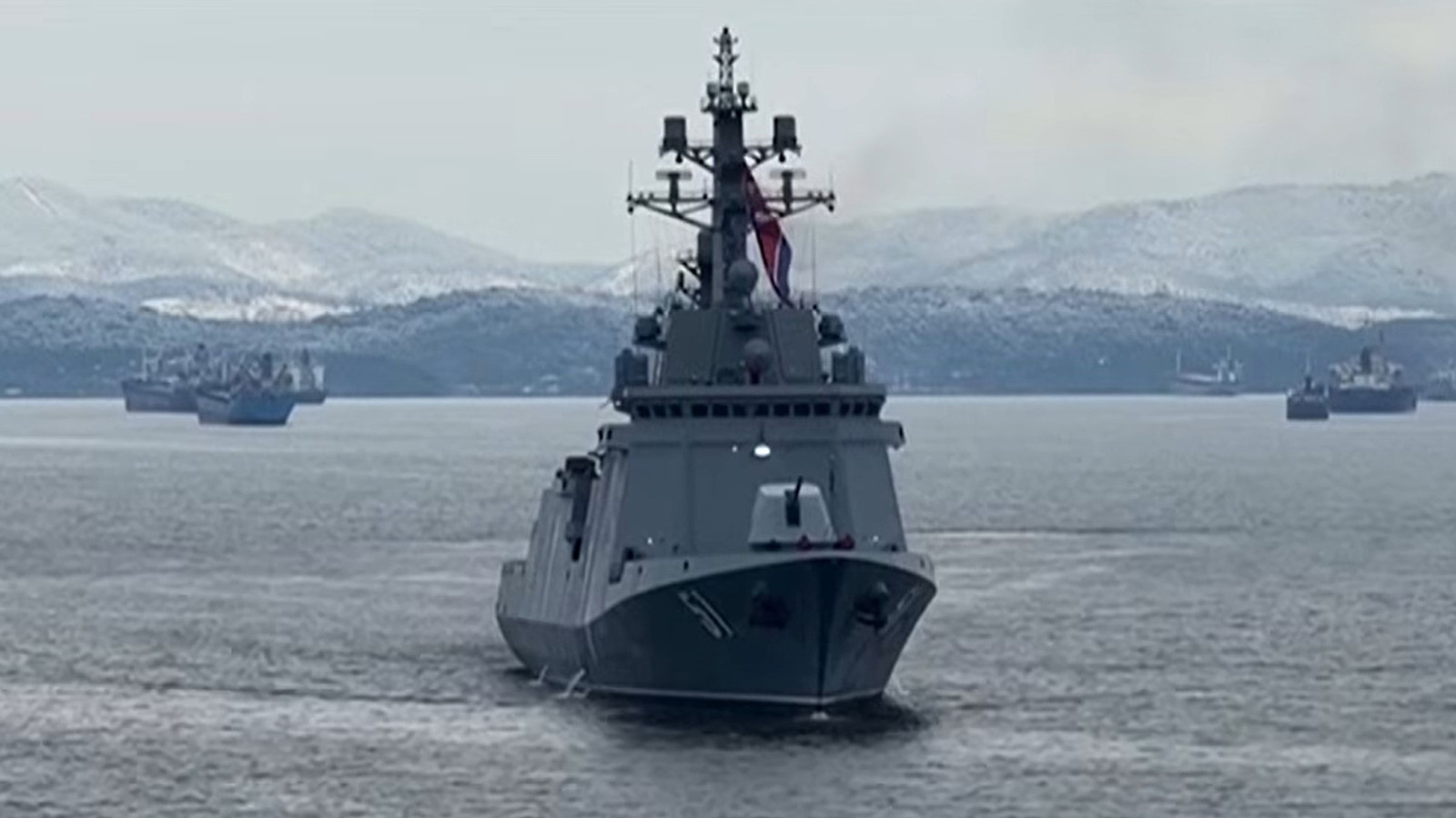
If you’re asked to list the most powerful navies on the planet, one country that probably doesn’t spring to mind is North Korea. Although North Korea has one of the largest land armies in the world, its seafaring military has never had access to the same level of resources. In fact, in terms of sheer tonnage, North Korea’s navy is ranked 23rd out of the world’s navies. Currently, the vast majority of the country’s naval fleet consists of offshore patrol vessels; an aging fleet of craft designed to patrol the country’s shoreline (although North Korea does have tactical nuclear submarines).
It now seems that the reclusive state is looking to bolster its navy, both in terms of the complexity and power of its ships. The Choe Hyon is the inaugural ship in the country’s Choe Hyon-class of destroyers, although a second vessel — the Kang Kon — was launched in June 2025.
The ship took a step closer towards full operational deployment when it completed a series of missile tests in April 2026. Those tests seemed to show off some serious firepower and were aimed at validating the ship’s integrated weapons command system, navigation systems, and anti-jamming systems. On board for the tests was North Korean leader Kim Jong-un, demonstrating just how much importance the country’s leadership places on the project.
On paper at least, the capability on show has led some observers to suggest the ship could rival modern Western destroyers, including America’s Burke-class ships. However, such claims need to be taken with at least a pinch of sea salt.
What we know about North Korea’s Choe Hyon-class destroyer
The tests carried out by the ship seem to suggest that this is a formidable ship that could indeed rival the US Navy’s destroyers. During the tests, the Choe Hyon test-fired three anti-warship missiles and two cruise missiles — all of which reportedly hit their targets with unerring accuracy. This would suggest that the destroyer has a modern and integrated weapons command system.
While this capability is undoubtedly a big step-up for North Korea’s Navy, is it enough to rival the Burke-class ships? In terms of sheer size, the North Korean ship is substantially smaller with a gross tonnage that’s believed to be around 5,000 tons. The Burke-class ships’ displacements vary between 8,230 and 9,700 tons, making them far larger.
Both classes use missiles as their primary weapon systems, with the Burke-class ships integrating 96 vertical launch cells. For comparison, the Choe Hyon-class boasts 74 launch cells. But there’s another factor to consider — several of the North Korean launch cells are large enough to carry ballistic missiles, a capability missing from the US ships.
What these tests show is that the Choe Hyon-class of destroyers and the Arleigh Burke-class seem to fulfil similar roles. However, the North Korean ship’s systems seem to be more heavily weighted towards an anti-shipping role, whereas the US destroyer-class has a greater emphasis on land attack and ballistic missile defense roles.
A pinch of sea salt
It’s fair to say that there are good reasons to be cautious about the ship’s capabilities and how they translate into actual performance. Much of the available information about these ships comes from state media, and — let’s face it — North Korean state media is unlikely to publish a groundbreaking expose that exposes any of the ship’s shortcomings. For instance, claims of “ultra-precision strikes” are difficult to independently verify and offer little insight as to how such systems would function in the heat of battle.
But, and probably more importantly, modern warfare is not just about who has the most and biggest guns — just as important are the less-visible systems. Sensors, radar performance, electronic warfare capabilities and data-sharing networks all need to work cohesively to ensure that the ship can detect, track, and neutralize enemy threats. This is an area where the American ship should have a clear advantage, especially as the Arleigh Burke-class is undergoing modernization. The Aegis combat system used by these ships is a mature and tested technology that is widely considered the world’s most effective combat system. This cutting-edge system is one reason that the Arleigh Burke-class is considered one of the most powerful Navy destroyers.
Of course, it could be that the North Korean navy has created a flawless system on its first try. However, what is more likely is that these systems won’t have the sophistication of Western systems like Aegis. This means that any suggestion that the Choe Hyon could rival US destroyers remains, at best, an open question.

Stephan is the sports journalist for the Maple Grove Report.