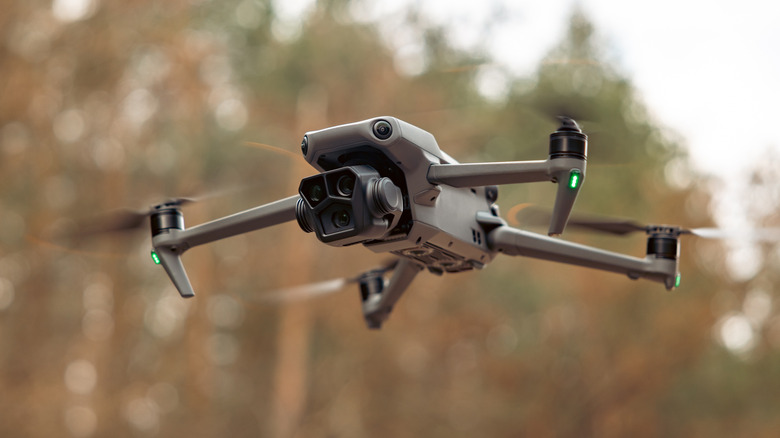

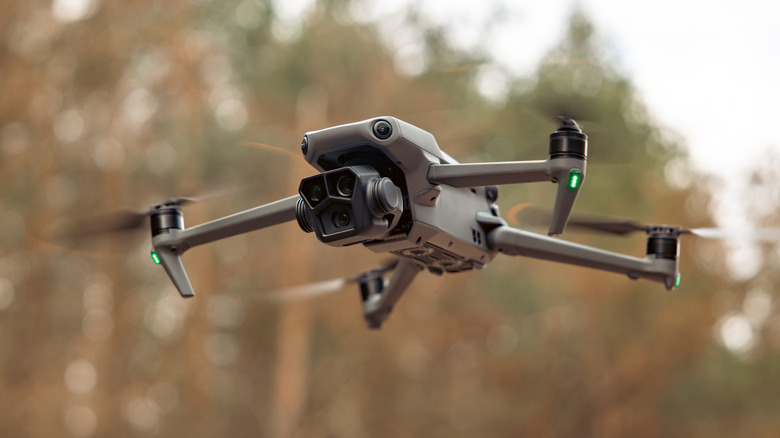
Like all wars, the ongoing conflict in Ukraine is driving the development of weapons technology forward at a rapid pace. Perhaps the most obvious way that this evolution has presented itself is in the widespread use of drones and the countermeasures developed to defend against them. This innovation was partly born from the fact that dealing with the scale of these attacks using traditional air defense systems is impractical and incredibly expensive, with traditional interceptor missiles costing up to $100,000 to launch.
From Israel’s iron beam laser to the UK’s “Dragon Fire” laser in Europe to similar anti-drone technology designed for ships in the U.S. Navy, militaries around the world are racing to improve their defense systems with new technology. In April 2026, Task & Purpose reported that U.S. Marines on their way to the Middle East were equipped with one such defense system: a new advanced optic that can attach to M4 carbines called SMASH 2000L.
Developed by an Israeli company called Smart Shooter, the system uses tracking algorithms and advanced image-processing software to assist soldiers in defending against drone threats. The scope features advanced technologies, including target detection, a lock and track system, and drone mode. It can also be operated in both day and night modes.
What we know about the SMASH 2000L smart scope
Smart Shooter Inc., the Israeli company’s U.S. subsidiary, announced that it was awarded a $13 million contract in June 2025 to supply the U.S. military with its SMASH 2000L system. Unlike anti-drone weapons like the U.S. Army’s armored vehicle-mounted high-energy laser weapon, the SMASH 2000L is designed to provide dismounted frontline troops with an effective defense against drone threats.
Physically, the scope weighs about 1.6 pounds and is built to military standards. Powering it is a lithium-ion battery pack that allows it to fire an impressive 3,600 SMASH-assisted shots before needing recharging. It has several working parts, including a camera, a display for the shooter, and a computer that helps work its systems.
Essentially, this scope is designed to reduce human-initiated errors. Unsurprisingly in this day and age, the scope uses AI in its fire control system in the form of advanced computer vision algorithms. Once the target is identified, the algorithms perform the ballistic calculations that determine the optimum time to successfully fire the weapon. Until this moment is determined, the system prevents the operator from firing. If necessary, this mode can be disabled to allow the weapon to be fired at will. Considering the use of drones on the battlefield increased by an astonishing 4,000% between 2020 and 2024, the importance of anti-drone technology like the SMASH 2000L is likely to continue to increase.

Stephan is the sports journalist for the Maple Grove Report.