
5 Perks You Didn’t Realize Come With Buying Tires At Discount Tire


Getting new tires is expensive, and there are a lot of different things you need to consider before you commit to a purchase. You’ll need to make sure that you’re getting tires that suit your vehicle, climate, driving habits, and budget while simultaneously considering other things like efficiency, expected longevity, and warranty coverage. You’ll also have to decide where you’re going to go to buy them.

There are a few decent places to get some new rubber on a budget, but Discount Tire is often considered one of the best tire retailers on the market. There are several factors that have likely contributed to the company’s reputation. As the name implies, its products are often sold at extremely competitive prices, but Discount Tire also offers a comprehensive warranty and has a broad selection of different wheels for shoppers to choose from, including options from top major tire brands like Michelin, Goodyear, Continental, and Falken.

That’s impressive enough on its own, but there are also a whole host of other perks and services that customers have access to when buying from Discount Tire that a lot of people don’t know about. These perks might not be the sole deciding factor on where you choose to buy your next set of wheels, but they certainly might tip the scales if you were thinking about giving Discount Tire a shot.

Free lifetime rotations, balancing, and air pressure checks

For most vehicles, you’ll want to get your tires rotated every 5,000 to 8,000 miles. This ensures that your tires wear evenly, keeping the tread level, prolonging their life, and ultimately saving you money. A lot of places offer free rotations as a perk, Discount Tire included, but one thing that Discount Tire offers that many places don’t is free lifetime spin balancing.

Balancing tires involves removing the wheel assembly with the tire still installed and placing it in a machine. This spins the tire and helps reset the center to account for any heavy points in the manufacture of the wheel or tire that make them a less than perfect circle. Leaving this unchecked can lead to vibrations in the chassis that can make driving uncomfortable and can even damage your suspension. This process usually costs $100 to $200, but Discount Tire shoppers get this service for free for the entire lifetime of the tire as part of the company’s upfront installation charges.

Another service the company offers is free air pressure checks. Regularly checking air pressure is important for the health of the tire, but having the right pressure can also affect things like traction and gas mileage. This is easy enough to do on your own with a gauge most of the time, but it’s nice to know you have the option of swinging through your local Discount Tire if you’re ever worried one of them is getting a bit low. The only situations where Discount Tire might refuse to fill up a flat are if it’s over 10 years old or too damaged to safely hold air.

Free Tire Repairs

Getting a flat can be stressful at the best of times, but you don’t necessarily need to get a brand new tire every time you run over a nail. It isn’t that hard to fix a flat at home if you have the right tools and equipment, but you don’t need to take on the extra DIY headache if you buy from Discount Tire. The company offers free tire repairs to all of its customers. This is probably better than trying to fix it yourself anyway, as its employees must follow the U.S. Tire Manufacturers Association guidelines in every repair that they make.

Of course, there are some limitations to this service. You can’t exactly bring in a tire that’s been slashed to ribbons and expect them to stitch it back together. Discount Tire employees have four specific guidelines that they need to follow when servicing a damaged tire: Repairs are limited to the tread area, they’ll only fix punctures smaller than ¼-inch in diameter, a new repair can’t overlap with an old one, and a patch alone is not considered a sufficient repair. If any of these apply to your tire, then the Discount Tire employees will gently suggest that you replace it with a new one.

Discount Tire also offers free tire inspections to all of its customers, and actually recommends that they bring their vehicle in at least once a month to get their tires checked, as well as before any long trips, after any sort of impact, or after driving through hazardous road conditions. This ensures that any damage to the tires is caught and repaired quickly, before it can spread and become unsafe.

Certificates

There are a lot of situations in which a tire simply cannot be repaired. In instances where a tire does need to be replaced, Discount Tire gives buyers access to its Certificates program, which offers either refunds (including sales tax) or replacements in situations where a tire cannot be repaired. This isn’t a free perk like the others mentioned thus far, but it is a service that is exclusively offered to Discount Tire shoppers.

This is designed to cover road hazard damage and manufacturer defects for the entire tread-life of the tire for up to three years from the purchase date. Unlike warranties that cover a specific mileage, the certificates program is designed to last until the tread depth gets below 3/32 inch, which is widely considered the point at which a tire becomes unsafe to drive on anyway. In fact, the National Highway Traffic Safety Administration recommends drivers replace tires once they hit 2/32 of an inch.

Most people won’t hit that mark in three years, but those who spend a lot of their workday in the car might find the added protection to be well worth it. Discount Tire claims that it conducted a poll of 5,800 customers who redeemed Certificates and that 97.1% of them claimed that they would buy them again. Of course, those who don’t drive much or who are looking to keep upfront costs down might want to decide for themselves if they’re better off without the extra expense.

Treadwell

Most tire shops recommend tires based on generic data about what fits your vehicle and your price range. Discount Tire’s system is a little more in-depth. The company offers a decision guide called Treadwell that makes custom recommendations based on several different factors. It starts with you inputting your vehicle information and then identifying your driving style and the kinds of roads, terrain, and weather you drive in most. 

Once you’ve input all of these data points, as well as your zip code, Treadwell will provide custom recommendations that are based on value and performance. It will also show you which of the tires that fit your vehicle are popular among other buyers in your local area. This is particularly useful for shoppers who don’t know a ton about tires and want to make sure they’re getting something that suits their vehicle, their environment, and their wallet all at the same time.

Much of this data is based on in-house testing that Discount Tire performs at its private test track, Treadwell Research Park, which is located in Pearsall, Texas. Though much of its winter testing is performed in the Upper Peninsula of Michigan. The company performs extensive stress tests under various manufactured conditions in order to see how the tires respond and then makes its recommendations. Treadwell has also been expanded to accommodate EV drivers, offering EV-specific insights and letting shoppers search for tires based on criteria such as handling or efficiency.

Mobile Installation

Sometimes it isn’t convenient to take your car into the shop to get the tires replaced. Maybe the tires currently on the vehicle are already damaged and unsafe to drive on, maybe the vehicle itself is in a state of disrepair, or is unregistered and can’t be driven. Whatever the reason, there are several Discount Tire locations that offer mobile installation. This means that the professionals at the store will load up your tires, bring them to your home, and install them on site without you ever needing to so much as buckle a seatbelt.

This isn’t available at every Discount Tire. The listed locations are currently only in Arizona, Colorado, Florida, Illinois, Minnesota, Missouri, North Carolina, South Carolina, Ohio, Tennessee, Texas, and Virginia. Discount Tire has stated that it’s planning to expand this service in the future, and that it eventually plans to make mobile tire repair available as well. If your local store does offer the service, you simply need to purchase the tires that you want online and then call the store to confirm that the order information is correct and schedule a mobile installation.

This isn’t a free service, however. Pricing starts at an additional $50 on top of the regular cost of the tires and service fees, but it’s certainly handy to have as an option if you can’t bring the vehicle in yourself.


Source link

Leave a Reply

Subscribe to Our Newsletter

Get our latest articles delivered straight to your inbox. No spam, we promise.

Recent Reviews


Every woman’s body, including their monthly menstrual cycle, is different. For example, some experience moderate cycles that last a full seven days, others may have shorter and lighter periods, and still others may experience heavy bleeding for more than seven days each month. While variation in bleeding can be normal, if bleeding occurs between monthly cycles, it can be a cause for concern.

According to the Journal of Endometrial and Uterine Disorders, abnormal uterine bleeding (AUB) involves bleeding that happens outside of the regular menstrual cycles. Symptoms include spotting or heavy bleeding on an unexpected basis, as well as severe pain and cramping.

AUB, also known as menometrorrhagia, is not uncommon. In fact, research published in the British Medical Journal estimates that the condition impacts between 20-50% of women at some point during their reproductive years. Review this brief guide to learn about the symptoms as well as the treatment options available.

Common Causes of AUB

The causes of abnormal uterine bleeding can vary, as they are related to a range of medical issues and even certain medications. According to the Mayo Clinic and the American College of Obstetricians and Gynecologists, these are some of the most common causes of AUB.

Hormonal Issues

Hormones play a significant role in uterine bleeding as they are the primary factor behind the regulation of menstrual cycles. Hormonal imbalances most frequently occur in women just beginning menstruation and those who are beginning menopause.

Hormonal imbalance and uterine bleeding are often intertwined, and an imbalance can result in one of the following causes of abnormal uterine bleeding:

Polycystic Ovary Syndrome (PCOS)

This common condition involves multiple cysts on the ovaries, impacting hormone balance by increasing androgen hormones. PCOS is one of the primary causes of irregular periods, decreased fertility, acne, facial hair growth, and thinning hair.

Thyroid Disorders

Thyroid disorders refer to any issues related to the thyroid that prevent it from creating hormones that impact the body’s major functions. Both hyperthyroidism (excessive thyroid hormones) and hypothyroidism (low thyroid hormones) can cause irregular periods, missed periods, or heavier/lighter bleeding.

Noncancerous Growths

Noncancerous (or benign) growths found in the uterus can also cause abnormal uterine bleeding.

In some cases, bleeding can result from growths that create a blockage; in others, the growth can bleed, resulting in AUB. Some kinds of growths that can happen in the uterus include:

Polyps

These growths are found in the inner lining of the uterus and are connected to the lining by either a thin stalk or a large base within the uterus. While they are usually benign, they can create issues with bleeding or fertility if they are not treated.

Fibroids

Uterine fibroids are a kind of noncancerous tumor found growing either in or on the uterus. Symptoms are not always experienced, but the most common include back pain, painful sex, frequent need to urinate, and heavy bleeding.

Endometriosis

Endometriosis refers to an inflamed inner lining of the uterus caused by infection. It can occur suddenly (acute endometriosis) and last only a short time, such as after birth, miscarriage, or surgery involving the cervix or uterus. Chronic endometriosis often occurs after menopause or after certain sexually transmitted infections.

Fortunately, benign growths can be addressed by your physician. Learn more about fibroid and endometriosis treatments.

Infections

Certain sexually transmitted infections (STIs) or other types of infections can result in abnormal uterine bleeding.

Some of the most common infections that can cause bleeding include:

Cervicitis

Most often caused by an STI, this infection occurs when the cervix has become irritated and inflamed. Some symptoms that may be experienced are pain during sex, unusual vaginal discharge, or irregular bleeding.

Chlamydia

This common STI can be spread through vaginal sexual intercourse, oral sex, or anal sex. As there are often no symptoms associated with chlamydia aside from irregular bleeding, regular screenings are suggested.

Urinary Tract Infections

UTIs aren’t an indicator of uterine bleeding but of an issue within the urinary tract itself. However, if you notice blood when wiping that occurs outside of your menstrual cycle, it may result from a UTI rather than uterine bleeding.

Medications and Devices

Some medications and medical devices that are meant to treat menstrual or bleeding issues can cause irregular or heavy uterine bleeding.

Medications may include:

  • Blood thinners and aspirin
  • Intrauterine devices
  • Some kinds of birth control
  • Tamoxifen, a drug used to treat breast cancer

Other Medical Issues

There are several other medical conditions that can also contribute to abnormal uterine bleeding.

These include:

Pregnancy

While light spotting can occur when the zygote is implanting during early pregnancy, heavier bleeding during late pregnancy can be the result of a serious complication like polyps, infection, placental abruption, or cervical insufficiency. If you are pregnant and begin bleeding, contact your healthcare provider right away.

Miscarriage

Progressively heavier bleeding during pregnancy can indicate a miscarriage. Miscarriage can result from an issue with the developing fetus or one of the issues above.

Ectopic Pregnancy

An ectopic pregnancy occurs when the embryo grows in the fallopian tube, which is not designed to support a growing fetus. Abnormal uterine bleeding can indicate an ectopic pregnancy.

Blood Clotting Disorders

Clotting disorders affect the body’s ability to control its clotting function, either producing excessive clots that don’t result from injury or excessive bleeding. A side effect of treatment for excessive clotting can result in heavy bleeding.

Abnormal Uterine Bleeding Symptoms to Watch For

Abnormal Uterine Bleeding Symptoms to Watch For

Typical menstrual cycles can last anywhere between 21 and 35 days, beginning the first day of menstruation, when endometrial lining is shed from the uterus if an egg has not been fertilized. The period usually lasts between five to seven days.

Bleeding that occurs after the cycle has finished is considered abnormal. Other symptoms can indicate a serious underlying issue as well.

Symptoms that are important to watch out for include:

  • Bleeding or spotting after a menstrual cycle
  • Bleeding or spotting after having sex
  • Bleeding after starting menopause
  • Having a menstrual cycle lasting longer than 35 days or less than 21 days
  • Irregular periods, including having a period more often than the 21-day cycle, and the cycle extending to longer than eight days
  • Very painful menstrual cycles
  • Experiencing extreme tiredness
  • Experiencing symptoms of anemia, such as weakness and shortness of breath

Heavy Menstrual Bleeding

Heavy menstrual bleeding is a common way many women experience abnormal uterine bleeding.

Some symptoms include:

  • Needing more than one sanitary napkin to contain the flow
  • Soaking through one sanitary napkin each hour consistently throughout several hours
  • Bleeding for longer than seven days
  • Waking up throughout the night to change a sanitary napkin
  • Having blood clots that are larger than the size of a quarter
  • Feeling extreme fatigue or out of breath due to loss of blood

Periods that involve heavy bleeding and extreme cramping can make it very difficult for a woman to function normally. Suffering through painful and heavy periods does not have to continue, however, as heavy period treatments are available.

Uterine Bleeding After Menopause

Menopause refers to the time when a woman has stopped getting a monthly cycle for at least twelve months consecutively. Even though the menstrual cycle has finished in menopause, bleeding can still occur.

There may be several reasons for bleeding during and after menopause, such as:

  • Weak uterus due to hormone deficiencies
  • Endometrial hyperplasia
  • Polyps
  • Hormone replacement therapy
  • Some kinds of cancers involving the female reproductive system

Uterine bleeding and menopause can occur at the same time, but it is typically a cause for concern, which is why it is important to seek medical attention. Seek comprehensive and compassionate care for menopause with Arizona Gynecology Consultants menopause services.

When to See a Doctor

Abnormal uterine bleeding can be alarming, but it is not always a reason to call your doctor. Certain symptoms, however, are indicative of a severe issue or an issue that has gone unnoticed and untreated.

Some signs of when to see a doctor for heavy bleeding include:

  • Bleeding heavily and leaking through one sanitary napkin for more than two hours at a time
  • Bleeding even after you have completed a menstrual cycle
  • Bleeding or spotting after menopause
  • Severe pain or cramping if you are not currently having a period
  • Bleeding for longer than seven days
  • Bleeding while also experiencing chest pain, dizziness, difficulty breathing normally, and fever
  • Having periods at unpredictable times
  • Bleeding while also experiencing anemia (including weakness or difficulty breathing)

Even if you don’t believe your symptoms are indicative of a severe issue, if they are making daily life difficult, discuss them with your doctor to pinpoint the cause and explore available treatments.

Seek Medical Attention for Abnormal Uterine Bleeding

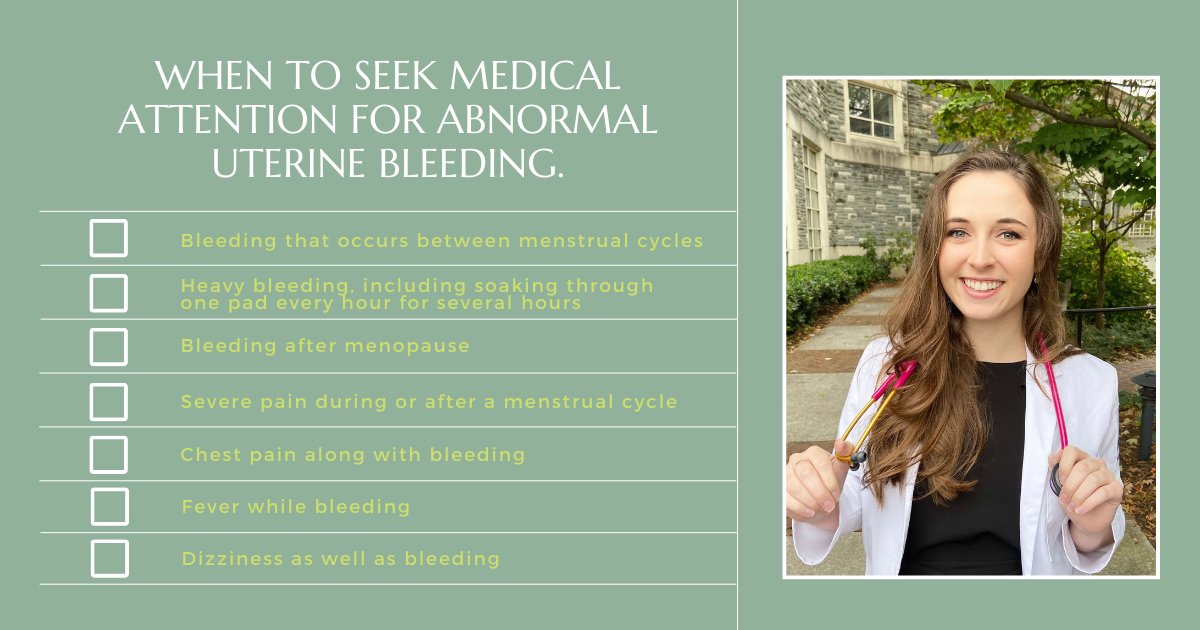
When to Seek Medical Attention for Abnormal Uterine Bleeding:

  • Bleeding that occurs between menstrual cycles
  • Heavy bleeding, including soaking through one pad every hour for several hours
  • Bleeding after menopause
  • Severe pain during or after a menstrual cycle
  • Chest pain along with bleeding
  • Fever while bleeding
  • Dizziness as well as bleeding

Diagnosis and Treatment Options

While a diagnosis of menometrorrhagia (or abnormal uterine bleeding) can occur without a known cause, a physician must identify the cause to assess your treatment options. This means that they will need to review your medical history, consider your age, the symptoms you are experiencing, and whether you have any known conditions that can result in AUB.

Diagnostic Tests

The American College of Obstetricians and Gynecologists suggests a full medical history review as well as both a physical exam and pelvic exam.

Other diagnostic and exploratory tests may be needed, such as:

  • An ultrasound
  • A hysteroscopy
  • An endometrial biopsy
  • A sonohysterography ultrasound
  • An MRI

Blood tests may also be necessary to determine whether you have an infection and to check your hormone levels. Additional biopsies may be necessary to eliminate the possibility of cancer.

Treatment Options

Depending on the cause of the bleeding, there are several different treatment options available.

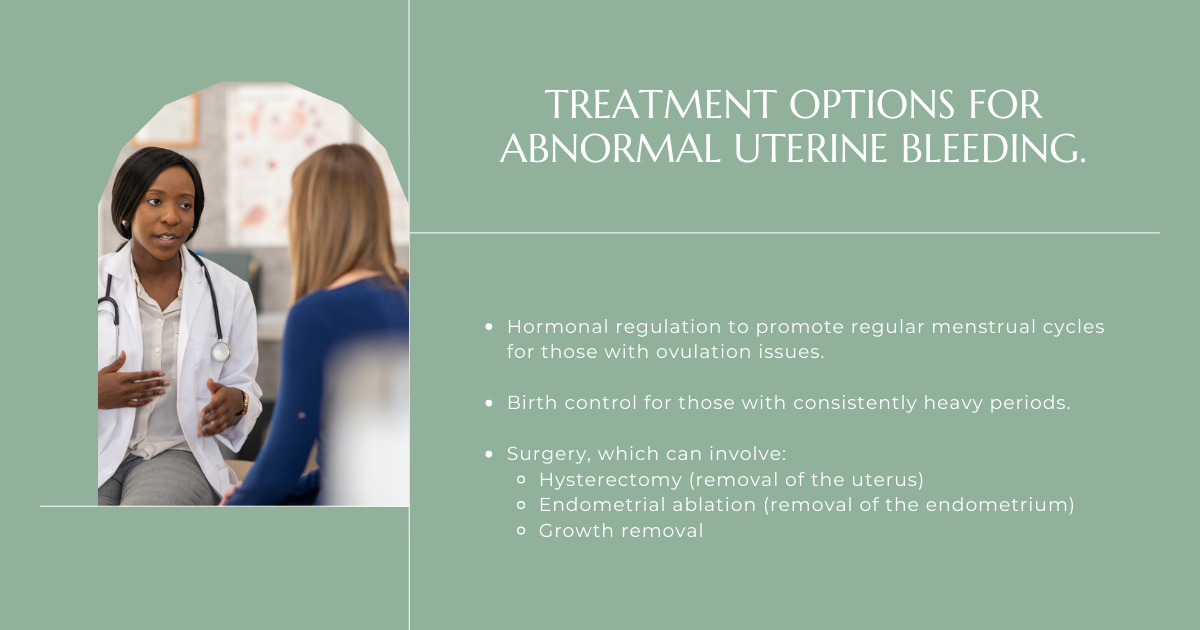
Treatment Options Abnormal Uterine Bleeding

Some of these treatments include:

  • Hormonal regulation to promote regular menstrual cycles for those with ovulation issues.
  • Birth control for those with consistently heavy periods
  • Surgery, which can involve:
    • Hysterectomy (removal of the uterus)
    • Endometrial ablation (removal of the endometrium)
    • Growth removal

Abnormal Uterine Bleeding FAQs

Abnormal uterine bleeding can cause valid concern. While we recommend consulting with your doctor about your specific issues, we’ve answered some commonly asked questions relating to AUB:

Is There a Difference Between Chronic and Acute Abnormal Uterine Bleeding?

AUB is considered a chronic issue if it continues to occur for at least six months. If the abnormal bleeding has occurred suddenly and unexpectedly, then this is considered acute abnormal uterine bleeding. Keeping a log can be helpful for determining the frequency.

Is There a Certain Age When Abnormal Uterine Bleeding Is More Common?

While irregular bleeding can happen to women of all ages, it is more common for women in certain stages of life. Abnormal uterine bleeding is more common between the ages of 9 and 14, when a girl begins getting regular menstrual cycles. It is also common for women approaching perimenopause (the time before menopause), typically around the age of 50. During perimenopause, periods can be irregular, or the flow may become heavier or lighter.

Who Is at Risk for AUB?

Women who are of age to reproduce are at risk for developing AUB.

Additional risk factors for AUB can include: 

  • Adolescence
  • Perimenopause
  • Obesity
  • The use of blood thinners
  • The use of an IUD

Schedule a Visit with Arizona Gynecology Consultants

Schedule a Visit with Arizona Gynecology Consultants

Don’t ignore symptoms like heavy or irregular bleeding. Take control of your health and get answers with help from the professional team at Arizona Gynecology Consultants.

Our experienced team is here to guide you toward the best treatment options—schedule your visit today.

*Editor’s Note: This article was originally published April 2, 2017 and has been updated May 5, 2025.


Resources:

  1. Chen, M.-J., Luo, L., Liu, Y.-Y., Liu, M.-E., & Hsu, Y.-C. (2024). Heavy menstrual bleeding and outcomes in women: A narrative review. Taiwanese Journal of Obstetrics & Gynecology, 63(1), 7–13. https://doi.org/10.1016/j.tjog.2023.11.006
  2. Munro, M. G., Fraser, I. S., & Archer, D. F. (2022). Abnormal uterine bleeding in reproductive-aged women. BMJ, 378, e070906. https://doi.org/10.1136/bmj-2022-070906
  3. Mayo Clinic. (2022, January 18). Menorrhagia (heavy menstrual bleeding). Mayo Foundation for Medical Education and Research. https://www.mayoclinic.org/diseases-conditions/menorrhagia/symptoms-causes/syc-20352829
  4. Cleveland Clinic. (2023, May 30). Menometrorrhagia (abnormal uterine bleeding). https://my.clevelandclinic.org/health/diseases/menometrorrhagia-abnormal-uterine-bleeding
  5. American College of Obstetricians and Gynecologists. (2021). Abnormal uterine bleeding. https://www.acog.org/womens-health/faqs/abnormal-uterine-bleeding
  6. Yale Medicine. (n.d.). Abnormal uterine bleeding. Yale University. https://www.yalemedicine.org/conditions/abnormal-uterine-bleeding
  7. University of Utah Health. (n.d.). Uterine bleeding. https://healthcare.utah.edu/womens-health/gynecology/uterine-bleeding

The post What Is Abnormal Uterine Bleeding? appeared first on AZGyn.


Source link