Cordless power tools are a huge part of anyone’s toolkit, be they DIYers working on home projects or professionals working on the job site. They require less effort than their hand tool counterparts, allowing you get work done more quickly and with less effort. The good news is that power tools are incredibly popular and sold at every hardware store. In fact, there are so many brands that it’ll make your head spin. So, where do you start?
For most people, deciding on a brand is the first step. Every major brand uses systems designed around their own battery types, allowing you to buy three, four, or more tools from the same brand while needing comparatively fewer batteries. However, actually deciding between brands can still get a little difficult.
We’re here today to help answer that question, so if you’re curious about the ins and outs of cordless power tools, you’ve come to the right place.
Snap-on
Snap-on’s hand tools are legendary for their American-made quality, lifetime warranties, and generally excellent reputations among professional workers. The brand also sells power tools, and by all accounts, they’re decent. However, they may not be the best choice for most people. For starters, the product line is relatively small, giving you fewer options than almost every other brand we looked at. Additionally, the power tools themselves are also exceptionally expensive.
For the price, you’re not getting much you aren’t getting elsewhere. For example, the brand’s impact wrench has 1,550 lb-ft of breakaway torque and the bare tool costs around $630, but a Milwaukee M18 Impact Wrench costs more than $200 less and delivers 1,600 lb-ft of breakaway torque. The warranty is also only up to two years, which is less than most competitors. Toss in the fact that these aren’t typically available in-stores, and it becomes difficult to recommend Snap-on for cordless power tools. Other brands have cheaper tools that are easier to get with longer warranties and wider availability.
Festool
It’s understandable if you haven’t heard of Festool before. The brand much more well-known in its home country of Germany, but it’s also known for making some good power tools. Like Snap-on and some other brands, its cordless power tools are rather expensive, with an impact driver and drill combo set going for around $650. For the price, you get a competently built tool, three years of warranty, and a guarantee that spare parts will be available for at least a decade.
So, why is it so low on the list? Well, for DIYers and hobbyists, the price is a pretty big pitfall. Festool products also difficult to find in stores, which limits many to ordering online from retailers like Amazon. The selection for U.S. shoppers is also smaller than some other competitors, which means the batteries won’t go quite as far if you plan on stocking up on many cordless power tools. It’s an excellent brand, but maybe not the best value for most people.
Black and Decker
Black and Decker’s reputation has gone through its ups and downs over the years, but all told, it’s not half bad, at least when it comes to cordless power tools. The brand has a few dozen power tools and kits available for sale using the brand’s 20V Max PowerConnect battery system, and it’s much like other power tool brands in this part of the list. You’ll find basic stuff like drills, circular saws, and other common power tools. Its selection is smaller than most competitors, but it hits the high marks and can be found in retail stores like Home Depot.
There are three main reasons Black and Decker isn’t higher on the list. First, other brands offer larger selections than what’s offered by Black and Decker. Second, the two-year power tool warranty is on the lower end of the spectrum. Finally, Stanley Black and Decker also owns DeWalt, which is the superior sub-brand for cordless power tools.
Bauer
Bauer is Harbor Freight’s budget brand for power tools, and one of two Harbor Freight brands on this list. Its selection is pretty decent, boasting dozens of cordless power tools — mostly the usual stuff, like cordless drills and angle grinders. The brand has more than enough to cover most basic DIY work and, somewhat oddly, it’s also becoming popular with professionals looking for inexpensive tools that they don’t use very often.
The prices are about as low as it gets for cordless tools. A good example is the Bauer 20V Cordless Drill, which costs $55 and that includes a battery with a charger. Reviews tend to be pretty positive for Bauer tools, and the brand has its fans. The biggest detriment is Bauer’s warranty, which is a scant 90 days. That’s the shortest warranty of any cordless power tool company we saw, and it might be worth spending a little extra for more warranty coverage.
Worx
Worx is a brand you may not know, possibly because you can only get it from online retailers like Amazon, but it’s a major player in the power tool market. In any case, the brand has a decent overall selection, roughly on par with brands like Bauer and Black and Decker. You can find the basics at least, along with some outdoor tools like hedge trimmers and leaf blowers. The prices are about average for the industry.
The general sentiment from shoppers is that Worx is better for DIY stuff than pro use, which puts it in the same neighborhood as Bauer, Ryobi, and some other brands. It has a three-year warranty, which is better than Bauer and Black and Decker. You can also get free string trimmer spools for life when you buy one, which is neat. Overall, Worx isn’t necessarily great, but it’s also not bad.
Hercules
Among Harbor Freight brands, Hercules is a step up from Bauer in terms of overall quality. Its tools are widely available at Harbor Freight locations and include a selection of several dozen products. Like every other brand on the list so far, you get your basics like a reciprocating saw or a cordless drill along with some specialty items, but pale in comparison to the big dogs when it comes to variety. The general sentiment for Hercules tools is positive, but you can find the occasional complaint if you look around.
Hercules has a weird warranty policy. The brand has both brushless and non-brushless tools. The brushless tools have a five-year warranty, which is among the best for cordless power tools while the rest have a 90-day warranty, which ties Bauer for the worst. Brushless cordless power tools from Hercules are a better value than anything else on the list so far thanks to their longer warranties and good availability.
Metabo
Metabo is a German toolmaker with a limited presence in the U.S., which means a lot of folks may have never heard of it before. It’s more popular in Europe, where the selection is much larger, but the brand still has a good reputation in America too. In any case, the brand’s selection is a bit smaller. You’ll find more 18V tools than 12V, so you may want to skip the 12V tools if you’re looking to build out a collection. Metabo’s tools are backed by a three-year warranty, and you can usually find them on Amazon.
Overall, Metabo’s tool prices are in line with industry averages, and availability on Amazon makes them easy to find. These are definitely good tools, with many reviewers saying they’re as good as the Hitachi tools that Metabo HPT tools replaced when Metabo was bought out by Hitachi. The only thing holding this brand back is its weaker than average selection.
Kobalt
Kobalt is Lowe’s in-house brand, and as such, you’ll find the blue cordless power tools all over the store if you walk around. Kobalt’s selection is the biggest of any brand so far, offering over 100 cordless power tools across the brand’s 24V, 40V, and 80V battery systems, which include everyday items like drills and even cordless electric lawnmowers. Its wide coverage is a big step up from some other brands and makes it easier to justify getting into the ecosystem.
The general sentiment around Kobalt is that it’s great for DIYers, and the occasional pro has been known to pick up a Kobalt tool on occasion when there’s a big sale. The warranty on power tools is also quite good, with five years for tools and three years for batteries. Lowe’s is also incredibly transparent with recalls and safety notices, so really, the brand covers all the bases. It may not be the best for pro work, but there’s little reason not to trust it for DIY stuff.
Craftsman
Craftsman has been around for nearly 100 years and is one of the most well-known power tool brands in the world. The brand has well over 100 cordless power tools, ranging from your standard drill to a variety of outdoor tools as well. It’s not quite as popular in the pro segment as it once was, but the occasional professional still uses Craftsman, and it is still quite popular in the DIY, homeowner, and hobbyist segment, where the brand’s cordless power tools get reasonably good reviews.
Craftsman has a good variety, and most of its metrics are about average. Power tools have a three-year limited warranty, and recalls on defective tools aren’t terribly common. In short, Craftsman doesn’t excel in any one metric in particular, but has a good all-around showing, with warranties, selection, and availability on par with many competitors and better than some cheaper brands like Bauer or Black and Decker. Other brands do better overall, though, so Craftsman is about average.
Bosch
Users trust Bosch tools more than almost every other brand on this list. The brand’s tool selection is above average, with dozens of tools and kits to purchase. The only problem is finding them. Some Bosch tools are in stock at Home Depot, although in-store availability tends to be a little random. You can, of course, order them online if you choose directly from Bosch or from Amazon, but it’d be nice to see a wider selection in stores.
Bosch’s products are backed by a one-year warranty, which is on the shorter side, but the brand’s recall list is quite short, so it appears as though warranty replacements aren’t needed too often. Even so, the shorter warranty, less optimal availability, and average tool selection makes it hard to gush about Bosch too much, even if the tools it does sell have stellar reviews online. It’s an above average brand, for sure, as long as it has what you need.
Husqvarna, Ego Power, and Stihl
Ego Power, Husqvarna, and Stihl all have one thing in common. They all not only sell cordless power tools, but exclusively tools that are used outdoors. This is nice because most of the brands we’ve discussed so far don’t sell outdoor cordless power tools at all. All three brands sell push mowers, chainsaws, string trimmers, leaf blowers, hedge trimmers, and more, all powered by batteries. All three of them have good reputations and are often compared to larger tool brands like Milwaukee.
All three brands are available in stores as well as online, where they have very good customer reviews. Ego Power has the best warranty at five years, with Husqvarna coming in second with up to five years, and Stihl having an average two-year warranty. Their selections are a little small, but they do compete in a segment most cordless power tool brands avoid. You can choose the one you like most — they’re all competent.
Ryobi
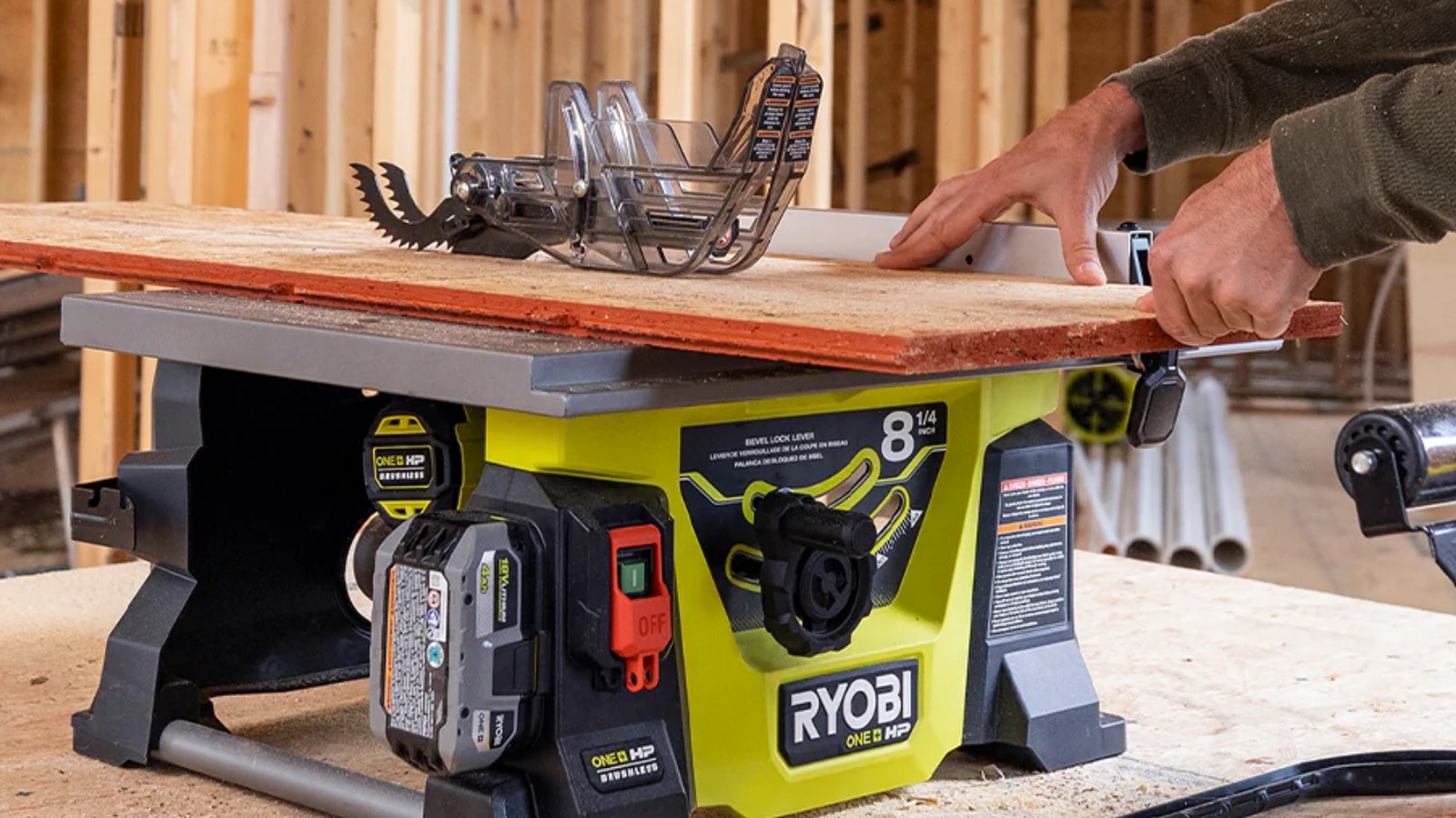
Ryobi’s placement on this list was difficult to decide. On the one hand, it is a darling in the DIY department, with customers praising the brand’s price, availability, and selection. In fact, Ryobi has so many tools that we make lists of just the ones you may not have heard about. On the other hand, the brand isn’t terribly popular with pros, although some do use Ryobi products occasionally. Ryobi’s greatest strength is its selection, which includes hundreds of tools across its 18V and 40V battery systems that include everything from cordless drills to battery-powered lawn mowers. It competes for the biggest selection of any brand on the list.
Ryobi’s warranty is also pretty decent, offering between three and five years depending on the tool, which is better than average. Availability is also no problem because you can’t walk through a Home Depot without seeing Ryobi everywhere. It’s very popular there, and there are thousands of positive reviews on some tools. It’s hard to argue that Ryobi isn’t good.
Ridgid
Ridgid is sold exclusively at Home Depot, but isn’t owned by the retailer like Husky is. Its selection is pretty average, offering roughly 100 cordless power tools, which put up good numbers in terms of popularity and reviews, but not at the level of Ryobi, DeWalt, and other big brands. Pros do use Ridgid tools, albeit not as often as DeWalt or Milwaukee. So, you may be wondering why Ridgid is so high on the list.
The reason is because the brand has the single best warranty of any toolmaker on the list. It gives you three years out of the box, which is pretty standard. However, if you register the product online and apply for the lifetime service agreement, Ridgid adds a lifetime warranty that includes free replacement batteries, free service, and free replacement parts for the tool’s original owner. There are limitations to this, but that is a ridiculous warranty for a cordless power tool, and immediately makes Ridgid worthy of consideration, even with its smaller tool lineup.
Makita
Makita is a huge purveyor of cordless power tools, and easily among the best on the market. It’s considered a pro-level brand, and DIYers should have no shame in picking these up as well. The brand’s selection is larger than most, with nearly 600 power tools across three battery systems. The biggest is the LXT system, with 350 products all by itself, more than every other brand on this list so far except Ryobi. The brand’s warranty is also decent, offering an average three-year warranty on its power tools and batteries, which is better than some and worse than others.
Makita tools strike a good balance between affordability and competence. The brand only has a few recalls in its history, and its tools are readily available in stores and online. Users seem to like them, with some tools garnering thousands of reviews, most of which are positive. There really isn’t much to complain about. This is a pro-level brand with hundreds of tools, good availability, and a decent warranty.
DeWalt
If you’ve gotten the sense that a lot of folks use DeWalt tools, it’s because they do. This is one of the most popular tool brands in the U.S. for both DIYers and pros, and it’s easy to see why. The brand’s selection is quite large, housing hundreds of tools across the brand’s 12V, 20V, and 60V battery systems, more than most tool brands on the market. There isn’t much you won’t find in the collection, including outdoor tools like lawn mowers.
DeWalt’s tools are backed by a three-year warranty, which is average for the industry. The brand is also quite transparent with recalls, with a history dating back over 25 years, which is much longer than most tool companies’ recall lists. There are definitely some DeWalt tools beginners should avoid, but otherwise, there’s not much to criticize here. DeWalt is a big dog, and this is one of its best segments.
Milwaukee
There aren’t many areas areas where Milwaukee doesn’t excel. It has an outstanding number of power tools across its M12, M18, M24, and M4 battery systems, with more coming every year. The only brands with more are DeWalt, Ryobi, and Makita. It’s often placed side by side with Dewalt, Makita, and Bosch as the de facto choice for pros, and you could probably rank Makita, DeWalt, and Milwaukee evenly on this since they’re so close to equal. Milwaukee tools are also popular with DIYers, putting up excellent numbers in terms of customer reviews and reputation.
The only reason we placed Milwaukee above DeWalt is because Milwaukee has a longer warranty. It covers up to five years for cordless power tools and three years for batteries, beating out DeWalt by two years. Its recall notice list is also quite short, with only four tools recalled in the last decade. DeWalt and Makita do have larger tool selections, though, so again, it’s mostly a wash.
How we ranked these cordless power tool brands
Judging a whole list of cordless tools is no easy task. Between all the brands, there are nearly 2,000 total tools to look at. We created this list using a variety of metrics. In terms of performance, most of competitive tools offer very similar features to each other. For example, Hercules’ impact wrench does 1,500 lb-ft of breakaway torque, while Milwaukee’s did 1,600 lb-ft and Snap-on’s did 1,550 lb-ft. All three of those did better a few hundred pounds better than Bauer or Ryobi, though, so performance helped a little bit.
After that, we looked at selection size, in-store and online availability, warranty length, value, and general sentiment. For example, Ryobi is mostly known as a DIY-friendly brand, whereas DeWalt, Milwaukee, and Makita are pretty popular with DIYers and pros. Bauer’s 90-day warranty dropped its placement, while Milwaukee’s five-year warranty was the tie breaker between it, Makita, and DeWalt. Once all of these factors were taken into consideration, the list appeared as it does above.

Stephan is the sports journalist for the Maple Grove Report.