

Here’s Why That Math Actually Works Out


When you are shopping for tires, you will almost certainly come to the conclusion that Michelin tires, which recently reached a milestone with its 106th J.D. Power award, tend to cost more than other brands. You may also wonder whether paying the additional money for a set of Michelins is worth it. Some independent sources have done the necessary research and have determined that the math of paying more for Michelin tires can actually work out in your favor.

One of these sources is none other than Consumer Reports, which published an article entitled “Tires That Last the Longest.” In it, CR compared a $254 Michelin CrossClimate2 tire to a $184 Vredestein HiTrac tire. The Michelin tire was expected to last for 95,000 miles, while the Vredestein tire had an expected life of 60,000 miles. Dividing the expected mileage of each tire by its cost, the Michelin came out costing 26.7 cents per 100 miles, while the Vredestein was actually a more expensive tire, costing you 30.7 cents per 100 miles of driving. In fact, Michelin is the most-purchased tire brand among CR members, and there are also numerous Michelin tires with great treadwear ratings.

Another source that backs up CR is PerformancePlusTire.com, a tire and wheel retailer which recently published an article on why Michelin tires tend to be more expensive, and it also compared a selected Michelin tire against its competitors to determine any major differences. The results are pretty interesting.

What makes Michelin tires more expensive?
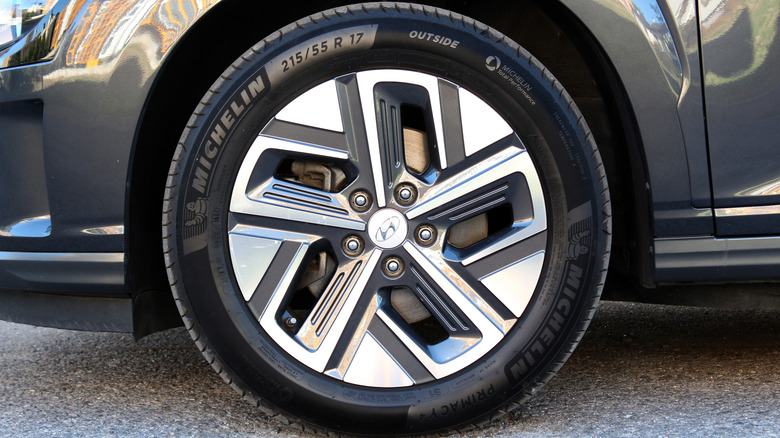
As far as why Michelin tires cost more, PerformancePlusTire.com suggests several reasons, from Michelin tires’ complex components, longer lifespans, higher mileages, and RFID tags, to Michelin’s 2.2 billion Euro (over $2.5 billion) annual R&D budget. After all, the company invented the radial tire in 1946, changing the tire world for good.

PerformancePlusTire.com then analyzed the differences between one particular Michelin tire, the Michelin Pilot Sport 4S, and its direct competitors from Bridgestone, Continental, Goodyear, Pirelli, and Yokohama. They looked at real-world performance, and broke down the overall tire cost vs. its cost per mile.

What PerformancePlusTire.com found was that while the Michelin tires cost more, their expected lifespan of 35,000-40,000 miles brought their cost down to $0.027-$0.031 per mile, similar to some cheaper tires that didn’t last as long. The Michelin tires were compared to the cheaper but short-lived Bridgestone tires tested, which came in at a higher cost $0.029-$0.033 per mile. The less expensive but long-wearing Continentals slightly undercut the Michelins at a per-mile price of $0.025-$0.029, while the Goodyears came in at a similar cost of $0.025-$0.028 per mile. 

The Pirellis cost nearly as much as the Michelins but didn’t last very long, bringing their cost per mile to $0.038-$0.042, the highest of the test. Interestingly, the Yokohamas tested cost much less, but lasted even longer than the Michelins, hitting the lowest cost of $0.017-$0.019 per mile, making them a great option for budget conscious buyers. Still, there’s a reason why Michelin tires consistently perform so well.


Source link

Leave a Reply

Subscribe to Our Newsletter

Get our latest articles delivered straight to your inbox. No spam, we promise.

Recent Reviews


We may receive a commission on purchases made from links.

For TV owners, High-Definition Multimedia Interface (HDMI) technology is the gateway to accessing endless content and maximizing your viewing experience. Whether it’s watching films from physical media, streaming content via your preferred subscription platform, or playing games, there are plenty of gadgets you can connect for the perfect entertainment setup in your home.

Apart from investing in the right HDMI cable, choosing the right port makes all the difference. Depending on how old your TV is, you can expect anything from the legacy HDMI 1.0 to even the most recent HDMI 2.2. However, while there’s a big jump in terms of quality between HDMI 2.1 and 2.0, there are plenty of gadgets that can still work perfectly with your HDMI 2.0 port. This is great news if you aren’t so particular about getting the best picture possible. In fact, unless you’re a hardcore gamer or have a TV made for high resolution, it’s likely you’ll be able to get the most out of what you already have without HDMI 2.1 or 2.2 ports.

To help you get the most out of your existing HDMI 2.0 port, we’ve listed broad categories of gadgets that work with it. Next, we share specific models that either maximize the port’s capabilities or still offer a great viewing experience despite the bandwidth limits. To learn how we selected the models that work well with HDMI 2.0 ports, you can skip to our methodology at the end.

1. Streaming sticks

If you own an older TV model but don’t want to trash it yet, streaming sticks are among the most affordable ways to access modern entertainment options on a budget. In fact, the HDMI 2.0 port will already let you maximize the performance of even newer streaming sticks, like the Fire TV Stick HD, which supports 1080p Full HD. So, if your TV can’t do 4K anyway, you don’t really need to get a more expensive model. An Amazon’s Choice product, the Amazon Fire TV Stick HD has an average rating of 4.7 stars from more than 62,000 reviewers.

While many newer smart TVs have built-in streaming capabilities, there are still many benefits to using a streaming device, such as regular security updates. These days, many streaming sticks are marketed as 4K-capable, like the Amazon Fire TV Stick 4K. While we’ve recommended plugging it into an HDMI 2.1 port for the best experience, an HDMI 2.0 port is also perfectly fine for most modern 4K movies and shows. If you have the extra budget, it can be an investment for future upgrades. As of March 2026, over 75,000 Amazon users have rated the Fire TV Stick 4K Max an average of 4.6 stars. However, you can also consider options like the Roku Express 4K, Apple TV 4K, and Google TV Streamer 4K.

2. Sync boxes

There’s something incredibly dramatic about having the lights match the scenes on your TV, and you can do that with a sync box. Whether you’re watching a movie, playing games, or listening to music, sync boxes help elevate your entertainment experience. While many of the latest sync boxes are designed for HDMI 2.1 ports, these are generally backwards compatible with HDMI 2.0 ports, so you can still enjoy them with their reduced capacity, such as the Philips Hue Play HDMI Sync Box 8K, which generated an average rating of 4.2 stars from more than 230 Amazon customers.

Priced at $384.99, you can connect up to 4 input devices. Unless you buy a kit, there’s also the price of the lights, which will vary depending on your screen size. The Philips Hue Play Gradient Smart TV Light Strip is available in three sizes: 55-inch ($274.99), 65-inch ($296.99), and 75-inch ($329.99). In general, many people seem quite satisfied with it, as over 2,000 Amazon users rated it 4.3 stars. 

Lastly, you will need to factor in the cost of the Philips Hue Bridge, which lets you enjoy its integration with smart home ecosystems, like Amazon’s Alexa, Google Home, and Apple HomeKit. With over 11,200 Amazon reviews, it has generated a pretty positive 4.5-star rating. Given that it tops our list of smart lighting brands, it can be a great investment if you’re already using other Philips smart lights in your home.

3. DVD and Blu-ray players

Although many people have turned to streaming to optimize their content viewing, there are still people who like owning physical media. Whether you’re a film buff, a parent of young children, an elderly person, or just someone who doesn’t want to deal with subscriptions, owning a DVD or Blu-ray player can keep all your favorite TV shows and films within reach, without the need for internet connectivity. For many old DVDs and some Blu-ray discs, they don’t max out HD resolution anyway, so you’re likely to get the most out of their content with even the older HDMI 2.0 port. In fact, even premium 4K Ultra HD Blu-ray players run flawlessly on HDMI 2.0.

On Amazon, the #1 Best Seller in its DVD category is the ELECTCOM PRO DVD Player, with over 40,300 customers rating it 4.2 stars on average. With prices starting at $41.99, it comes in different set variations that include HDMI and RCA cables, and even remote controls with large buttons designed for the comfort of seniors. But take note, this model doesn’t support Blu-ray discs. Alternatively, there’s the Panasonic Blu-ray player that retails for $89.95.An Amazon’s Choice product, more than 2,100 users gave it an average rating of 4.4 stars. Apart from playing Blu-ray discs, it can also work with CDs, DVDs, and even compatible files on your thumb drive, such as photos and videos. You may even find similar media players in secondhand or vintage stores if you’re on a tighter budget.

4. Gaming consoles

For gamers who get a little overstimulated with the latest releases, the HDMI 2.0 port already lets you experience games that run on 4K at 60 fps. So, if you’re one of those people who still enjoy older-generation consoles, like the PlayStation 4 Pro or Xbox One S, you’ll be happy to know it’s built to work perfectly with the HDMI 2.0 port. These days, you can still get secondhand models of the PlayStation 4 Slim 1TB ($199.99) or the PlayStation Pro 1TB ($240.95) from the official PlayStation store on Amazon. Despite being released years ago, both models still enjoy an average rating of at least 4.6 stars from more than 12,000 Amazon customers.

Among the devices that should always be plugged into an HDMI 2.1 port, many newer gaming consoles can benefit most from high resolution and 120Hz frame rates. But, since HDMI 2.0 supports 4K resolution at 60 frames per second, a powerful console like the Sony PlayStation 5 will still run massive, modern AAA games flawlessly in stunning ultra-high definition. Despite its price tag, it boasts a ton of satisfied customers with 2,400+ Amazon users rating the PlayStation 5 Pro around 4.6 stars.

5. HDMI switch

If you find yourself attaching several devices to your TV via the HDMI port, you may need to use an HDMI switch to free up space, like the UGREEN HDMI Switch. An Amazon’s Choice Product, it boasts a positive 4.3-star rating from 5,200 customers. Available in two colors, the switch comes in black or grey with discounts for Amazon Prime customers. With 5 input ports, you can connect all kinds of devices, such as the ones above: PCs and laptops, streaming sticks, and TV boxes. To switch devices, you can either press the buttons on the unit or use the remote, which is powered by two AAA batteries. The unit itself has an LED indicator that shows which device is active. On the other hand, its single output port is compatible with displays such as TV screens, monitors, and projectors.

But, if you’re on a budget and only really need one extra slot, the Anker HDMI Switch might be better for you. An Amazon Overall Pick product, the Anker HDMI Switch has an average rating of 4.5 stars from more than 4,000 customers. Priced at $15.99, this HDMI switch measures just 2.17 inches by 2.17 inches by 0.57 inches, so you can easily take it with you when you’re traveling, too. It comes with a pair of input ports and a single output port for displays. Unlike the UGREEN model, this doesn’t need an external power supply.

Methodology

To help you understand what your HDMI 2.0 port can do, we’ve highlighted gadgets that either maximize its capabilities or provide a great experience despite the port’s bandwidth limits. We selected devices that have averaged at least four stars from more than 200 reviewers, indicating a general trend of user satisfaction. While it didn’t affect their inclusion on the list, we also noted whether they are top-selling products in their respective categories and mentioned additional features you may enjoy beyond their primary functions.


Source link


