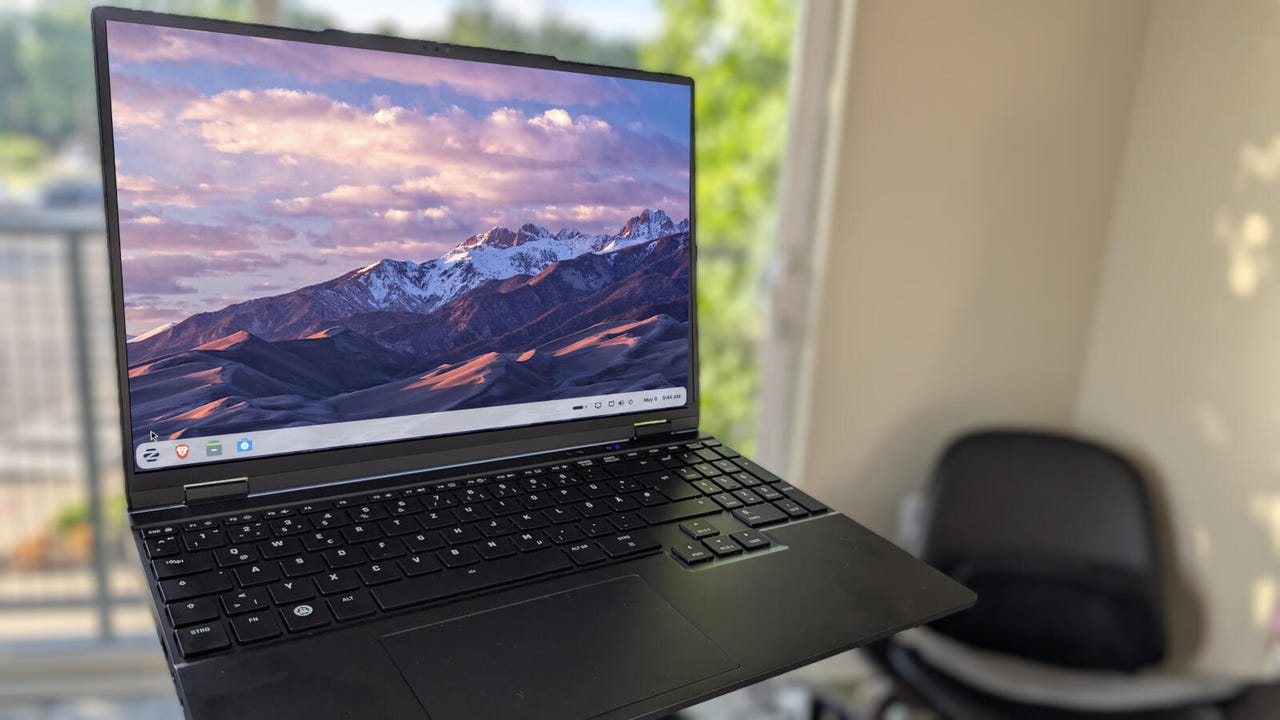
5 ways I make Zorin OS faster and better than it already is


zorinherolaptop

Jack Wallen/ZDNET

Follow ZDNET: Add us as a preferred source on Google.


ZDNET’s key takeaways

  • Zorin OS is a fantastic and popular Linux distribution.
  • With just a bit of tweaking, you can optimize it to fit your needs.
  • These tweaks can be done by anyone and are free.

If I ever switch from Pop!_OS, my distribution of choice will be Zorin OS. It’s clean, easy to use, reliable, and it offers plenty of customization options that let me make it truly mine. I can make Zorin OS look better, run faster, and function more efficiently. And with the release of Zorin OS 18.1, the developers have created what I believe is the best OS on the market.

Also: Linux Mint vs. Zorin OS: I’ve tried both Windows alternatives, and here’s my winner

If you’re a Zorin OS user, you might be interested in some of the optimizations I like to apply to the OS. If so, read on.

1. Make it faster

Who doesn’t want a faster computer? One of the best ways to speed up Zorin OS is to enable Zram, which is a Linux kernel module used to create a compressed block device in RAM that allows for faster data access and efficient memory usage. Zram is like a much faster swap space, and the improvements are noticeable.

To enable Zram, install the necessary tool with:

sudo apt-get install zram-config

When that installation is completed, enable Zram with:

sudo systemctl enable –now zram-config

Next, you’ll need to disable the swap file. First, open your fstab file with:

sudo nano /etc / fstab 

Note: There are no spaces between etc, /, and fstab in the above command.

In that file, comment out the /swap line like this:

#/swap

Save and close the file.

Also: The best Linux distributions for beginners: Expert tested and reviewed

Disable swap with:

sudo swapoff /swapfile

Reboot your system.

Zram is now active, and your machine should show improved performance, especially when several apps are open and running.

2. Stop the startups

When you log in, certain apps automatically start. Some of those apps are necessary, while others may not be. To enable/disable startup apps, do the following:

Open the desktop menu and search for Startup Applications.

Look at the list of startup apps and remove any you don’t want.

Zorin OS 18.1.

This is a freshly-installed instance of Zorin OS, so there aren’t many startup apps.

Jack Wallen/ZDNET

Reboot your system so the changes take effect.

Keep in mind that you don’t want to disable a necessary app. For instance, you’ll want to keep the SSH Key Agent, so you can use Secure Shell.

3. Hot corners

I love hot corners. I can assign specific actions to each corner of my display, so all I have to do is move the cursor to one of the corners, and whatever action I’ve assigned happens. It’s efficient, and it’s simple.

Also: I’m a Linux power user, and this distro made me rethink what an operating system can be

The only caveat to Zorin OS is that it only offers a single hot corner. To get multiple hot corners, you need to install a GNOME extension that adds the feature. The extension is called Custom Hot Corners Extended. To install the extension, you’ll need to either install Firefox or the Extension Manager (both of which can be installed from within GNOME Software). My preferred method is using the Extension Manager.

Zorin OS 18.1.

Install the CHC-E extension to enable multiple hot corners.

Jack Wallen/ZDNET

Once installed, you can go back to the Installed tab, click the gear icon associated with CHC-E, and then customize the hot corners to your specifications. 

4. Auto delete temp files

Your computer saves temporary files in /tmp for 10 days and /var/tmp for 30 days. Because some temporary files can include sensitive information, I prefer to have them automatically deleted. Not only can it prevent accidental exposure of sensitive information, but it can also free space.

Zorin OS 18.1.

You can also manually delete the temporary files from here.

Jack Wallen/ZDNET

With Zorin OS, you can configure the automatic deletion of these files in Settings > Privacy & Security. Click the On/Off slider for Automatically Delete Temporary Files and then set the delete period you want. I typically set the delete period for one day.

5. Using the auto tiling feature

If you’re not accustomed to a tiling window manager, this might not appeal to you. For me, tiling window managers are incredibly efficient, and I even like it when those windows are automatically tiled.

Automatic tiling means that when you open a new window, it will automatically be placed on your desktop in a tiling manner. For example, if you open the first app, it will automatically be placed on the right half of the screen. Open a second window, and it’ll take up the left half. The only caveat to Zorin auto tiling is that when you open a third window, it opens a floating app (meaning it can be moved and placed where you want).

Zorin OS 18.1.

If you’ve never experienced a tiling window manager, you’re missing out.

Jack Wallen/ZDNET

You can manually tile the next apps if you want, but I do wish Zorin would make it such that the auto tiling would work the same as, say, Hyprland.

Also: I struggled with Hyprland for months, until this Arch-based distro fixed it

Either way, the tiling window feature is a must for those who want their desktops to be optimized for efficiency and speed.





Source link

Leave a Reply

Subscribe to Our Newsletter

Get our latest articles delivered straight to your inbox. No spam, we promise.

Recent Reviews


Many couples reach a point, often quietly, when travel shifts from collecting destinations to focusing on how a place truly feels.

You still want adventure. You still want to be surprised. But you’re no longer interested in jockeying for position at a viewpoint, setting alarms to beat tour buses, or sharing what was supposed to be a quiet, meaningful moment with a sea of strangers holding up phones.

What you want now is space.

You want space to hike without hearing other people’s conversations, to sit together and watch the weather change, and to feel like the experience is truly yours—not just another item on a checklist.

The good news is these trips still exist. Often, they’re the most rewarding, even if they aren’t always easy to find.

Alaska: Where the Wild Still Sets the Schedule

Root Glacier near McCarthy Ak
Photo Credit: Jenn Coleman.

Alaska quickly changes your expectations. Everything feels bigger, quieter, and it’s impossible not to feel like a small part of something much larger.

For couples who want both adventure and calm, Alaska offers something special. Days follow the weather, wildlife, and light instead of strict plans. You might plan a hike but end up quietly watching a bear by the water. Or you might expect a simple drive and find yourself stopping again and again, amazed by the views.

Places like Wrangell–St. Elias National Park make this clear. As the largest national park in the U.S., its emptiness feels humbling. You can explore for hours without seeing anyone else. In that solitude, conversations slow, your senses sharpen, and daily worries fade away.

For couples, Alaska isn’t about conquering the land. It’s about sharing it—standing together on a glacier, paddling on calm waters, or noticing you haven’t checked your phone in days. It’s wild, but also grounding.

Winter Cities: When Familiar Places Feel Intimate Again

Christmas night in Quebec City
Photo Credit: Deposit Photos.

Cities in winter tell a different story.

As temperatures fall and days get shorter, crowds disappear, leaving behind a more genuine version of the city. Streets are quieter, restaurants feel cozier, and experiences become more meaningful.

Winter cities encourage couples to slow down. Instead of hurrying from place to place, you linger. You take long walks together and relax over coffee or wine, with no rush to be anywhere else.

Places like Quebec City, Scandinavian capitals, and alpine towns are especially beautiful in winter. Snow softens the scenery and quiets the noise. Even famous landmarks feel personal when you aren’t surrounded by tour groups.

Adventure is still here, just in a different form. You might go snowshoeing outside the city, skate on natural ice, or step out late at night to look for the northern lights. These moments feel special and stay with you long after the trip.

Small-Ship Cruising: Big Landscapes Without the Chaos

UnCruise ship Takatz Bay Alaska
Photo Credit: Jenn Coleman.

For couples who want immersive travel without constant packing and unpacking, small-ship cruising can be a revelation.

This isn’t the typical cruise. There are no crowds, no lines, and no forced entertainment. Days are about exploring—kayaking, hiking, or watching wildlife. Evenings are quiet, often spent talking with other travelers who came for the same reasons.

Small-ship companies such as Uncruise go where larger ships can’t, reaching narrow fjords, remote coasts, and less-visited ports. The pace is relaxed, not rushed. If whales show up, the plan changes. If the light is beautiful, you stay longer.

For couples, sharing these moments without distractions is deeply satisfying. You’re present, together, and fully involved, without having to manage every detail.

National Parks That Reward Going Off the Beaten Path

Wind Canyon Theodore Roosevelt National Park South Unit North Dakota
Photo Credit: Jenn Coleman.

National parks are known for adventure, but the number of visitors can change a lot depending on where and when you visit.

The most popular parks get crowded, especially during peak times. But couples who look beyond the usual spots often find parks that are just as impressive, with much more space.

Less-visited parks give you room to wander, think, and talk. Trails feel welcoming, not crowded. Overlooks feel like rewards, not competitions. Even famous parks can feel different in the off-season or winter, when fewer people visit.

In these places, couples can hike at their own pace, pick trails that interest them, and finish the day feeling relaxed instead of overwhelmed.

Remote Mountain Towns: Adventure Without an Audience

Historic steam engine train travels from Durango to Silverton through the San Juan Mountains along the Animas River in Colorado, USA.
Photo Credit: Deposit Photos.

Some of the best trips happen in places that aren’t trying to impress anyone.

Remote mountain towns attract people who come for the experience, not just for photos. The atmosphere is calm and grounded. Mornings are spent outdoors, and evenings are slow and relaxed.

In these towns, adventure is part of the landscape, not something packaged for tourists. You might hike right from where you’re staying, bike along quiet roads, or sit by a river with no plans at all.

Since these places aren’t in the spotlight, interactions feel more real. Locals take time to chat, guides tell real stories, and couples feel like they’re seeing the place as it truly is.

Why Crowd-Free Adventure Feels More Romantic

Two hikers on top of the mountain enjoying sunrise over the tropical valley
Photo Credit: Deposit Photos.

Romance doesn’t always make a big entrance.

Sometimes it’s found in a quiet moment together, a long drive without cell service, or standing side by side in a place so vast it changes your perspective.

When the crowds are gone, distractions fade too. There’s no pressure to rush or record every moment. Conversations deepen, choices get easier, and the experience feels personal instead of staged.

For couples, this change is meaningful. Adventure becomes something you share, not something you hurry to capture before someone else does.

Choosing Trips That Fit Who You Are Now

Downstream at Kakabeka Falls Provincial Park Thunder Bay Ontario Canada
Photo Credit: Jenn Coleman.

The best trips for couples who want adventure without crowds usually require a small mindset shift.

Instead of asking where everyone else is going, it helps to ask where you’ll feel most at ease, most curious, most connected. That might mean traveling off-season, choosing a smaller ship, or skipping the most famous destination in favor of one that offers space.

These trips don’t always make the loudest impressions online. But they tend to leave the deepest ones.

Final Thoughts: Adventure That Leaves Room for Two

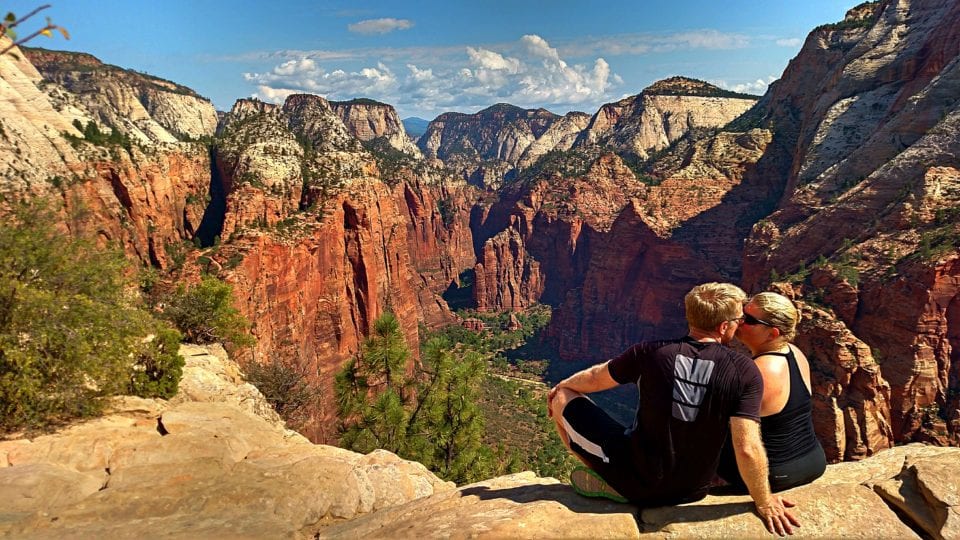
Jenn and Ed Top of Angels Landing via @habitat9travels
Photo Credit: Becca Eve Young.

As couples evolve, the way they travel evolves with them.

The desire for adventure doesn’t fade—it becomes more intentional. What falls away is the tolerance for chaos, crowds, and experiences that feel more like performances than memories.

The best trips now are the ones that offer space: space to explore, space to breathe, space to reconnect. Whether it’s Alaska’s raw wilderness, a winter city wrapped in snow, a quiet national park, or a small ship tracing remote coastlines, these journeys share one thing in common.

They leave room for the two of you.

And in a world that rarely slows down, that may be the most meaningful adventure of all.


Hi! We are Jenn and Ed Coleman aka Coleman Concierge. In a nutshell, we are a Huntsville-based Gen X couple sharing our stories of amazing adventures through activity-driven transformational and experiential travel.


Source link