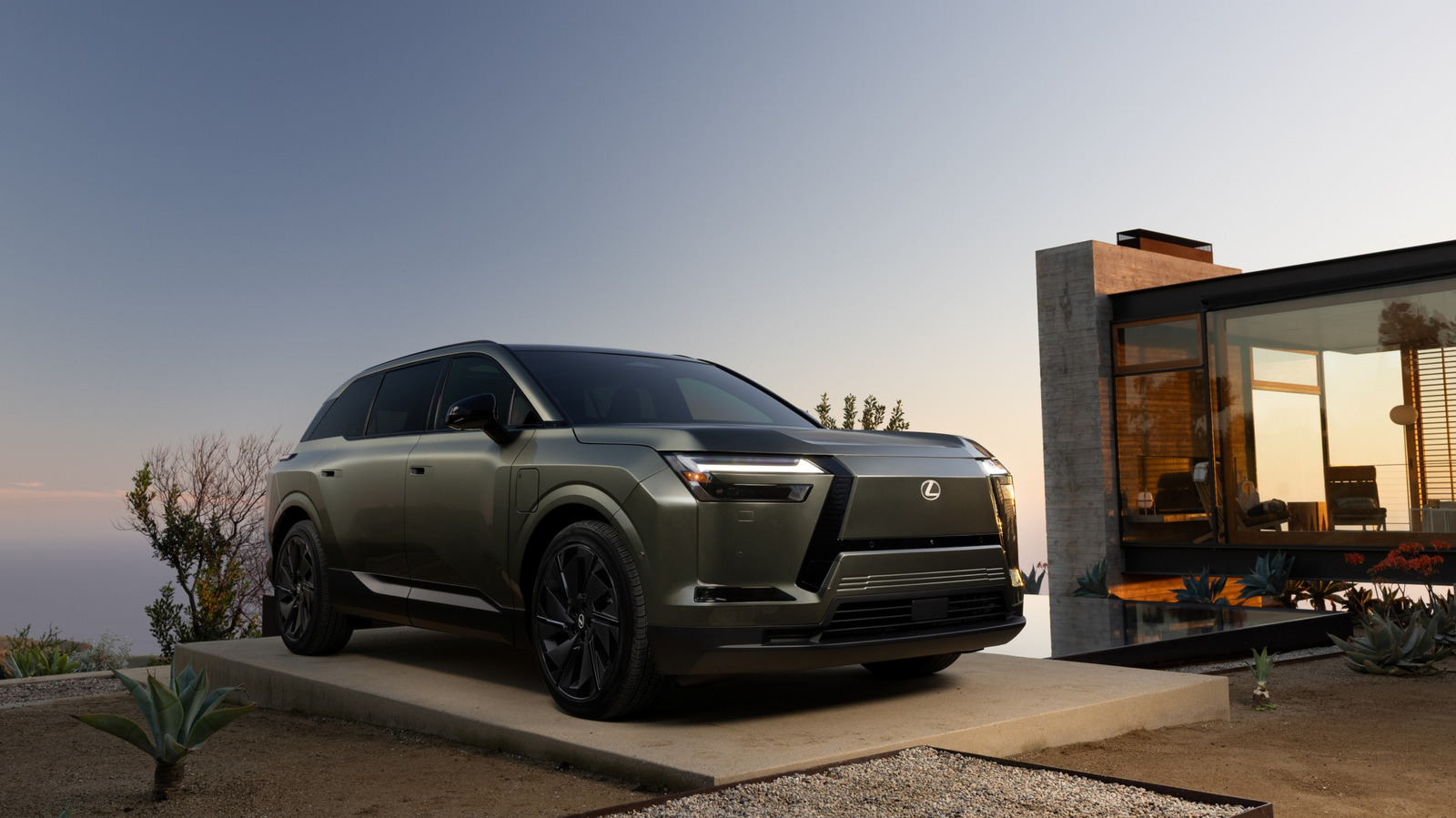

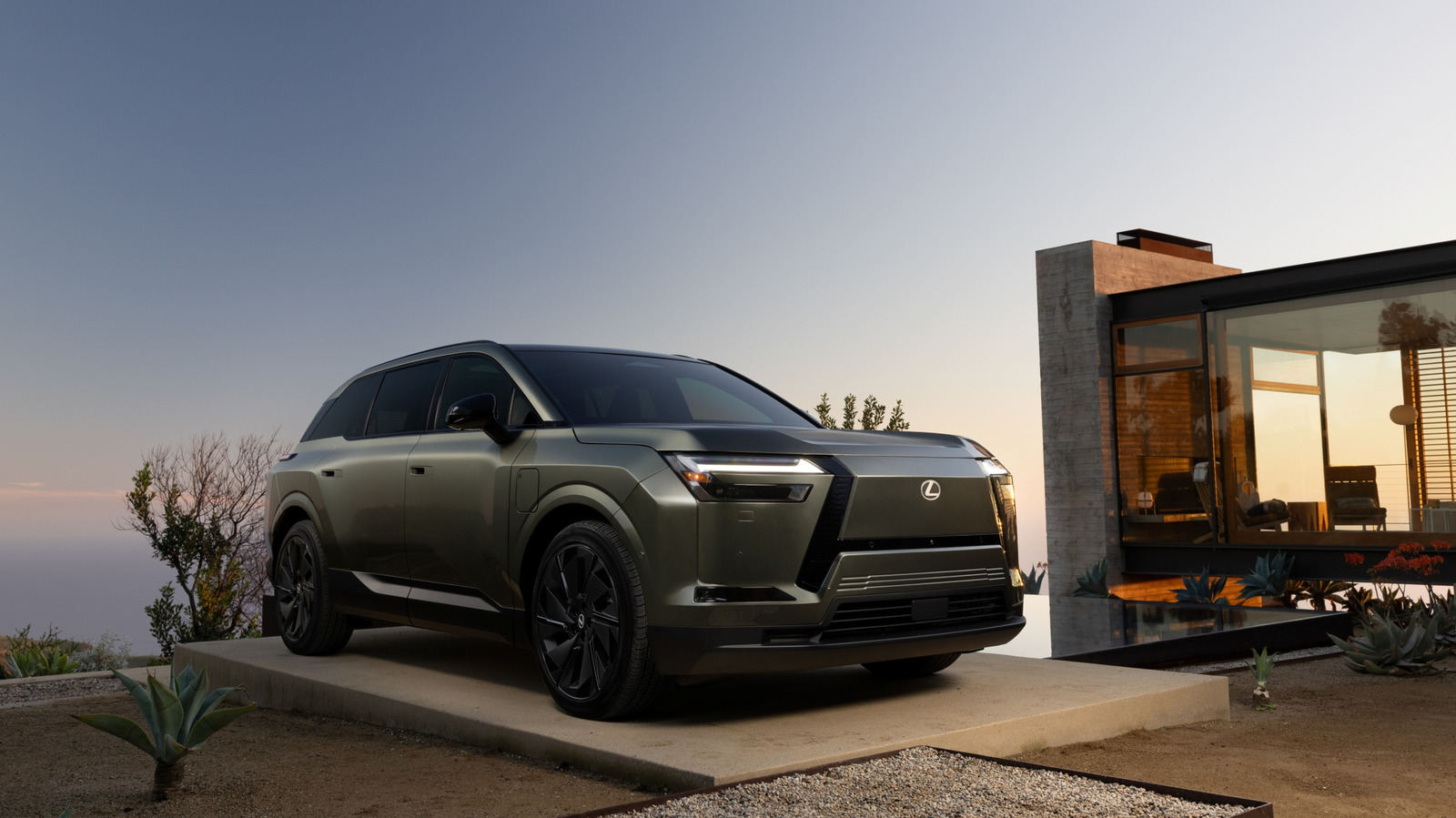
Lexus just announced the TZ SUV for the 2027 model year. It’s a big luxurious three-row EV with an estimated range of 300 miles and it charges through a NACS plug. Just listing those attributes alone means that someone has already signed up to order one the second they are done reading this sentence. However, the three-row EV SUV segment is heating up.
For everyone else, let’s break it down a bit. No price has been announced yet, but there’s a lot of other info to dig into before Lexus drops the price tag later in the year.
It rides on the TNGA architecture, which is the same general hyper modular platform that underpins just about every current Toyota and Lexus. Lexus says customers can pick from two battery options that power the dual motor drivetrain. There’s a 76.96 kilowatt-hour pack and a 95.82 kilowatt-hour pack. The automaker has not yet shared the range of the lower capacity battery.
High-tech and high luxury
As it is a Lexus, it will have some performance-oriented features that might pique some interest. Notably, its “Direct4” system has the ability to move power from the front and rear motors while driving. It can divert power from almost an entirely front wheel drive layout (80% of the power going to the front, 20% going to the rear) to entirely rear-wheel drive (100% of power going to the rear), to a more balanced 60% front and 40% rear configuration when you’re accelerating or cornering to help mitigate the handling of a big and heavy SUV. This is also known as torque-vectoring.
On the luxury end, the front row and second row have access to heated and ventilated seats, with the second row getting a power ottoman feature for some extra relaxation (sorry third row occupants). You also get a Mark Levinson 21-speaker sound system, the option to choose between 20 or 22-inch wheels, power sunshades, and a large panoramic sunroof — it is a big Lexus SUV after all.
The competition is fierce
As mentioned earlier, the segment is getting crowded. The Kia EV9/Hyundai Ioniq 9, Rivian R1S, Lucid Gravity, Cadillac Vistiq, and Cadillac IQ are already out. However, there’s another big three row luxury EV coming soon that might give potential TZ customers pause. Genesis has been quiet on details, but the upcoming GV90 has the very real possibility of securing buyers who would rather wait for it over the Lexus. If the rest of the Genesis lineup is anything to go off of, it will be competitive in price as well.
Still, if the price is at a point where drivers agree, the TZ could be a compelling future entry to complement the Lexus ES and RZ electric Lexuses. There are still a lot of unknowns at the moment, but the fight between all the brands (in a segment made ever more popular by wildly fluctuating gas prices) will definitely be one to watch.

Stephan is the sports journalist for the Maple Grove Report.