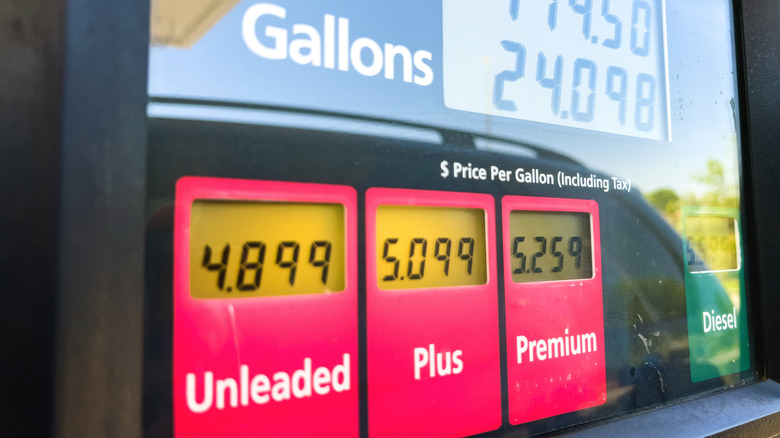
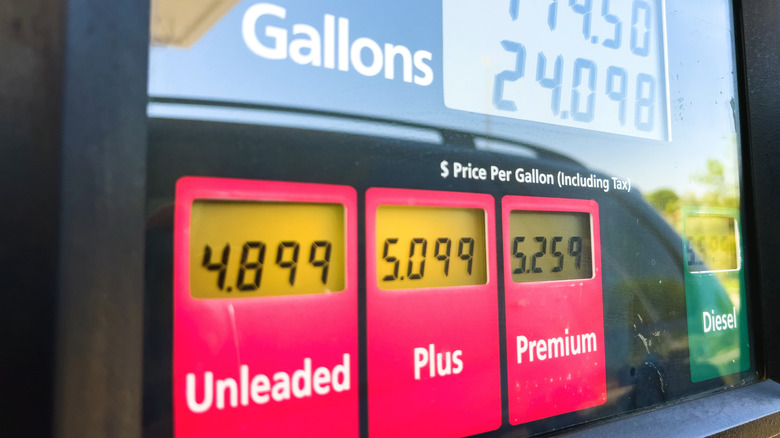
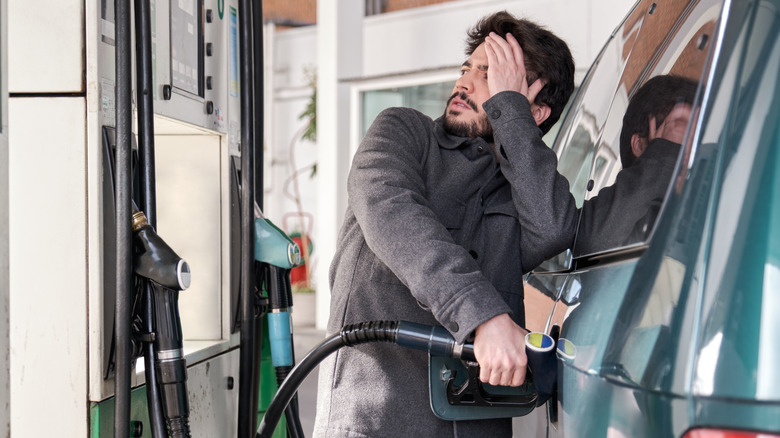
According to AAA, the national average for a gallon of gas sits at $4.53 at the time of writing. In the span of a week, prices jumped by nearly 30 cents. Drivers in several states are paying more than $5 per gallon, and some Californians are paying $6 or more. And fuel costs are affecting more than just drivers. In response to skyrocketing prices, airlines are raising fares, and some are suspending flights.
As many Americans struggle with increased prices, many are asking: When will we see some relief at the pump? Unfortunately, the answer is probably not anytime soon. In an interview with NPR, Kevin Book from ClearView Energy Partners, a Washington, D.C.-based independent research firm, laid out the facts. The cost of gas has gone up because the price of oil is higher than at any point in the last four years. The war in Iran is the biggest driving factor; supply is down, and many countries are pulling from commercial inventories and government stockpiles. It’s unknown when the Strait of Hormuz, through which an estimated 20% of the world’s oil supply passes, will reopen, and even when it does, it may take weeks or months for inventory to replenish.
That uncertainty makes it difficult to predict when gas prices may come down. Book states that we should not expect a return to pre-war levels this year. If prices do fall drastically, it likely won’t be a positive sign.
How to save money when gas prices are so high
Ladanifer/Getty Images
For most people in America, gas is a fundamental necessity, not a luxury. Many of us drive to work or school every day. Additionally, when gas prices surge, there are typically economic aftershocks. Almost everything transported by trains, trucks, planes, or even ships gets more expensive because the cost to ship it has gone up. Instead of spending money on vacations or new electronics, consumers are focused on groceries and other essentials.
We all want to see cheaper gas, but as Book explained to NPR, a drastic drop in price would very likely indicate a fall in demand due to a recession, when the economy is in decline, and people are losing jobs. It’s a situation few desire, but what can we do in the meantime to save a few dollars when gas prices are so high?
AAA offers drivers several tips and tricks to save a few cents when filling up. First, sign up for any loyalty programs offered by your local gas stations or grocery stores. If you have a credit card that earns cash back when you get gas, use that and pay off the balance before the interest hits. You may also want to adjust your driving style. Driving too fast, changing speeds abruptly, and harsh braking can all affect your fuel efficiency. Compare prices using an app like GasBuddy or AAA Mobile and plan your fill-ups carefully. Data from GasBuddy indicates that Wednesday through Saturday tend to be the most expensive days to get gas, while Sunday and Monday are the best.
Many people dread going home for the holidays. It can be a stressful time of tiptoeing around fractious family members, trying to keep the peace, and maintaining some personal space.
The American Institute of Stress suggests that a score of 150 to 300 points on the Holmes-Rahe Stress Inventory equates to a 50% chance of health breakdown in the next two years. Divorce tops the stress scale with a 100, but the total score is the sum of all one’s stressors.
The holidays are a veritable smorgasbord of stress, with vacations (13 points), holidays (12 points), and potential in-law troubles (29 points). Those who don’t manage their space and set boundaries, could experience changes in residence (20 points), recreation (19 points), social activities (18 points), sleeping habits (16 points), family get-togethers (15 points), and eating habits (15 points). Adding all those together gives a person a score of 157 points, which puts them at an elevated stress risk, even if everything else is going great.
This Too, Shall Pass
Photo Credit: Deposit Photos.
One strategy is to recognize that stressors are temporary. People can try keeping calm and carrying on with a stiff upper lip, figuring it’s better if they can enjoy their families. Coleman Concierge interviewed five travel and relationship experts to learn what it takes to not only survive, but to thrive this holiday season.
Plan It Out
Photo Credit: Deposit Photos.
Planning is the first step of any endeavor. That’s especially true when confronting unresolved issues from childhood or unrequited affections from youth. A family visit can bring up those issues. Relationship experts have some advice and tips for preparing for the holidays physically, spiritually, and emotionally.
Stephen Barton, owner and founder of life coaching site Over The Looking Glass, and author, offers, “My advice to anyone is: ‘Be true to who you are, always in all ways.’”
Yancy Wright, leadership coach and founder of Casa Alternavita, provides these concrete steps for staying true to yourself: “Create a clear agreement with your significant other about how long you plan to stay with their family. Whether it is just for a few hours, overnight or even for a few days, give yourself permission to create space for you to be on your own to recharge as needed.”
There are a few options for finding safe spaces when people or their partners are in times of conflict. Renée D. Burwell, LCSW and Educator, says, “Maybe your parents have an in-law suite, stay at a hotel, or your bedroom or even a closet can be your safe haven when space is needed.”
Dr. Christina Kraft, DMD, has some guidance for being intentional about holiday travel. “Spend some time before your trip thinking, meditating, or journaling on why you are visiting family this holiday,” she says. “Consider the purpose of this family time and why it’s important. Focus on positive feelings and memories and visualize an experience filled with love, laughter, and gratitude. Most importantly, grant yourself and others grace and forgiveness if things don’t go as planned.”
Couples may have some unique travel issues. Jennifer Coleman, a couples travel expert, offered practical advice for couples travel particularly appropriate for a gift-giving holiday, “Money is a major source of stress for most couples, so discussing your budget and financial expectations before embarking on your trip is essential. When your budget is decided beforehand, all you need to do on vacation is to enjoy yourselves.”
Peace and Goodwill to All People
Photo Credit: Deposit Photo.
The professionals also had some pointers for maintaining peace and goodwill during time with the family. They suggest being careful around controversial topics like conspiracy theories, religion, and politics.
Barton added caveats for controversial conversations like, “unless they bring up the subject” and “It’s best not to have an opinion about anything even when asked.” Wright suggests people “find a way to go in with a mindset of curiosity,” while Dr. Kraft takes that idea one step further. She advises, “Understanding that people’s reactions to others are more about themselves and their own internal dialog than it is about you.”
If things do go astray, all is not lost. Yancy suggests guests “Try to redirect the conversation to something else, something more generative of laughter and connection.” Dr. Kraft recommends self-care by scheduling “a short trip with lots of private time so everyone has space to decompress.”
If things get heated, Burwell recommends having safety signals and to check in with your partner often because “Having each other’s back and maintaining a strong unit will help to preserve peace this holiday season and potentially years to come.”
Make Some Space
Photo Credit: Deposit Photos.
Some aspects of holiday travel can be more stressful if sharing a family space instead of staying in a hotel. Coleman encourages establishing travel rituals because they “provide a sense of stability amidst the excitement and unfamiliarity. It could be something as simple as having breakfast together each morning or setting aside time daily to reflect on the day’s experiences.” She continues, “Mistakes and disagreements are bound to happen. Learn to forgive and let go of any resentments. Holding onto grudges will only dampen the joy of your travel experiences. Embrace forgiveness and keep your focus on the present.”
Appreciate the Opportunities
Photo Credit: Deposit Photo.
The winter solstice is the longest night of the year, but even the darkest nights have a dawn, and a new year will soon arrive. Yancy says, “Focus on what you can appreciate. Even the little things, like how some food might be prepared or what someone is wearing. It’s so easy to get into a critical and judgemental mindset, so it takes practice to instead focus on things that bring you into the present moment.”
Coleman calls on her adventure travel expertise, equating a family visit with a spot in one’s comfort zone. For some, it’s as comfortable as a warm hug; for others, it can be as uncomfortable as eying the water below a 40-foot cliff jump. She says, “Just beyond your comfort zone is the growth zone, where you can learn and accomplish things you’ve never thought were possible and return with more confidence and courage to face new challenges.” She describes the experiential learning cycle she used while teaching skiing as “learning a new skill, trying it out, and reflecting on what you’ve learned.”
Remember to reflect on what went right and what went “not so right” during the holiday season and what can be done next time to manifest those goals and desires you visualized before hitting the road. Family connection could be the greatest holiday gift you’ll ever receive. Approaching loved ones with gratitude and forgiveness makes almost anything possible.
This article originally appeared on Media Decision.
Hi! We are Jenn and Ed Coleman aka Coleman Concierge. In a nutshell, we are a Huntsville-based Gen X couple sharing our stories of amazing adventures through activity-driven transformational and experiential travel.
To provide the best experiences, we use technologies like cookies to store and/or access device information. Consenting to these technologies will allow us to process data such as browsing behavior or unique IDs on this site. Not consenting or withdrawing consent, may adversely affect certain features and functions.
Functional
Always active
The technical storage or access is strictly necessary for the legitimate purpose of enabling the use of a specific service explicitly requested by the subscriber or user, or for the sole purpose of carrying out the transmission of a communication over an electronic communications network.
Preferences
The technical storage or access is necessary for the legitimate purpose of storing preferences that are not requested by the subscriber or user.
Statistics
The technical storage or access that is used exclusively for statistical purposes.The technical storage or access that is used exclusively for anonymous statistical purposes. Without a subpoena, voluntary compliance on the part of your Internet Service Provider, or additional records from a third party, information stored or retrieved for this purpose alone cannot usually be used to identify you.
Marketing
The technical storage or access is required to create user profiles to send advertising, or to track the user on a website or across several websites for similar marketing purposes.