The Switch 2 still doesn’t have a proper YouTube app, so users made their own solution


As the Nintendo Switch 2 still doesn’t have access to the YouTube app, owners have managed to find a workaround on the console.

This workaround is via the free-to-play title Super Animal Royale and takes advantage of the news section embedded within the app. As shared by Reddit user JampyL, the news section surfaces YouTube videos that open inside the console’s browser and enables gamers to search for and watch any YouTube content freely.

Nintendo Switch 2 owners have found a workaround to access YouTube on the console through the free-to-play title Super Animal Royale, filling a gap that Google has yet to address with an official application.

Undoubtedly it’s a clever workaround, however it’s not without its compromises. Firstly, the browser-based playback caps resolution at just 360p which makes longer or detail-heavy content much harder to watch on a TV. In addition, users won’t be able to sign into their YouTube accounts which means there’s no access to personal playlists or recommendations.

The absence of a native YouTube application on the Switch 2 is a notable gap given that the original Nintendo Switch shipped with a dedicated YouTube app that remained available to users throughout the console’s life cycle, with that same legacy app remaining downloadable on Switch 2 hardware for owners who want a stopgap while waiting for a purpose-built successor.

Advertisement

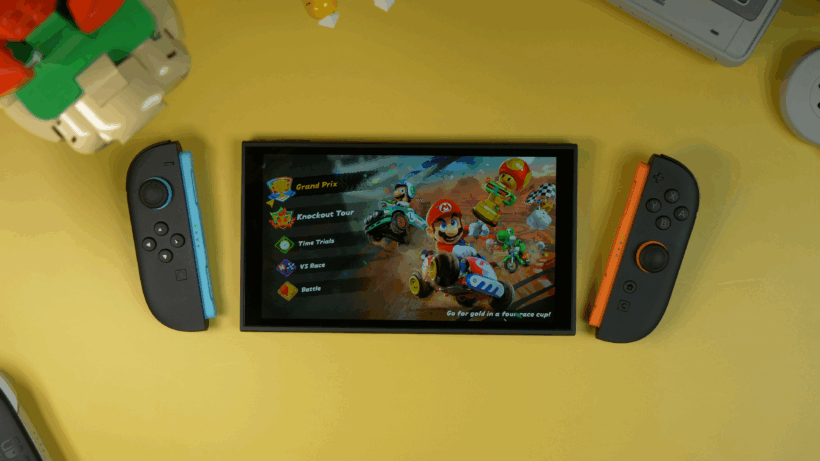
Nintendo Switch 2 - top down - controllers disconnected
Image Credit (Trusted Reviews)

Google confirmed during an earlier period that a YouTube application for the Switch 2 is in active development, though more than a year has passed since that acknowledgement without any further update on timing or availability, leaving the console without streaming video support that competing platforms have offered as standard for well over a decade.

The Switch 2 launched earlier this year to strong demand, with Nintendo reporting significant early sales figures, making the continued absence of a fully functional YouTube experience on the platform increasingly conspicuous among the broader library of missing media applications at this stage of the hardware cycle.

Google has not confirmed when a dedicated YouTube application will arrive on the Nintendo eShop, leaving Switch 2 owners reliant on workarounds for a feature the platform’s predecessor supported from relatively early in its own life cycle.


Source link

Leave a Reply

Subscribe to Our Newsletter

Get our latest articles delivered straight to your inbox. No spam, we promise.

Recent Reviews


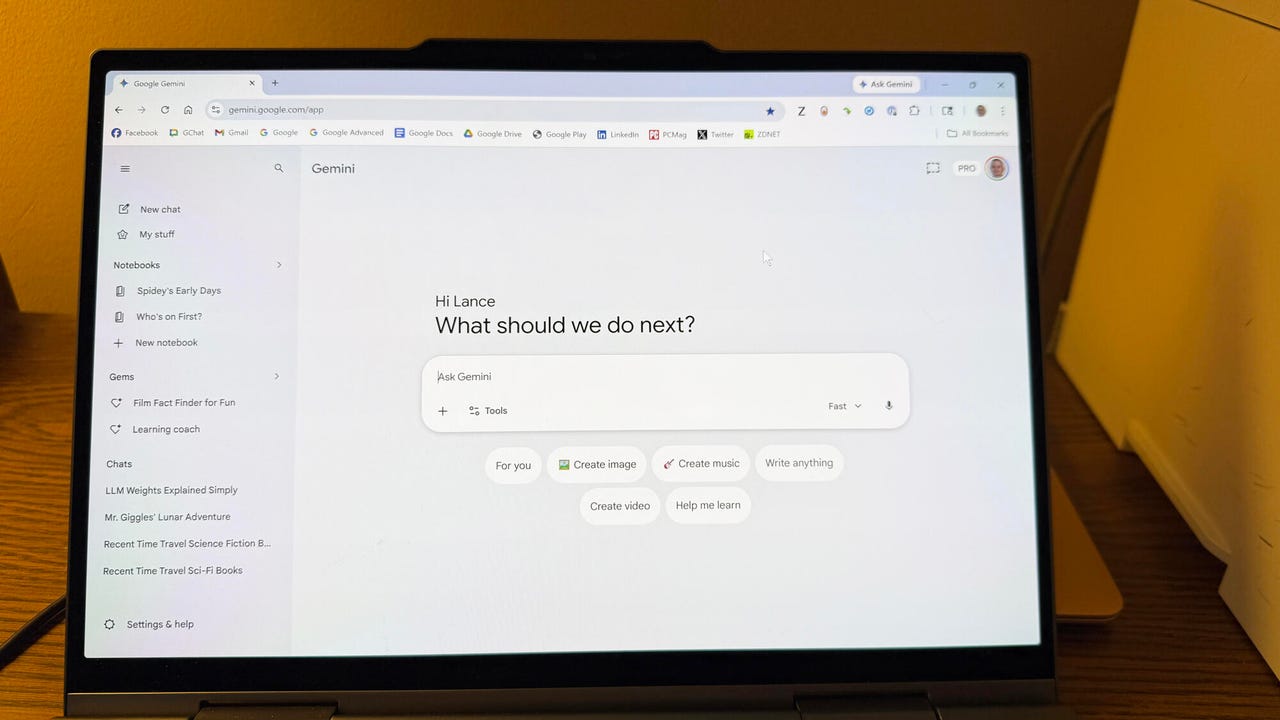
Google Gemini

Lance Whitney/ZDNET

Follow ZDNET: Add us as a preferred source on Google.


ZDNET’s key takeaways

  • Google is downloading a 4GB file to the PCs of many Chrome users.
  • The file is harmless and is used for the Gemini Nano on-device LLM.
  • You’ll see it if you’ve opted into the on-device AI setting in Chrome.

Google is silently saving a Chrome-related file to many computers. That’s nothing earth-shaking. But this file is a hefty 4GB in size, which has caught the attention of some Google watchers. What is the file, why is it being installed, and how can you check for it?

Also: I let Chrome’s AI agent shop, research, and email for me – here’s how it went

In a new blog post, computer scientist Alexander Hanff, aka the Privacy Guy, pulled back the curtain on this mysterious file. Named weights.bin, the file is being downloaded deep within the user data folder of many Chrome users. The file itself is related to Gemini Nano, which Google is using as the on-device AI model for Chrome users.

If you delete the file, it comes back

Though there’s nothing risky or dangerous about the file, Hanff and others have expressed concerns that it’s being downloaded without users’ knowledge or permission. And if you delete the file, it eventually comes back, Hanff said. That by itself is hardly alarming; that’s part of any software update. Rather, some of the criticism centers on the file’s size. If you have ample hard disk space, then 4GB is likely not a big deal. But if you’re running low, that big a file might chew up space you can’t spare.

Traditionally, AI models like Gemini use the cloud to interact with you. Submit a request, ask a question, or kick off a conversation, and the AI taps into its online data and resources to respond. But that method can be slow and naturally requires that you be connected. By traveling between your device and the cloud, your data can also be exposed.

A trend has emerged in which companies are experimenting with locally stored LLMs (large language models). That not only speeds up the process, but it also means you can use the AI offline and more securely. Gemini Nano has already been in play on Google’s own Pixel phones.

That explains why the file is so large; it has to pack in a lot of data. In this case, a weights file contains numbers that measure the level of importance an AI model assigns to your input. The AI uses these values to determine what should come next. For example, let’s say you start typing the phrase “Why did my new phone cost me an arm and a…” at the prompt. The AI assigns weights to your input to help it predict that the next word would be “leg.”

Also: This powerful Gemini setting made my AI results way more personal and accurate

How can you tell if the file has been downloaded to your PC? First, open Chrome, go to Settings, and select System. On the System screen, check whether the On-device AI option is turned on. If so, then you probably have the file or will soon get it.

To double-check, you’ll have to navigate to the user folder on your PC. That location varies based on your operating system. On my Windows 11 PC, I ran a search in File Explorer for weights.bin. The search took a long journey through the following path: C:\Users\lance\AppData\Local\Google\Chrome\User Data\OptGuideOnDeviceModel\2025.8.8.1141. At that final location, the weights.bin file appeared, measuring 4GB.

Since the file is downloaded again if you simply delete it, you’ll have to take an extra step to get rid of it permanently. After you delete the file, go back to Settings in Chrome and select System. Then  turn off the switch for On-device AI.

But as long as you have enough disk space (and if you can’t spare 4GB, then it’s time to clean up your drive), the file is little cause for concern. Just forget about it, especially if you’re keen to try on-device AI, and we’ll see what the future holds for Gemini Nano.


Source link