Follow ZDNET: Add us as a preferred source on Google.
ZDNET’s key takeaways
- Samsung’s Galaxy Watch may predict fainting episodes.
- False alarms and missed warnings remain concerns.
- More real-world testing is still needed.
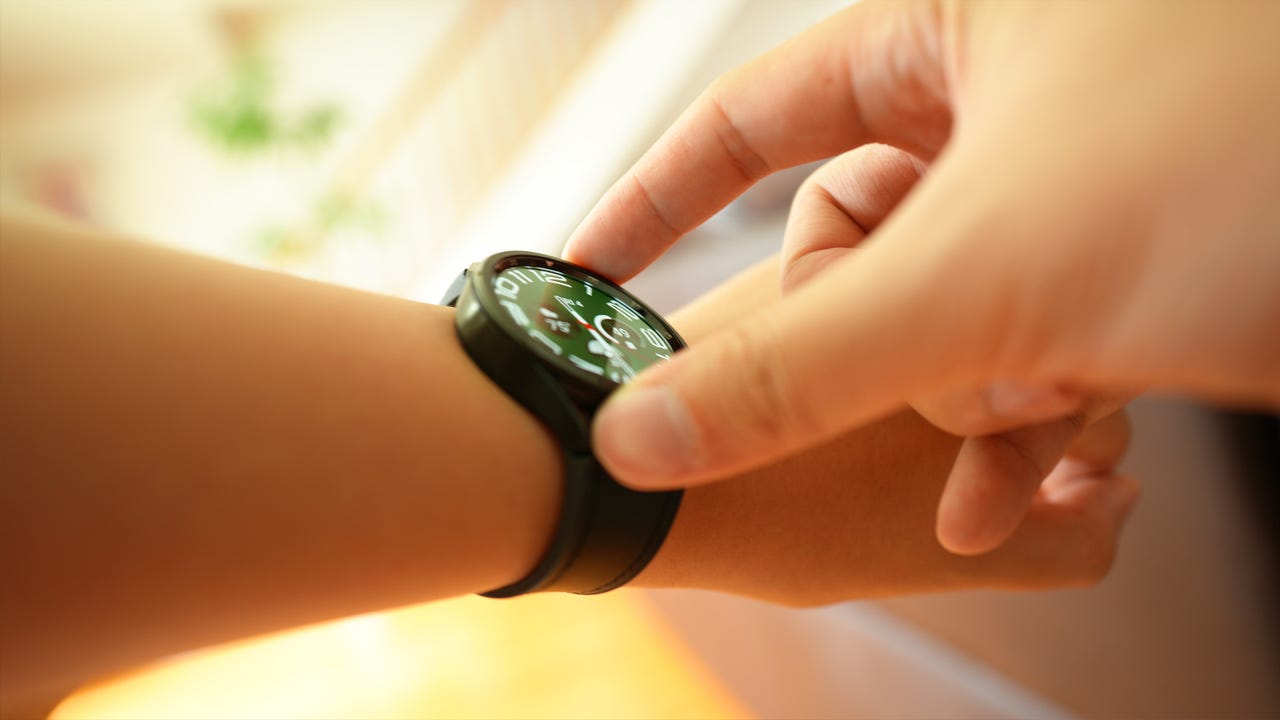
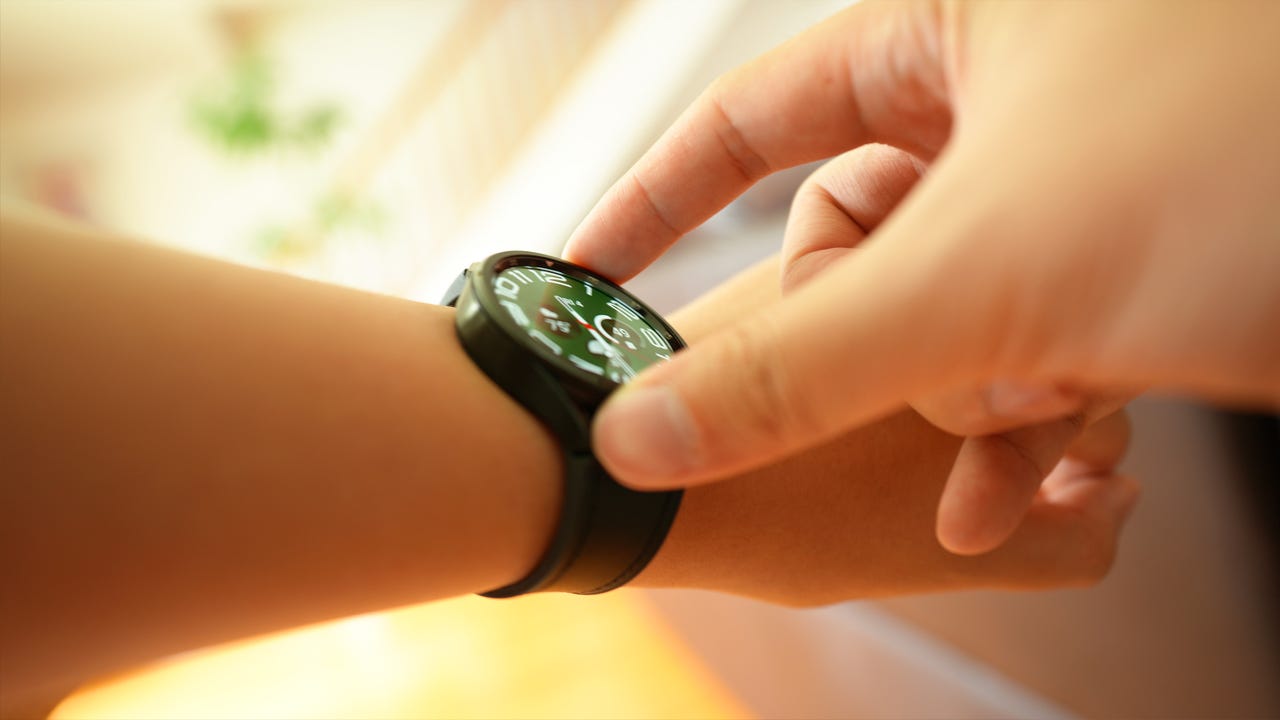
Samsung wants you to know its smartwatch can do more than count your steps, track your sleep, and guilt you for not moving enough. The company has announced its Galaxy Watch may be able to predict a fainting episode or blackout before it happens.
Samsung revealed this week that a joint clinical study with Chung-Ang University Gwangmyeong Hospital in Korea validated the Galaxy Watch 6’s ability to predict vasovagal syncope, or VVS. The study used the device’s photoplethysmography, or PPG, sensor to analyze heart rate variability data, then applied an AI algorithm to predict VVS during head-up tilt testing.
Also: You can still get a free Samsung Galaxy Watch 8 deal at T-Mobile
Samsung called the research the “world’s first study” to demonstrate the potential for a commercial smartwatch to provide early prediction of syncope. The findings were published in European Heart Journal – Digital Health.
Why early warnings matter
Vasovagal syncope is one of the most common types of fainting, with “up to 40% of people” experiencing it in their lifetime, according to Junhwan Cho, a professor in the department of cardiology at Chung-Ang University Gwangmyeong Hospital.
It happens when heart rate and blood pressure abruptly drop, often because of stress, dehydration, standing too long, or another trigger. The fainting itself is not life-threatening, but the resulting fall can lead to a concussion, fracture, or other injury.
Also: Google Pixel vs. Samsung Galaxy: There’s a clear winner
“The injuries from sudden falls can be very real,” Dr. Sam Setareh, director of cardiology and cardiovascular performance at Beverly Hills Cardiovascular and Longevity Institute told ZDNET. “Even a few minutes of warning could be meaningful: sit or lie down, hydrate, perform counterpressure maneuvers, or call for help. That could reduce falls, fractures, concussions, and other secondary injuries.”
This is where Samsung is positioning the Galaxy Watch and an early warning system as potentially making a difference.
The study and the results
According to Samsung, the joint research team, led by Cho, evaluated 132 patients with suspected VVS symptoms during induced fainting tests. Using heart rate variability data from Samsung’s watch, the AI model predicted fainting episodes up to five minutes before they happened with 84.6% accuracy. Samsung also said the model reached 90% sensitivity and 64% specificity.
Also: I use this 30-second routine to fix sluggish Samsung smartwatches
Sensitivity refers to how often the system correctly catches true fainting events, while specificity is how often it correctly avoids false alarms. Looking at the numbers, there could still be a significant number of alerts generated when a person is not about to faint.
False positives
Dr. Brett A. Sealove, chair of cardiology at Hackensack Meridian Jersey Shore University Medical Center and vice chair of cardiology at Hackensack Meridian School of Medicine, said the 64% specificity is one of the study’s biggest limitations.
“In a controlled tilt-table lab, that may be acceptable,” he said, but in the real world, where millions of watch users are moving through daily life, “that false-positive rate could generate an enormous volume of unnecessary alerts.”
Setareh also cautioned that the study was done in a controlled tilt-table lab, with researchers observing patients in a setting designed to provoke symptoms, not in a broad real-world consumer setting with users going about normal life. Everyday factors such as “motion artifact, hydration status, posture, medications, sleep, alcohol, anxiety, and other variables” can affect signals, he said.
He added: “Too many false positives can create anxiety, alarm fatigue, and unnecessary medical evaluations.”
Also: Samsung’s Galaxy Watch 8 got me off my couch and running again
Sealove noted the study population was also highly specific. Every participant was undergoing a “deliberately provocative laboratory procedure designed to induce syncope (or the blackout event),” he said. The participants also had suspected neurally mediated syncope, which means the findings do not show how the algorithm would perform in someone without that history.
“The study tells us nothing about how this algorithm would perform in someone who has never had a tilt-table test, who has no documented history of vasovagal syncope, or who is simply going about their daily life,” Sealove said.
False reassurance
False reassurance is another risk, warned Dr. Rab Nawaz Khan, a board-certified neurologist at MyMigraineTeam, a San Francisco-based health startup. “If a watch does not warn someone, that does not mean they are safe,” he said. “People with fainting linked to chest pain, palpitations, seizure-like activity, neurologic symptoms, injury, or exertion still need medical evaluation.”
Also: Best Android smartwatches of 2026
In other words, someone should not assume everything is fine, or shrug off recurrent fainting, just because their watch did not buzz.
“A normal smartwatch reading should not make someone ignore recurrent syncope, chest pain, palpitations, exertional symptoms, or neurologic symptoms,” Dr. Setareh agreed.
Not a replacement for medical evaluation
For now, the most realistic role for this kind of smartwatch feature appears to be as an extra warning layer for people already known to have recurrent vasovagal syncope. In that scenario, a few minutes of warning could be enough time for someone to sit down, lie down, call for help, or move away from stairs, traffic, or another unsafe place.
But it needs to be accurate enough to help without creating panic, a false sense of safety, or causing people to ignore alerts. It should also work alongside medical care, not instead of it. The important part of the study, according to Setareh, is not that Samsung’s watch diagnosed fainting like a doctor would. It’s that it may be picking up a physiological pattern before an event.
Also: I tracked 3,000 steps on my Apple Watch, Google Pixel, and Oura Ring
“Consumer smartwatches are absolutely becoming legitimate preventive health tools, but they are not yet replacements for medical evaluation,” he said. “Their best role is as an early-warning and risk-awareness layer.”
Khan shared a similar sentiment. “My view is that consumer smartwatches are becoming legitimate health-support tools, but they are not diagnostic replacements for clinicians,” he said.
Sealove said the Samsung study is still notable because it used a commercial smartwatch rather than a medical-grade device, going as far as to call it a “meaningful milestone.” Nevertheless, he warned that while wearables are useful for collecting physiological data, most are not ready to diagnose conditions or suggest treatment.
More studies needed
Sealove reiterated that Samsung’s study does not yet validate the Galaxy Watch as a preventive tool for the general population.
Predicting a fainting episode during a controlled tilt-table test is one thing. Predicting one while someone is cooking breakfast, standing on a crowded platform, walking outdoors in the heat, or getting up during the night is a much harder challenge.
“The leap from ‘this works during induced syncope in a care lab’ to ‘this will protect my grandmother in her kitchen’ is enormous, and that gap can only be closed by larger, multicenter, real-world ambulatory trials,” he said.
Also: Health is Tim Cook’s defining legacy – and your Apple Watch proves it
Both Setareh and Khan also suggested that the next step is real-world validation.
New studies should answer practical questions: Does the feature work when people are walking, overheated and sweating, not sleeping well, drinking alcohol, taking prescriptions, or wearing the watch loosely? Does it perform equally well across ages, skin tones, and health ailments? And do alerts actually prevent injuries, or do they create noise? Only more data can provide answers.
“Larger, multicenter studies across different populations, devices, skin tones, activity levels, and spontaneous fainting episodes” are needed, Setareh said. “We also need to know whether alerts actually reduce injuries.”
“If validated in larger real-world studies,” Khan said, “this type of technology could become a useful preventive tool for people with recurrent vasovagal syncope.”
Coming soon? Not so fast
Samsung didn’t report how it plans to use the results of this study. It only said the study demonstrates the “potential for early fainting detection” using the Galaxy Watch and that it paves the way for real-time warning systems.
Currently, there is no timeline for rolling out a fainting detection feature to the broader public.