
Depreciation is an unavoidable part of owning a car. Some major brands hold their value better than others, sure, but overall, there’s really no way to avoid losing money — in a sense — on your shiny new car after it leaves the dealer’s forecourt. Of course, this can be a good thing, too, as it ensures that those of you on the hunt for a used car may be able to score a good deal if prices dip low enough.
Unlike common specs such as horsepower, torque, or cargo room, there is generally no precise way to predict how well (or badly) a car or truck will hold its value. Thus, being aware of historical trends is very important, whether you’re trying to ensure that you can get as much money back when it comes time to sell or are seeking the best bang for your buck on the used market. To that end, let’s look at five vehicles that have especially bad resale value after five years.
We based this list primarily on data from CarEdge, which calculates its numbers based on an average yearly mileage of 13,500 miles. We selected the five worst-performing vehicles in the outlet’s rankings, based on how well they retain value. It’s important to note that CarEdge ranks vehicle depreciation based on the percentage of value lost, not the dollar value. To make sure that CarEdge’s estimates aren’t too out of line, we’ve also drawn on data from other trusted outlets such as Kelley Blue Book and Edmunds.
Nissan Titan XD
Many popular trucks tend to hold their value quite well, including big names like the Ford F-150, Chevy Silverado, and Toyota Tacoma. The latter, especially, is well known for holding its value exceedingly well, besting even the Toyota Tundra in terms of long-term value. Not all pickups (and their owners) are so lucky, however.
Nissan’s Titan XD, which Nissan discontinued in 2024 alongside its smaller sibling, the standard Titan, has the worst depreciation of all modern, mainstream pickup trucks, at least according to CarEdge. The site’s data suggests that a 2021 Titan XD only retains 36.2% of its original value after five years. Based on an estimated selling price of around $65,127 — which would equate to a top-tier 2021 Titan XD Platinum — that means that a Titan XD is only worth roughly $23,589 after five years, according to CarEdge. The biggest drop would have been in the truck’s first year, with a 15% reduction in value over those 12 months.
Kelley Blue Book has a similarly dim view of the Titan XD’s value on the used market. Its estimates peg a five-year-old Titan XD as being worth just $22,400 or so, with a 33% drop in value since 2023 alone. Curiously, however, the outlet’s data shows that used prices actually climbed slightly in 2026: That $22,400 sale price, however depressing for a Titan XD owner, represents a $595 increase from the $21,805 that a Titan XD should have sold for in 2025.
Chrysler Voyager
Are minivans cool? Some might say they can be, as evidenced by products like the ultra-sleek Hyundai Staria and cooler-than-you-think 1990s minivans like the Toyota Previa. No matter how generously you define “cool,” however, the Chrysler Voyager likely won’t make the list. They seem to be dependable vehicles, sure, and owners put a lot of miles on them — the Voyager was the second-most-driven car in 2025 — but it’s certainly not very appealing.
Nor, as it turns out, is it a vehicle that retains its value, with CarEdge having a 2021 Voyager down as losing 64% of its value over five years. Taking a new price of $41,990, that drop means that a five-year-old Voyager will only be worth $15,129. The major issue here is how badly the minivan depreciates during the first year of ownership: CarEdge indicates that the Voyager loses a massive 31.08% of its value after that period. The year-on-year drops aren’t nearly as bad after that, admittedly, but that terrible first year is hard to ignore.
Edmunds’ data paints an even worse picture. It estimates that a 2021 Voyager LX with no options will only be worth $6,445 in 2026. Compared to the $30,045 MSRP (excluding destination) it had when new, that makes for a residual value of just 21% — and we’re not even counting any extra destination fees or the pains of inflation. Good news for those who need a really cheap minivan, but bad news for anyone who actually owns one.
Nissan Leaf
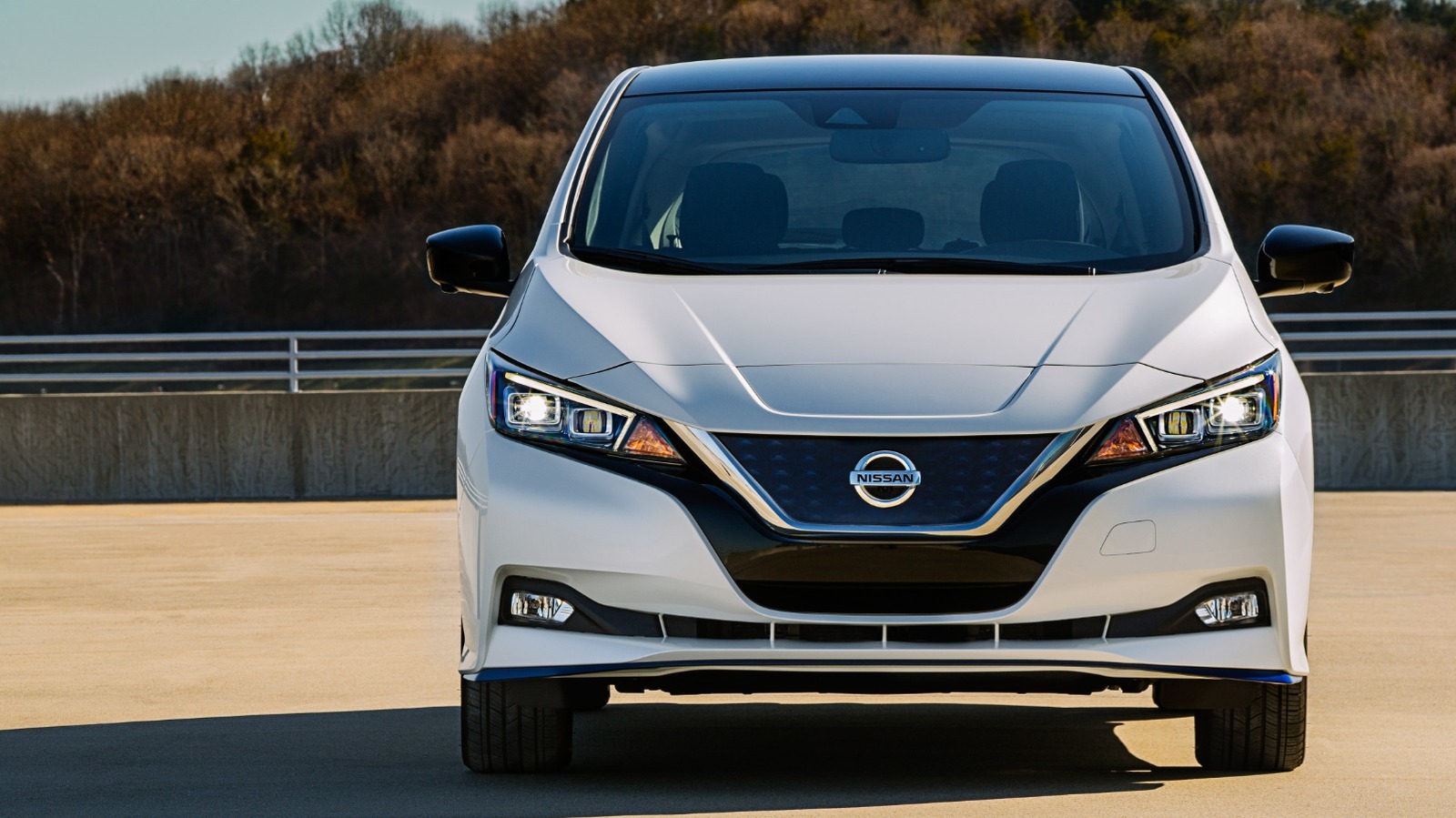
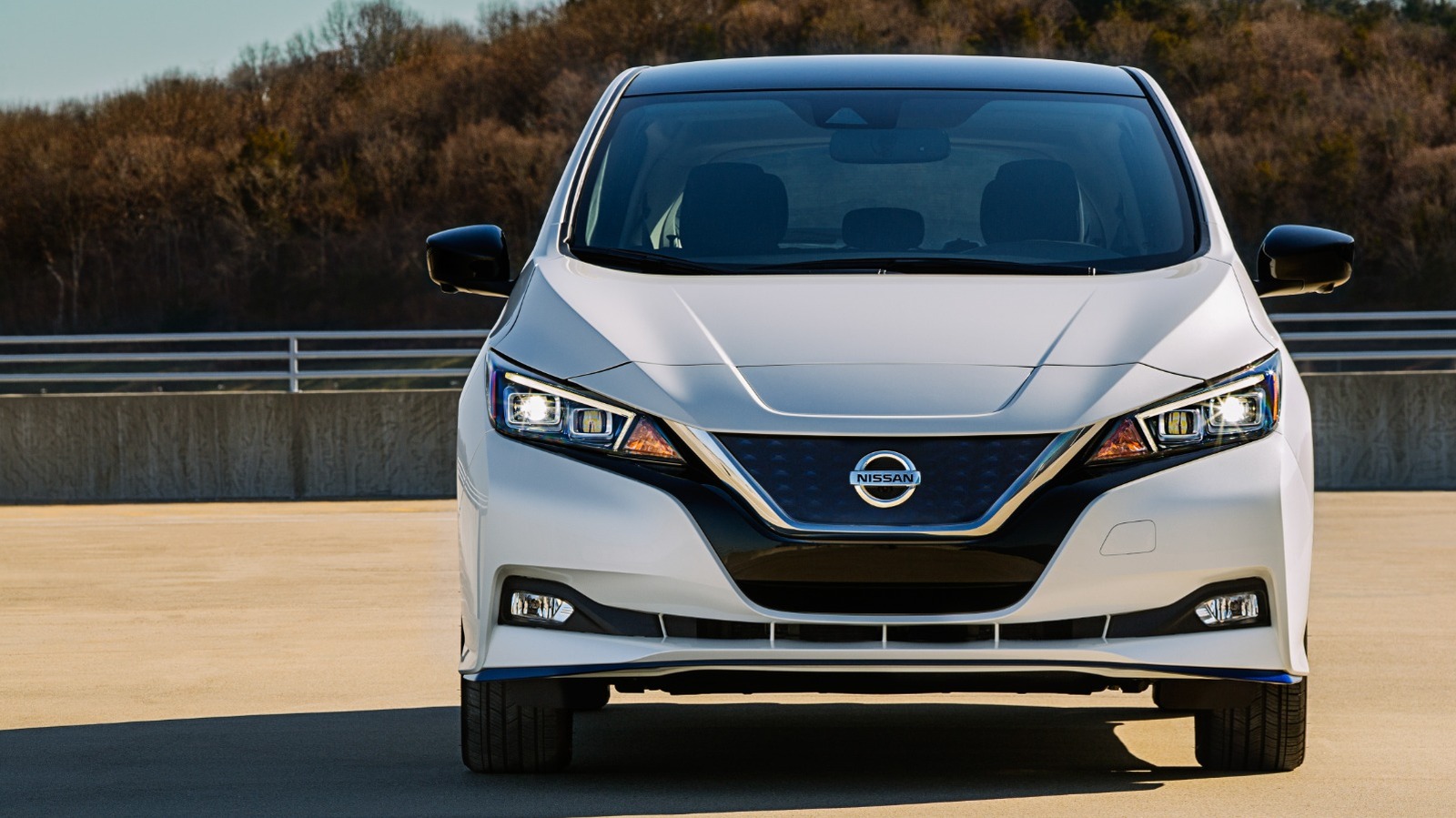
The Nissan Leaf is something of an example of how first isn’t always best. It arguably kickstarted the EV revolution, proving to the world that an all-electric powertrain was indeed viable, but the base model Leaf’s poor range compared to other EVs has always held the compact EV back. The new third-generation Leaf has the potential to change things, but that’s a conversation for a different time and place. For now, let’s look at what the Leaf’s so-so reputation equates to in terms of depreciation.
The situation is, to put it bluntly, not good. A 2021 Leaf only retains 34.2% of its value after five years, according to CarEdge, making it the worst of all the mainstream EVs on the market. Sure, EV resale values have historically been quite low compared to gasoline cars, and other all-electric cars like the Honda Prologue and Nissan Ariya also perform poorly here according to CarEdge, but the Leaf still earns the unenviable accolade of being the only EV bad enough to make it onto this list.
On the upside, the 2021 Leaf’s relatively low price means that an owner won’t have lost quite as much in terms of raw dollar value. CarEdge expects a five-year-old Leaf to be worth $11,748, which is not as bad a drop — from the assumed brand-new price of $34,311 — as the percentages might indicate. Sure, that still works out to about $22,500 or so, but as the other entries on this list prove, it could be a lot worse.
Nissan Armada
The Armada is Nissan’s premier, full-size SUV, capable of carrying eight passengers across all sorts of terrain in quite a bit of luxury. The 2021 version was, by most accounts, a good SUV, but while it earned plaudits for its comfortable ride, smoothness, and brisk powertrain, the years have not been very kind to the SUV — at least, when it comes to value on the used market.
CarEdge’s analysis shows that a five-year-old Armada will have depreciated by 66.2%, making for a residual value of just 33.8%. That 33.8% equates to a five-year resale price of just $24,497, which will likely be a bit of a punch in the gut for any Armada owner. That said, CarEdge’s assumed new selling price of $73,721 does seem a bit high to us; even a 2021 Armada Platinum 4×4, the most expensive trim for that model year, only had a $68,300 MSRP (before $1,495 destination), but we wouldn’t be surprised if CarEdge has actual transaction data to draw on.
If you were hoping that other outlets’ data would offer some solace, though, we’re sorry to have to disappoint. Kelley Blue Book‘s figures are a bit better than CarEdge, but they’re still not great. The cheapest Armada S, for example, is valued at $21,300, while the Platinum comes in at $30,000. Not quite the 66.2% drop that CarEdge estimates, admittedly, but it’s not very reassuring news for owners, regardless.
Toyota Mirai
Buying a hydrogen fuel cell vehicle like the Mirai may earn you plenty of ecological brownie points, but it certainly doesn’t entitle you to good resale value on your purchase. Used Toyota Mirais are known for being extremely cheap, with issues such as the cost of unsubsidized hydrogen and limited fueling infrastructure combining to keep used prices low.
How low, you ask? Well, according to CarEdge, a 2021 Toyota Mirai will only be worth 15.6% of its new MSRP after five years. That’s a massive 84.4% drop, which is likely going to be hard for a car to equal any time soon (if ever). The 2021 Mirai’s two trim levels — XLE and Limited — cost $49,500 and $66,000, respectively, when new, so you’re looking at sub-$10,000 prices for one five years on.
CarEdge, for example, says that a five-year-old Mirai is worth $9,981 (based on an assumed new price of $64,019). But it gets worse: Kelley Blue Book’s data shows that the Mirai has depreciated 74% over just three years since 2023, and its estimated prices are even lower than CarEdge’s. The Mirai XLE has a resale value of just $6,975, according to KBB. The Limited’s significantly higher MSRP doesn’t count for much, either, with an estimated resale value of just $8,950. This level of depreciation definitely isn’t what commentators have in mind when they discuss the cost of going green, but maybe it should be.

Stephan is the sports journalist for the Maple Grove Report.