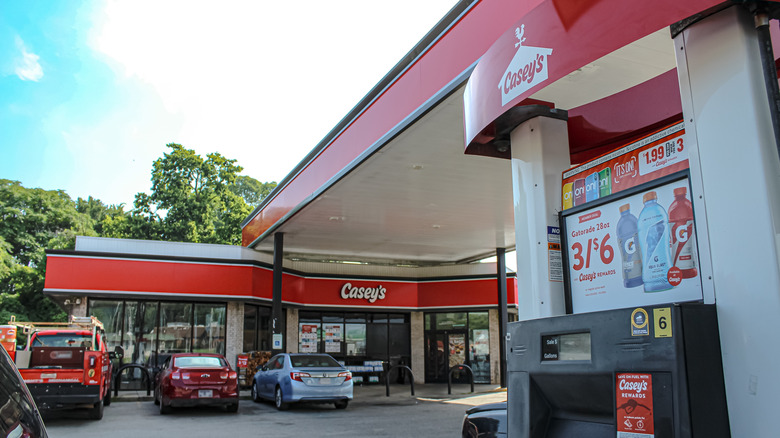

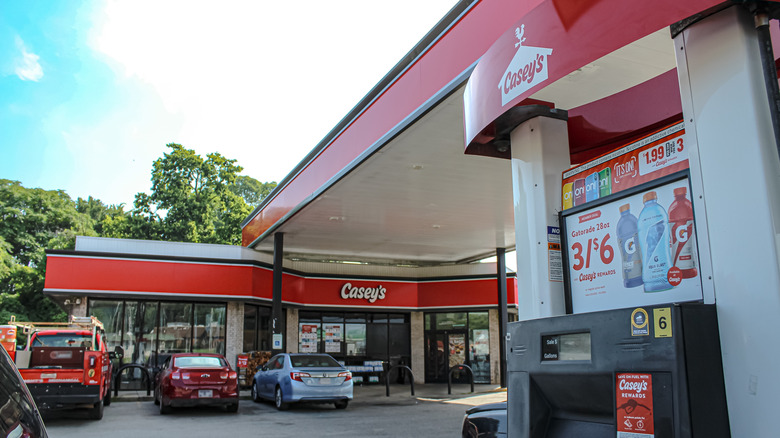
With stores dotted throughout the Midwest and beyond, the Casey’s General Stores logo is an instantly recognizable one to many drivers. Its gas stations are known for their competitive pricing, and that’s no accident. Speaking to Retail Merchandiser Magazine, Casey’s Senior Vice President and CFO Bill Walljasper said the company aims “to identify who we believe our competition is and price accordingly with them,” rather than basing prices on how much it costs the company to source fuel. He noted that “fuel has the lowest gross profit for our company,” and that incentivizing customers to buy food in-store was the main way the company makes money.
But who exactly is benefiting from the company’s profits? The answer is primarily investors in mutual funds and ETFs that own Casey’s stock. According to Investing.com, around 53% of the company’s ownership is shared between various mutual funds and ETFs, many of which are managed by industry giants like Vanguard and BlackRock (with the latter managing its stake via its iShares division).
Vanguard and BlackRock also own significant stakes as institutional investors, alongside various other investment management companies. You’ll find the same names holding ownership stakes in many of the world’s biggest tech companies on behalf of their clients. Public companies and retail investors account for just over 10% of Casey’s total ownership.
The Norwegian government owns a small stake in Casey’s, and you might, too
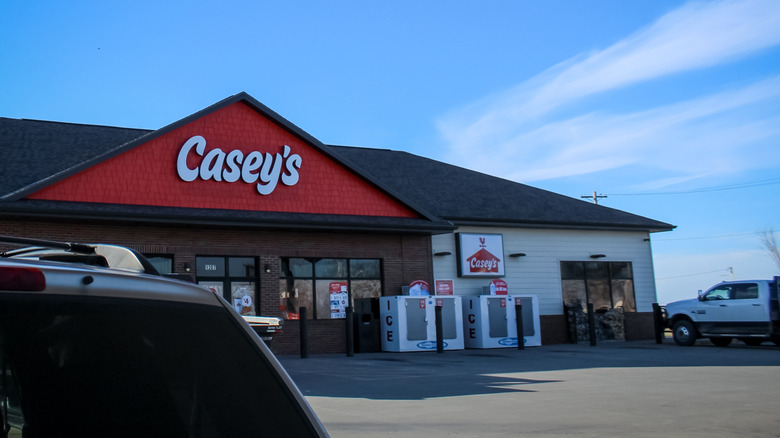
Alongside the usual slew of big asset management companies, one of the more notable funds that holds a minority stake in Casey’s is the Government Pension Fund Global. It’s a fund that’s owned and managed by the government of Norway via the country’s central bank, and was set up to invest the profits generated by its oil and gas reserves. At the time of writing, the fund owns around 1.3% of Casey’s stock. It also holds minority stakes in a huge variety of other U.S. companies, from Amazon and Meta to the Valero chain of gas stations.
In April 2026, Casey’s General Stores was added to the S&P 500, and so if you hold a stake in an S&P 500 index fund through personal investment or a pension, you might also hold a very small stake in Casey’s without realizing it. You might also find that a new Casey’s opens up near you soon, particularly if you live in an area with a small population. The company acquired 235 existing stores and opened 35 new ones in 2025 alone. Two-thirds of its current locations can be found in areas with 20,000 residents or less.
Although its gas stations won’t be going anywhere anytime soon, Casey’s is also planning to install a network of EV fast chargers at some of its locations in partnership with IONNA. The name might not be familiar, but IONNA is supported by several of the industry’s largest automakers, including Stellantis, General Motors, and Hyundai, among others.

Stephan is the sports journalist for the Maple Grove Report.