Android Owners: You Could Get Part of Google’s $135 Million Data Settlement


For years, Google has been accused of harvesting data from Android phones without users’ consent. Following a California lawsuit that was settled for $314 million last year, a new settlement could mean payouts for another 100 million people.

A class action lawsuit alleging “Google caused Android mobile devices to transfer a variety of information to Google without users’ permission, consuming users’ cellular data,” is nearing its end. The two sides in Taylor v. Google LLC (PDF) have agreed to a settlement and have begun resolving it. 

Without admitting fault, Google agreed to a preliminary settlement in January, committing to pay $135 million in damages. The settlement website is now live. 

The final approval hearing won’t occur until June 23, when the court will hear objections and consider whether Google’s settlement is fair. After that, the court will decide whether to approve the $135 million settlement. 

In the meantime, if you qualify and want to be paid as part of the settlement, you can select your preferred payment method on the official website. There, you can find information on speaking at the June 23 court hearing and on how to exclude yourself or write to the court to object by May 29.

As part of the settlement, Google will update its Google Play terms of service to clarify that certain data transfers do occur passively even when you’re not using your Android device, and that cellular data may be relied upon when not connected to Wi-Fi. This can’t always be disabled, but users will be asked to consent to it when setting up their device. 

Google will also fully stop collecting data when its “allow background data usage” option is toggled off. 

Who can be part of the Google data settlement?

In order to join the Taylor v. Google LLC settlement, you must meet four qualifications:

  1. Be a living, individual human being in the US.
  2. Have used an Android mobile device with a cellular data plan.
  3. Have used the aforementioned device at any time from Nov. 12, 2017, to the date when the settlement receives final approval.
  4. You’re not a class member in the Csupo v. Google LLC lawsuit, which is similar but specifically for California residents.

To set your payment information on the official settlement website, you’ll need a Notice ID and Confirmation Code, which the settlement administrators mailed or emailed to eligible claimants.

The final approval hearing is on June 23, so you can add your payment method until then. The hearing’s date and time may change, and any updates will be posted on the settlement website. 

a screenshot of the Payment Election page on the Joseph Taylor, et al., v. Google LLC class-action lawsuit settlement website. It reads, "If you received a personalized notice in the mail or via email with a Notice ID and Confirmation Code, please enter the codes you were provided below.  Please remember to enter the full Notice ID exactly as it appears on your personalized Notice, (i.e. 12345678)." with two fields below for Notice ID and Confirmation Code

To set your payment method, you’ll need a Notice ID and Confirmation Code from a settlement notification email or letter.

Screenshot by Peter Butler/CNET

If you choose to do nothing and are eligible, you will still be issued a settlement payment, but not selecting a payment method might increase your risk of not getting paid.

Even if you didn’t receive a notification letter or email, you still might be eligible for a payout from Google. To find out, you can call the toll-free information number at 1-844-655-4255 or email info@FederalCellularClassAction.com. You can also mail a letter requesting more information to: Federal Cellular Class Action, 1650 Arch Street, Suite 2210, Philadelphia, PA 19103. 

Watch this: Your Phone is Disgusting: Let’s Fix That

How much could I get paid by Google?

It’s not currently known exactly how much each settlement class member will receive, but the maximum is $100. Payments will be distributed after final court approval and after the resolution of any appeals.

After all administrative, tax and attorney costs are paid, the settlement administrator will attempt to pay each member an equal amount. If any funds remain after payments are sent, and it’s economically feasible, they will be redistributed to members who were previously and successfully paid. If it’s not economically feasible, the funds will go to an organization approved by the court.


Source link

Leave a Reply

Subscribe to Our Newsletter

Get our latest articles delivered straight to your inbox. No spam, we promise.

Recent Reviews


Many couples reach a point, often quietly, when travel shifts from collecting destinations to focusing on how a place truly feels.

You still want adventure. You still want to be surprised. But you’re no longer interested in jockeying for position at a viewpoint, setting alarms to beat tour buses, or sharing what was supposed to be a quiet, meaningful moment with a sea of strangers holding up phones.

What you want now is space.

You want space to hike without hearing other people’s conversations, to sit together and watch the weather change, and to feel like the experience is truly yours—not just another item on a checklist.

The good news is these trips still exist. Often, they’re the most rewarding, even if they aren’t always easy to find.

Alaska: Where the Wild Still Sets the Schedule

Root Glacier near McCarthy Ak
Photo Credit: Jenn Coleman.

Alaska quickly changes your expectations. Everything feels bigger, quieter, and it’s impossible not to feel like a small part of something much larger.

For couples who want both adventure and calm, Alaska offers something special. Days follow the weather, wildlife, and light instead of strict plans. You might plan a hike but end up quietly watching a bear by the water. Or you might expect a simple drive and find yourself stopping again and again, amazed by the views.

Places like Wrangell–St. Elias National Park make this clear. As the largest national park in the U.S., its emptiness feels humbling. You can explore for hours without seeing anyone else. In that solitude, conversations slow, your senses sharpen, and daily worries fade away.

For couples, Alaska isn’t about conquering the land. It’s about sharing it—standing together on a glacier, paddling on calm waters, or noticing you haven’t checked your phone in days. It’s wild, but also grounding.

Winter Cities: When Familiar Places Feel Intimate Again

Christmas night in Quebec City
Photo Credit: Deposit Photos.

Cities in winter tell a different story.

As temperatures fall and days get shorter, crowds disappear, leaving behind a more genuine version of the city. Streets are quieter, restaurants feel cozier, and experiences become more meaningful.

Winter cities encourage couples to slow down. Instead of hurrying from place to place, you linger. You take long walks together and relax over coffee or wine, with no rush to be anywhere else.

Places like Quebec City, Scandinavian capitals, and alpine towns are especially beautiful in winter. Snow softens the scenery and quiets the noise. Even famous landmarks feel personal when you aren’t surrounded by tour groups.

Adventure is still here, just in a different form. You might go snowshoeing outside the city, skate on natural ice, or step out late at night to look for the northern lights. These moments feel special and stay with you long after the trip.

Small-Ship Cruising: Big Landscapes Without the Chaos

UnCruise ship Takatz Bay Alaska
Photo Credit: Jenn Coleman.

For couples who want immersive travel without constant packing and unpacking, small-ship cruising can be a revelation.

This isn’t the typical cruise. There are no crowds, no lines, and no forced entertainment. Days are about exploring—kayaking, hiking, or watching wildlife. Evenings are quiet, often spent talking with other travelers who came for the same reasons.

Small-ship companies such as Uncruise go where larger ships can’t, reaching narrow fjords, remote coasts, and less-visited ports. The pace is relaxed, not rushed. If whales show up, the plan changes. If the light is beautiful, you stay longer.

For couples, sharing these moments without distractions is deeply satisfying. You’re present, together, and fully involved, without having to manage every detail.

National Parks That Reward Going Off the Beaten Path

Wind Canyon Theodore Roosevelt National Park South Unit North Dakota
Photo Credit: Jenn Coleman.

National parks are known for adventure, but the number of visitors can change a lot depending on where and when you visit.

The most popular parks get crowded, especially during peak times. But couples who look beyond the usual spots often find parks that are just as impressive, with much more space.

Less-visited parks give you room to wander, think, and talk. Trails feel welcoming, not crowded. Overlooks feel like rewards, not competitions. Even famous parks can feel different in the off-season or winter, when fewer people visit.

In these places, couples can hike at their own pace, pick trails that interest them, and finish the day feeling relaxed instead of overwhelmed.

Remote Mountain Towns: Adventure Without an Audience

Historic steam engine train travels from Durango to Silverton through the San Juan Mountains along the Animas River in Colorado, USA.
Photo Credit: Deposit Photos.

Some of the best trips happen in places that aren’t trying to impress anyone.

Remote mountain towns attract people who come for the experience, not just for photos. The atmosphere is calm and grounded. Mornings are spent outdoors, and evenings are slow and relaxed.

In these towns, adventure is part of the landscape, not something packaged for tourists. You might hike right from where you’re staying, bike along quiet roads, or sit by a river with no plans at all.

Since these places aren’t in the spotlight, interactions feel more real. Locals take time to chat, guides tell real stories, and couples feel like they’re seeing the place as it truly is.

Why Crowd-Free Adventure Feels More Romantic

Two hikers on top of the mountain enjoying sunrise over the tropical valley
Photo Credit: Deposit Photos.

Romance doesn’t always make a big entrance.

Sometimes it’s found in a quiet moment together, a long drive without cell service, or standing side by side in a place so vast it changes your perspective.

When the crowds are gone, distractions fade too. There’s no pressure to rush or record every moment. Conversations deepen, choices get easier, and the experience feels personal instead of staged.

For couples, this change is meaningful. Adventure becomes something you share, not something you hurry to capture before someone else does.

Choosing Trips That Fit Who You Are Now

Downstream at Kakabeka Falls Provincial Park Thunder Bay Ontario Canada
Photo Credit: Jenn Coleman.

The best trips for couples who want adventure without crowds usually require a small mindset shift.

Instead of asking where everyone else is going, it helps to ask where you’ll feel most at ease, most curious, most connected. That might mean traveling off-season, choosing a smaller ship, or skipping the most famous destination in favor of one that offers space.

These trips don’t always make the loudest impressions online. But they tend to leave the deepest ones.

Final Thoughts: Adventure That Leaves Room for Two

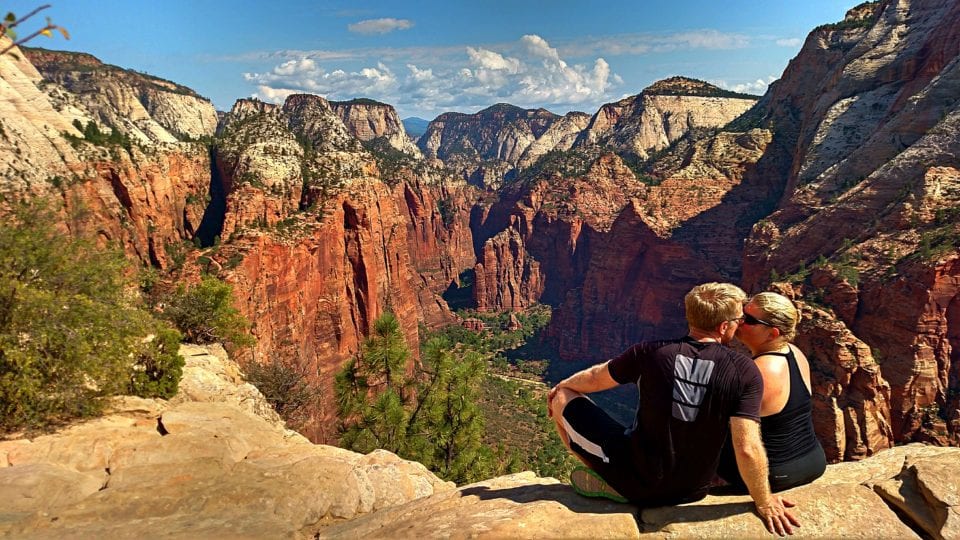
Jenn and Ed Top of Angels Landing via @habitat9travels
Photo Credit: Becca Eve Young.

As couples evolve, the way they travel evolves with them.

The desire for adventure doesn’t fade—it becomes more intentional. What falls away is the tolerance for chaos, crowds, and experiences that feel more like performances than memories.

The best trips now are the ones that offer space: space to explore, space to breathe, space to reconnect. Whether it’s Alaska’s raw wilderness, a winter city wrapped in snow, a quiet national park, or a small ship tracing remote coastlines, these journeys share one thing in common.

They leave room for the two of you.

And in a world that rarely slows down, that may be the most meaningful adventure of all.


Hi! We are Jenn and Ed Coleman aka Coleman Concierge. In a nutshell, we are a Huntsville-based Gen X couple sharing our stories of amazing adventures through activity-driven transformational and experiential travel.


Source link