
Follow ZDNET: Add us as a preferred source on Google.
ZDNET’s key takeaways
- Headphone use at too high a volume for too long can damage your hearing.
- Once your inner ear is damaged, the damage is permanent.
- Your headphones and smartphone have features to protect your hearing health.
Preserving your hearing is an important aspect of maintaining overall health, including cognitive health. According to a 2020 Lancet commission report, hearing impairment is one of 12 modifiable risks for developing dementia. This concern becomes more prevalent as headphones and earbuds are constantly in and around our ears.
Also: Do yourself a favor and clean your earbuds right now (before this common problem hits)
Hearing health experts recommend the 60-60 rule for listening with headphones, and as someone who’s always wearing headphones or earbuds, I generally follow that guidance. Here’s what to know about it and how your devices can help you abide by it.
What is the 60-60 rule?
The 60-60 rule asserts that you shouldn’t listen to music at a volume louder than 60% of maximum for more than 60 minutes at a time. Listening to your headphones at a safe volume is paramount to preserving your hearing. According to the National Institute on Deafness and Other Communication Disorders, noises at or above 85 dBA, about the sound of a gas-powered push lawnmower, can damage your hearing.
Here’s how the damage happens: Inside your ear is the cochlea, a small spiral-shaped organ that converts sound vibrations into electrical impulses for your brain to interpret as sound. You have thousands of hair cells on and around your cochlea that use their sensing organelles to detect, convert, sharpen, and amplify sounds. Excessive volume can damage or destroy these hairs, and they cannot regenerate. Once they’re damaged, it’s permanent.
Your devices can help you stay aware
Several headphones and earbuds include a setting in their companion app that can notify you when you’ve been listening too loudly for too long. Some headphones might also automatically reduce volume if you’ve been listening too loudly.
It’s important to protect your hearing at loud sporting or music events, but it’s also more common to wear hearing protection at these events and attend them infrequently. Experts warn that constant exposure to loud noise from frequent headphone use can lead to more intense hearing loss at a younger age.
Also: I tracked 3,000 steps on my Apple Watch, Google Pixel, and Oura Ring – this one was most accurate
Google Pixel, Samsung Galaxy, and Apple iPhones all have hearing health features in their respective health apps. You’ll get the most robust hearing health awareness when pairing each manufacturer’s headphones with their respective smartphone.
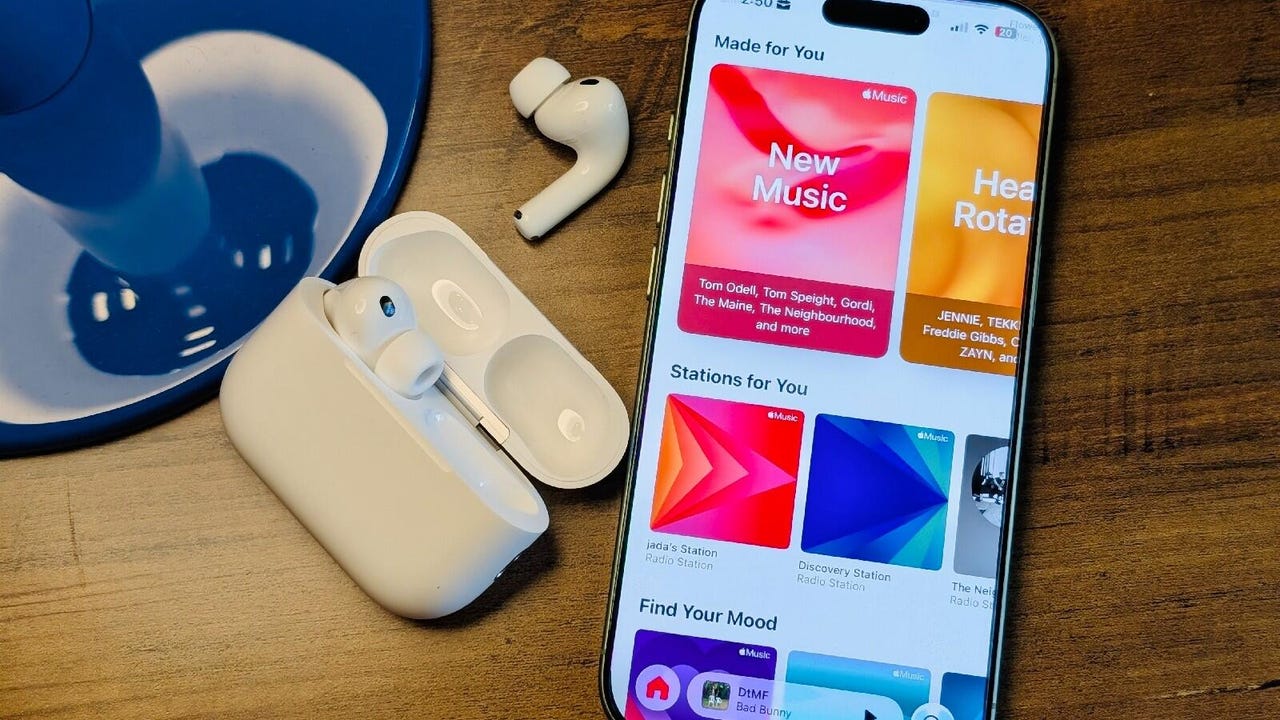
For example, your iPhone can track headphone audio levels and record levels for every pair of headphones you’ve connected to it, though I notice the most accurate recordings when I use my AirPods.
If you also wear an Apple Watch, it can record environmental sound levels and notify you when your surroundings are concerningly loud. I receive this notification every time I attend an Atlanta Falcons game, with my Watch recording a peak of 114 dBA. A mere 15 minutes at this noise level can damage your hearing.
Can noise cancellation help?
Hearing health experts assert that active noise cancellation (ANC) in headphones and earbuds should not be a substitute for traditional, well-studied hearing protection methods, such as earplugs or earmuffs. ANC definitely shouldn’t be a replacement for hearing protection if you work in a factory, construction site, or any other loud environment.
However, in everyday situations, ANC can reduce your environment’s loudness, discouraging you from maxing out your headphones’ volume, which is key. A 2022 study in the Journal of Audiology and Otology found that using headphones, especially in-ear earbuds, in noisy environments can reduce excessive recreational noise exposure.
Also: I’ve tested dozens of Sony headphones – these 4 tweaks get me the best sound quality
My own best real-world example is the gym. On a Saturday afternoon, my gym is packed. My Apple Watch recorded the gym’s environmental sound level at 104 dBA during my most recent workout.
At the same time, my AirPods’ noise cancellation provided 27 dBA of environmental sound protection, which kept my noise exposure at a lower, safer level, prompting me to keep my headphone audio level under 85 dBA for the 45 minutes I worked out.