How MLB’s and T-Mobile’s ABS Challenge System Corrects Strike Calls in Seconds


Baseball can be a game of physics and statistics, so I was surprised during a recent major league game in Seattle when a technical measurement sent the crowd into a tizzy.

In the May 1 matchup, Kansas City Royals pitcher Cole Ragans threw a fastball to hitter Leo Rivas of the Seattle Mariners toward the bottom-left corner of the strike zone. The umpire called a strike, putting Rivas out — until Rivas tapped his helmet twice.

That gesture activated an Automatic Ball-Strike, or ABS, challenge to review the pitch, which must be triggered within seconds of the ball being caught. 

All eyes turned to the big screen to watch an animation of the pitch. It showed, empirically, that the ball did nick the corner of the strike zone, confirming that the umpire had made the correct call, much to the groaning disappointment of the crowd.

ABS is the product of a joint collaboration between Major League Baseball and T-Mobile. The technology got called up to the majors this season after more than 7,000 games of testing in the minor leagues. The system is now used in all 29 MLB stadiums in the US (the Toronto Blue Jays’ ballfield hasn’t deployed ABS because T-Mobile is not licensed to operate in Canada).

A big screen at a baseball stadium showing a replay of a pitch that was challenged.

When an ABS challenge is made, baseball fans see the results on the big screen within seconds.

Jeff Carlson/CNET

Speaking at T-Mobile Park in Seattle before that early May game, John Stanton, owner and chairman of the Seattle Mariners (and founder of VoiceStream Wireless, which became T-Mobile), explained that the challenge system was developed after a new TV technology changed how people experienced the game.

Unlike fans in the stadium relying on umpire calls behind the plate, viewers at home could plainly see whether pitches were balls or strikes, thanks to a visible box for the strike zone on television. 

“It became apparent when there was a bad call. And the umpires were embarrassed by it, and we were in a situation where it undermined some of the credibility of baseball,” Stanton said. “It was important to find a way to fix that.”

How the ABS system calls strikes and balls

Behind the scenes — or rather, surrounding the park — are 12 Hawk-Eye cameras pointed at the pitching mound and home plate to track pitcher handoffs and ball movement. 

Cameras mounted on a pole in a stadium.

Cameras at T-Mobile Field in Seattle capture data about every pitch as part of the Automatic Ball-Strike challenge system.

T-Mobile

They communicate over a private T-Mobile 5G network within the park using Ericsson Dot radios, easily-overlooked finned discs the size of dinner plates mounted in various locations, including each team’s dugout and the press box above home plate. The network uses T-Mobile’s licensed N41 (2.5 GHz) spectrum to minimize interference.

Baseball dugout with a circular radio affixed to the back wall.

The round Ericsson Dot radio in the corner of the Mariners dugout is part of the Automatic Ball-Strike system.

Jeff Carlson/CNET

Also key to the network is low latency, which averages around 2.3 milliseconds, according to a LinkedIn post by T-Mobile’s John Saw, president of technology and chief technology officer.

The ABS system analyzes the pitch, builds an animation of where the ball landed in the strike zone and projects it onto the big screen for the stadium’s fans to see. T-Mobile’s internal goal is a 17-second turnaround from when the player taps their head. Stanton said that, in practice, it happens within 15.4 seconds on average.

Although one could argue that the animation of the pitch crossing the plate and appearing in a zoomed-in representation of the strike zone isn’t technically necessary, it’s surely more compelling for the audience than a simple binary decision over whether it’s a strike. The lead-up to the call can feel as dramatic for the crowd as waiting to see if an outfielder will catch a high fly ball.

Big screen at a stadium during a baseball game showing the Auto Ball Strike system in action.

The ABS system catches pitches that are right on the edge of the strike zone.

Jeff Carlson/CNET

“When there’s a call made, the fans, the umpires and the players all find out at exactly the same time,” said Stanton, creating “that hold‑your‑breath dynamic that’s particularly special.”

MLB maintains a video record of all of the ABS challenges at the MLB Film Room, but fans can head to the league’s official ABS website to dig deeper into how the tech is affecting teams and players this year. Front and center are stats showing that, currently, 53% of calls have been overturned by an ABS challenge at this point in the season. 

While that ostensibly suggests that umpires are missing calls, players are only requesting reviews of the most uncertain situations — and anyone who’s seen an ABS result knows how these pitches often barely nick the edge of the strike zone. 

screenshot of a website showing ABS statistics.

MLB’s Baseball Savant site tracks every ABS challenge made.

MLB/Screenshot by Jeff Carlson/CNET

Is instant data ruining the spirit of the game?

What about baseball purists who see this as an encroachment of technology on a game that relies on the eyes and judgments of players and skilled umpires? I would have expected fans who think ABS is dampening the heart of the game to push back harder against even more Moneyball-style embrace of data over tradition.

T-Mobile’s Amy Azzi, vice president of sponsorships for sports, entertainment and hospitality, said that sentiment was their biggest point of nervousness. But MLB shared statistics with T-Mobile showing that 91% of respondents said ABS improved the game overall, and 76% said it improved the game experience. 

“This stadium just lights up when a call is overturned, or it becomes a rally moment for the crowd,” Azzi said.

Each team gets two ABS challenges during a game. If a challenge is overturned, the team that made it loses one of its challenges. If it’s upheld, the team keeps the challenge and can use it again later. So if a team challenges two calls it thinks were strikes, and the ABS system confirms they were strikes, the team can still make further challenges until they lose them.

ABS is also adding another strategic element to the game. Jerry Dipito, president of baseball operations for the Mariners, said that the team is learning that patience matters. 

“We always value patience and thoughtfulness among our players,” Dipito said, noting that’s even more important today with this technological option. “We just need to flip the switch at the right time on an ABS challenge to affect the outcome of a game.”

Even with precision ABS technology, it still doesn’t remove the human factor. Dipito gave an example of a game against the Minnesota Twins, who he said have been aggressive in using ABS challenges. They’d run out of their challenges in the sixth inning, and when it got to the ninth, Seattle threw two pitches that would have been identified as balls if a challenge were available.

However, Mariners catcher Cal Raleigh framed the pitch as a strike, something he’s historically been very good at, Dipito noted. 

“[Raleigh] effectively flipped the game in our favor because he made it look like a strike,” he said.

Although the Mariners eventually lost the early May game 7-to-6, it was still exciting to watch in person, with five home runs, four ABS calls and a home-team comeback that almost prevailed. At the end of the night, despite all the data and statistics, it’s still the experience that matters.


Source link

Leave a Reply

Subscribe to Our Newsletter

Get our latest articles delivered straight to your inbox. No spam, we promise.

Recent Reviews


There are places in the world where everything feels accounted for. The roads are smooth, the signs are clear, and the experience has been carefully arranged long before you arrive. Adventure exists, technically, but only within boundaries that make it predictable. Nothing unexpected happens. Nothing pushes back.

And then there are places that still feel wild.

Not reckless. Not uncomfortable. Just untamed enough that you feel like a guest rather than a consumer. Places where the land doesn’t bend to human schedules, where weather sets the tone for the day, and where nature isn’t something you observe from a distance — it’s something you move through, adapt to, and occasionally surrender to. Traveling somewhere that still feels wild changes you in quiet, persistent ways. It slows your thinking. Sharpens your senses. Reminds you how small you are — and how good that can feel.

Alaska is the clearest example we know. But the feeling itself, the pull toward the wild, extends far beyond one place on the map.

The Absence of Predictability Is the Point

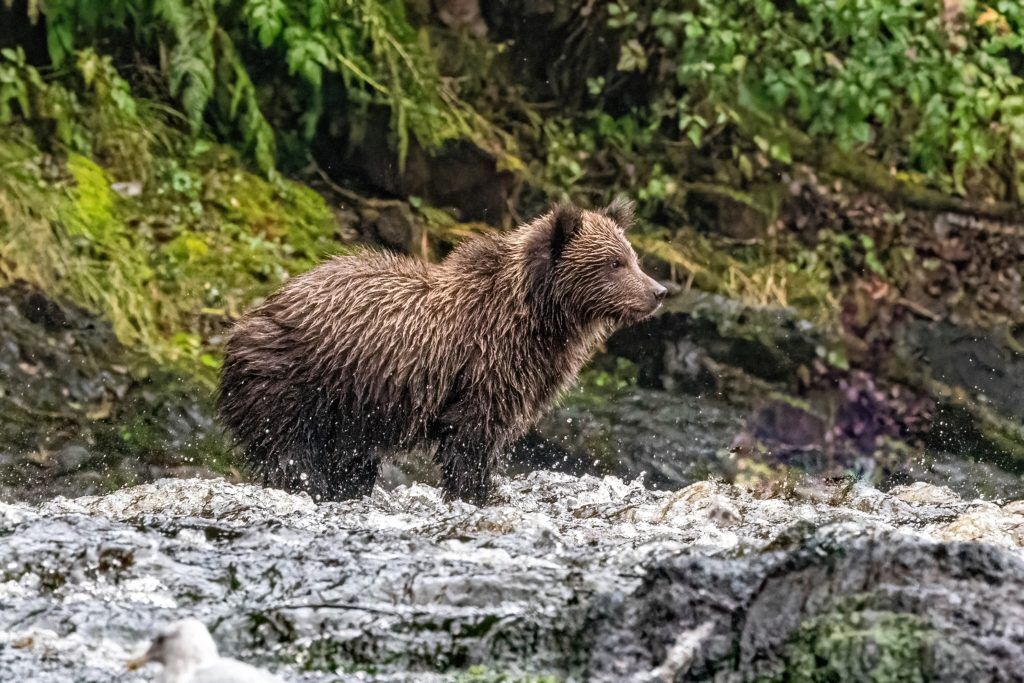
Baby bear Pavlovs Bay Alaska
Photo Credit: Jenn Coleman.

When you travel somewhere wild, certainty disappears almost immediately. Plans turn into loose outlines. Timelines soften. The assumption that you’re fully in control starts to fade — and that’s exactly where the experience opens up.

In Alaska, weather doesn’t politely cooperate. Flights wait. Boats adjust for tides. Trails change overnight. Wildlife appears on its own terms, not when you’re ready with a camera in hand. At first, this unsettles people. We’re trained to optimize travel, to squeeze value from every hour, to move efficiently from one highlight to the next.

Wild places resist that mindset. They force you to slow down and pay attention instead.

Instead of rushing, you find yourself watching clouds crawl across a mountain range or listening for the distant crack of shifting ice. You wait because someone has spotted a bear across the river, and suddenly waiting doesn’t feel like lost time — it feels like the entire point. In wild places, patience isn’t a virtue. It’s a requirement.

Nature Isn’t a Backdrop — It’s the Main Character

Endless Adventures Await-Moose - Alaska Glacier Lodge Palmer Alaska
Photo Credit: Jenn Coleman.

In many destinations, nature plays a supporting role. It’s something you admire between meals and museum visits, a scenic pause before moving on to the next activity.

In wild places, nature is the storyline.

In Alaska, the scale alone recalibrates your perspective. Mountains don’t rise politely in the distance; they loom. Glaciers don’t shimmer passively; they groan, fracture, and move. Rivers aren’t decorative — they’re powerful, cold, and very much alive. Wildlife isn’t something you visit. It’s something you encounter, often unexpectedly, and always on its own terms.

That reality changes how you move through the world. You speak more quietly. You scan the horizon. You learn to read the land not just for beauty, but for meaning — wind direction, cloud movement, water levels. You stop expecting nature to perform for you and start allowing it to lead.

Comfort Looks Different in the Wild

View from my room Homer Inn and Spa
Photo Credit: Jenn Coleman.

Traveling somewhere wild doesn’t mean giving up comfort, but it does redefine what comfort actually means. Luxury here isn’t about excess or polish. It’s about warmth after cold. Shelter after exposure. A solid meal after a long day outside.

Some of our most memorable places to stay in Alaska weren’t remarkable because of opulence, but because of where they were. Remote enough that silence felt complete. Close enough to the land that stepping outside meant being fully immersed — weather, wildlife, and all. Comfort in wild places is practical and intentional, and because of that, it feels deeply satisfying.

You notice and appreciate the basics more. Dry socks. Hot coffee. A sturdy roof during a storm. These aren’t assumed; they’re earned. And because you’re more present, they land differently. They feel grounding in a way that polished luxury sometimes doesn’t.

Your Senses Wake Up

Matanuska Glacier, Alaska
Photo Credit: Deposit Photos.

One of the quieter gifts of wild travel is how it reactivates your senses. In daily life, we filter relentlessly just to get through the day — noise, movement, light, information. Wild places strip that filter away.

You smell rain before it arrives. You hear ice shifting miles off. You notice how light changes minute by minute. In Alaska, even the air feels sharper, cleaner, alive. You become aware of your body in space — where you step, how fast you move, what’s happening around you.

This heightened awareness isn’t stressful. It’s calming. It pulls you into the present without effort or instruction. It’s mindfulness without the app, presence without performance.

You Remember What Adventure Actually Means

Hatcher Pass - Gold Cord Lake Trail Alaska
Photo Credit: Jenn Coleman.

Somewhere along the way, adventure became a marketing word. But real adventure, especially in wild places, isn’t about adrenaline or bragging rights. It’s about curiosity, humility, and uncertainty.

Adventure means not knowing exactly how the day will unfold. It means trusting guides and locals. It means adapting instead of controlling. In Alaska, that might look like hiking through mist, unsure if the clouds will lift. Kayaking through ice-dotted water where seals surface nearby. Boarding a small plane knowing weather could change everything.

And when things don’t go according to plan, that doesn’t diminish the experience — it becomes the story. Wild places remind you that the goal isn’t perfection. It’s participation.

Time Feels Different Out Here

Yllas Ski Resort Finland
Photo Credit: Jenn Coleman.

Wild destinations stretch time in ways that are hard to explain until you experience them. Days feel full without feeling rushed. Hours pass unnoticed when you’re fully engaged. Evenings arrive gently, not abruptly.

Without constant stimulation or packed schedules, your nervous system settles. You sleep more deeply. Wake earlier. Feel less urgency to check your phone. In Alaska, the light itself reshapes time, lingering late into the evening in summer, quietly reminding you that clocks are human inventions, not natural laws.

That shift doesn’t disappear when you leave. You return home more aware of how often urgency is manufactured — and more protective of your time because of it.

You Feel Like You’ve Earned the Experience

Kayaking Glacier Bay Alaska
Photo Credit: Jenn Coleman.

There’s a quiet satisfaction that comes from traveling somewhere that isn’t effortless. Wild places often require extra steps — small planes, ferries, long drives, patience. But effort creates investment.

When you arrive, you don’t feel like you stumbled into the experience. You chose it. And that choice creates respect — for the land, for the people who live there, and for the experience itself. In Alaska, simply reaching some destinations comes with stories before the stay even begins.

Wild travel doesn’t hand itself to you. It asks something in return.

Why We’re Drawn to the Wild Now More Than Ever

Waterfall Cove Alaska
Photo Credit: Jenn Coleman.

The pull toward wild places isn’t accidental. After years of constant connectivity, crowded destinations, and carefully curated experiences, many travelers are craving something real. Something grounding. Something that doesn’t ask them to perform.

Wild places offer perspective. They remind us that the world is bigger than our inboxes, that discomfort isn’t dangerous, and that awe still exists — no explanation required. Alaska sits at the heart of this longing, but it isn’t alone. You feel it in remote coastlines, high deserts, northern forests, and far-flung mountain towns around the world.

What unites them isn’t geography. It’s restraint. These places haven’t been overly softened or simplified. They still ask you to meet them where they are.

What You Take Home From a Wild Place

Hikers hiking, enjoying the view of Famous Patagonia Mount Fitz
Photo Credit: Deposit Photos.

You don’t return with just photos. You come back quieter, more observant, and more comfortable with uncertainty. You gain a clearer sense of what you actually need — and what you don’t.

Traveling somewhere that still feels wild recalibrates your sense of scale and self. It reminds you that not everything needs improvement, explanation, or monetization. Some things are powerful simply because they exist.

And once you’ve felt that — once you’ve stood somewhere that didn’t care whether you were there or not — it changes how you travel going forward. You start seeking places that ask something of you. Places that feel alive. Places that leave room for surprise.

Because wildness, in the end, isn’t something you conquer.

It’s something you experience — and carry with you long after you’ve left.

Hi! We are Jenn and Ed Coleman aka Coleman Concierge. In a nutshell, we are a Huntsville-based Gen X couple sharing our stories of amazing adventures through activity-driven transformational and experiential travel.


Source link