5 3D Printer Projects That Can Upgrade Your Smart Home


If you’re a DIY enthusiast, a 3D printer is pretty much a must-have at this point. The fact that you can design and print your own items based on your requirements around the house unlocks a whole world of possibilities. From useful kitchen gadgets to clever home improvement products, 3D printed items not only add more functionality but also give your home a more customized, unique look. 

Apart from these everyday items that you can place around the house, you’re in for a treat if you have smart home gadgets along with a 3D printer. Some smart home gadgets and accessories can either work better or provide extended functionality when clubbed with an add-on part. Another use case would be to provide better housing for your smart home gadgets so that they continue to work in the background without occupying space or displaying messy cables.

We’ve found these solutions, thanks to hundreds of thousands of online models listed on several forums. Whether you have a device from the best smart speaker brands or a smart lightbulb, here are some nifty accessories you can print to upgrade your smart home. Some of these items can even add to your smart home functionality instead of simply improving existing gadgets. The best part about 3D printing is that you can use any color of filament to suit your home’s decor, and you’ll often find multiple iterations or remixes of a design that you can pick based on your preferences.

Amazon Echo socket mount

There is a specific kind of satisfaction that comes from 3D printing a solution to a problem you didn’t realize was bothering you until it was gone. Most people keep their Amazon Echo on their kitchen counter or a random shelf, with its power cord lying around and ruining the aesthetic of your home. While it works fine this way, it can feel like the speaker is another piece of clutter.

So if you’re looking for a cleaner solution, give this Amazon Echo socket mount by Marcel Nóbrega a shot. The design is simple and no-nonsense. It uses the adapter plug itself as the anchor, suspending the Echo directly over the outlet. Do note that, as per the maker, this is an easy print without requiring supports, and can be done in a few hours even with an entry-level printer. The real magic, though, is how smoothly this solution hides the cable. Being able to coil that cord inside the casing means the only thing you see is the Echo itself.

You can see the light ring comfortably from across the room, and the mics are also exposed well. The best part is that you can now use the empty space to keep something else, and you no longer have to deal with a suspended wire that’s essentially a trip hazard if you have kids or pets walking around. Considering the Echo Dot is going to stay indoors, you can print this using PLA itself. It’s also worth noting that the design is tested to work with the Echo Dot 4 and Echo Dot 5 when used with the original adapter that shipped in the box.

Philips Hue table lamp

If you have a spare Philips Hue smart bulb lying around, consider this your sign to 3D-print the Philips Hue Table Lamp by DSL Design that looks much better than a simple one you can buy at a local store. You can either use it as a design element on your desk or even as a night lamp on your bedside table, especially since you can control the brightness and color of the bulb.

The material choice is critical for a project like this. We highly recommend printing in PETG or ABS rather than PLA. Because lamps are often left on for long durations, PLA’s low thermal resistance puts the shade at risk of disfiguring over time. Further, as per the maker’s specifications, this model is designed for Philips Hue LED bulbs. You should strictly avoid incandescent or CFL bulbs, as the excessive heat they produce could compromise the plastic holder and shade. The maker also suggests printing at a 0.2mm layer height with 2 walls and 15% infill.

To really lean into a premium aesthetic, consider printing the base in a wood-finish filament. This creates a beautiful contrast against the diffuser, resulting in a piece of home decor that enhances your home’s atmosphere. The light bleeds through the layers, giving it a warm glow that you just can’t replicate on mass-produced plastic lamps. It’s a functional and stylish print that puts the bulb to good use. Notably, you will need a bulb holder to put the contraption together. Once you do, though, you can shift it around the house and use it for various purposes.

Drip irrigation system

Tired of overwatering or underwatering your plants? Well, GRDesigns3D has a perfect solution that not only helps with perfectly watering your plants but also saves water — the modular drip irrigation system set. This product delivers water directly to the roots, which makes it an ideal fit during periods of high heat or while you’re on vacation.

The kit consists of various emitters, splitters, and connectors, making it modular. Whether you need a fine mist for delicate seedlings or a heavier flow of water for grown shrubs, you can print as many irrigators as you want for your garden. While the exact print time varies depending on your machine and how many parts you choose to print at once, the maker says that it would take around 3.5 hours to print one set.

The designer suggests a brilliant low-tech hack to maximize the efficiency of the irrigation system for larger pots. They say placing a piece of cotton cloth in a star pattern, radiating outwards from the drip point, into the soil improves moisture distribution throughout the pot, reaching a wider root zone, effectively eliminating the need for extra nozzles. While the maker says the print doesn’t require supports, the model has several overhangs that will certainly require supports to print. Furthermore, as per the manufacturer — while PLA works for indoor pots, using PETG or ASA is recommended for outdoor use to prevent the plastic from deforming in the sun.

Apple TV mount

Ever looked at the cable spaghetti behind your TV and wished for it all to disappear? The major part of this mess is caused by external devices being plugged into your TV. If one of those devices is an Apple TV streaming box, and you prefer a clean aesthetic, this Apple TV 4K mount is exactly what you need. It can be easily attached directly to your TV’s VESA mount using just a few M6 screws. You don’t need additional magnets or fasteners, which is a big plus.

The mount allows you to tuck the device neatly against a wall or even hide it right at the back of your television, reclaiming your TV stand for more important things. Since you no longer have to place the streaming box on the stand, you can also avoid cables from showing up. Simply mount the Apple TV on the rear of the TV and wrap the cables around the mount. Even though the new Apple TV runs cooler than its predecessors, the designer included a smart, ventilated base to ensure airflow isn’t restricted.

It’s also an excellent solution for those who have wall-mounted their TV, since connecting an external device in such a setup can be a hassle. The mount takes into account the ports on the streaming box, so you can insert the power cord and HDMI cables without any issues.

Philips motion sensor angular mount

An issue with several smart home sensors, such as the Philips Hue motion sensor, is that they don’t necessarily trigger at the right moment. The Philips Hue motion sensor angle mount offers a clever and easy solution for such a problem. The maker has specially designed a wall mount that fixes one major issue. The stock mounting options often leave blind spots, especially in narrow hallways. This design provides an angled wedge that allows you to physically tilt the sensor toward the area where motion is most likely to occur. You can install this mount at the corner of the wall and ceiling. If you have multiple sensors, you can print several mounts for different parts of the house or office.

By orienting the sensor more precisely, you can significantly improve the speed and reliability of your automated lighting, ensuring the lights turn on the moment you enter a room rather than halfway through it. To achieve the best results, the designer recommends printing the mount with a 0.2mm layer height, 3 walls, and 15% infill. This combination ensures the mount is sturdy enough to be screwed into a wall. It also prints without supports. We would recommend printing it in a filament that matches the color of your wall, so that it blends in seamlessly. Because the sensor itself is lightweight, you don’t have to worry about the mount falling off.


Source link

Leave a Reply

Subscribe to Our Newsletter

Get our latest articles delivered straight to your inbox. No spam, we promise.

Recent Reviews


There are places in the world where everything feels accounted for. The roads are smooth, the signs are clear, and the experience has been carefully arranged long before you arrive. Adventure exists, technically, but only within boundaries that make it predictable. Nothing unexpected happens. Nothing pushes back.

And then there are places that still feel wild.

Not reckless. Not uncomfortable. Just untamed enough that you feel like a guest rather than a consumer. Places where the land doesn’t bend to human schedules, where weather sets the tone for the day, and where nature isn’t something you observe from a distance — it’s something you move through, adapt to, and occasionally surrender to. Traveling somewhere that still feels wild changes you in quiet, persistent ways. It slows your thinking. Sharpens your senses. Reminds you how small you are — and how good that can feel.

Alaska is the clearest example we know. But the feeling itself, the pull toward the wild, extends far beyond one place on the map.

The Absence of Predictability Is the Point

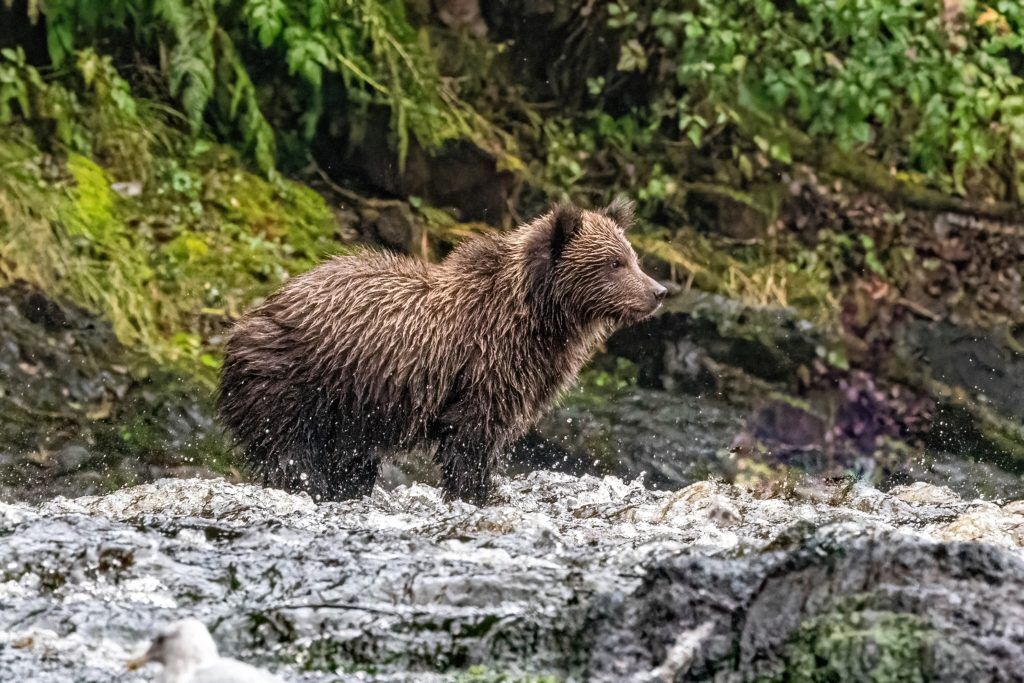
Baby bear Pavlovs Bay Alaska
Photo Credit: Jenn Coleman.

When you travel somewhere wild, certainty disappears almost immediately. Plans turn into loose outlines. Timelines soften. The assumption that you’re fully in control starts to fade — and that’s exactly where the experience opens up.

In Alaska, weather doesn’t politely cooperate. Flights wait. Boats adjust for tides. Trails change overnight. Wildlife appears on its own terms, not when you’re ready with a camera in hand. At first, this unsettles people. We’re trained to optimize travel, to squeeze value from every hour, to move efficiently from one highlight to the next.

Wild places resist that mindset. They force you to slow down and pay attention instead.

Instead of rushing, you find yourself watching clouds crawl across a mountain range or listening for the distant crack of shifting ice. You wait because someone has spotted a bear across the river, and suddenly waiting doesn’t feel like lost time — it feels like the entire point. In wild places, patience isn’t a virtue. It’s a requirement.

Nature Isn’t a Backdrop — It’s the Main Character

Endless Adventures Await-Moose - Alaska Glacier Lodge Palmer Alaska
Photo Credit: Jenn Coleman.

In many destinations, nature plays a supporting role. It’s something you admire between meals and museum visits, a scenic pause before moving on to the next activity.

In wild places, nature is the storyline.

In Alaska, the scale alone recalibrates your perspective. Mountains don’t rise politely in the distance; they loom. Glaciers don’t shimmer passively; they groan, fracture, and move. Rivers aren’t decorative — they’re powerful, cold, and very much alive. Wildlife isn’t something you visit. It’s something you encounter, often unexpectedly, and always on its own terms.

That reality changes how you move through the world. You speak more quietly. You scan the horizon. You learn to read the land not just for beauty, but for meaning — wind direction, cloud movement, water levels. You stop expecting nature to perform for you and start allowing it to lead.

Comfort Looks Different in the Wild

View from my room Homer Inn and Spa
Photo Credit: Jenn Coleman.

Traveling somewhere wild doesn’t mean giving up comfort, but it does redefine what comfort actually means. Luxury here isn’t about excess or polish. It’s about warmth after cold. Shelter after exposure. A solid meal after a long day outside.

Some of our most memorable places to stay in Alaska weren’t remarkable because of opulence, but because of where they were. Remote enough that silence felt complete. Close enough to the land that stepping outside meant being fully immersed — weather, wildlife, and all. Comfort in wild places is practical and intentional, and because of that, it feels deeply satisfying.

You notice and appreciate the basics more. Dry socks. Hot coffee. A sturdy roof during a storm. These aren’t assumed; they’re earned. And because you’re more present, they land differently. They feel grounding in a way that polished luxury sometimes doesn’t.

Your Senses Wake Up

Matanuska Glacier, Alaska
Photo Credit: Deposit Photos.

One of the quieter gifts of wild travel is how it reactivates your senses. In daily life, we filter relentlessly just to get through the day — noise, movement, light, information. Wild places strip that filter away.

You smell rain before it arrives. You hear ice shifting miles off. You notice how light changes minute by minute. In Alaska, even the air feels sharper, cleaner, alive. You become aware of your body in space — where you step, how fast you move, what’s happening around you.

This heightened awareness isn’t stressful. It’s calming. It pulls you into the present without effort or instruction. It’s mindfulness without the app, presence without performance.

You Remember What Adventure Actually Means

Hatcher Pass - Gold Cord Lake Trail Alaska
Photo Credit: Jenn Coleman.

Somewhere along the way, adventure became a marketing word. But real adventure, especially in wild places, isn’t about adrenaline or bragging rights. It’s about curiosity, humility, and uncertainty.

Adventure means not knowing exactly how the day will unfold. It means trusting guides and locals. It means adapting instead of controlling. In Alaska, that might look like hiking through mist, unsure if the clouds will lift. Kayaking through ice-dotted water where seals surface nearby. Boarding a small plane knowing weather could change everything.

And when things don’t go according to plan, that doesn’t diminish the experience — it becomes the story. Wild places remind you that the goal isn’t perfection. It’s participation.

Time Feels Different Out Here

Yllas Ski Resort Finland
Photo Credit: Jenn Coleman.

Wild destinations stretch time in ways that are hard to explain until you experience them. Days feel full without feeling rushed. Hours pass unnoticed when you’re fully engaged. Evenings arrive gently, not abruptly.

Without constant stimulation or packed schedules, your nervous system settles. You sleep more deeply. Wake earlier. Feel less urgency to check your phone. In Alaska, the light itself reshapes time, lingering late into the evening in summer, quietly reminding you that clocks are human inventions, not natural laws.

That shift doesn’t disappear when you leave. You return home more aware of how often urgency is manufactured — and more protective of your time because of it.

You Feel Like You’ve Earned the Experience

Kayaking Glacier Bay Alaska
Photo Credit: Jenn Coleman.

There’s a quiet satisfaction that comes from traveling somewhere that isn’t effortless. Wild places often require extra steps — small planes, ferries, long drives, patience. But effort creates investment.

When you arrive, you don’t feel like you stumbled into the experience. You chose it. And that choice creates respect — for the land, for the people who live there, and for the experience itself. In Alaska, simply reaching some destinations comes with stories before the stay even begins.

Wild travel doesn’t hand itself to you. It asks something in return.

Why We’re Drawn to the Wild Now More Than Ever

Waterfall Cove Alaska
Photo Credit: Jenn Coleman.

The pull toward wild places isn’t accidental. After years of constant connectivity, crowded destinations, and carefully curated experiences, many travelers are craving something real. Something grounding. Something that doesn’t ask them to perform.

Wild places offer perspective. They remind us that the world is bigger than our inboxes, that discomfort isn’t dangerous, and that awe still exists — no explanation required. Alaska sits at the heart of this longing, but it isn’t alone. You feel it in remote coastlines, high deserts, northern forests, and far-flung mountain towns around the world.

What unites them isn’t geography. It’s restraint. These places haven’t been overly softened or simplified. They still ask you to meet them where they are.

What You Take Home From a Wild Place

Hikers hiking, enjoying the view of Famous Patagonia Mount Fitz
Photo Credit: Deposit Photos.

You don’t return with just photos. You come back quieter, more observant, and more comfortable with uncertainty. You gain a clearer sense of what you actually need — and what you don’t.

Traveling somewhere that still feels wild recalibrates your sense of scale and self. It reminds you that not everything needs improvement, explanation, or monetization. Some things are powerful simply because they exist.

And once you’ve felt that — once you’ve stood somewhere that didn’t care whether you were there or not — it changes how you travel going forward. You start seeking places that ask something of you. Places that feel alive. Places that leave room for surprise.

Because wildness, in the end, isn’t something you conquer.

It’s something you experience — and carry with you long after you’ve left.

Hi! We are Jenn and Ed Coleman aka Coleman Concierge. In a nutshell, we are a Huntsville-based Gen X couple sharing our stories of amazing adventures through activity-driven transformational and experiential travel.


Source link